
Beat the Champions Review
Nintendo Switch
A chaotic World Cup-style football game that swings for fun but struggles to keep up with itself.
Reviewed by Mahi Araf on Jun 05, 2026
You step into what looks, on the surface, like something fresh for arcade football fans with Beat the Champions. The idea immediately feels like it's aiming for that old-school, over-the-top football energy where realism takes a back seat, and spectacle takes over. It drops you into a world where national teams, anime-style flair, and exaggerated special moves are meant to carry the experience, and the game clearly wants to be that chaotic football fix you jump into without thinking too hard.
At first glance, Beat the Champions tries to sell you on that "World Cup fever" feeling, mixing in international squads and tournament structures that resemble a global competition. It feels like it's reaching for something similar to classic arcade football games from years ago, where matches are fast, flashy, and a bit ridiculous in the best way. You're not meant to be thinking about realism here, and it makes that clear from the start.

The developers, Purple Tree, position Beat the Champions as a pure arcade alternative in a space that's mostly dominated by simulation-heavy football titles.
The intention seems to be to strip everything back and focus on fun, but the execution immediately reveals a strange mix of ambition and shortcuts. You can sense that the game wants to channel anime-football energy and the spirit of old arcade sports titles, but it doesn't always land cleanly.
There's also a clear attempt to tie Beat the Champions into a World Cup-like structure, complete with international teams and even historical squads like Argentina's legendary lineups. You get moments when you see familiar names mixed with fictional or slightly altered versions of real players, creating a strange blend of authenticity and distortion. It feels like the game is trying to build a football fantasy, but it doesn't fully commit to the depth that idea usually needs.
From the moment you start playing Beat the Champions, you're placed in a loose narrative framework centered on tournaments and the chaos of international football. The "Cup 26" style mode acts like a fictional World Cup replacement, where you're thrown into group stages and expected to progress through matches that feel more like arcade battles than proper football fixtures.
Beat the Champions leans on the fantasy of taking underdog teams or legendary squads and pushing them through absurd football matches. You can end up with matchups like historical Argentina squads going against modern versions, which creates a kind of "what if" football timeline that feels intentionally messy.
There's also this strange presentation of mixed rosters, where legends and current stars exist side by side.
Beat the Champions doesn't explain much; it just drops you in and lets the chaos unfold. You might see iconic players from different eras on the same pitch, which should feel exciting. Still, instead, it often feels unstructured because there's no system to properly balance or contextualize it.
As you progress through the tournaments in the game, you also notice how the structure is very repetitive. You're pretty much fighting your way through cup after cup, league after league, with the main story being your rise to the top rather than any pre-written plot. This creates a loop in which the 'story' is just about winning matches and unlocking trophies. This directly ties into the game's grind-heavy design.
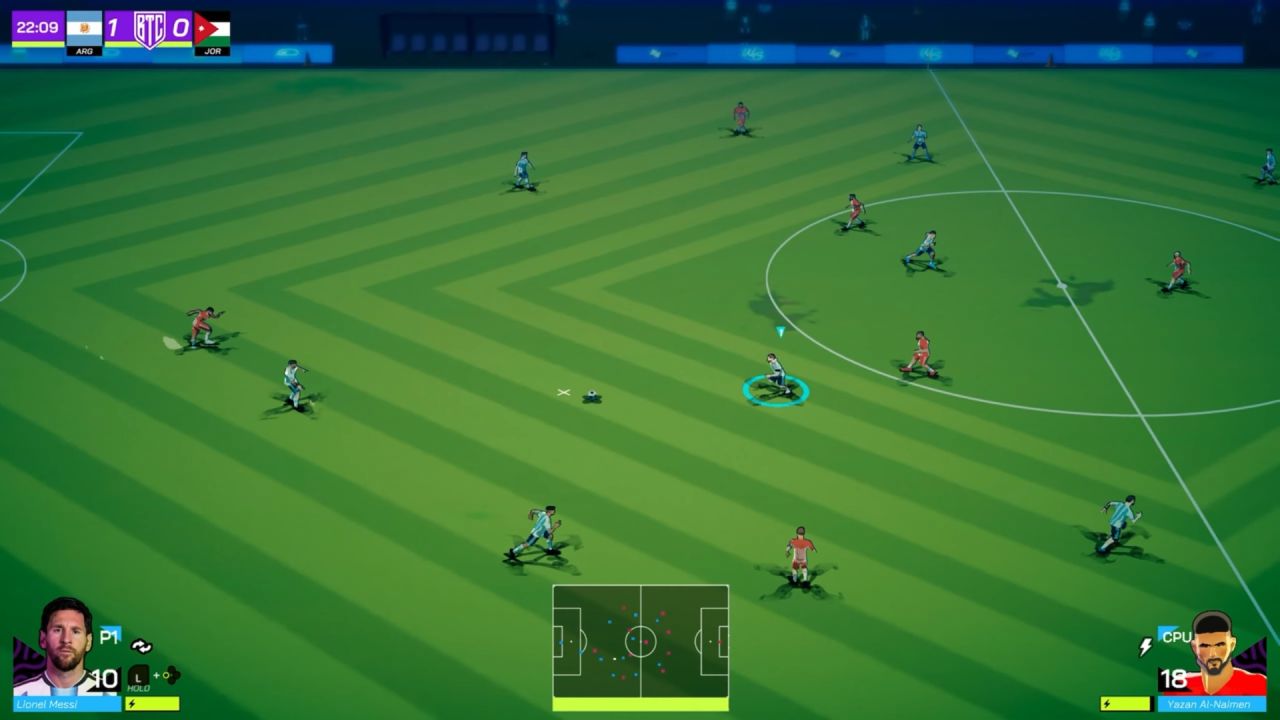
Beat the Champions' game modes are built around a few core ideas: quick matches, tournaments, leagues, and a World Cup-style campaign. But you have international competitions, regional leagues like Europe, Asia, and the Americas, and various cup formats that all feel like variations on the same structure rather than distinct experiences.
Cup 26-style tournament is the main attraction of Beat the Champions, one of the most prominent modes.
You're dropped into group stages with different nations and pushed through knockout rounds if you perform well. It's designed to replicate the feeling of a World Cup without official branding, and it becomes the central loop for most of your playtime.
You also get historical team selections, especially for Argentina, spanning different eras of the national team. This is one of the more interesting ideas in Beat the Champions, since it allows matchups like Maradona-era teams facing modern-day squads. It's a concept that sounds like it should be a highlight, but the lack of deeper systems or customization options holds it back.
Outside of tournaments, there's only couch co-op as a multiplayer option. The game does not include online multiplayer, which immediately limits how far you can take the experience. If you're playing alone, the game becomes entirely AI-driven; if you're with someone locally, it turns into a short-session, party-style experience rather than a long-term competitive game.
There are also league modes spanning different continents, but they don't dramatically change the core experience.
Whether you're playing in a cup or a league, the game keeps you in the same loop of matches with very similar structure, just under different labels. It gives you variety on paper, but in practice, it feels more like repetition with different flags.
When you actually get into matches in Beat the Champions, the gameplay immediately shows its arcade identity. You're dealing with fast movement, exaggerated shooting mechanics, and special abilities that replace traditional football systems. Sprinting, passing, and shooting are all simplified, and the game pushes you toward constant action rather than tactical buildup.
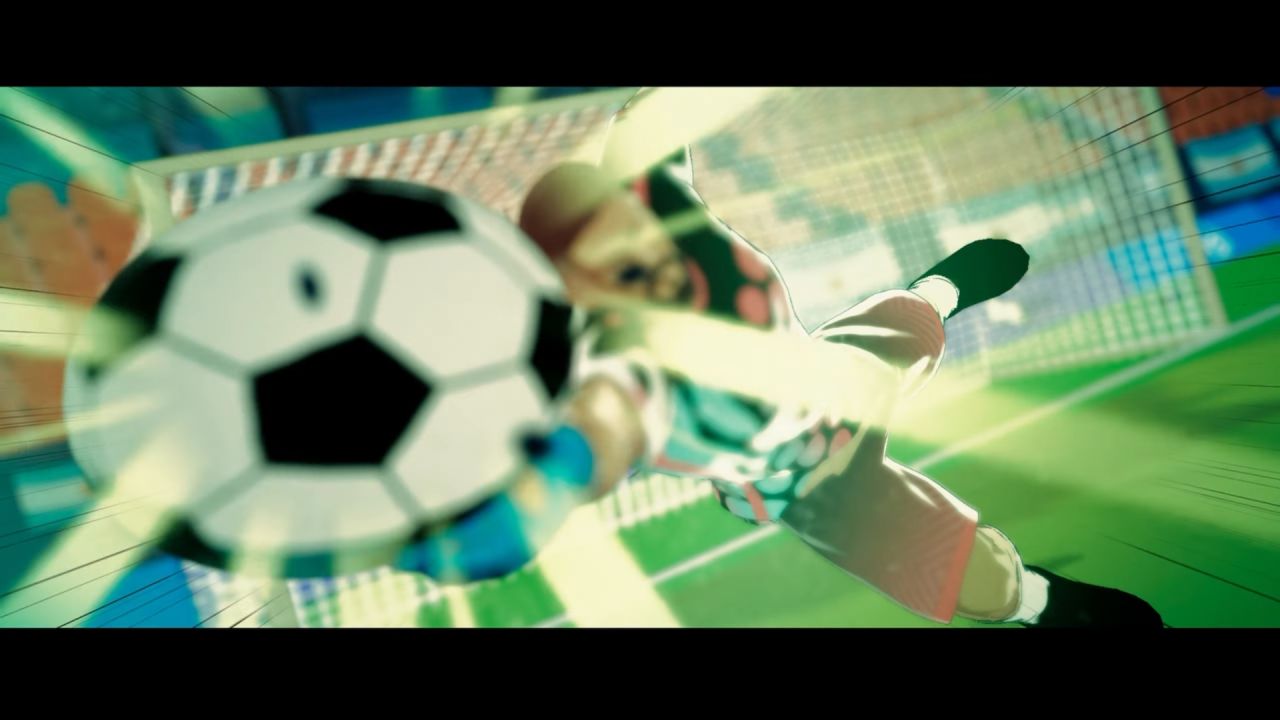
One of the defining features of Beat the Champions is the presence of super shots and special moves.
These are meant to be the highlight of every match, but in practice, they quickly become repetitive. You see the same animations over and over again, with very little variation, which reduces their impact after only a few minutes of play.
Dribbling and movement feel snappy at first, and there's a sense of responsiveness when you pass or shoot. Beat the Champions does manage to capture a basic arcade rhythm, letting you move quickly from defense to attack, and the first match or two can feel surprisingly engaging because of that pace.
However, the deeper you go into Beat the Champions, the more the mechanics start to fall into predictable patterns. Super shots become the dominant strategy, crosses feel almost useless, and certain passing combinations don't really create meaningful advantages. Once you figure out what works, the game stops pushing back in any significant way.
There are also times when the physics and collision systems don't feel consistent. Players will glitch through animations or respond in odd ways to tackles and shots. The game tries to maintain a chaotic arcade vibe, but sometimes falls into an unpredictable realm that feels unintentional.
Another big mechanic is the power shot system, designed to add tension to attacking plays. In reality, it often feels off-kilter, with shots either going in too easily or being stopped in predictable ways. I think Beat the Champions is struggling to find a middle ground where attacking is rewarding and challenging.
The game doesn't offer much resistance on defense once you learn its patterns.
AI opponents are prone to getting stuck in repetitive behaviors, and games quickly become about exploiting the same strategies over and over again. Beat the Champions focuses less on adapting and more on replicating what already works.
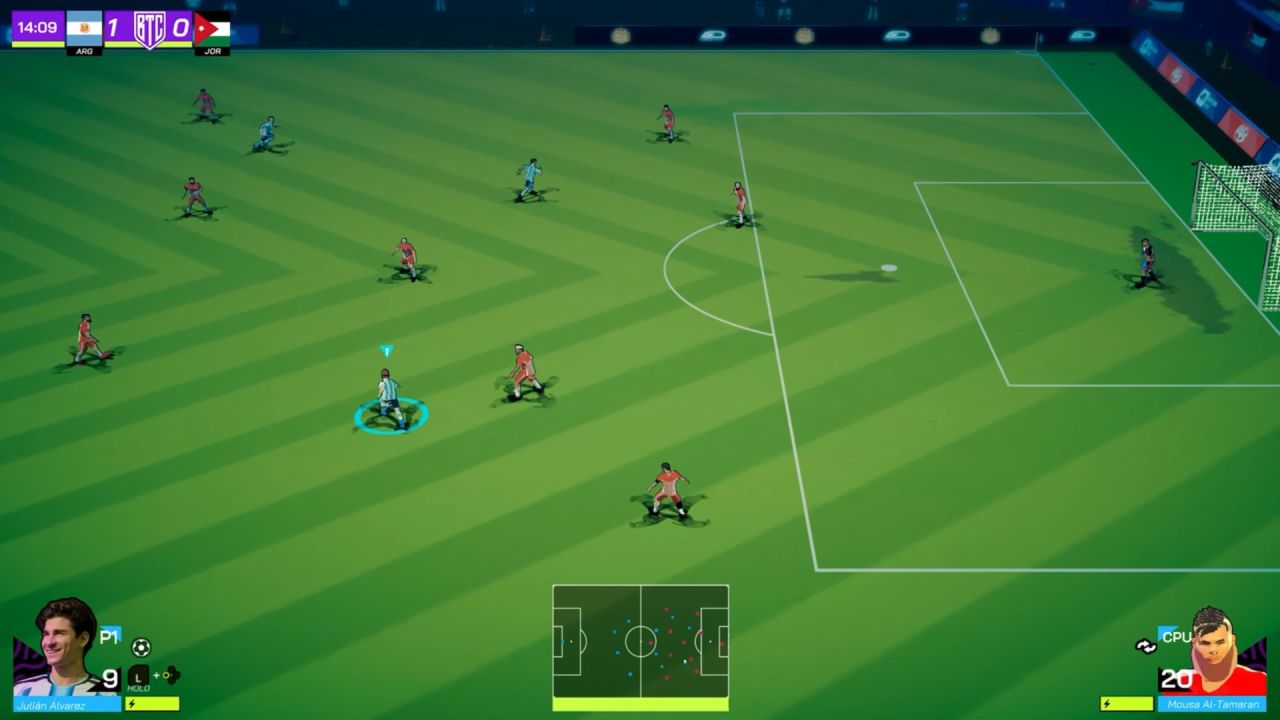
One of Beat the Champions' most noticeable weak points is the AI as you spend more time with the game. At first, you feel like you are playing a pretty chill arcade game, but then you realize how the difficulty doesn't really ramp up in any way.
On easier settings, you can dominate almost immediately. There are still ways to score from unrealistic distances or through simple timing, rather than through tactical buildup, at greater difficulty. The AI doesn't often adapt to your strategy, so it removes any long-term challenge from the experience.
Sometimes the AI defenders and goalkeepers respond inconsistently.
They sometimes behave too passively, and at other times they suddenly become overly reactive in scripted situations, such as super shots or set pieces. Matches in Beat the Champions feel lopsided because there is no consistent difficulty curve.
The goalkeeper's behavior is particularly noticeable because special shots have a button-prompted save system. The game has some quick-time moments where you hit buttons to save shots, which is fun but gets repetitive once you've seen it enough times rather than just reactive AI. Overall, the AI doesn't adapt to how you play. It doesn't really put up a fight once you know the right strategies, and the matches feel more like executions than contests.
When it comes to strengths and weaknesses in gameplay, there is a strange middle ground to Beat the Champions. On one hand, it's an arcade rhythm game that is fast and fun in small doses, especially early on in your first few matches when everything is new and unpredictable.
On the other hand, the lack of variety quickly becomes a major problem. Super moves all seem the same, dribbling doesn't improve, and match results become predictable. The game doesn't introduce enough mechanical depth to sustain long sessions.
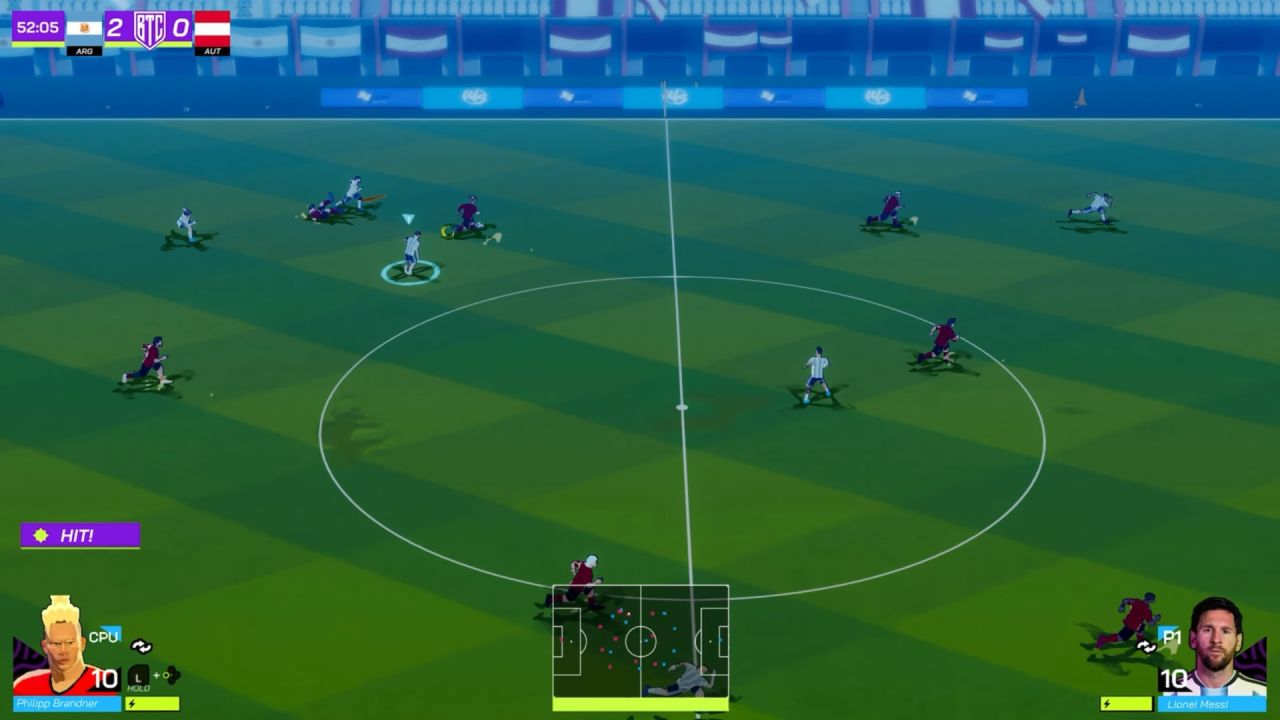
The most significant problem is that once you understand the core winning pattern, there's very little reason to explore other tactics. Crosses don't work consistently, passing combinations don't open up unique plays, and defensive systems don't force you to adjust.
Beat the Champions ends up feeling too easy too soon.
There are still fun moments when chaos happens, especially in close games where teams trade goals. But those moments are more accidental than systemic, and it doesn't develop enough structure to make them consistently rewarding.
Beat the Champions relies heavily on tournament completion and trophy-type objectives. Instead of a deep upgrade system, you're mostly working through cups, leagues, and match-based achievements like scoring goals, winning matches, and completing specific challenges.
This creates a grinding loop of playing similar matches over and over again in different competitions. The game leans toward completionist-style goals rather than gameplay system evolution, making progression feel more like checklist-clearing than skill development.
There are World Cup equivalents, regional leagues, and cup competitions. You get trophy-style rewards for various modes. It forces you to replay formats many times over, which adds to its longevity but also significantly increases repetition.
There's no real player development system or deep customization, so progression doesn't really change the way you play. It keeps you in the same mechanical loop the whole time, the reward being milestones rather than gameplay enhancers.
Visually, Beat the Champions has a stylized arcade style, but feels a little rough around the edges.
Player models are low detail, textures are simple, and animations are stiff or recycled. It attempts to capture a retro anime-inspired football aesthetic, but it doesn't quite hit that mark. Still, you can see what Beat the Champions is trying to achieve. The over-the-top football action, exaggerated moves, and special shots all point to a nostalgic arcade direction. The intent is clear, even if the execution is not quite there.
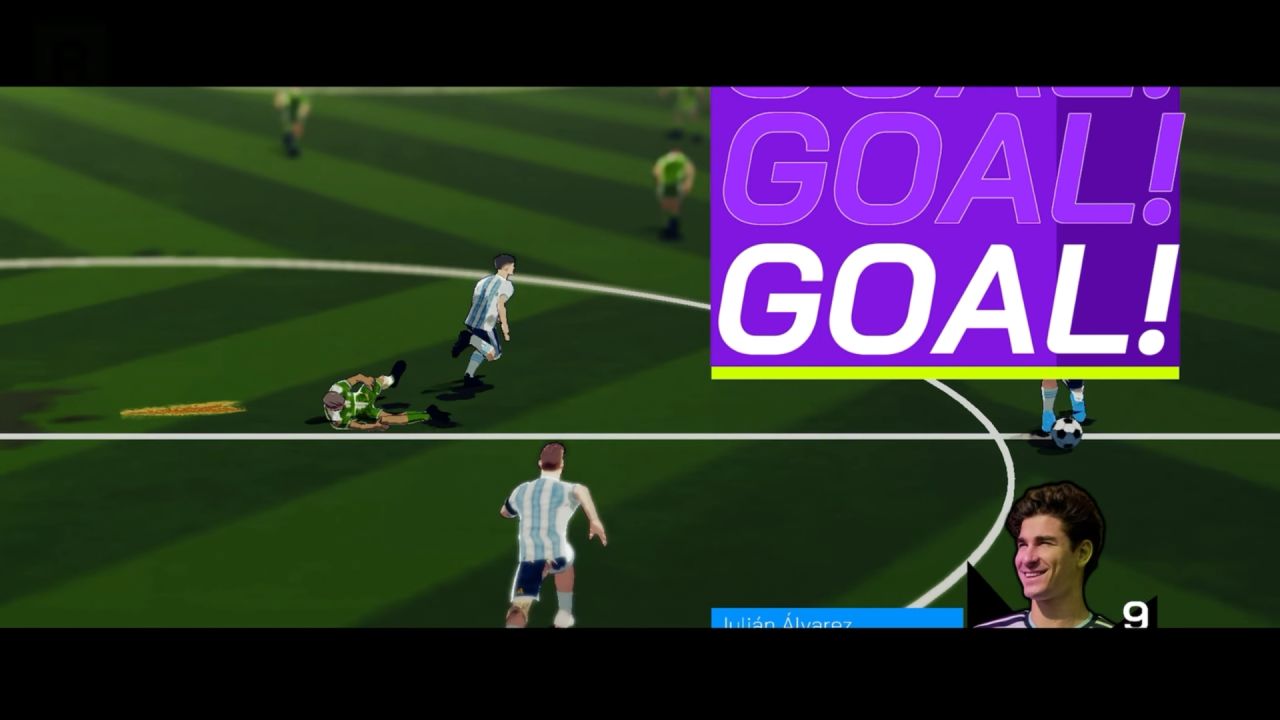
The audio and commentary also seem to be inconsistent. Beat the Champions suffers from repetitious voice lines and rudimentary match commentary that wears thin rather quickly. You don't get dynamic reactions and hear the same phrases repeated across matches, which kills immersion.
Performance-wise, the game runs smoothly for the most part, although visual glitches and awkward animations do crop up. Sometimes goalkeepers behave strangely or camera angles shift in unintended ways. The game feels technically stable enough to play but not polished enough to feel finished.
Final impressions of Beat the Champions come down to the gap between expectation and reality. The notion of a chaotic arcade football game with the energy of the World Cup is genuinely appealing, and it can be fun in short doses. But the longer you play it, the more it shows a lack of depth, variety, and long-term engagement systems. The lack of online multiplayer, limited animation variety, and repetitive mechanics make this a short-lived experience.
Beat the Champions is available at a budget price of around €19.99 (though it's usually discounted). But even for that price, its limitations are hard to ignore. It feels like a game that needed more time to develop its systems and refine its core ideas. Ultimately, Beat the Champions is better described as a short couch experience than a full football title. It's a quick, fun game, especially with a friend, but it just doesn't stand up as a long-term solo game.
Senior Editor, NoobFeed
Verdict
Beat the Champions is a fun arcade idea but gets repetitive and shallow rather quickly. Online multiplayer is missing, which is a shame, and the depth is lacking, so it's good for a quick couch session but not worth sticking with long-term.
68
Related News
No Data.