
Celestial Return Review
PC
A bold cyberpunk mystery that delivers unforgettable atmosphere and meaningful choices.
Reviewed by Zahra Morshed on Jul 13, 2026
When new independent role-playing games come out, people generally have high aspirations since they have heard wonderful things about some of the genre's most famous classics. This was the exact problem with Celestial Return when it came out. It was a story-driven cyberpunk-style detective adventure with a mystical mystery.
Rather than striving for big-budget spectacle, the project concentrated on telling stories, giving participants agency and establishing a mood. Celestial Return was developed by Metaphor Games and published by Shoreline Games. It was the product of a successful crowdfunding effort that appealed to gamers seeking cerebral role-playing games rather than the usual action-packed adventures.
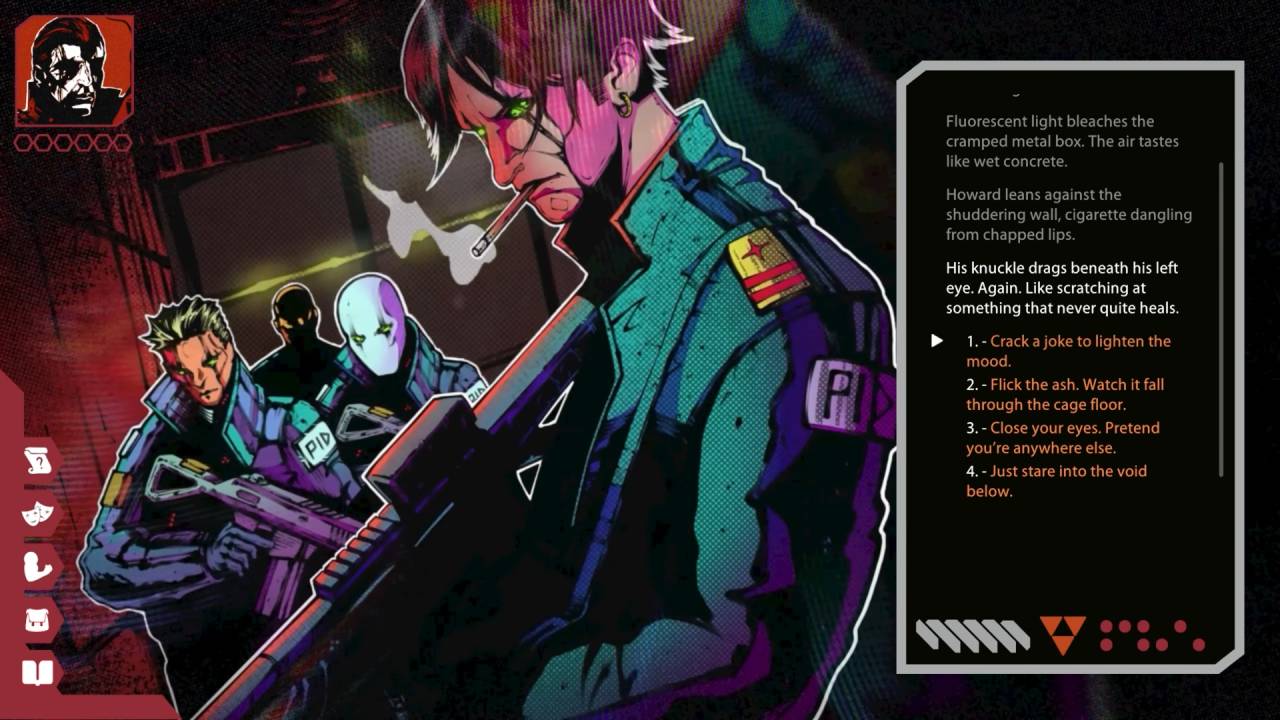
Its advertising talked about making crucial choices, having talks driven by resources and living in a world where every conversation may change the case. People had great aspirations because of those assurances before the release.
The end effect is really ambitious in an artistic sense.
It does not strive to be like bigger productions by employing scale, but rather tries to be unique by combining emotive visuals, philosophical storytelling and a weird dice system that affects practically every key interaction. This emphasis on personality immediately distinguishes Celestial Return from the many formulaic RPGs vying for attention in today's market.
Yet ambition alone is no guarantee of success. Time and time again, Celestial Return demonstrates the difference between having excellent ideas and translating them into ever-rewarding experiences. The confident look masks a game that can make you admire it one minute and be incredibly annoyed with it the next. It is both the unfulfilled promise and the unmistakable inventiveness of the event.
Celestial Return is set in the ruined city of Netherveil, where investigator Howard is investigating some peculiar deaths that slowly expose a conspiracy that goes much beyond normal criminal activities. The world seems to be getting less stable, with corporate power, supernatural phenomena, political tyranny and existential uncertainty all coming together.
The tale does an excellent job of withholding information in the opening few pages. Research and discussion often bring up strange ideas, strange species and hidden groups. It is better than spoon-feeding info as it triggers curiosity. This methodical approach pays off, as you being an observant player, will uncover things organically while the darker aspects of the city remain shrouded.
There is much mention of authoritarian control, identity, survival, artistic expression and social degradation throughout the campaign. And these concepts are not simply the background noise of the era; they affect practically every major occurrence. They lend philosophical substance to the detective story, without detracting from the central mystery. What it boils down to is that the landscape is more than simply a backdrop since it adds to the emotional struggle the people are going through.
Not every story choice is a good choice.
Some story developments lean too much on ambiguous symbolism and not enough on clarity, making critical emotional moments appear distant rather than powerful. Some dramatic discoveries arise before the plot has had a chance to fully set the setting, making some parts of the story seem more interested in style than sense.
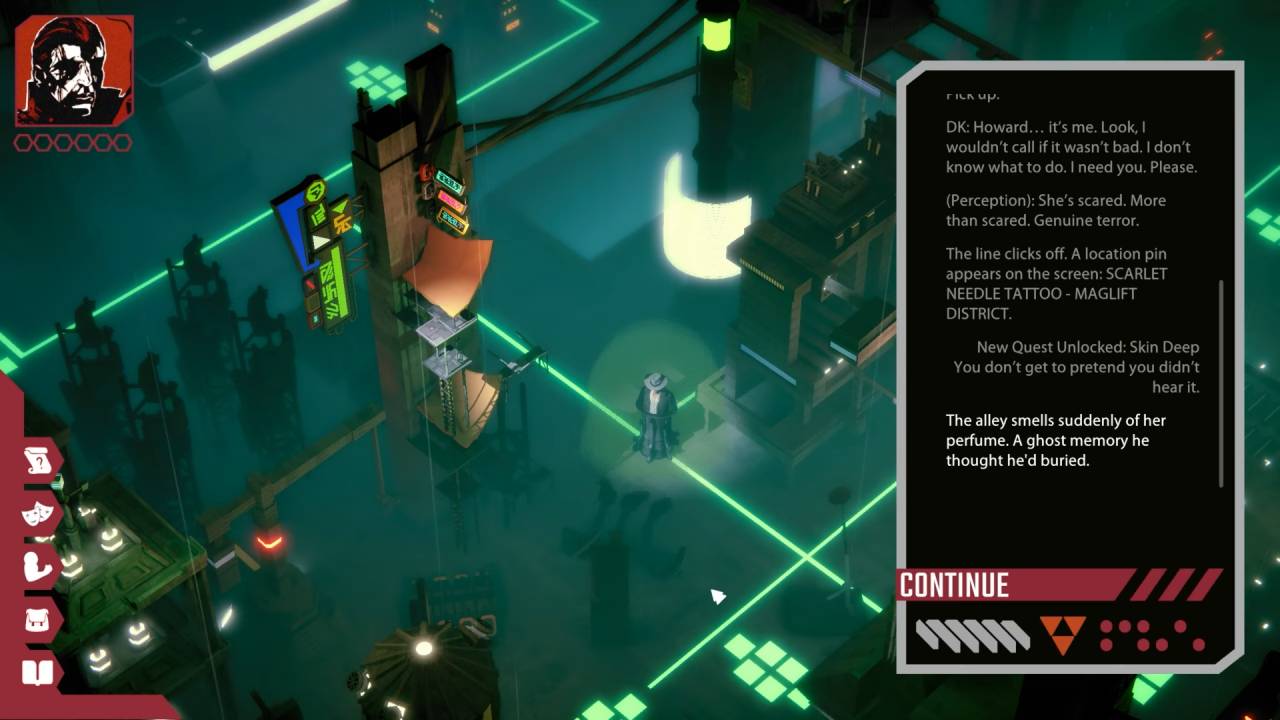
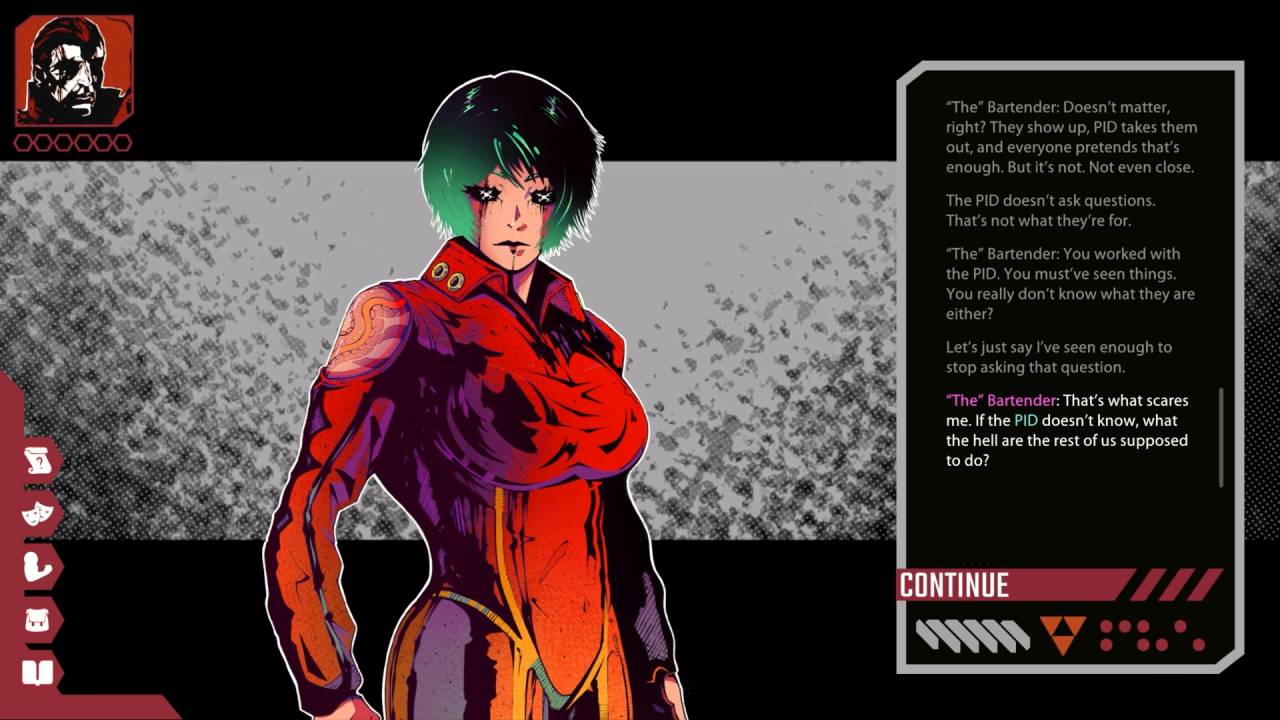
Despite those problems, writing characters is still one of the best things about Celestial Return. Howard is not the primary character through extensive scenes in gameplay, but through speech choices, psychological concerns and your decisions. Likewise, supporting characters not only hand out tasks but also contribute their own ideas to flesh out the city's political and emotional landscape.
Perhaps the most astounding thing about a story is keeping the drama going while keeping the scale tiny. The investigation never strives to become an open-world epic that never ends. Each chapter, nevertheless, builds the emotional stakes gradually and keeps the intimacy readers expect from mystery fiction. This controlled rhythm keeps the mystery compelling even when some of the storytelling techniques go a bit too far.
In traditional role-playing games, you are often rewarded with better gear or new ways to combat. Celestial Return is all about decisions, conversations, investigation and resource management. As progress is more about how to handle discussions and environmental obstacles than it is about killing foes, everything that matters has to be planned out.
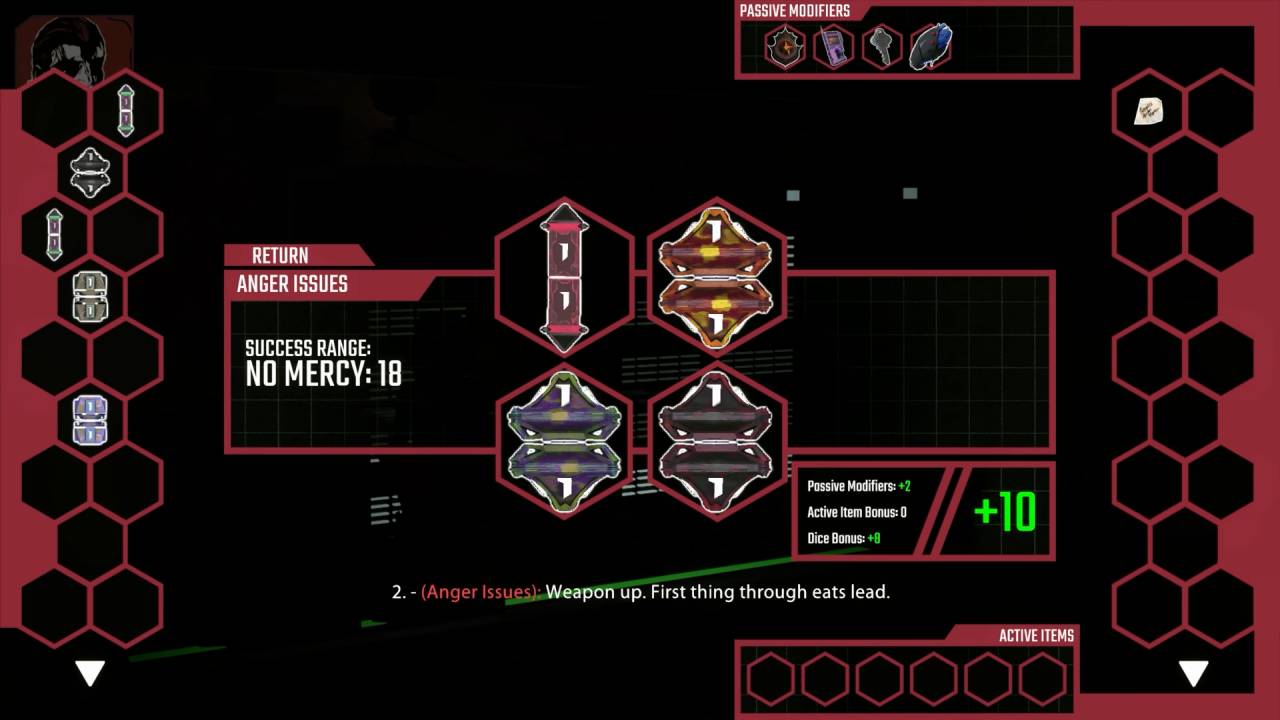
The key feature is valuable dice that get used up fast and cannot be reused. You have a limited number of dice to spend on key skill checks. Then it is a matter of resource management strategy for all decisions. But choosing the conversational choice is only half the battle, you still have to assess whether the conversation is worth valuable resources.
This mechanic impacts how you think and behave in a big way.
The uncertainty makes people less likely to accept every attractive discussion option without considering the repercussions. Success always comes at a price, and squandered opportunities are precious. This creates a tension rarely experienced in story-oriented excursions. It provides for a more immersive experience for a lot of it, because the study feels intentional rather than mechanically repeating.
Exploration is in line with these guidelines since it values attentive observation and constant movement. At times, you can find great resources, tale bits and optional discoveries in the most innocuous of settings. The places that may be investigated are still somewhat tiny, but the locations are well designed, encouraging meticulous investigation while maintaining the detective fantasy central to the experience.
It is a shame that some of the game's features occasionally make their own strengths less helpful. There are times when resources are limited and trying anything new feels like a waste of time, not a prize. In some instances, you cannot be creative with your responsibilities and must be careful with your optimization, or you may miss out on critical possibilities later on in the game.
The result is a nice combination of new ideas and issues. There is a true joy to every successful probe because all choices have real implications. In contrast, instances when progress relies on resources gathered previously demonstrate where the system is unbalanced, preventing the gameplay from always living up to the amazing notion that supports it.
Celestial Return isn't your standard role-playing game where you just keep it rolling with combat. Rather, study and discussion form the core of practically all challenges. Interactions are about conversation, reading the room and taking calculated risks. Quick reflexes do not help as much as being mentally engaged.
The puzzle design is intimately tied to the primary dice function of Celestial Return.
Sometimes, if you want to have a shot at significant conversations, hidden revelations or important investigation breakthroughs, you must use a restricted number of dice. Every decision has risk, because the best planned-out decision can fall short if there aren't enough resources.
Instead of just seeing failure as a problem, Celestial Return attempts to convert unsuccessful rolls into plotlines that influence what happens later. Some blunders might bring surprises, changes in relationships, or the sharing of information from other angles. That means mistakes are significant parts of the investigation, not merely consequences.
Combat is largely there to add to the plot and is not designed to be the main method you play. Disagreements can often be resolved through lying, negotiation or wise use of resources. This plays into the detective mystique, rewarding discretion and observation rather than force. It is a good change of pace from a genre that is largely made up of monotonous fights.
That design ethos is admirable for always contributing to the tale, not detracting from it. Every battle seems to be about the bigger investigation. This ensures that the gaming mechanics support the emotional impact of the plot, rather than adding meaningless action scenes. Even when the spectacle gives way to anxiety, the experience holds together.
The problem with the system is that your choice is limited. There are a number of key sequences where you have to use dice and have no alternatives. This means that choices made earlier on about resources might influence success, before you really know how impactful those choices would be in the future. These are the times that release tension and create unneeded aggravation, making you feel less sure about the otherwise carefully considered design of the game.
More troubling are cases when failed checks do not really get you anything other than stopping progress.
In a role-playing game where you make decisions, losses must be turned into fresh story chances. But certain interactions just take those alternatives away. This makes it difficult to experiment and keeps you from being open to random results on your initial playthrough.
With all these flaws, the premise behind it is good. A lot of recent narrative RPGs fail to make every chat feel vital, but this one does that a lot of the time. A unique system with better balance and greater progress-problem safeguards would have been one of the most memorable new ideas in the genre.
The character development follows a step-based system that emphasizes mental progression over numerical dominance. As you conduct studies and earn experience points, you can acquire traits. Traits affect the way you talk, change the way skill checks operate and even generate brand new ways to talk. Therefore, progress feels more like role-playing than statistical optimization.
With different enhancements, we view Howard's personality in very different lights. Putting money into rationality, emotional control, impulsiveness, or eccentricity modifies the way things work so that progress reflects who the character is, not just making it easier to win. This creates an excellent case for playing Celestial Return more than once, even if you do not utilize the different endings.
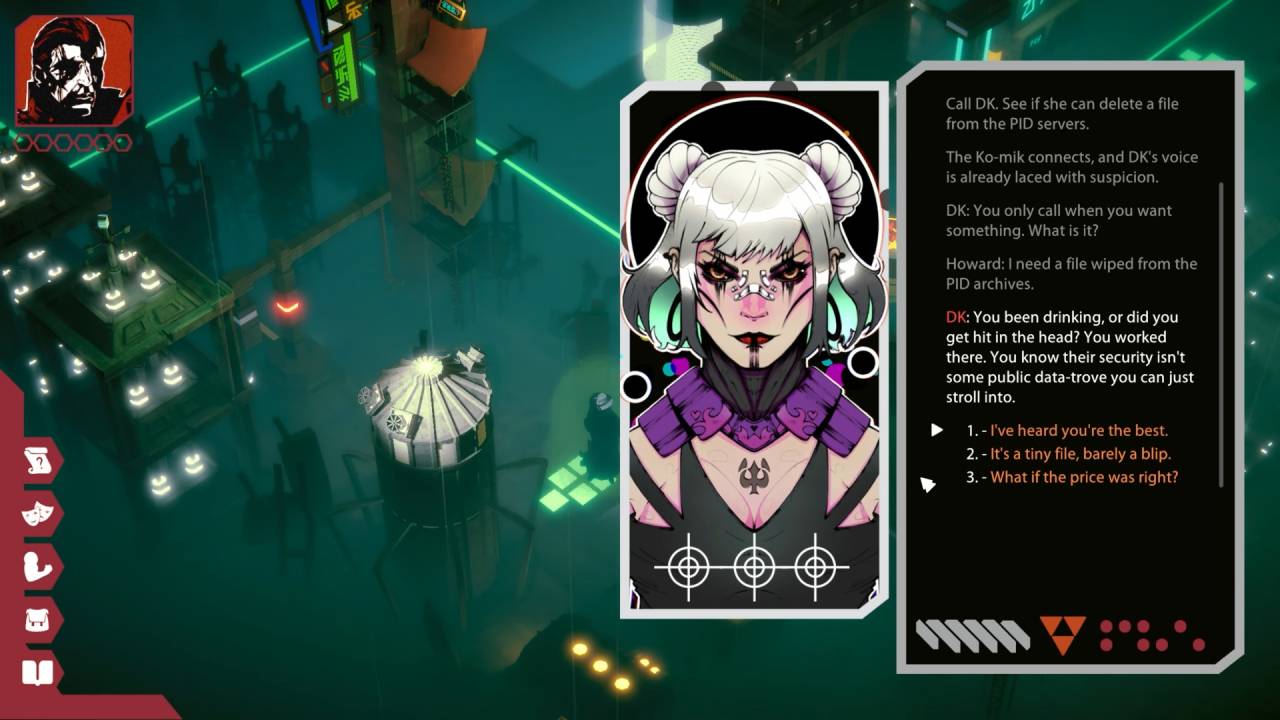
The progression approach works in combination with the investigative framework to help people specialize. You do not just master everything, but slowly mould the strengths and weaknesses of your detective, which impacts how you interact with the residents of the city. Each upgrade is a tale pledge that modifies probabilities and speaks in minor but crucial ways for the future.
It has some issues with how well it works because Celestial Return is relatively short story-wise.
Some character builds don't really come into their own until the game is almost over, making it difficult to experience varied methods of progression as much as you would like. If the journey had been longer, these mechanisms may have developed more organically, without being a detriment to the tale.
Celestial Return is quite easy to remember because of the way it looks. The styled backgrounds and hand-drawn graphics combine to create a metropolis that feels at once futuristic, threatening and somehow lovely. The bold artistic direction, not the excessive technology, makes each area contribute to the uneasy balance of technological advancement versus societal disintegration.
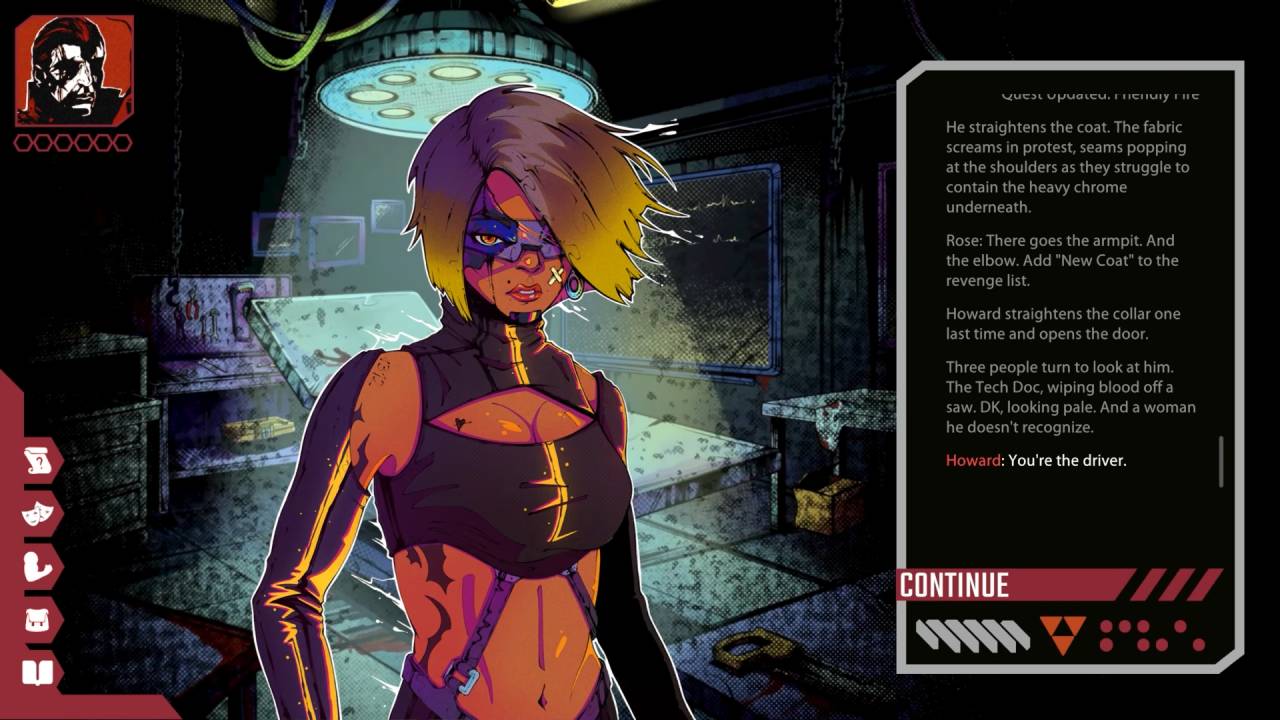
Character designs are very essential because they tell you who the character is before they even say a word. Clothing, facial gestures and exaggerated physical attributes all add subtle ways of world-building. Thus, the dynamics of the setting, political and cultural, can be perceived via the individuals who inhabit it, rather than through lengthy explication.
The lighting and color choices constantly enhance the somber mood. Neon glows in the dark streets, and in the muted interiors, people are lonelier. These striking visual contrasts underpin the detective plot throughout the campaign. The style is distinctive, even if the materials used to create it are not particularly luxurious.
But visual consistency is not always possible. The artistic choices sometimes feel disconnected from the rest of the presentation, with moments that interrupt the experience instead of adding to it. Mismatched character graphics and occasional problems in the interface are more evidence that the project needed additional work before it was launched.

But despite these shortcomings, the creative purpose cannot be missed.
Most independent films aim to be realistic, but they do not succeed because they do not have enough money or time. What this game does instead is embrace a powerful visual identity that stays with you long after the technical shortcomings are forgotten.
The sound design is always one of Celestial Return's most highly reviewed elements. The soundtrack is a blend of electronic beats, jazz with noir elements and darker music styles to create a soundscape that portrays the unsettled mood of the city. Each piece adds to the mood and builds up the tension surrounding each case in a gentle way.
The ambient elements mix effectively with the music without drowning out the dialogue. This means that calm moments of investigation nonetheless carry tremendous weight. The audio does not strive to be the center of attention, but rather quietly complements the tale as it unfolds, creating a sense of complete immersion, even throughout long talks and slower exploring parts.
Voice performances have more unequal consequences. The enthusiasm and commitment of the ensemble are there, but the performance is not always as consistent as it is in bigger shows. Sometimes the emotional situations do not have the desired effect since the vocal acts aren't up to the literary and visual presentation standard.
These blunders usually do not destroy the event, fortunately. Sound is a defining characteristic that can elevate many sequences beyond what words alone could. Loud sound effects for the surroundings, memorable musical themes and well-thought-out pace.
At the end of the day, the music is one of the most compelling creative pieces in Celestial Return.
Independent role-playing games often succeed because they test ideas that larger studios might consider too risky from an economic standpoint. Celestial Return is very much a detective adventure game in that style. There is a philosophical storyline, meaningful player agency and a distinct artistic aim. It should get credit for its willingness to place personality ahead of convention.
But history teaches that large ideas need as much focus to be carried out. Great narrative, unforgettable atmosphere, new mechanics, but also balancing flaws, technical rough patches and uneven tempo. Those problems prevent the game from ever reaching the heights that its brightest moments suggest it could.
That said, the overall impression remains extremely nice, as the original concept of Celestial Return always shines despite its faults. And few investigative role-playing games released in the last several years have had the confidence to ask you to think carefully about your choices in such a way, all while keeping an atmosphere that is both scary and emotionally authentic from start to finish.
For those of you who crave non-stop action, the slow pace could be hard to swallow, but those who enjoy story-driven investigations, ethically complex choices and fully realized dystopian environments will find an experience worth the wait. Celestial Return is unlikely to ever fully shake off the influences that inspired it, but in its own way, it is unique enough that the game's personality deserves to be remembered.
Contributor, NoobFeed
Verdict
A visually captivating detective RPG elevated by exceptional atmosphere, intelligent storytelling, and meaningful choices, yet restrained by uneven balancing and limited polish. Despite that, it is an ambitious indie experience that earns attention.
64
Related News
No Data.