
Terrinoth: Heroes of Descent Review
PC
A dungeon-crawler RPG with sharp combat and a hollow world.
Reviewed by Adeela Tas on Jun 09, 2026
The tactical RPG space has been riding a wave of renewed interest lately, largely off the back of games like Baldur's Gate 3, which reminded a whole generation of players just how good turn-based combat can feel when it's done right. Into that space steps Terrinoth: Heroes of Descent, a game that draws from a different well entirely, the Descent dungeon-crawler board game series by Fantasy Flight Games.
This is a title that's been around for a long time and carries a dedicated tabletop following, even if it's not exactly a household name everywhere in the world. The game was developed by a French studio based in Lyon, working under commission from the relatively young Paris-based publisher New Tales, with roots in former Blizzard and Activision management.
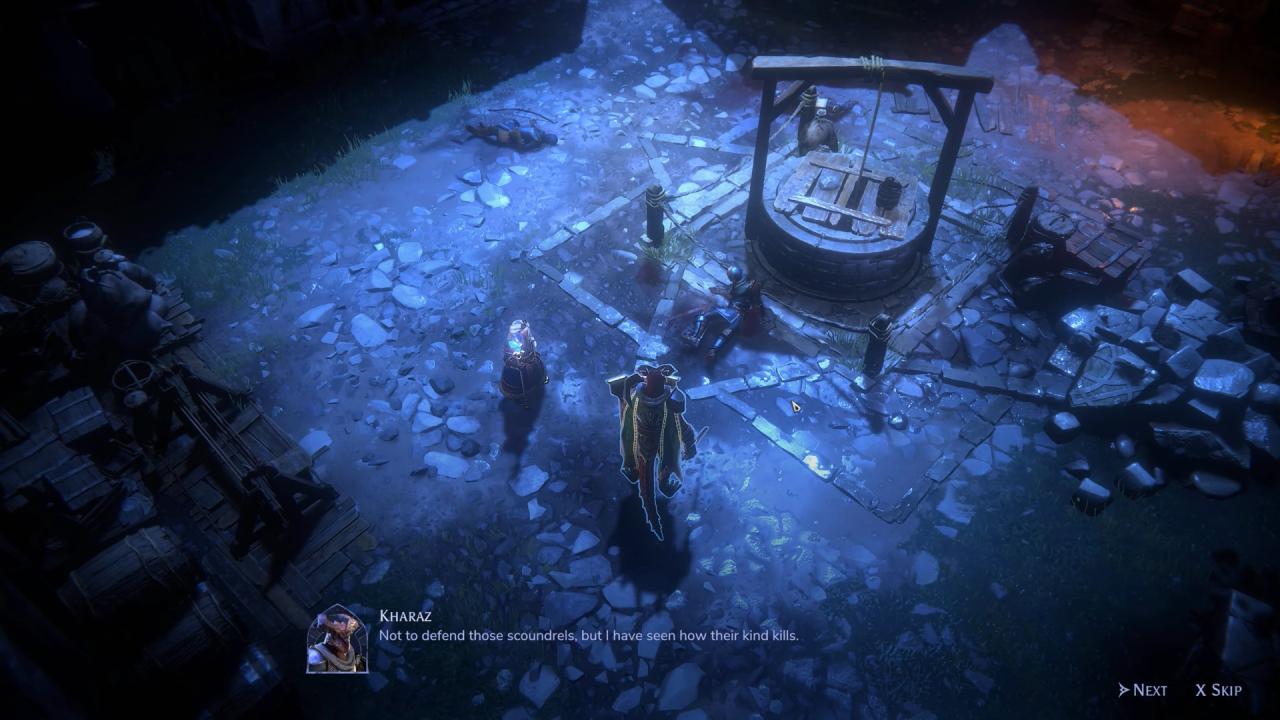
This isn't a scrappy passion project built in someone's garage; it's a mid-sized production with a proper team, a full voice cast, and a licensed IP behind it.
That context matters when you're sizing up what Terrinoth: Heroes of Descent is trying to do and how close it gets to doing it well. The story drops you into the land of Terrinoth, where peace has slowly settled over what was once a war-scarred realm. The Elder Kings once ruled through powerful relics called the Stars of Kymia, until the Dragonlords came, plunged the land into conflict, and shattered those artifacts across the world.
Centuries later, you're living in the long aftermath of that chaos; the baronies bicker, the free cities squabble, and something darker is beginning to stir beneath the surface. You're assembled as part of a group of heroes, initially tasked with recovering a rune-inscribed shard stolen by bandits. That errand quickly escalates when the undead start rising, and you realize there's a much bigger threat pulling strings behind the scenes.
The structure of Terrinoth: Heroes of Descent is episodic by design. There are four acts, each broken into five missions, and the whole thing adds up to somewhere between 20 and 30 hours depending on how deep you go into builds and difficulty. Each act follows a similar rhythm: you need someone's help to get closer to the main villain, that person has their own problems to deal with first, and those problems become your next five missions.
It's functional storytelling, but it tends to fragment the larger narrative into a series of loosely connected threads. At a certain point, it becomes genuinely difficult to track why you're chasing an earth elemental, why a dragon has shown up, or why one character's father is inexplicably sitting in a dungeon. The mission-level stories can feel disconnected from the main conflict in ways that make the plot feel more like a board game campaign, lots of separate threads, than a cohesive video game narrative.
That said, the story isn't without its moments.
There are genuine twists along the way, the characters have distinct personalities that come through in their dialogue, and the world-building is serviceable enough to keep things moving. The writing just doesn't reach the depth of the best RPGs. Part of that is structural: because Terrinoth: Heroes of Descent doesn't give you a camp or hub area where you can spend time with your companions outside of missions, character development gets crammed into the missions themselves.
The result is that characters end up front-loading exposition in ways that feel unnatural. There's a moment early on where a character explicitly says she won't discuss a sensitive personal connection, and then reveals everything about it minutes later when it becomes plot-relevant. That kind of rushed disclosure happens throughout the game, and it gives the storytelling a first-draft quality that stops it from landing emotionally.
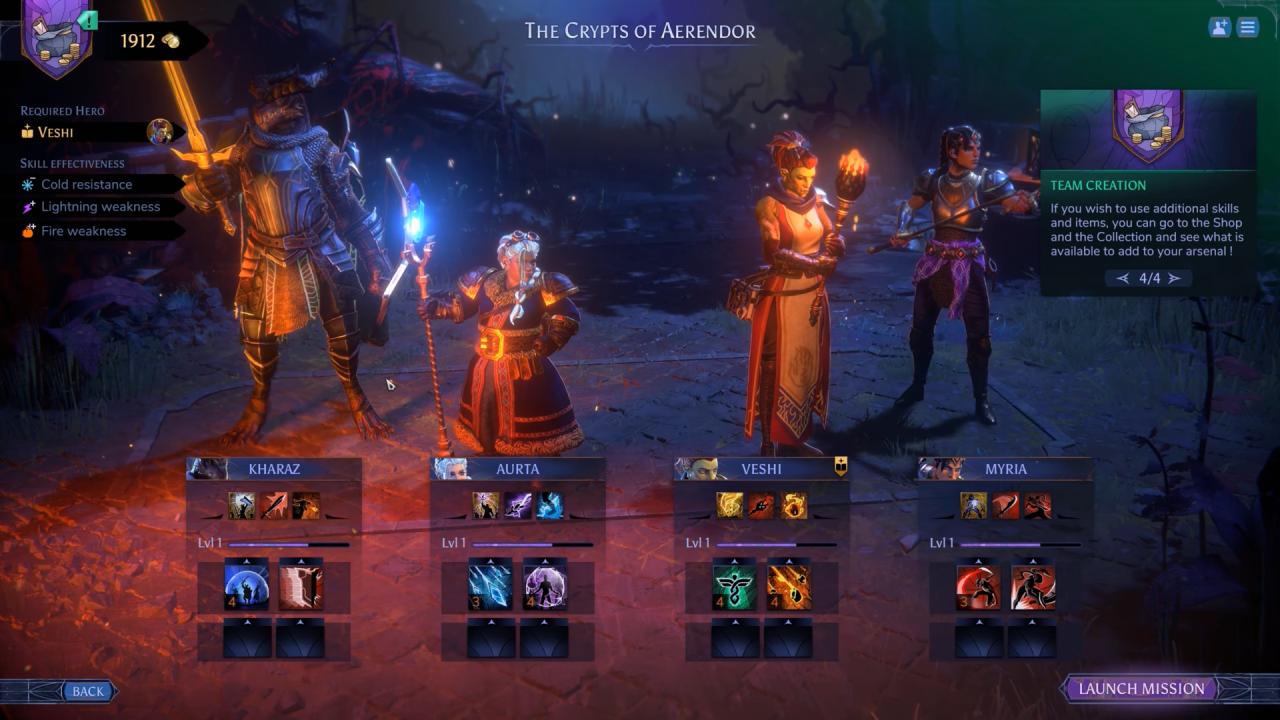
On a structural level, Terrinoth: Heroes of Descent works similarly to a series of tabletop one-shots strung together. Each mission has its own map, its own objectives, treasures to find, and puzzles to solve. Between missions, you can head to a shop to buy new items and abilities, upgrade gear at the forge, and assemble your party before heading back out. You have eight characters available across the run, but only four slots in your party at a time.
Each character brings their own skill set and playstyle, and you can build them out by choosing which abilities to slot and how to spend upgrade resources. Skills can be respecced freely as you unlock new options, which gives you real flexibility. Items are split into four categories with one slot each, and item upgrade resources are spent permanently, so those choices carry more weight.
Outside of combat, you're navigating environments in real time using an isometric camera.
You switch between characters freely, and since each one has different physical abilities, puzzles often require you to position them independently, leaving one on a pressure switch while moving another across the room to hit a second trigger, for example. Exploration is mostly linear, with shortcuts and hidden secrets scattered throughout. There are text-based events where you make choices, environmental hazards, and character-specific passages that add variety to the traversal.
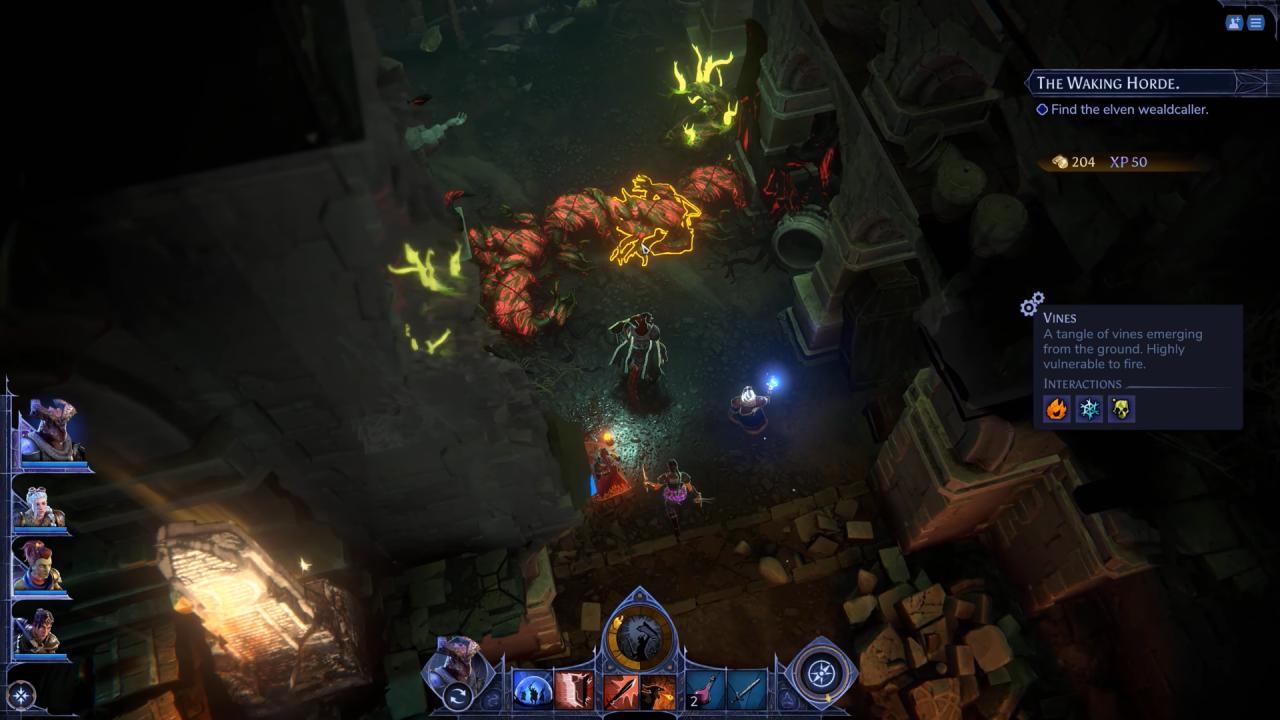
This side of Terrinoth: Heroes of Descent is well put together, and it makes moving through the dungeons feel more interesting than just walking from fight to fight. When you enter combat, everything shifts into a turn-based tactical mode on a grid. You get three Action Points per turn, which you spend on movement, attacks, abilities, and using items.
Every character and enemy has a guard or defense value, and the system rewards you for targeting weaknesses. Attacking an enemy with something they're weak to chips away at their guard and makes them take more damage; hitting them with something they resist does the opposite. This creates a layer of synergy-hunting that's genuinely engaging- figuring out which characters combo well together, how to chain abilities across your team to strip defenses and then capitalize.
Watching those interactions unfold in real time is the most fun Terrinoth: Heroes of Descent has to offer. There's real satisfaction in pairing a character who reduces nearby fire resistance with a fire-breathing ally and watching a whole group of enemies melt. Co-op, where each player controls one or more characters, seems like it would make these moments even better.
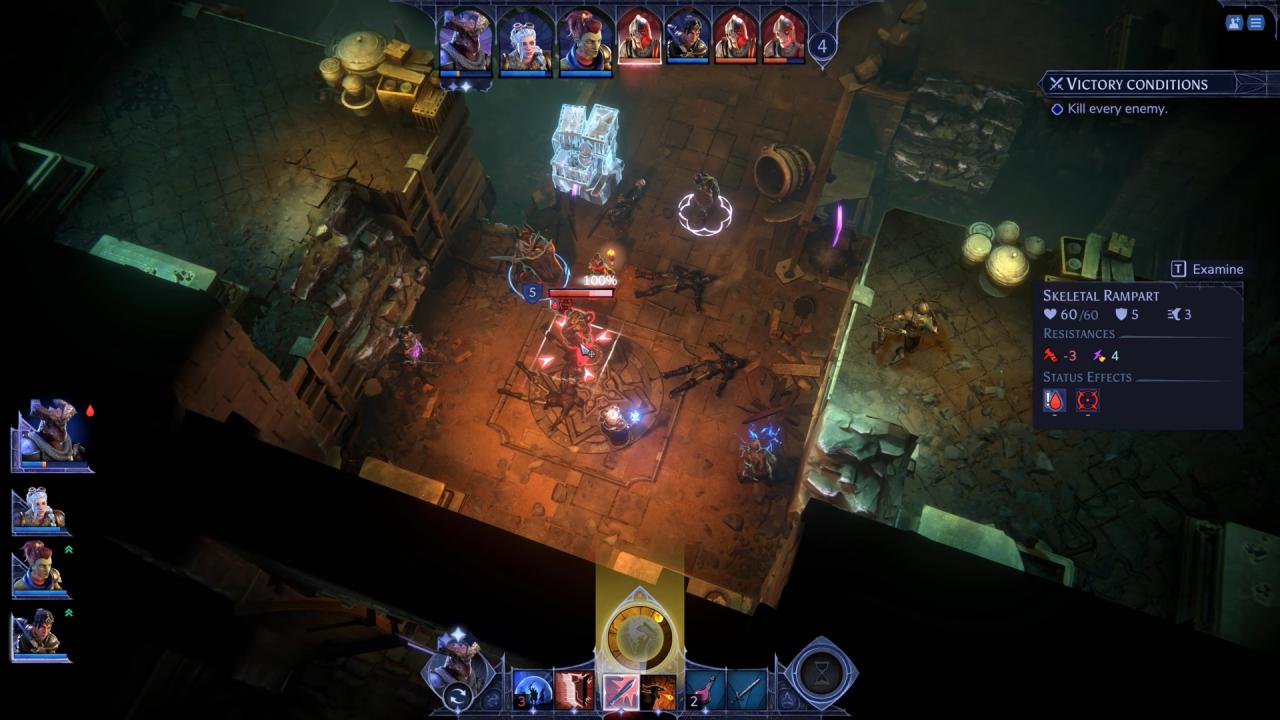
The problem is that the combat depth starts and ends with your own team's synergies.
The enemies on the other side of the board aren't doing anything nearly as interesting. Most enemy types only have a handful of attacks, and the AI governing them is genuinely poor. Enemies with mobility abilities will happily jump straight into traps. Others will spend turns wandering in apparently random directions. The AI doesn't flank, doesn't exploit status effects, doesn't coordinate between unit types, and doesn't respond meaningfully to what you're doing.
Flying high ground with your ranged characters works almost every time, because enemies just march forward without trying to dislodge you. The primary way Terrinoth: Heroes of Descent compensates for the AI's limitations is through enemy quantity. Most battles start manageable, but almost every fight triggers wave after wave of reinforcements. By the second or third round, five or six new enemies appear.
A few rounds later, another group arrives. In the later game, having fifteen or twenty enemies on the field simultaneously is common. This turns what could be tight tactical puzzles into prolonged attrition tests. You're not making complex decisions; you're grinding through headcount. And since you can't fast-forward enemy turns, you watch each one slowly complete its action, one by one, which adds up.
The difficulty settings- Story, Adventure, Veteran, and Darkness- mostly just adjust enemy numbers and stats rather than making the AI smarter. Greater difficulties don't create more interesting fights; they create longer ones. The boss encounters and missions with non-standard objectives are where the combat system shows its potential, but those moments are spread too thin across the campaign.
By the later acts, your party becomes powerful enough that fights feel more like a power fantasy than a strategic challenge.
While that is fun in its own way, it doesn't fix the underlying issue. There are also moments in Terrinoth: Heroes of Descent where the game forces a specific character into one of your four party slots for story reasons, which means reshuffling equipment, reworking builds, and adjusting synergies around someone you may not have invested much into. It happens often enough to become a minor source of frustration.
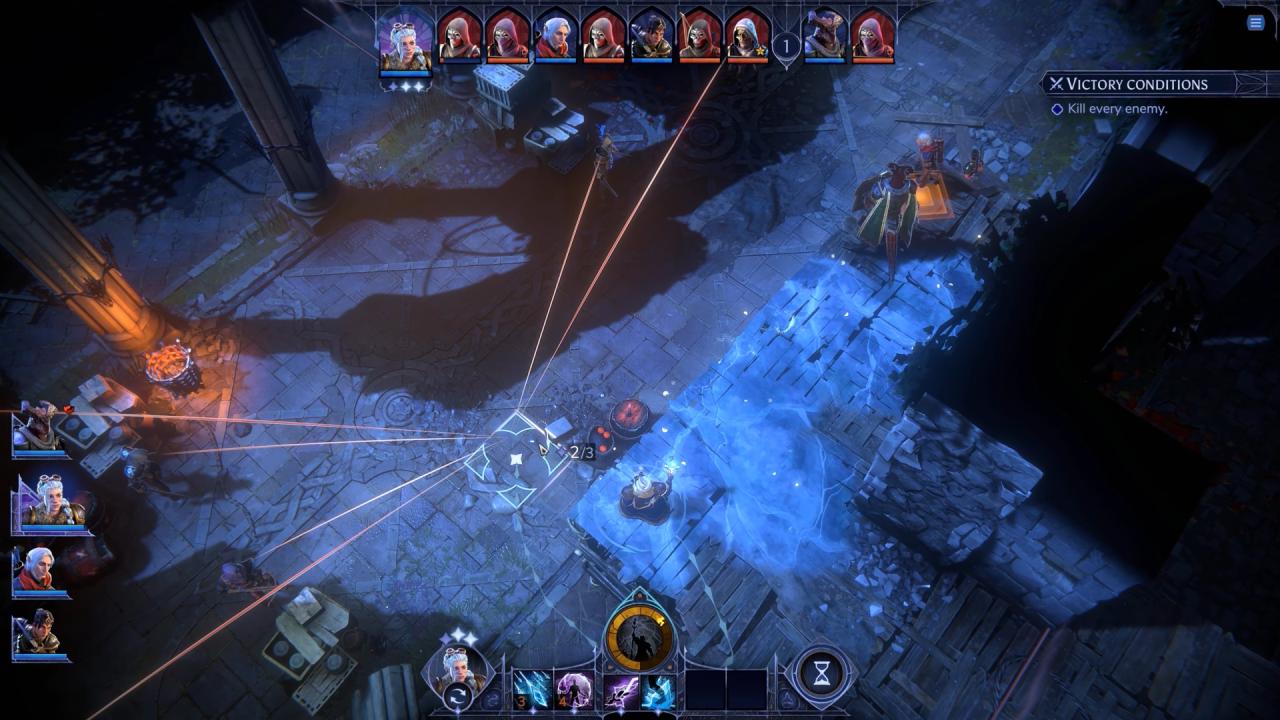
Particularly when your preferred lineup is well-optimized, and suddenly you're forced to accommodate a character who doesn't fit. Visually, Terrinoth: Heroes of Descent is a well-crafted game. The isometric 3D art style is detailed and atmospheric. With dungeon environments that feel lived-in and varied enough to hold up across a full playthrough, even if some assets get reused more than you'd like, and certain enemy models get recycled with a new coat of paint.
Cutscenes are delivered through illustrated still images, which are nicely done and add a sense of production value that punches slightly above the game's budget tier. The console versions run at 1080p without any resolution enhancements on PlayStation 5 or PlayStation 5 Pro, and frame rates can dip noticeably below 60, occasionally settling in the low 30s, a real issue given how PlayStation handles variable refresh rate thresholds.
The PC version fares better overall. Technically, there are occasional startup issues on PC that require a full system restart to resolve, a stability problem that the developers would do well to address in a patch sooner rather than later. The audio side of things is a real strength. The voice acting covers every line of dialogue in the game, and the performances are consistent and well-cast across the board.
Characters feel distinct in how they speak and carry themselves, which helps compensate for the limited screen time each gets.
The soundtrack sits in the background most of the time in an ambient style, but it's well-composed and contributes to the atmosphere without drawing too much attention to itself. The sound design during combat, abilities firing off, enemies reacting to hits, and the layered texture of a multi-character fight all feel polished and add real punch to the moment-to-moment action.
Terrinoth: Heroes of Descent is available on PC, Xbox Series X|S, and PlayStation 5 for around $35, which feels fair for the roughly 20 to 30 hours it offers. Xbox players also get a Play Anywhere benefit, meaning a single purchase covers both the console and PC versions. There's an online co-op mode that lets you bring in additional players to share control of the party across the full campaign, which could meaningfully extend the appeal if you have people to play with regularly.
Ultimately, Terrinoth: Heroes of Descent is a game with a clear identity problem. The combat system at its core has real potential; the synergy mechanics are fun, the optimization loop between missions is engaging, and when the encounter design actually challenges you to think, it works.
But the enemy AI is too passive, the encounter design leans too heavily on raw numbers, and everything outside of combat- the story, the character development, the world-building- doesn't have the space to breathe that it needs to leave a real impression. If you go in expecting a tight, deep tactical experience in the vein of the genre's best, you'll likely find it falls short.
If you go in expecting a competent, accessible dungeon crawler with satisfying combat moments and a reasonable price tag, there's enough here to make it worth your time. Those who love the Descent board game universe will find a faithful and serviceable adaptation; those coming in cold may find it a decent gateway into the genre without ever feeling like they've encountered something truly memorable.
Editor, NoobFeed
Verdict
Terrinoth: Heroes of Descent is an excellent synergy-driven game set in a dungeon where players can engage in cooperative fights with great graphics and sound effects.
71
Related News
No Data.