
EA SPORTS College Football 27 Review
Xbox Series X|S
Sharper gameplay, deeper Dynasty management, and stronger presentation make this the series' best on the field, but controversial progression systems stop it from becoming an easy recommendation.
Reviewed by Mahi Araf on Jul 11, 2026
When EA SPORTS College Football 27 arrived, it had a difficult job ahead. The excitement surrounding the franchise's return had already worn off by the time College Football 25 reintroduced the series, and College Football 26 mostly refined what was already there. There was no more nostalgia to fall back on this year.
It had to prove that annual releases could deliver meaningful improvements instead of simply refreshing rosters. Thankfully, EA's development team clearly understood that expectation, because much of the work this year focuses on making football itself feel better rather than completely reinventing the formula.
That approach makes sense when you look at the franchise's history.
Before its long absence, the NCAA Football series earned its reputation by combining fast-paced gameplay with the unique atmosphere of college football. Packed stadiums, marching bands, heated rivalries, and the dream of turning a small program into a national powerhouse helped set it apart from Madden.
When the series finally returned after more than a decade away, fans were simply happy to have college football back. Now, though, expectations have changed. Returning isn't enough anymore. Every new installment has to justify its worth.
For the most part, EA SPORTS College Football 27 succeeds where it matters most. The developers have refined gameplay, expanded Dynasty Mode with meaningful management systems, improved Road to Glory, and delivered the strongest presentation the series has seen since its revival. It doesn't feel like a lazy roster update, which is something sports games are often accused of becoming. You can tell genuine effort went into improving the experience, even if some additions are more impactful than others.
Unfortunately, those accomplishments don't exist in a vacuum. Some of the game's biggest talking points have little to do with football itself. Progression systems have become noticeably slower, microtransactions now extend into modes that were traditionally single-player experiences, and a handful of frustrating bugs hold back what otherwise feels like a genuine leap forward.
That's what makes EA SPORTS College Football 27 such a conflicting release. It's simultaneously the best-playing game in the franchise's modern era and one that raises serious concerns about where the series is heading.
Once you dive into everything the game offers, that contrast becomes impossible to ignore.
Unlike many sports games, EA SPORTS College Football 27 doesn't revolve around a traditional story campaign. Instead, it lets you create your own football journey across several modes, each focusing on a different aspect of the college football experience.
Whether you want to become the next superstar player, build a championship dynasty, compete online, or simply jump into quick exhibition games, there's no shortage of ways to spend your time. The game doesn't tell one narrative—it gives you the tools to create your own.
Dynasty Mode once again serves as the heart of the package. If you've always enjoyed taking a struggling program and slowly turning it into a national powerhouse, this remains the mode you'll spend most of your time in. This year introduces Dynasty Points, effectively acting as your athletic department's budget.
Every successful season generates additional resources, but deciding where to spend them becomes just as important as winning games. You'll divide those resources between coaching staff, facility improvements, recruiting, and NIL opportunities, forcing you to think several seasons ahead rather than simply chasing the next recruiting class.
The new blueprint system complements those changes nicely.
You can build your program with different priorities, rather than every Dynasty eventually becoming the same thing. You can spend a lot of money on player development (better coaches, better facilities, etc.) or on recruiting (stronger NIL packages to attract elite talent).
Smaller schools naturally have fewer advantages than powerhouse programs, making rebuilds feel considerably more rewarding than before. It's one of the smartest additions EA has made because it reflects the modern realities of college football without becoming overly complicated.
Recruiting itself also receives meaningful upgrades. Prospects now have financial expectations tied to NIL deals, meaning recruiting battles involve more than simply spending weekly recruiting hours. Every scholarship you give out is a chess match, trying to spread your limited resources among dozens of players. Existing athletes also expect continued investment if you want them to remain with your program rather than enter the transfer portal.
The entire process feels more dynamic and gives every offseason far greater importance than in previous entries.
Road to Glory also returns with several welcome additions. You can play more positions like safety, edge rusher, tight end, and linebacker, so you get to see college football from different perspectives instead of just always playing the same offensive skill positions.
Your journey starts in high school and moves on to college, where you'll have the opportunity to earn scholarship offers and ultimately build your reputation at the next level. Position-specific gameplay keeps every career feeling different, especially when comparing a defensive playmaker to a quarterback or running back.
The mode isn't perfect, though. With high school games relying on situational moments instead of full contests, your performance can sometimes feel less meaningful. No matter how dominant you are during the course of a game, scripted objectives dictate how the experience plays out. It takes away some of the freedom that makes career modes enjoyable, even if the additional positions and expanded progression provide more long-term variety.
Outside those two headline modes, EA SPORTS College Football 27 offers several familiar options.
Road to the College Football Playoff continues to serve competitive online players, while Ultimate Team returns for those who enjoy building fantasy rosters with collectible cards. Mascot Mashup also makes its long-awaited return, bringing back one of the franchise's classic fan-favorite modes. Watching oversized mascots with perfect ratings battle each other creates exactly the kind of ridiculous football fun older fans remember.
In the end, though, Mascot Mashup is more about nostalgia than substance. Most mascots are still behind repetitive unlock requirements unless you buy premium editions of the game, and there are so many extra features the mode could have had to make it more engaging.
Without any tournament options, unique objectives, or meaningful progression, it quickly becomes a novelty rather than a mode you'll be revisiting regularly. It's fun for a few matches, but it never builds to anything more.
The one thing that separates EA SPORTS College Football 27 from previous installments is on the field.
From the moment you start playing, you notice the controls are tighter and more responsive than ever. Quarterbacks regain the mobility that many players missed in last year's release, allowing you to escape collapsing pockets naturally instead of feeling locked into lengthy animations.
Running backs cut through narrow rushing lanes more smoothly, and the left stick once again becomes one of your most important tools instead of simply guiding predetermined movement. Everything feels just a little more under your control.
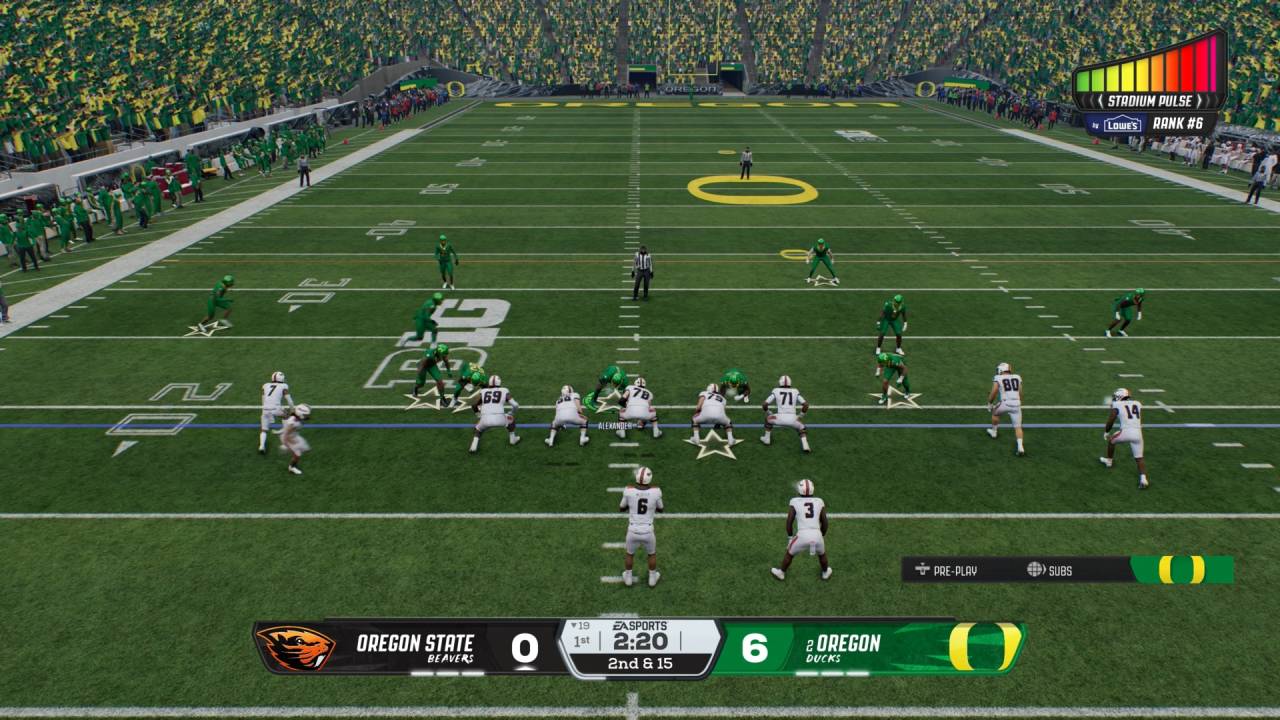
Pre-snap adjustments are also deeper than ever. You can fine-tune defensive coverage, reposition individual defenders, alter zone depths, assign double teams, and make countless smaller tactical decisions before the ball is even snapped.
These additions don't weigh you down; instead, they provide veteran players with more options to respond to different situations while remaining accessible to newcomers. Also, offensive adjustments are much faster, making competitive play flow a lot more naturally than in previous games.
Passing is balanced by smart defensive coverage.
Defensive backs are better at reacting to route combinations, so you'll need to progress through your reads rather than throwing the same easy throws on every drive. Running the football remains effective, although offensive linemen occasionally dominate a little too consistently, opening lanes that feel easier than they probably should. Overall, though, games become more tactical because neither offense nor defense feels overwhelmingly dominant.
But some new mechanics are more polarizing. Timing-based catching rewards perfect button releases to snag receptions. QB sneaks now use timing meters instead of automatic success. The competitive player may appreciate the added skill gap. Still others may feel that these mechanics make player ratings less relevant in situations that should carry more weight than the fundamentals of football do.
The good news is that there are options to tweak or turn off for your play style. Coach Mode is one of the most pleasant surprises of the year. You're not the one playing puppet master anymore. Now you're the one calling the shots on the sidelines while your team does the rest.
Success depends on preparation, roster building, and decision-making rather than stick skills, creating an experience that feels completely different from traditional gameplay. It's a surprisingly addictive addition that gives Dynasty players another reason to invest hundreds of hours into building their perfect program.
If the controls are the biggest improvement, the artificial intelligence is a close second.
EA SPORTS College Football 27 plays a smarter game of football than its predecessors. Defensive backs stay with receivers more consistently, linebackers react quicker to underneath routes, and opposing defenses adapt far better over the course of a game.
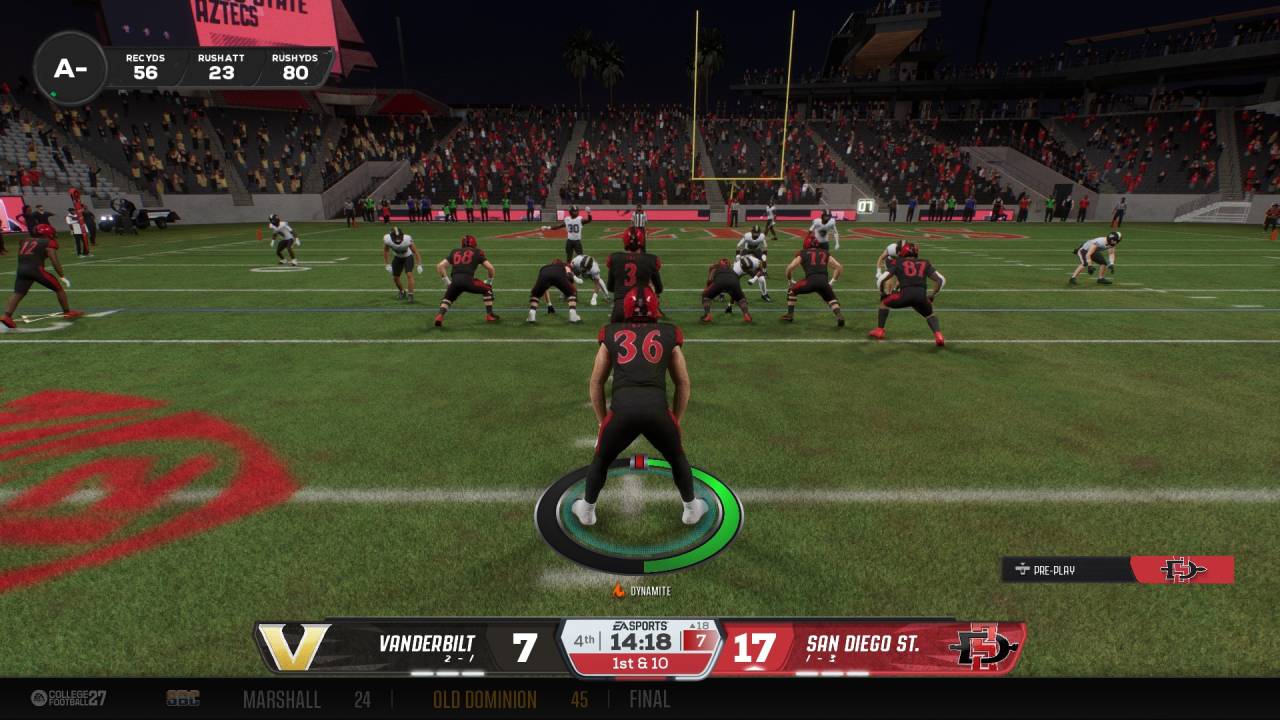
You can no longer rely on the same handful of unstoppable plays that worked repeatedly in previous years because the CPU does a much better job of recognizing tendencies and forcing you to adjust. To win consistently, you have to mix things up on offense, read coverages correctly, and take what the defense gives you, instead of trying to make highlight plays on every drive.
The movement feels much more natural, even though it still uses Frostbite’s animation system. Quarterbacks can escape collapsing pockets with much greater freedom, runners squeeze through tighter gaps, and defenders transition between animations more smoothly than before.
There are still moments when animations override player input or blocking behaves a little too perfectly, but those situations happen less often than in earlier entries. The football itself feels faster, cleaner, and more responsive, making every possession more enjoyable, whether you're playing online or against the CPU. Perhaps the biggest compliment you can give the gameplay is that losses usually feel earned.
Instead of constantly blaming broken mechanics, you're more likely to recognize a poor defensive read, an ill-advised throw, or a risky play call. The CPU presents a genuine challenge without feeling artificially unfair, and higher difficulty levels become much more rewarding because opponents actually capitalize on your mistakes. It's one of the strongest gameplay foundations EA has produced for a football game in years, and it finally feels like the series is building meaningful momentum after its return.
That makes the game's biggest weakness even more frustrating because it has very little to do with football itself.
Dynasty Mode introduces some genuinely brilliant management systems. Dynasty Points function as your athletic department's budget, forcing you to balance spending between recruiting, coaching staff, facilities, and NIL opportunities.
Every decision has long-term consequences, and building a powerhouse program today takes a lot more foresight than just stacking recruiting classes. The blueprint system gives each Dynasty its own identity, encouraging different approaches depending on whether you value player development, recruiting dominance, or financial efficiency. It's easily one of the most engaging additions the mode has ever received.
The problem is how progression has been redesigned around it. Coach progression is dramatically slower than before, requiring an enormous amount of time to reach the highest levels naturally. Features that previously allowed faster XP gain have disappeared, leaving players with significantly longer grinds than in previous games.
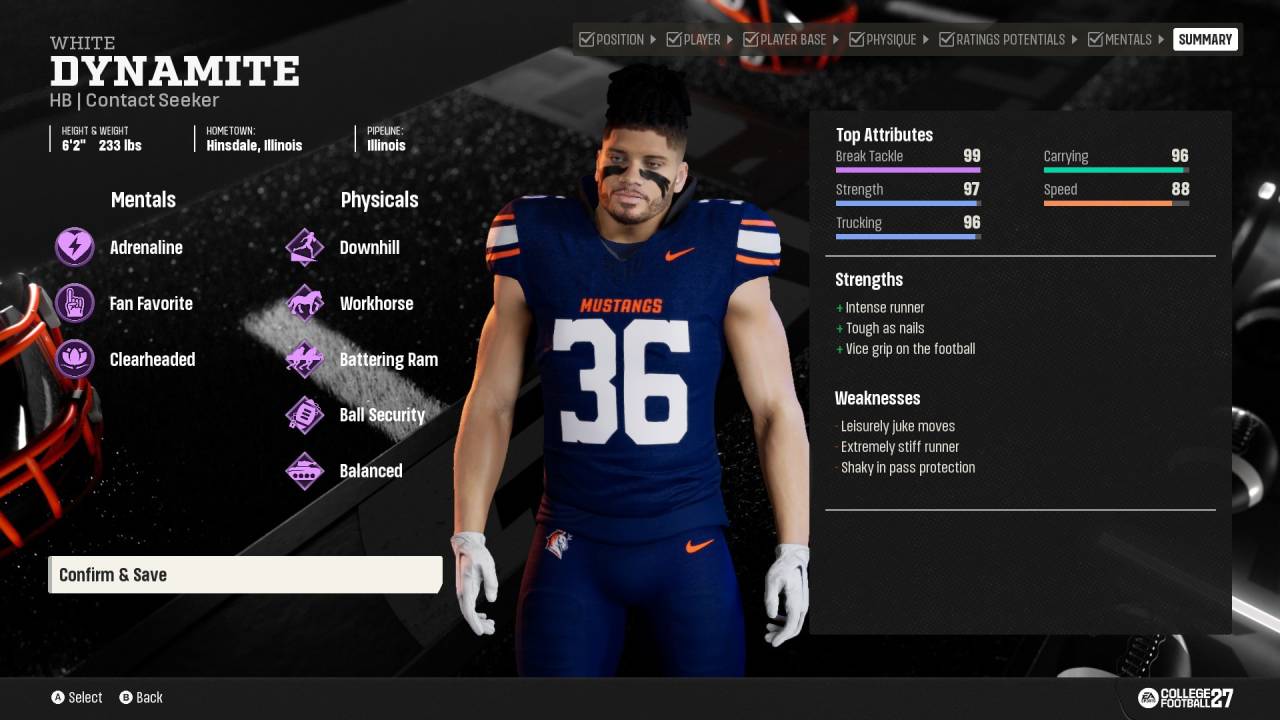
On its own, slower progression could have been defended as a balancing decision. Instead, it becomes difficult to ignore because the game also offers paid shortcuts that let you bypass much of that grind.
Road to Glory suffers from a similar issue.
Building your created player should feel like a rewarding journey where every improvement comes from your performance on the field. Instead, optional purchases allow faster upgrades in what has traditionally been an offline career experience.
Ultimate Team has always been built around microtransactions, so players largely expect them there. Seeing similar monetization extend into Dynasty and Road to Glory changes the entire conversation surrounding EA SPORTS College Football 27. It creates the impression that progression has been intentionally slowed to encourage additional spending, even if you never choose to buy anything yourself.
That frustration is amplified by several launch issues that affect Dynasty Mode. Recruiting logic occasionally breaks down, CPU-controlled schools make questionable recruiting decisions, and some long-requested features remain absent.
None of these problems completely ruins the experience, and many can likely be addressed through post-launch updates, but they arrive at a time when players are already questioning the game's progression systems. It's unfortunate because underneath those issues lies what could easily have been the franchise's deepest Dynasty Mode yet.
Presentation, meanwhile, continues moving in the right direction.
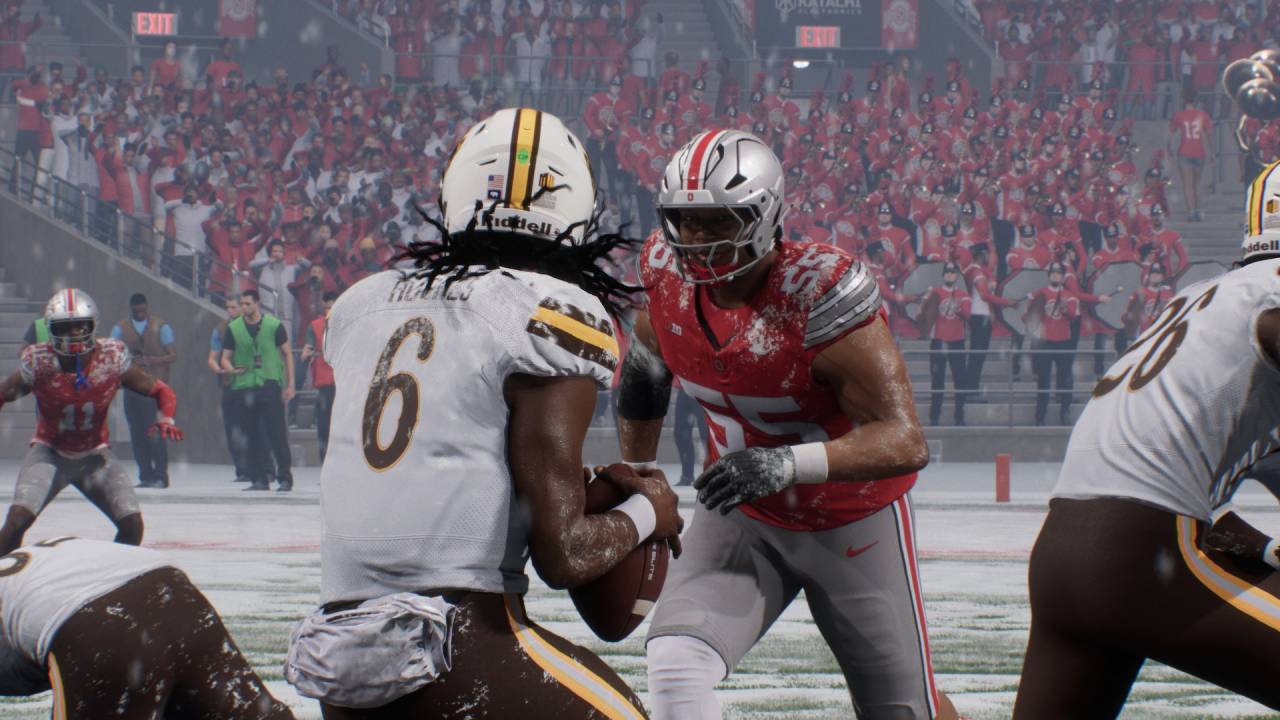
The atmosphere surrounding college football has always been one of the series' greatest strengths, and this year's release captures it better than ever. Improved lighting dramatically changes how stadiums look throughout the day, weather effects add more personality to individual games, and player models have received noticeable upgrades across the board.
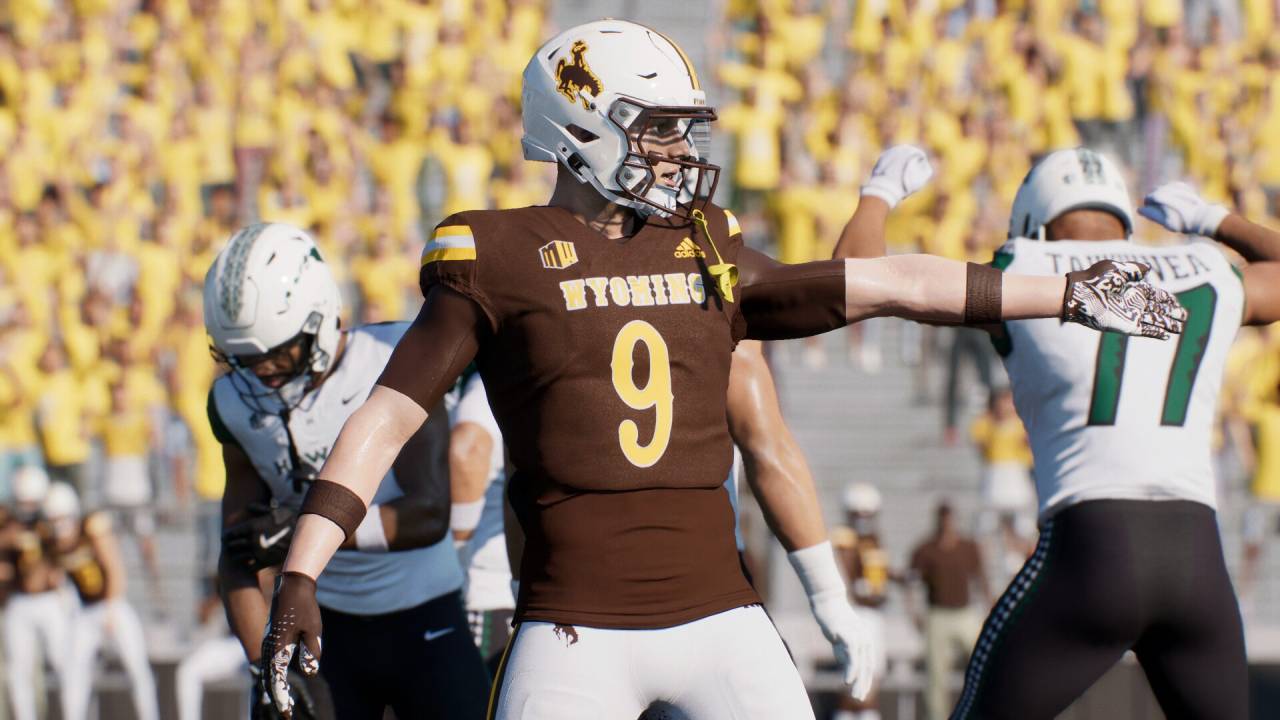
Equipment customization is also far more detailed, with realistic helmet placement, hanging mouthpieces, updated uniforms, and accessories that help athletes look much more like their real-life counterparts than ever before.
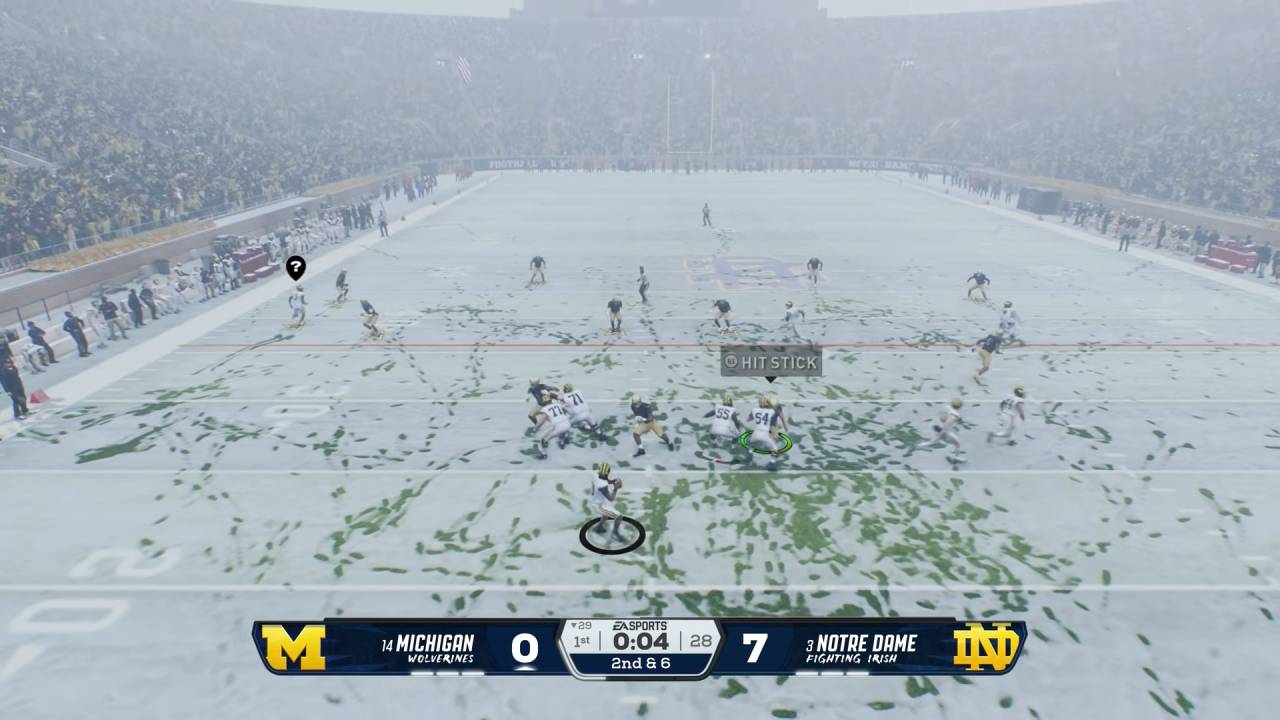
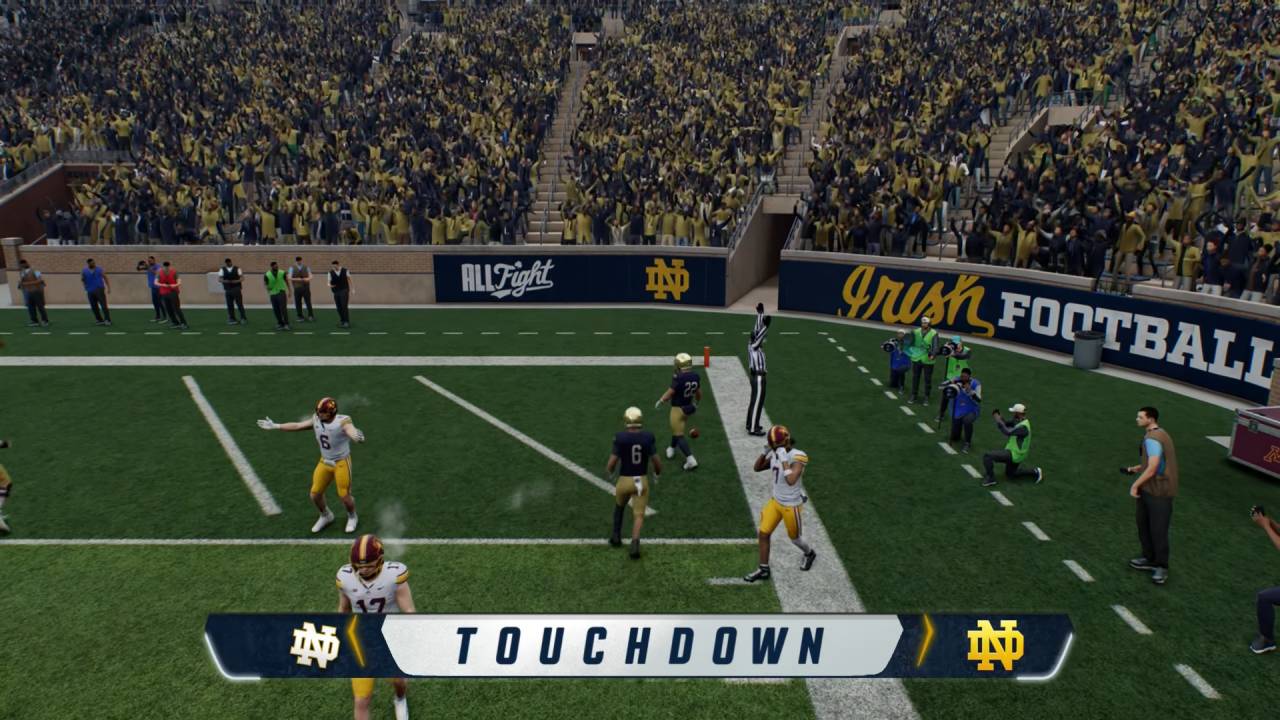
And the improvements don't stop with the look. The crowd reactions are more animated and sound louder, marching band performances are a standout on the soundtrack, and the stadium audio does a great job capturing the energy of Saturday football.
Big plays get explosive crowd noise, rivalry games are more intense, and every touchdown is celebrated appropriately. Commentary is still solid rather than spectacular, but it supports the action without becoming overly distracting during longer play sessions.
There are still a few shortcomings in the presentation.
Crowd models lag behind the quality of the player models; some broadcast elements remain repetitive, and small interface bugs occasionally appear throughout menus. Even so, EA SPORTS College Football 27 represents one of the biggest presentation upgrades the series has seen since its return. It looks, sounds, and feels far closer to an authentic college football broadcast than ever before.
What ultimately makes EA SPORTS College Football 27 so difficult to score is its sheer potential. On the field, this is arguably the strongest football game EA has produced since reviving the franchise.
The gameplay is smoother, the AI is smarter, Dynasty Mode is significantly deeper, and the presentation reaches a new level of authenticity. It clearly isn't a simple roster update, and the developers deserve credit for making meaningful improvements where players spend most of their time.
Unfortunately, those achievements are constantly marred by needless business decisions. Aggressive progression systems, controversial microtransactions in offline modes, and launch bugs keep this game from being the game it could've so easily been.
They don't spoil the great gameplay, but they do leave an uneasy feeling that some of the player's freedom has been sacrificed at the altar of monetization.
At $69.99 USD for the Standard Edition, EA SPORTS College Football 27 is still worth considering if you're passionate about college football.

If you're upgrading from College Football 25, you'll notice meaningful improvements across gameplay, Dynasty, and presentation. Players coming directly from College Football 26 will still find a better football game, although the leap feels far less dramatic. The value ultimately depends on how much those gameplay improvements matter to you compared to the frustrations surrounding progression and monetization.
EA SPORTS College Football 27 is a reminder that a game can be both genuinely impressive and genuinely disappointing. The developers have created a football experience worthy of praise for its smarter gameplay, deeper management systems, and outstanding atmosphere.
But the decisions about progression and microtransactions stop it from being the easy recommendation it should have been. If EA fixes those concerns in future updates and continues to build on this gameplay foundation, the series could finally reach the heights fans have been waiting for. For now, though, it's a very good football game that falls just short of greatness.
Senior Editor, NoobFeed
Verdict
College Football 27 delivers the series' best gameplay since its return, but deeper management systems are held back by frustrating progression and needless microtransactions. A strong step forward, just not the complete victory it should have been.
72
Related News
No Data.