
God of War: Sons of Sparta Review
PlayStation 5 Pro
A brave 2D prequel that looks at Kratos's childhood but struggles to live up to the series' legendary weight.
Reviewed by Azfar Rayan on Feb 18, 2026
A certain picture comes to mind when you hear the name "God of War." Large bosses. Combat that breaks bones. An angry anti-hero who cuts gods and monsters in half. Over the years, Santa Monica Studio made Kratos one of the most familiar characters in video games, first in the violent Greek tragedy and then in the calmer, more thoughtful Norse saga.
Because of its past, God of War: Sons of Sparta is a surprise game. Instead of another dramatic third-person epic, Mega Cat Studios has made a 2D action-platformer with a retro feel. It's mostly about Kratos when he was younger and learning how to be a Spartan, a long time before he turned into the Ghost of Sparta.
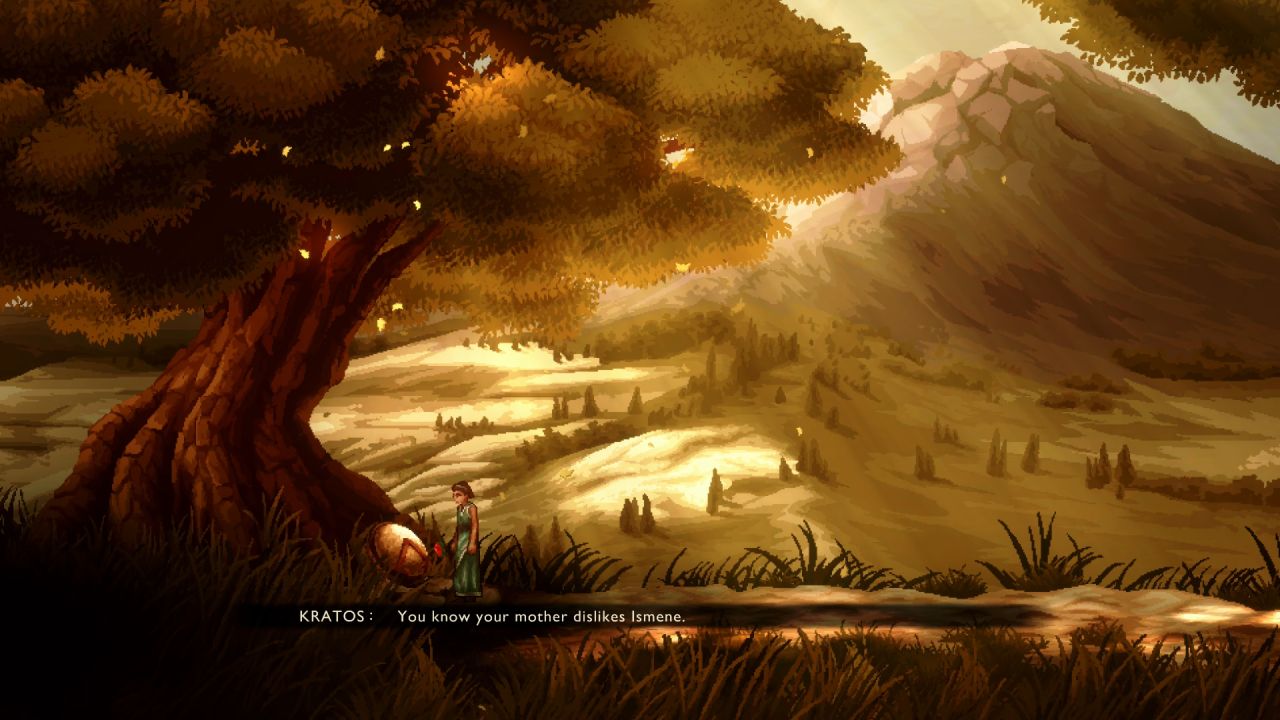
It sounds interesting on paper. A look at Kratos before his anger took over. More information about his relationship with Deimos. A change in theme that could give the show a new beat. But going against what has worked in the past is always risky, especially for a brand with such a long history.
It's set up like a story that an older Kratos is telling his daughter, Calliope. That setup makes me think of something quiet and personal right away. You're not far away and are watching a tale being made. You are being asked to join a story.
The story takes place during Kratos' time in the Spartan agoge, which was a harsh way to train soldiers that changed him. He is still young, following the rules, and trying to show what he can do. Deimos is with him, and their bond is what makes the game so moving.
A fellow cadet goes on a journey outside of Sparta and doesn't come back.
This is the start of the main plot. Because their world is so terrible, Kratos always thinks the worst will happen. Deimos, who is more rebellious and positive, tells him to look. What starts out as a mission to save someone turns into a bigger fight with mythical enemies that are waiting outside of Sparta. Seeing Kratos before the tragedy that makes him who he is is certainly interesting.
You know he's powerful, but he's not yet that strong. He stays true to the ideas of the Spartans. He obeys the rules. A few times a week, he even jokes around with Deimos. It makes him seem more like a person than in previous entries. Even though the idea is good, the writing isn't always up to par. It talks a lot, especially in the early hours, but not all of it is important.
There are times when talks go on for too long. There are emotional parts, but they don't always hit as hard as you'd expect from a God of War story. Deimos feels like a missed chance in particular. Fans who have been interested in his role for a long time may enjoy the extra screen time, but he's not really necessary for the game itself. The sibling bond is there, but it's not as strong as it could have been, which would have made this prequel stand out.
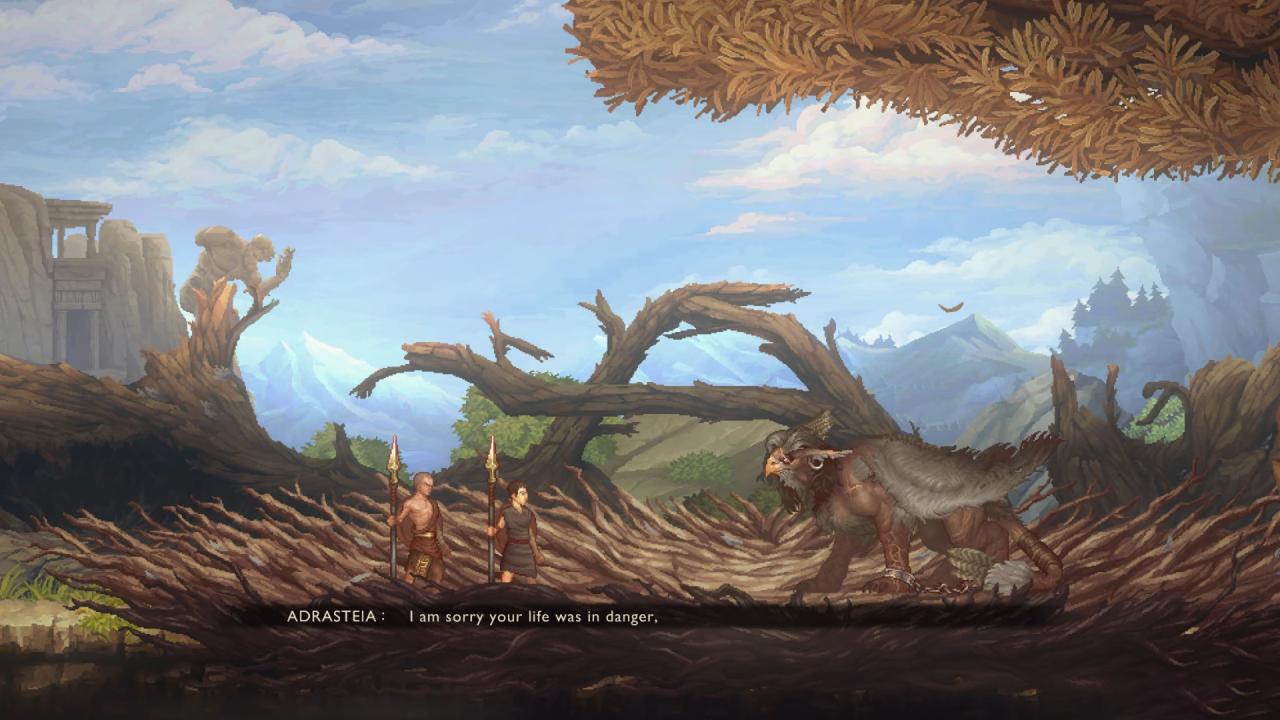
Kratos will be explained to you more. You'll get a sense of what makes him who he is.
But you might feel like the story should have taken more risks when you're done. Narrative isn't the biggest change here. It's about structure. In Sons of Sparta, cinematic third-person action is swapped out for a 2D Metroidvania style. You explore a big map that is all linked together. As you do so, you gain new skills that let you go back to earlier areas and find secret paths.
When you first start exploring, it seems easy. Moving through hallways, killing enemies, and performing light platforming tasks are what you do. But as more movement skills become available, the map starts to get bigger. Ledges that couldn't be reached before can now be reached. Secrets can be found on locked routes. Curiosity is rewarded with hidden rooms.
Being able to go back in time with new skills and finally opening that chest you saw hours ago feels good. It gives you a sense of success that you've worked for instead of being given to you. But benefits aren't always the same. A lot of the time, big bright chests don't hold cool new gear but instead craft supplies.
Materials can help you get better, but they don't always give you the thrill you're looking for after a tricky part of platforming. It's not as common to find new pieces of tools as it should be. Even so, the exploring loop as a whole works. It's not revolutionary, but it's good. When you play Metroidvania games, you'll naturally look around for secrets and go back to old places to get every upgrade.
Instead of the famous chained blades, the Sons of Sparta fight with a stick and a shield. Light strikes, dodging, blocking, and parrying are part of the basic moveset. At first, it seems almost too easy. Encounters can turn into pressing the same buttons over and over.
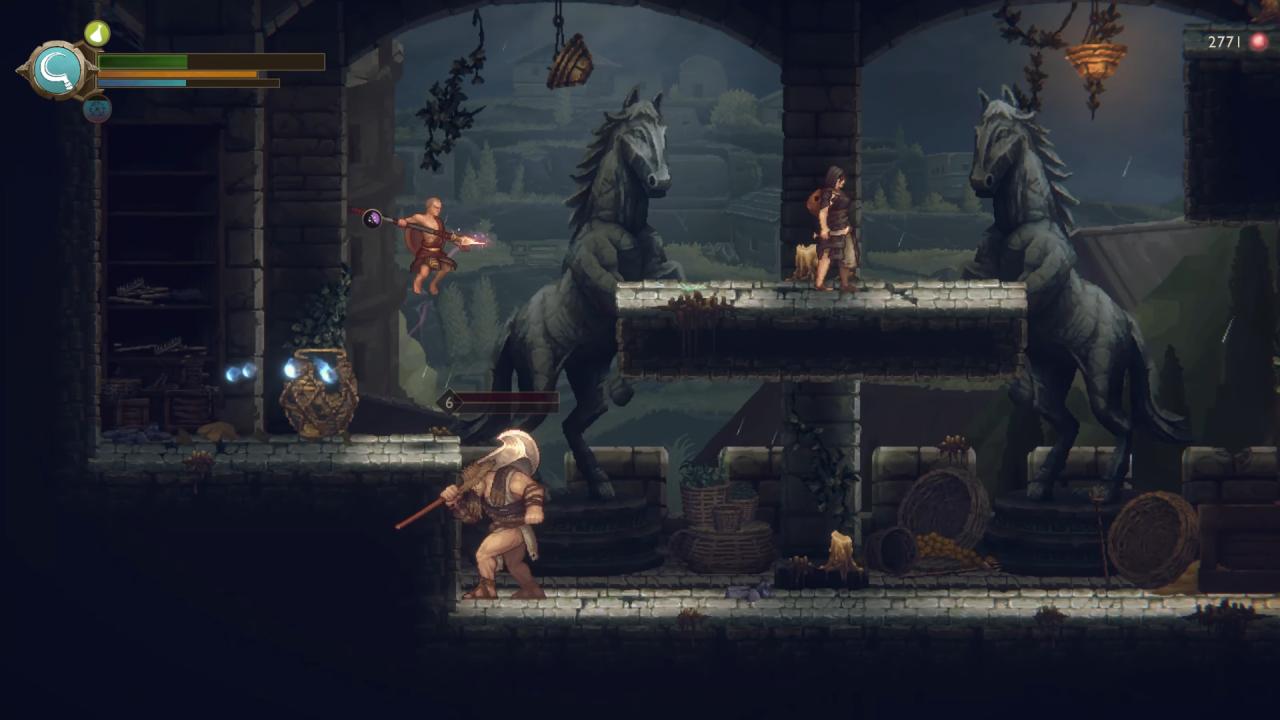
Things get easier as you go. You can change how the spear looks. Its function is changed by different parts. Passive bonuses are given by the tip. The handle changes how the combo works. Active moves like vertical slams and fast thrusts can be done with the pommel. It's a smart method that lets you customize things without making things too hard.
Color-coded signals let enemies know when they are going to attack.
You have to block some hits, parry others, and completely avoid others. Spirit-boosted strikes add another level of complexity. When you hit often, your spirit grows, which you can then use to make stun-focused attacks. If you fill up the stun meter, a brutal execution will happen that will heal you and return resources.
It looks like a well-thought-out loop on paper. It gets better with practice, but it never really feels fierce. It can be fun to block, especially when it slows down the action and lets you launch a counterattack. But the attacks don't always have the effect that you'd expect from a show that is known for being very violent.
The best parts are the boss fights. These multi-stage meetings need focus and the ability to spot patterns. They make you stay alert and test your fighting and platforming skills. Some bosses really do feel scary, especially when they add new abilities in the middle of a fight. These scenes most likely have the epic feel that the series is known for.
The form of the puzzle is pretty simple. You can expect environmental hurdles, timing-based platforming, and some logic problems. They are not mind-bending roadblocks; instead, they help keep things moving. You won't get stuck for hours with anything here, but that isn't always a bad thing. The main focus is still on moving and action.
One small problem is with the way the controls are set up. The only way to move is with the thumb stick, which can feel a little strange in a fast-paced 2D action game. There is also a button that is only for climbing steps, which doesn't seem to be needed. You get used to these quirks, but they are obvious at first.
Character development is directly linked to how well you do in battle. A skill tree that improves attacking combos, defensive moves, and special moves is built up through experience and resources. Some changes, like those that make defenses more flexible or use resources more efficiently, feel like they have to be done.
It's nice that the game has more than one level of challenge.
When you mess up on harder challenges, you get punished quickly, especially during boss fights. Taking care of your health and using spirits becomes necessary instead of a choice. It takes about ten hours to finish, which is pretty short for this type of game. Its short length works in its favor. The game doesn't drag on for too long, and the progress feels steady rather than sluggish.
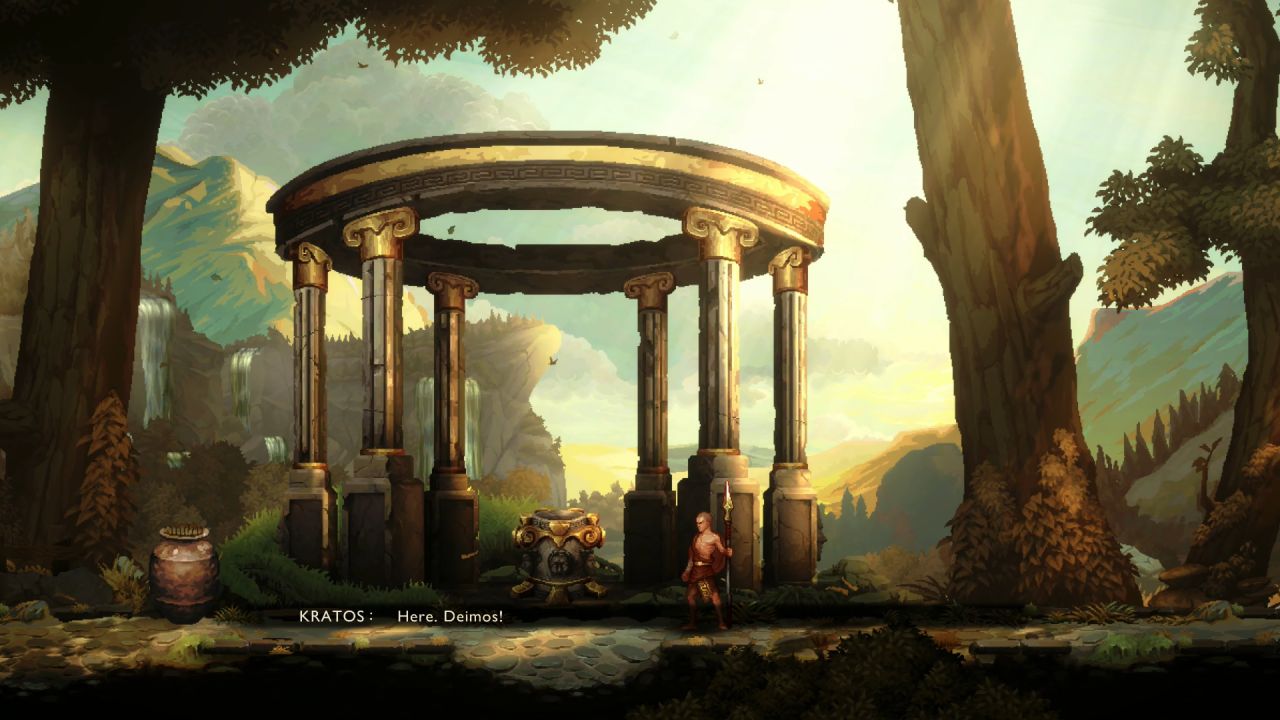
Sons of Sparta uses pixel art with a retro feel to make its graphics. Environments are complex, have many levels, and often have an atmosphere. There is a certain charm to ruins, woods, and arenas based on myths. Because enemy silhouettes are easy to see, combat can be read even when the screen is full of activity.
The art direction, on the other hand, stays safe. The backgrounds look good, but the figure models aren't always very well done. The soft color scheme works together, but it's not very strong. It's good enough and steady, but it doesn't really stand out. The framework works smoothly. Even when fights get crazy, frame rates stay stable, and load times are quick. For the most part, it works well.
Sound design stands out more than expected. Attacks make a difference. The sounds of parry have a sharp, rewarding edge to them. The music has some mythical sounds to it without being too much.
Voice acting gives more weight to the story's structure. The small talk between Kratos and Deimos can get boring at times, but it gives bland parts of the story personality.
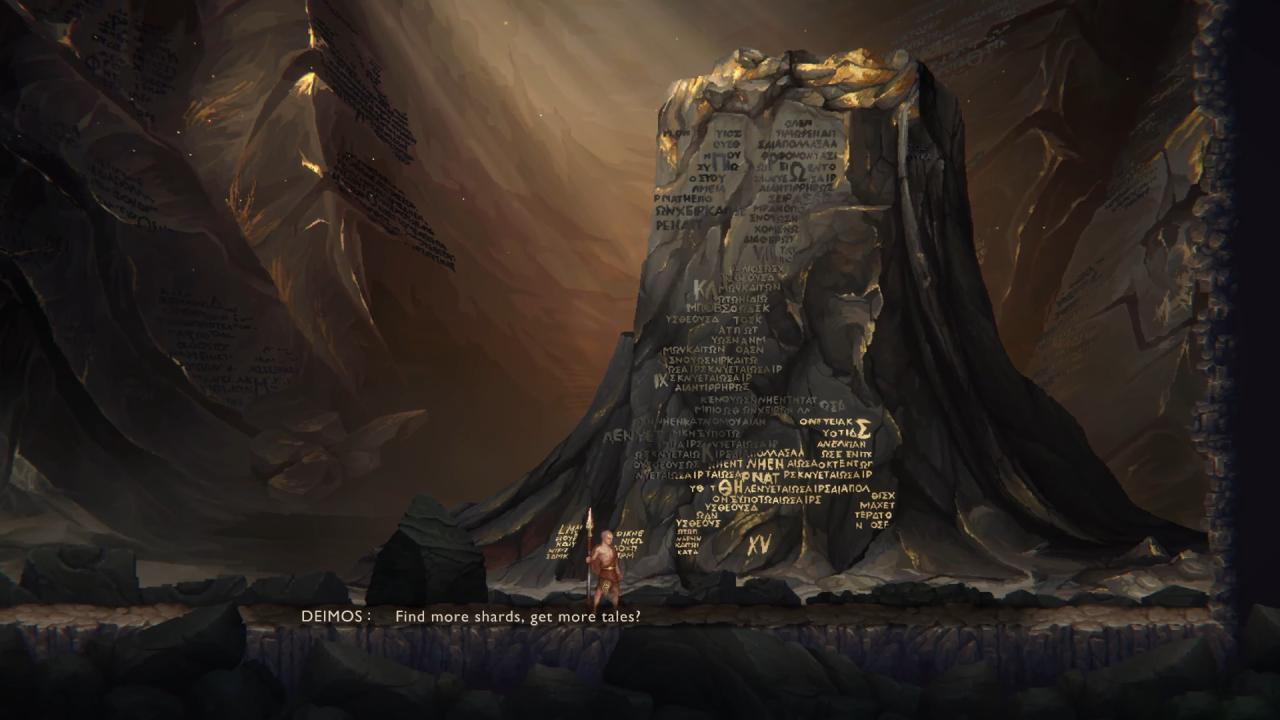
Audio does a lot of work and can make scenes better that might not look their best.
The game God of War: Sons of Sparta isn't bad. It was carefully put together, works well automatically, and is sometimes fun to play. Exploration is useful. Boss fights are great. The progress feels steady.
But this is a brand that came from breaking new ground. In this place, desire seems limited. When you fight, it's not as intense as you might hope. Even though the story is full of interesting ideas, it doesn't always make you feel something. The retro look is cute, but it's not very bold.
You can enjoy it more if you think of it as a smaller-scale side story instead of a major evolution. There will be a change in how you see Kratos. You'll see parts of his early life that help you understand how he changed later on.
Senior Editor, NoobFeed
Verdict
Despite enjoyable boss battles and exploration, this 2D precursor falls short of the emotional and technical heights one would expect from a God of War game. Playing God of War: Sons of Sparta is enjoyable, but it won't stick in your memory.
78
Related News
No Data.