
Gradius Origins Review
PC
A legendary collection of shoot 'em ups reborn.
Reviewed by Adiba Manha on Aug 26, 2025
There was an instant feeling of déjà vu when it was announced that Konami would be releasing Gradius Origins, a collection that included a sizable portion of their most renowned shoot 'em up franchise. Ultimately, wasn't this accomplished six years prior with the Arcade Classics Anniversary Collection? Along with other arcade classics, that bundle included a few Gradius games. It made people wonder if Gradius Origins would seem like little more than a derivative repackaging and if it would recycle too much.
The response is surprisingly straightforward: absolutely not. The collection that Konami and M2 have put together here is significantly more thorough and significant; it honors and protects the Gradius and Salamander series' past in ways that go well beyond simple nostalgia. It is a well-curated collection of iconic shoot 'em ups that have influenced the genre for decades, not just another arcade anthology.
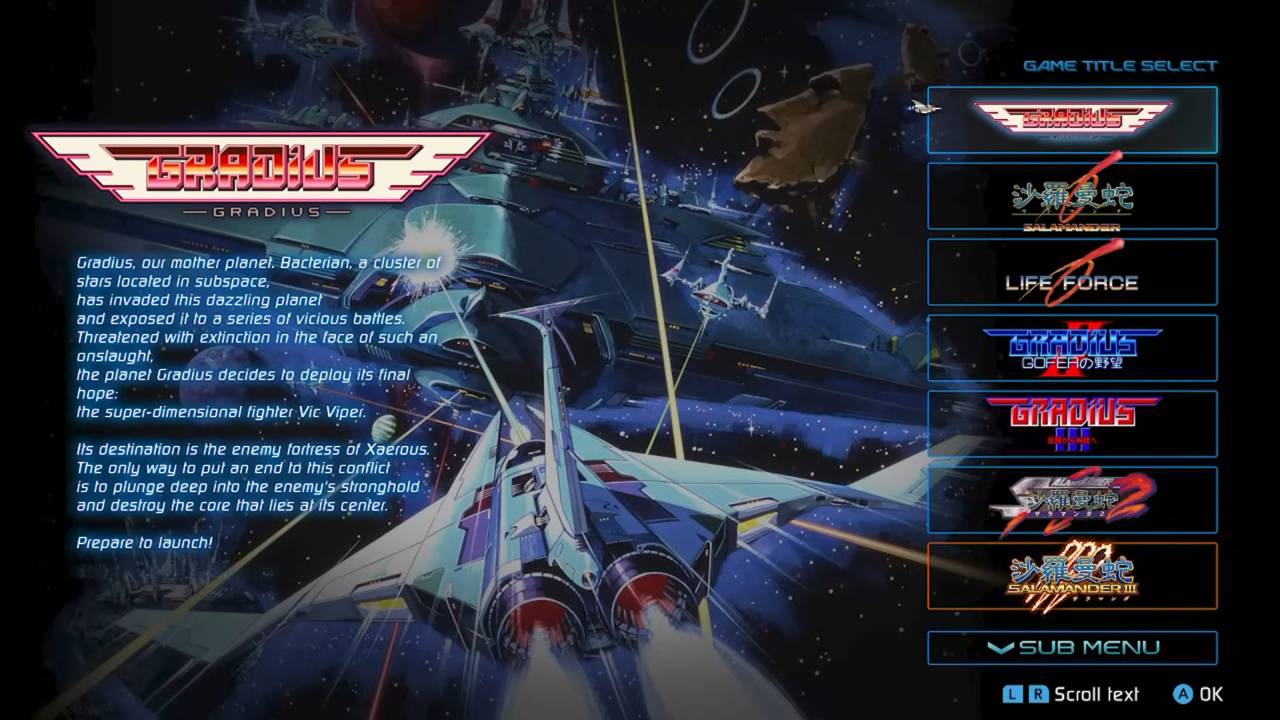
Although there has never been much plot in the Gradius series, its mythos has endured as a familiar touchstone among shmups. You take control of the fabled Vic Viper, humanity's final defense against extraterrestrial dangers, as you engage in combat with several enemies and biomechanical monsters.
You take control of the Lord British ship in the Salamander series, which adds its own flair while staying closely connected to the Gradius universe. Even though the major plotlines are straightforward—protect your world, destroy enemy bosses, and continue forward into dangerous space—they are nevertheless recognizable. The arcade appeal is enhanced by the absence of a strong storyline, not a drawback.
With each level designed like a gauntlet, these games rely on unadulterated gameplay, imaginative enemy designs, and the rush of survival. While the action actually recounts the true story, the lore only serves to pique your interest. Gradius Origins' flawless gameplay loop is its main feature. The D-pad or stick, which has three primary functions—firing your regular weapon, launching missiles, and triggering power-ups—is used to operate your ship.
Gradius is unique because of its renowned Power Meter system. Power-up capsules move through a bar at the bottom of the screen as you gather them. The next step is to strategically determine when to activate them. Do you take the chance of waiting for a laser, gain a speed boost right away, or rely on calling forth strong Options to get more firepower?
The distinctive feature of the series is this mechanic. Although it offers you control over your upgrading path, it also necessitates risk management and foresight. It gives you unparalleled flexibility, allowing you to adjust your approach to each phase while continuously anticipating your next move.
Boss fights are just as famous. Tearing off each enormous opponent's weak place, which is typically a bright core, gives you a great sense of accomplishment. These confrontations serve as exciting set pieces that break up the constant barrage of dangers and adversaries. Yes, they are challenging, but they also reward accuracy, memory, and judicious use of your power-ups.
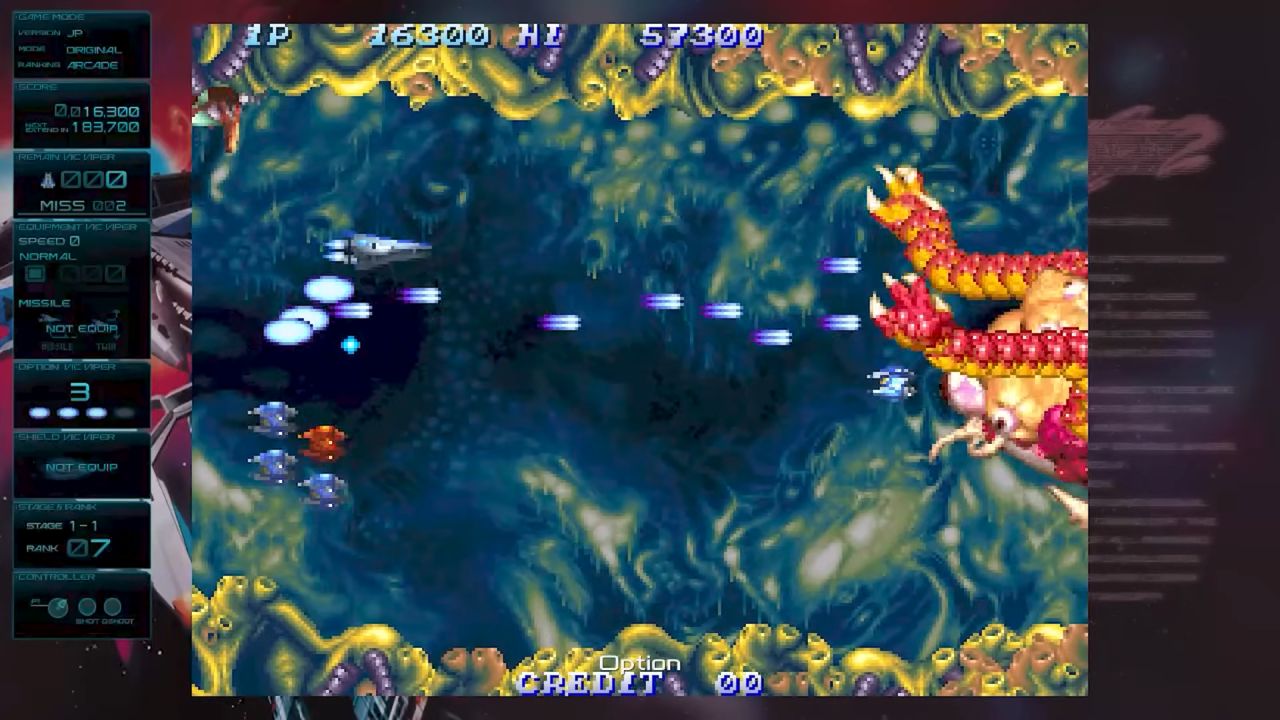
The Salamander games take a different tack. Power-ups start right away when the vehicle is picked up, rather than cycling through a power meter. With the ability to stack skills and become a screen-clearing force, this drastically changes the tempo and makes for more chaotic, action-packed gameplay. In order to keep things interesting and surprising, the Salamander series also alternates between horizontal and vertical stages in its level design.
More importantly, the first Salamander abandoned Gradius' turn-based alternating system and introduced cooperative multiplayer. A whole new level of complexity is added by cooperative play, as you and a teammate dodge enemy fire together, protecting one another's vulnerable areas and taking pleasure in mutual devastation.
In Gradius Origins, fighting involves more than just shooting; it also involves space management, pattern recognition, and quick decision-making. You must master challenging level layouts with environmental hazards like closing walls and unexpected enemy formations in the Gradius games, which place a strong emphasis on accuracy. Although the need for memory can be discouraging, conquering these challenges is gratifying.
In contrast, the Salamander titles welcome turmoil. You may swiftly build up your firepower and feel unstoppable thanks to their pickup-based system—that is, until Gradius Origins unfairly ambushes you. Sometimes it can be annoying, particularly when foes appear in blind corners or the level design abruptly destroys you. However, Gradius Origins faithfully captures the unfairness that was a hallmark of arcade culture.
In the context of contemporary role-playing games, advancement is achieved by mastery rather than through XP or grinding mechanisms. You learn how to control the Power Meter to fit your playstyle, hone your reflexes, and commit patterns to memory.
Training modes, rewind features, quick saves, and even invincibility modes are included to let you practice and get better without having to deal with the arcade's never-ending coin-feeding annoyance. These enhancements do not diminish the experience; rather, they make it more approachable without lessening its basic elements.
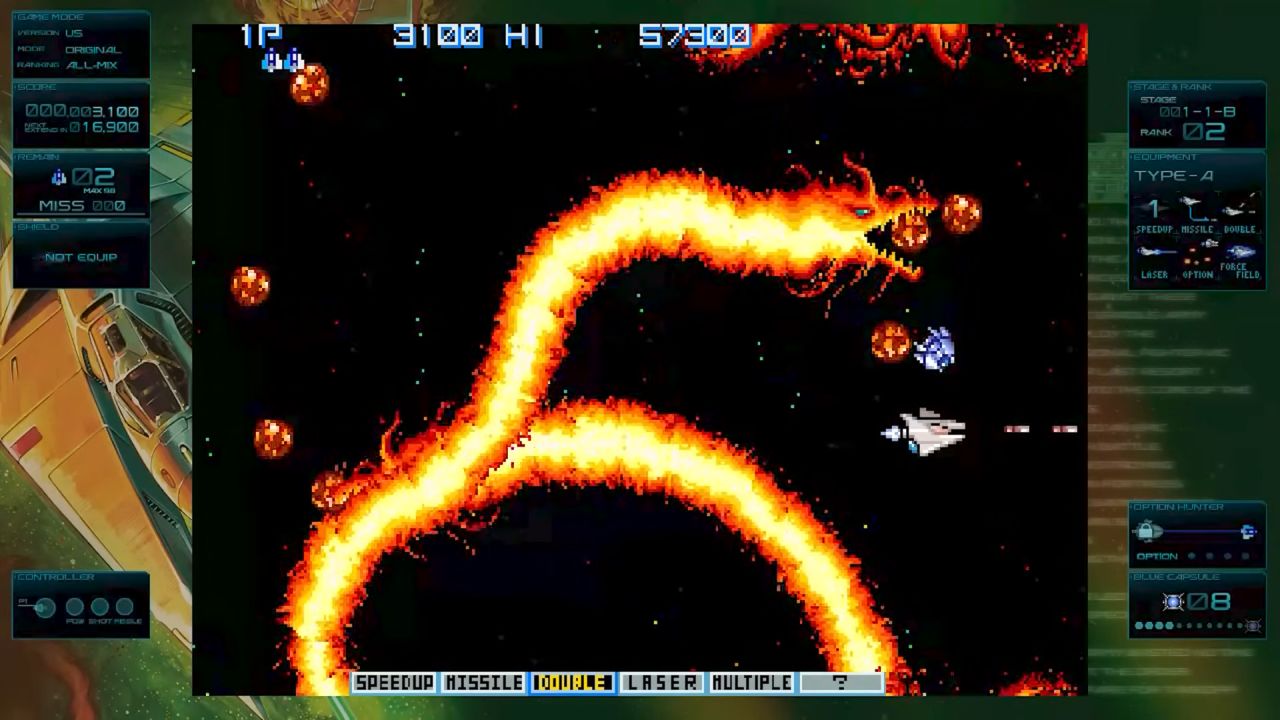
In addition to their technical skill, each game has a unique charm that captures the aesthetics of its time period. With their striking color schemes and chunky sprites that retain their individuality to this day, early Gradius entries have that distinctive 80s arcade aesthetic.
You can see how the designs got more ambitious as you move into Gradius III and Salamander II, adding larger enemy sprites and intricate backgrounds to create a spectacle-filled screen. With the presentation options accessible here, you can truly appreciate that visual journey in a way that feels timeless and authentic. The shift across the collection almost feels like seeing the evolution of arcade artistry.
Gradius Origins is visually impressive because it achieves a harmonious mix between careful presentation and accurate replication. The sprites are still clear, vibrant, and very vintage, but they gain from excellent scaling and filtering choices that look great on contemporary screens. You may adjust the appearance to your preference using CRT filters, backgrounds, and personalization options.
The new title created especially for this collection, Salamander III, is the highlight. While pushing spritework and effects farther than its predecessors, its visuals maintain the nostalgic vibe. It's one of the most visually stunning shoot 'em ups in the bundle because of its vivid explosions, intricate enemy designs, and incredibly creative stages. There is an unquestionable artistry here that has aged nicely, even without the visual bells and whistles of today.
Gradius has always relied heavily on audio design, which Gradius Origins expertly maintains. Every action provides that pleasant feedback, and the sound effects—laser blasts, missile launches, and shield activations—retain its arcade punch.
Each game has a memorable soundtrack that heightens the excitement of each stage, demonstrating the equal importance of music. The collection captures a wide variety of arcade soundtracks, from the experimental energy of Salamander II to the pounding beats of Gradius III. Salamander III's music is particularly noteworthy because it successfully combines an authentically old vibe with upbeat new songs that blend in perfectly with the film's history.
The program also includes galleries of instruction cards, sketches, and design documents, as well as museum content that allows you to listen to soundtracks whenever you want. This degree of archiving care is remarkable for gamers interested in gaming history.
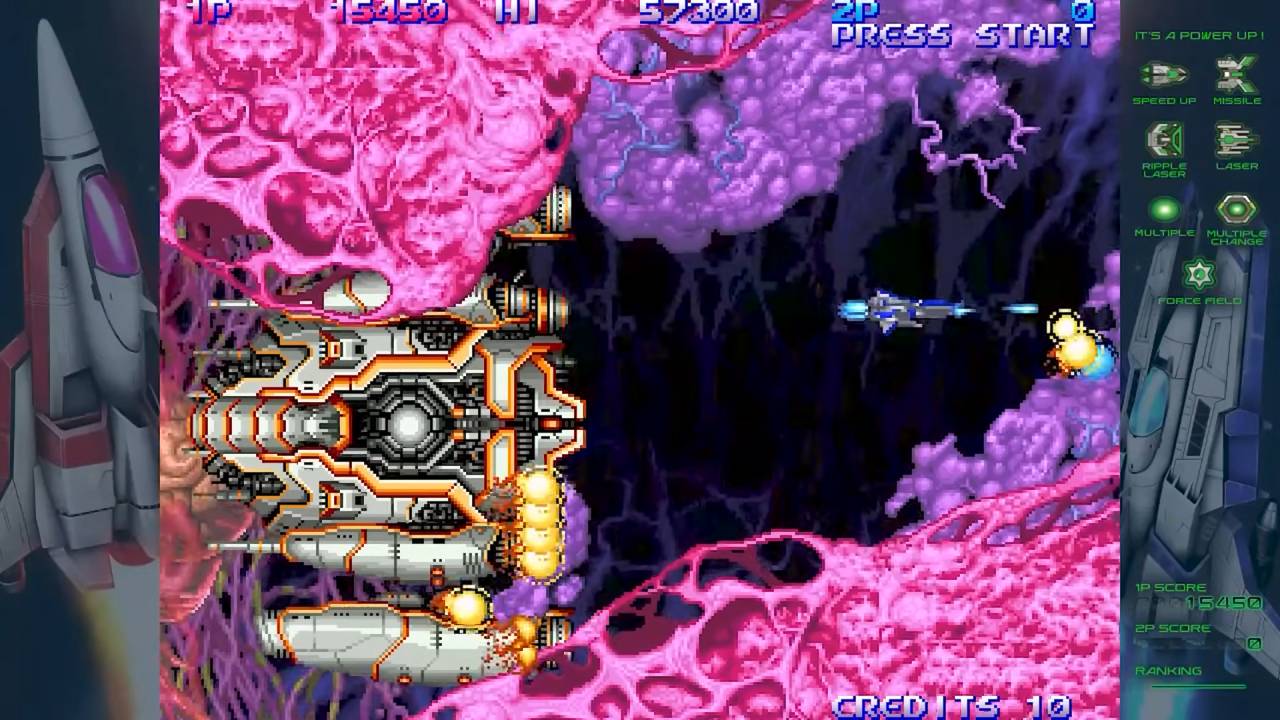
Gradius Origins is not just another anthology. In many respects, it's a rebirth of Konami's most recognizable shmup series, as well as a celebration and preservation effort. It exhibits an unparalleled degree of comprehensiveness by incorporating not only a number of games but also their regional versions, prototypes, and upgrades. The experience is exquisitely completed by the extras, which include practice modes, leaderboards, quick saves, replays, and even oddball achievements.
Although it's disappointing that several fan favorites like Gradius IV, Gradius Gaiden, and the MSX entries aren't included, the sheer value of Gradius Origins isn't diminished. Even though the Salamander series' spikes in difficulty can be annoying, they are counterbalanced by the accessibility elements that make this package suitable for both beginners and experts.
Fundamentally, Gradius Origins demonstrates that arcade shoot 'em ups are still popular. The audio still sounds good, the graphics are still strong, and the gameplay is still tight. This package celebrates the past while preserving it for the future, and the icing on the cake is Salamander III, a brand-new game that proudly stands beside its predecessors.
Editor, NoobFeed
Verdict
Gradius Origins is an essential game for anyone who enjoys fast-paced, skill-based action, classic shoot-'em-up lovers, and new players interested in arcade history. It's Konami and M2 at their finest, dedicated to nostalgia.
73
Related News
No Data.