
Graphite Review
PC
A hand-drawn world where every fight, choice, and heartbeat comes straight out of a kid's notebook.
Reviewed by Adeela Tas on Aug 17, 2026
Graphite comes from RipRed, a Colombian studio, published under indie.io. It's the kind of game that hooks you fast and doesn't let go for hours on end. It made its way onto Steam recently, though anyone curious could already try a free demo covering the opening act before deciding to buy the full thing.
What grabs you first about Graphite isn't a mechanic or a stat sheet; it's the premise. You're not dropped into another generic fantasy kingdom. Instead, you're pulled into a world built out of pencil lines, spiral-bound paper, and whatever household odds and ends a kid could find lying around at night.
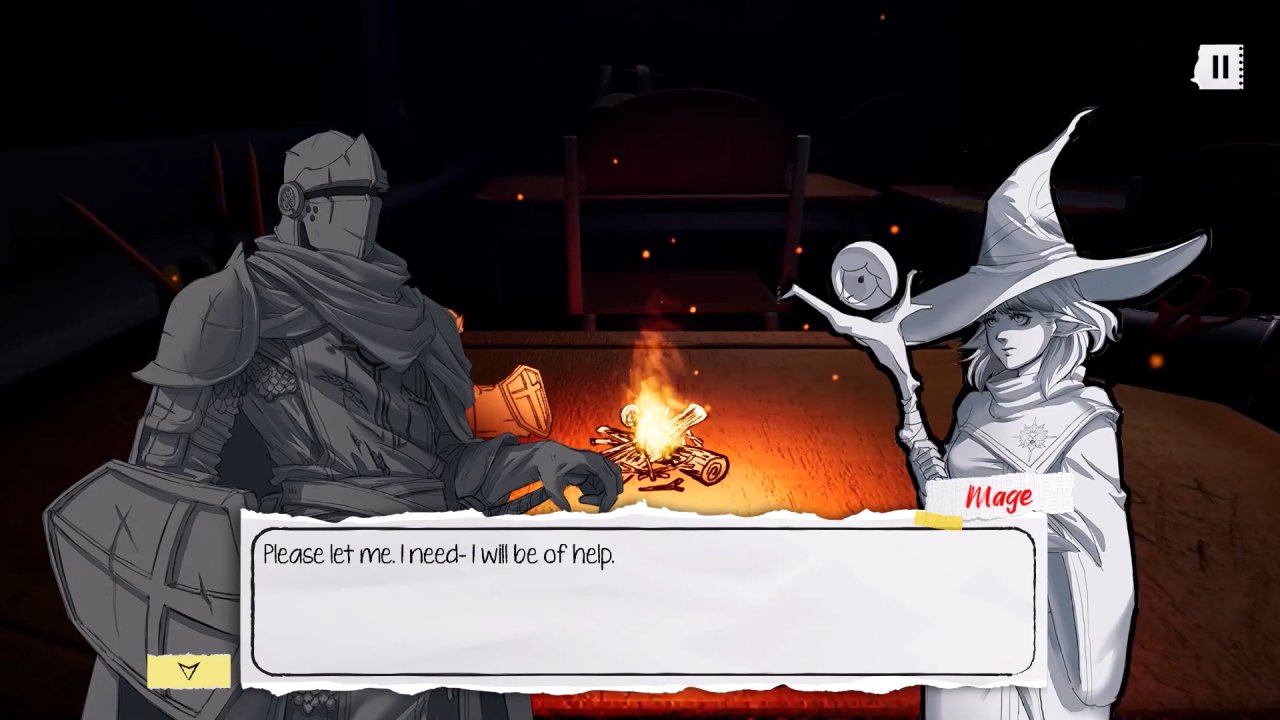
Underneath the pencil lines, though, sits a real story: seven heroes, a looming threat, and a mystery about who's drawing it all.
Every hero, monster, and battlefield in Graphite looks like it was sketched into existence one late evening, and that idea shapes everything else about the experience. There's a real sense of dramatic irony running through the whole thing too, since none of the heroes or monsters you meet ever realize they're figments of somebody's imagination.
They chase prophecies, forge alliances, and take every stake completely seriously, even though you're always aware of the bigger picture sitting just outside the page. That contrast between how seriously the characters treat their own world and how humble that world actually is gives the whole opening hours a strange, endearing pull you won't expect going in.
Once you're actually playing, Graphite's story pulls you in through a mysterious figure called the Scribe, who sets seven heroes on a path to grow stronger and band together before something called Death eventually catches up with them.
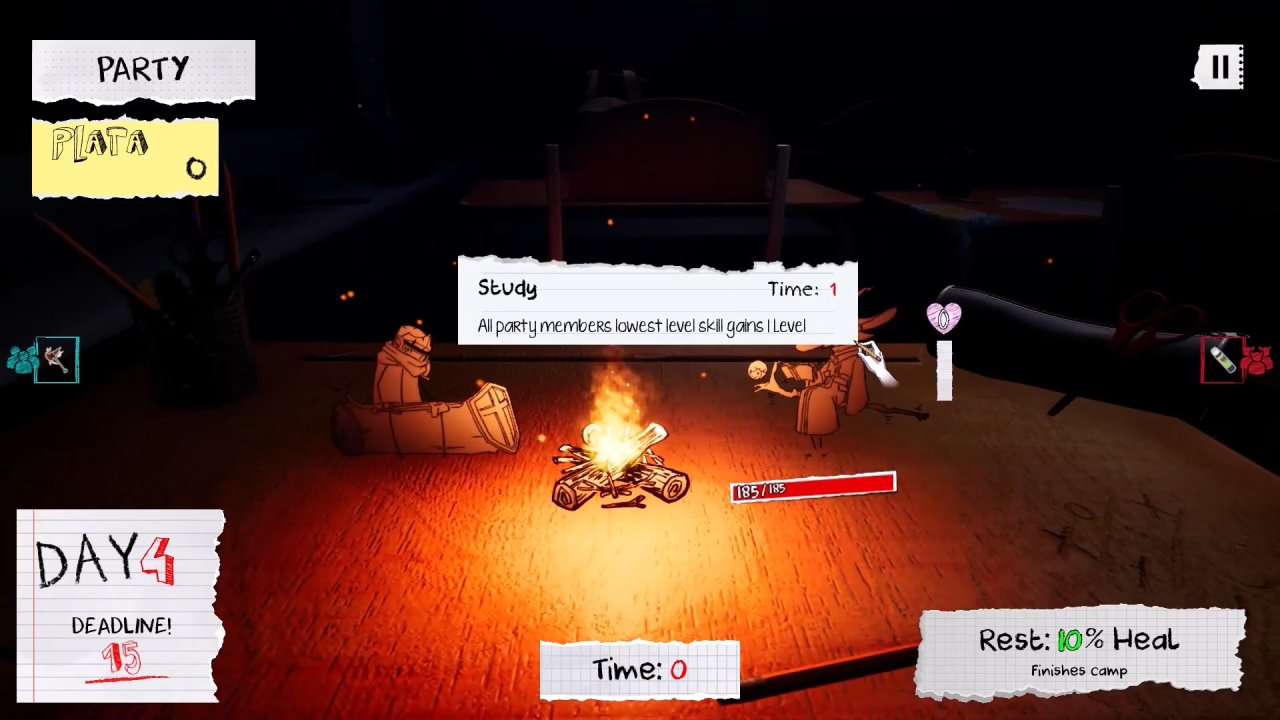
You begin as the Warrior, a straightforward sword-and-shield type, and you slowly recruit the rest of the cast, including the Mage, Rogue, Hunter, Monk, and Bard, by spending time with them around campfires between runs. As you build up friendship with each hero, you start to realize none of this is as simple as heroes-versus-monsters.
Look closer, though, and each hero turns out to be carrying more than just a sword.
Every character in Graphite is quietly standing in for a piece of the child who's imagining this whole world. You'll notice traits like grief, courage, insecurity, and hope woven into their personalities rather than just handed to you as backstory.
The Scribe and Death both show up at key story beats, and there's clearly more meaning simmering under the surface about who the Scribe really is, even if the game doesn't spell it out directly by the credits. You get most of this characterization through short conversations tied to how close you've grown with each hero, so the more time you spend building friendship at the campfire, the more of their personal history gets handed to you.
It's a slow reveal rather than a dump of lore all at once, and you'll want to push runs further just to unlock the next piece of somebody's backstory. Mechanically, Graphite plays like a roguelike at its core, meaning every run resets your heroes' equipment and progress while letting you carry over a few permanent unlocks. Friendship earned at the campfire is really the only lasting progression system here.
Leveling up your bond with a hero doesn't just make them playable in future runs; it also hands you passive bonuses, like the Rogue bringing extra artifacts into a run or the Warrior granting the whole party bonus health. Beyond that, you're mostly working with what you draw and earn inside a single expedition.
Beyond that expedition, three decks decide how your run actually plays out.
You'll pull cards from a tarot-style deck to trigger story events, pull from a separate deck for combat encounters, and, if you're willing to spend your earned currency, pull from an artifact deck to boost your heroes further. If straight-up tactical combat isn't your thing, Graphite also gives you an auto-battle toggle, though don't expect the AI to plan things out as carefully as you would yourself.
There's also a surprisingly deep difficulty tuning system tucked away in the options, letting you adjust something like a dozen or more individual settings, from how many artifacts you're offered to how aggressively enemies scale, so you can push a run anywhere from painless to nearly unwinnable.
That level of control means a rough run isn't necessarily the game being unfair; it's usually a setting you dialed up yourself. Between runs, the currency you've earned carries a bit of weight beyond just buying artifact pulls, since it feeds into how much you can afford to gamble on bigger draws later in an expedition.
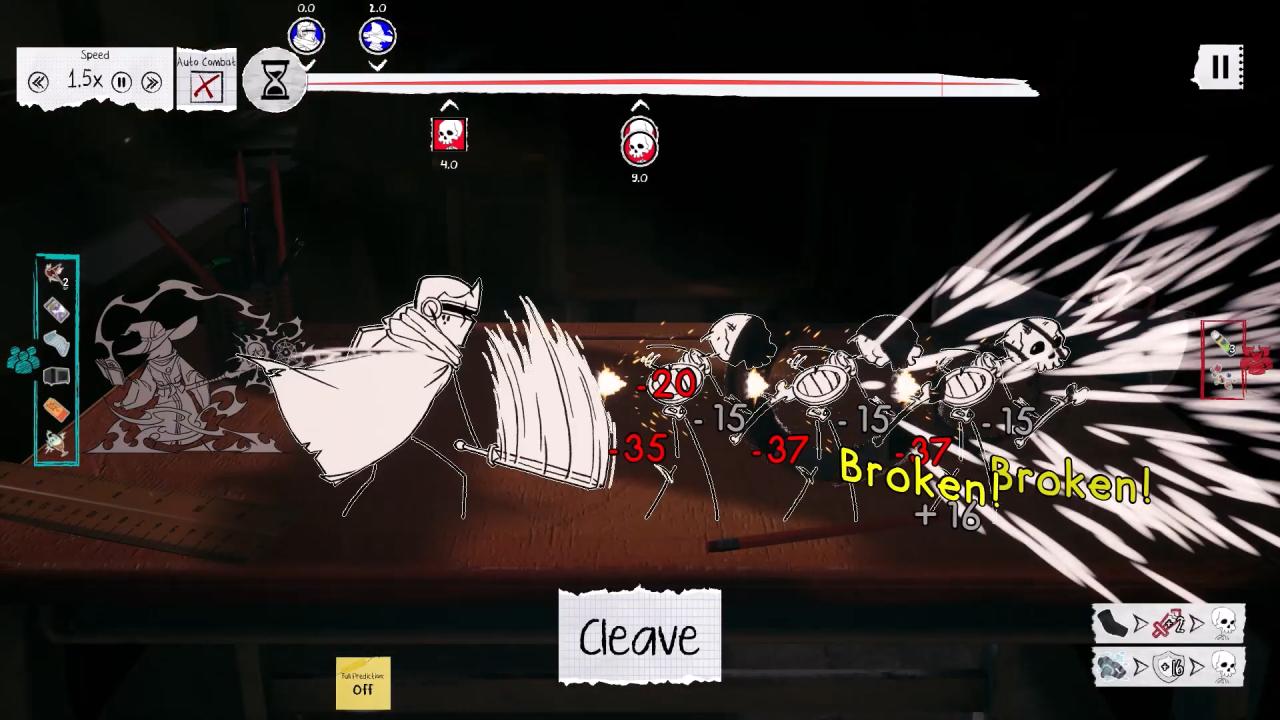
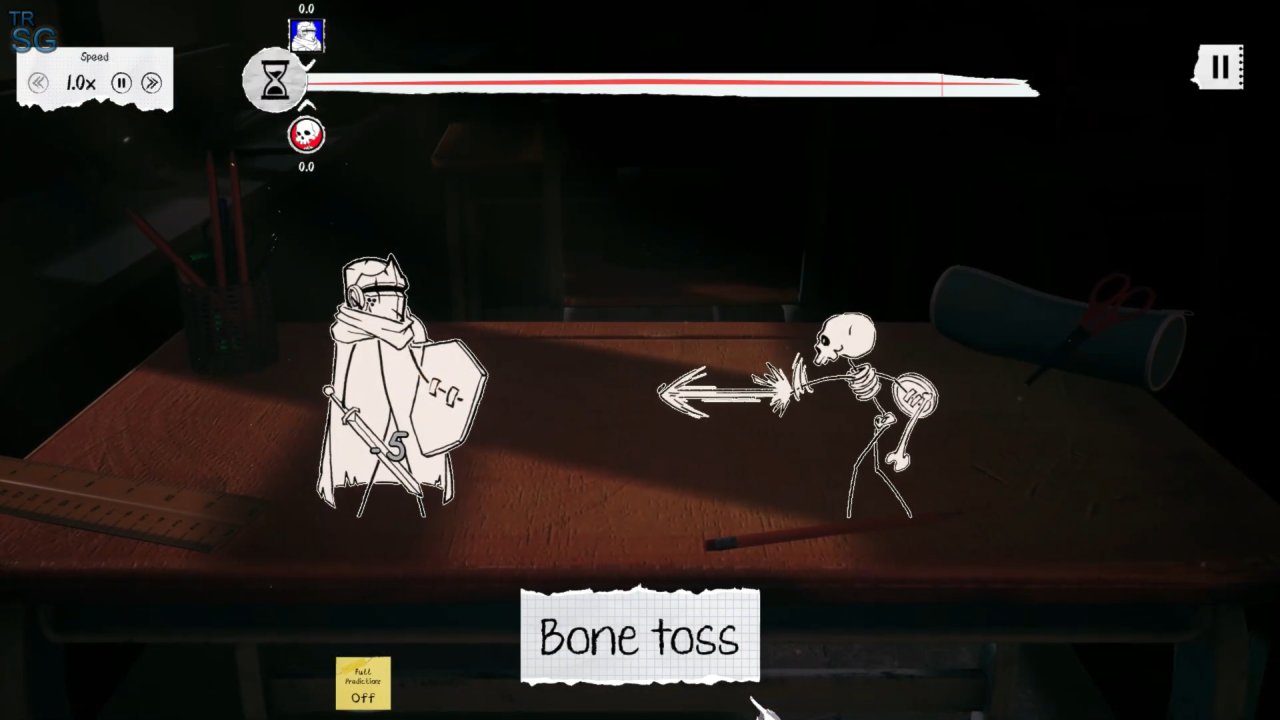
Combat in Graphite is where the game asks the most of you, and it's built entirely around a shared timeline rather than the usual take-turns setup. Every skill or attack, yours or the enemy's, takes a certain amount of time to actually go off, and Graphite shows you exactly what your opponents are lining up to do before it happens. That visibility is the whole game.
Knowing the plan is one thing. Timing your response to it is the real test.
You're constantly deciding whether to rush an attack in before an enemy's big hit lands, hold back and block at the right moment, or use a Break ability to knock their upcoming move further down the timeline and drain away some of its power. The catch is that enemies have access to the exact same toolkit you do, so any advantage you create for yourself can just as easily get turned around on your own party later in the fight.
Watching the timeline stays manageable when you're facing a single enemy, but once you're up against a full trio of monsters who are all queuing up abilities at the same time, keeping track of everything gets genuinely hectic in a way that keeps you leaning forward instead of coasting through fights.
Where the combat clicks best is in how deep the synergy can get. As you unlock new hero skills using points earned after battles, you start chaining Breaks together, stacking artifacts with no real ceiling on how many you can pile onto one character, and finding combinations that snowball into genuinely wild power spikes.
A single wave of artifact pulls can double your party's strength almost instantly, and that kind of swing feels appropriately absurd given the whole thing is supposedly happening inside a kid's imagination. The downside shows up once you start comparing heroes directly.
Some heroes handle that swing better than others.
Graphite doesn't hide the fact that some characters, particularly the Hunter and, to a lesser extent, the Rogue, hit noticeably harder than the rest of the cast, which makes defensive or support-leaning heroes feel like a rougher ride the further you push difficulty. Boss encounters against Death and company can spike hard too, especially once enemies have had a chance to pick up their own artifacts and abilities over the course of a run.
Graphite doesn't really lean on traditional experience points so much as it leans on choices you make mid-run. Every fight you win hands you skill points to spend on new hero abilities, and finding synergy between those abilities is really how your characters grow stronger over a single expedition, rather than any kind of slow numeric grind.
Artifacts work the same way. The more you pull, the more your builds compound, but enemies are scaling right alongside you, so power never feels like it's purely in your favor. The tarot event deck technically offers a bit of healing and other perks along the way, but those event pulls tend to pay off less than simply taking another fight, aside from your very first draw of a run, which is consistently worth grabbing.
It's a clever risk-reward idea on paper, though the actual math behind it currently nudges you toward avoiding events more often than embracing them. On top of that, the pool of events themselves starts repeating after a handful of runs.
The events and artifacts might repeat, but the pencil-and-paper look never does.
The sense of discovery you get from the tarot deck early on fades a bit once you've seen most of what it has to offer. The same goes for the artifact pool. It can start feeling familiar even when the combinations technically stay fresh. Visually, Graphite absolutely nails its central gimmick.
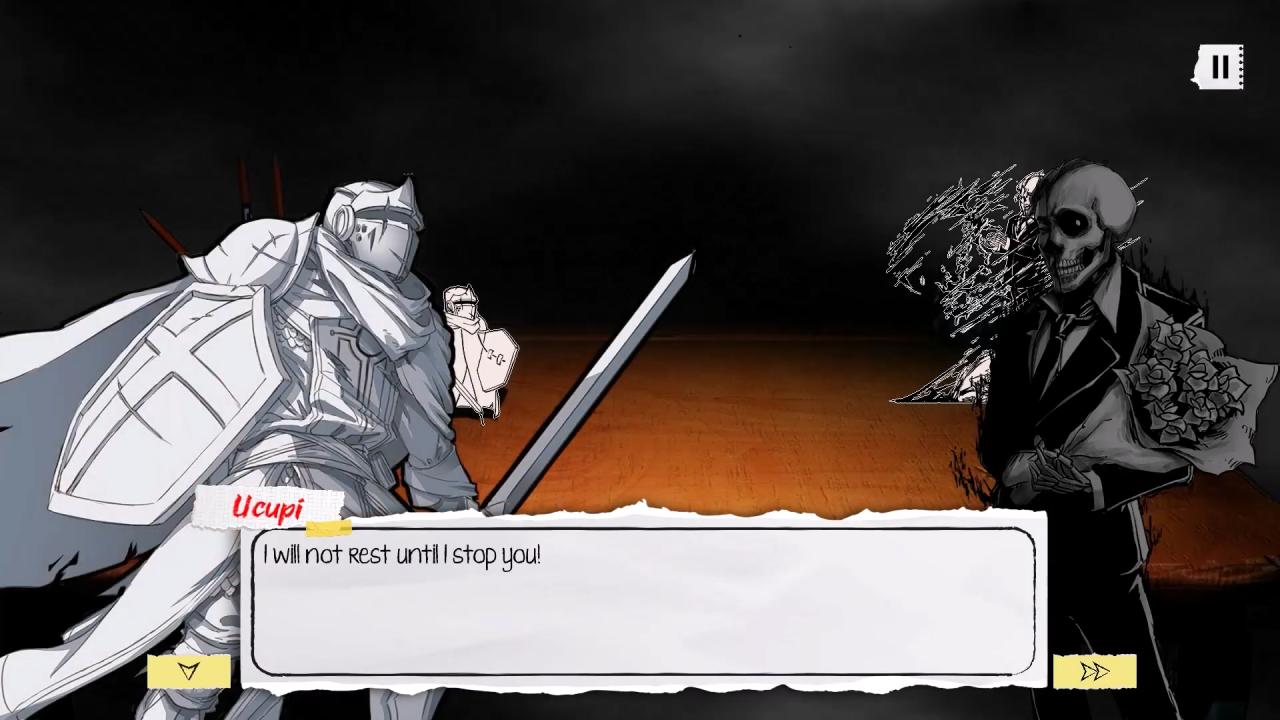
Everything looks hand-drawn rather than digitally assembled, with pencil textures and paper grain giving the whole world a genuinely handcrafted feel. Cutscenes lean into full-grayscale character art, while combat trims things down to simpler stick-figure silhouettes, and there's a neat touch: scenes set deeper into the fantasy side of the story get noticeably more detailed artwork than the more grounded moments.
Hero and monster silhouettes are distinct enough that you can read a fight at a glance, and campsite scenes carry a genuine charm that fits the whole notebook concept. That said, the simplicity of those character cutouts doesn't always sit comfortably next to the busier combat arenas, and a fair number of the artifacts you collect look like they wandered in from a completely different game rather than sharing the established art language.
Even with that small inconsistency, the overall presentation still feels cohesive enough to sell the idea that everything you're looking at was drawn by hand rather than built out of stock assets, and that authenticity carries a lot of the game's charm.
That handcrafted look carries over to sound too, just not as consistently.
The audio side of Graphite is a mixed bag. The soundtrack leans heavily on rock instrumentation, and it genuinely works well once you're in the middle of a fight, giving battles a real sense of urgency. Outside of combat, though, that same rock-driven sound doesn't mesh especially well with the softer, more whimsical fantasy tone the game is going for elsewhere.
Your heroes chatter during battles with short, voiced barks, and while it's a nice touch early on, you'll start hearing the same lines repeat fairly quickly the longer a run goes. Story cutscenes aren't fully voice-acted, but the more pivotal characters do get short spoken lines at key moments, which helps some of the bigger story beats land with a bit more weight.
Taking a step back, Graphite feels like a genuinely ambitious swing from a small studio, and for the most part, it lands. You get a combat system with real depth, a cast of heroes worth getting attached to, and an art style that actually reinforces what the story is trying to say about imagination and growing up.
The Monk and the Bard stand out as some of the most enjoyable heroes to play, while the Hunter and Rogue work well as go-to picks whenever you want to farm currency efficiently or just push through a tough run. The artifact system alone is worth the price of admission, since stacking synergistic effects across a party never stops feeling rewarding, even after dozens of pulls.
Like any game still finding its footing, Graphite has room left to grow.
Where the game stumbles is in its narrower spots: hero balance needs another pass, defensive playstyles could use more support at greater difficulties, and the tarot event system currently works against itself by rewarding you less than just picking fights. The lack of any real long-term meta-progression beyond campfire friendships also means the loop can start feeling a little thin once you've unlocked most of what's there.
Even with those rough edges, Graphite is a game worth spending money on without much hesitation. It's inventive, it's got real strategic teeth, and it clearly came from people who wanted to build something that hadn't quite been done this way before, and that alone makes the time you spend with it worthwhile.
Editor, NoobFeed
Verdict
Graphite is a clever, hand-drawn roguelike with deep, timeline-based combat and real heart; rough around the edges, but absolutely worth playing.
79
Related News
No Data.