
Quasimorph Review
PC
A ruthless science-fiction RPG where every mission feeds into a much larger war.
Reviewed by Elme Dhee on Aug 02, 2026
Not many indie RPGs try to mix as many systems as Quasimorph. And finally, the 1.0 release is here after years of development, combining tactical combat, extraction mechanics, mercenary management, and long-term strategic progression into a complete experience. The game does not try to simplify these concepts, but instead embraces their complexity, creating an experience that constantly requires players to think several steps ahead before making any decision.
That ambition is clear almost immediately. Rather than just dropping players into a simplistic campaign, Quasimorph gives you a multi-layered framework where each mission is part of a much larger conflict being played out across the Solar System. Every contract you win is a win for your organization, but it also creates new opportunities in the future and, over time, new strategic options.
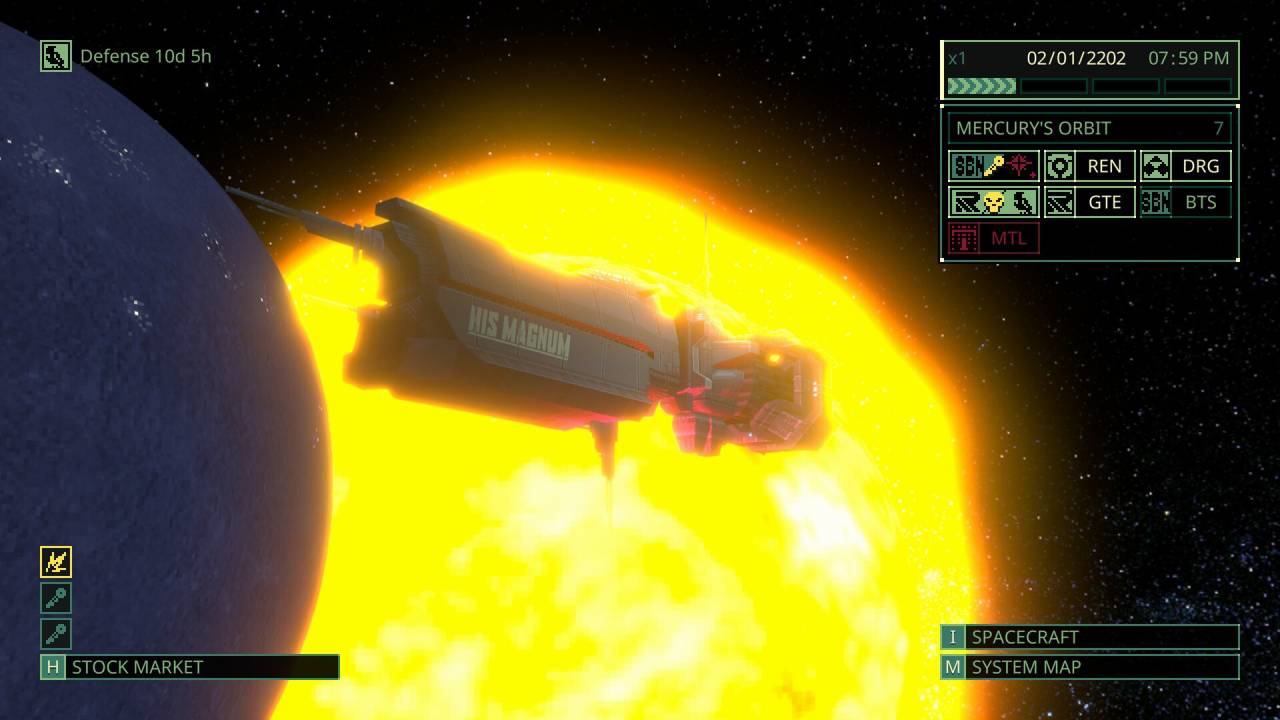
It's a design philosophy that values planning and adaptation over instant gratification, making every victory feel truly earned.
The confidence of the game comes from not compromising its identity. Quasimorph doesn't attempt to be a casual action game or a dumbed-down strategy title. Players are expected to learn a lot of interconnected systems, accept failure as part of progression, and gradually develop mastery of mechanics through experience. The steep learning curve can be daunting at first for new users, but it also leads to a very rewarding experience once the systems begin to work together.
The corporate war provides an unbeatable science-fiction backdrop for the dystopian setting.
Quasimorph is set in a future where humanity continues to chase profits as the collapse of civilization looms. In space, rival corporations battle for dominance as demons, pirates, criminals, and other hostile forces flourish. The game presents the apocalypse as just another business opportunity, not the greatest tragedy for humanity, building a cyberpunk world driven by greed, exploitation, and endless warfare.
That cynical premise gives the narrative an instantly recognizable identity. The supernatural elements support that identity without clouding the corporate conflict. Science fiction and cosmic body horror go hand in hand in a world of advanced technology, demonic invasions, and quasimorphic corruption.
Even as forces beyond understanding threaten to consume everything, humanity continues to alter bodies, build ever more powerful technology, and expand corporate influence. That juxtaposition of technological advancement and supernatural annihilation always makes the setting interesting. The most impressive achievement is how well the world itself supports the gameplay.
The factions are not just narrative decoration, but actors in the strategic layer. All contracts, rewards, reputation increases, and diplomatic decisions are part of the larger conflict between rival organizations. The progression systems instead emphasize how players are gradually becoming another influential force in this brutal dystopian society, rather than taking players out of the story.
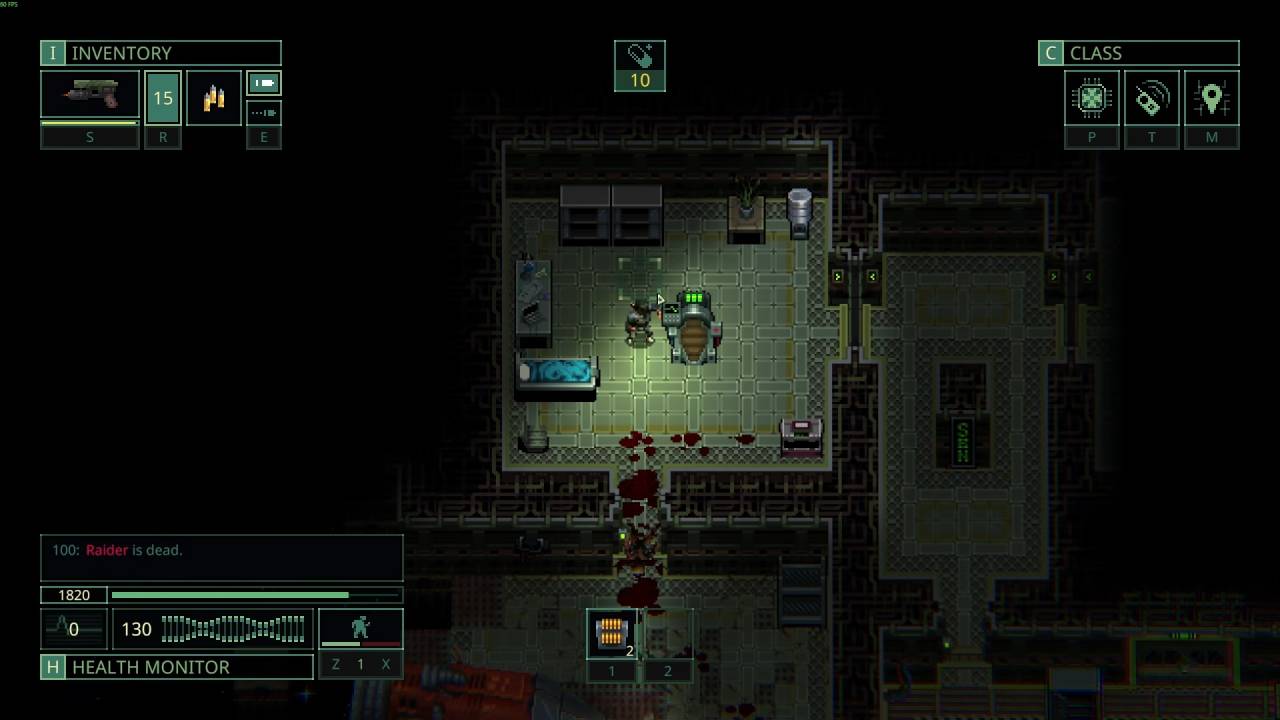
The whole experience is based around building an effective mercenary company.
Progression starts with your roster of clones, each with their own unique strengths, specialties, and long-term potential. Choosing the right clone for each operation is already a big decision, but Quasimorph takes that flexibility even further by having every clone work alongside different combat classes. Those combinations have a massive effect on combat effectiveness and encourage experimentation rather than following one single universal strategy throughout the campaign.
Leveling up is not the only driver of character development. Clones gain ranks that unlock more perks, while mechanical and quasimorphic augmentations add entirely new abilities. Adding robotic limbs or corrupted biological enhancements to your character heightens the game's transhumanism themes and gives you more tactical options in combat.
The upgrades all have a narrative and gameplay function, so progression feels meaningful rather than purely statistical. Depth carries on through equipment and long-term upgrades. Weapons, armor, classes, ships, and the larger mercenary organization can all be upgraded separately, providing many different paths to progress at any one time.
Rather than forcing players down a single path, Quasimorph always gives players meaningful choices about where to spend resources next. That flexibility becomes one of the biggest reasons to keep playing, as every completed mission counts toward a larger strategic goal.
Every expedition is a test of how much risk you are willing to take in your preparation.
Before starting a mission, Quasimorph makes the prep feel like a strategic decision rather than a checklist. You choose your clone, choose a class, and decide which weapons, armor, ammo, food, medical supplies, and other equipment can take up valuable inventory space. Everything has a purpose, but you can't take everything with you.
The result is a constant balancing act between being ready and leaving room to bring home valuable resources. Once inside a mission, the extraction-shooter structure is especially important. Once you complete the objective, it's only half done because you still have to find your way back with whatever you managed to collect. Food can't be ignored either. Clones have an accelerated metabolism, and survival supplies are surprisingly important.
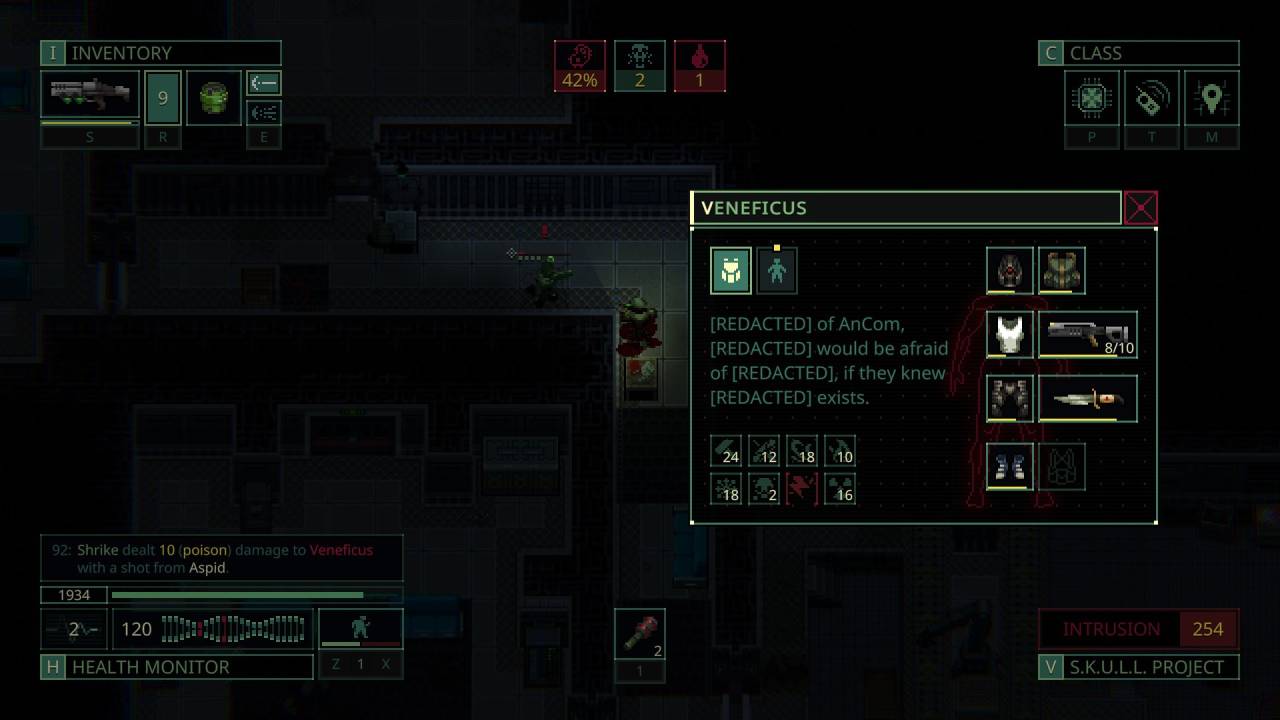
This generates a strong sense of pressure without a standard countdown, as your resources are always softly working against you. Equipment management adds another level of stress to that process. Weapons and armor slowly degrade, and repairing them can lower their max durability over time.
Depending on the caliber, you also have different types of ammo, so you cannot just stockpile one general supply and forget about preparations. These limitations appear severe initially, but they lend practical value to each piece of equipment and make successful extraction feel much more rewarding.
It's a turn-based combat system that rewards those who understand their gear and their surroundings.
Combat is turn-based, but Quasimorph provides players with enough options that every encounter feels surprisingly flexible. Guns can fire in several modes, like single shot or burst fire, while close combat weapons provide another way to deal with your enemies. Resistances and damage types matter too; the best weapon isn't always the strongest weapon. Knowing what you carry is half the battle. Knowing what you battle is the other half.
The fog of war adds to that uncertainty by hiding unexplored areas until you enter them. You may come across enemies who have powerful weapons, explosive devices, or other dangerous tools, and some situations are far more difficult when multiple threats appear together. This system encourages careful movement and observation rather than unthinkingly rushing forward.
Consequently, familiar locations can also be dangerous when your equipment, health, or resources are already low. The game's difficulty is particularly good because preparation and tactical decisions are linked throughout an encounter. Going into a
mission with not enough ammo, healing supplies, food, or the right gear can lead to problems that can't always be solved with smart combat alone. This makes failure seem informative, rather than entirely random. Every failure can teach you something about the game's systems, slowly teaching you how to prepare better.
The development of Quasimorph connects the extraction loop to a much larger strategic game.
You don't just get instant loot from successful missions. Factions can reward you with useful equipment and resources, unlocking more opportunities as you build reputation and influence. Trading is also a big part of the wider progression, allowing resources and equipment to be used to help bolster your operation. These systems add meaning to individual missions, as completing a contract can affect what is possible hours later.
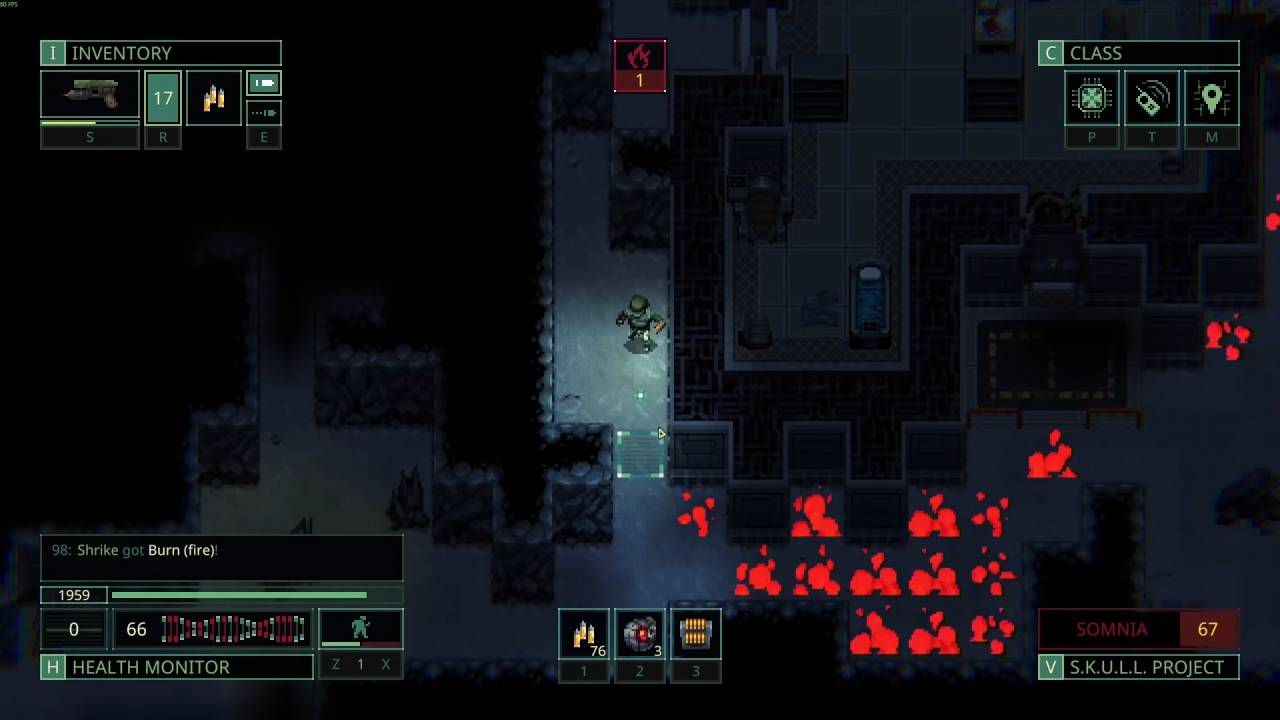
Another key part of that long-term progression is your vessel. Gradually upgrading it will increase your capabilities and help develop your mercenary faction. That growth could eventually lead to a much larger role within the conflict, including the ability to take control of a corporation. Leveling up feels good, because your goals shift from just surviving each mission to leading a force that can stand up to powerful organizations.
That progression also gives Quasimorph its most RPG-like qualities. It's not just about buffing one character and repeating the same stuff over and over; it's about building an entire organization through interconnected systems.
Clones, classes, equipment, augmentations, ships, factions, reputation, and resources all play a part in that process. The amount of management can be daunting at first. Still, for players who enjoy strategy and experimentation, this provides a surprisingly deep base to allow for multiple singleplayer runs.
The growing quasimorph menace gives every successful run a reason to become more dangerous.
As the influence of quasimorphs grows, a more disturbing problem starts to appear. As they become more present, demons may start to show up more often, and stronger manifestations may happen. This escalation also means that missions can never be completely predictable, because even the most familiar of operations can change when supernatural threats are thrown into the mix.
This results in a constant pressure buildup which adds to the game's existing extraction and turn-based strategy systems. That threat also plays nicely into the cosmic body horror of the game. Quasimorph doesn't just add demons as normal enemies with increased health pools; their presence is the clash of man's technological ambitions with powers beyond his control.
With the supernatural playing a bigger role, the game's cyberpunk technology and transhumanist ideas become increasingly uncomfortable, echoing the bleak atmosphere surrounding the whole campaign. The pixel-art presentation gives Quasimorph a grim personality without taking away from its systems.
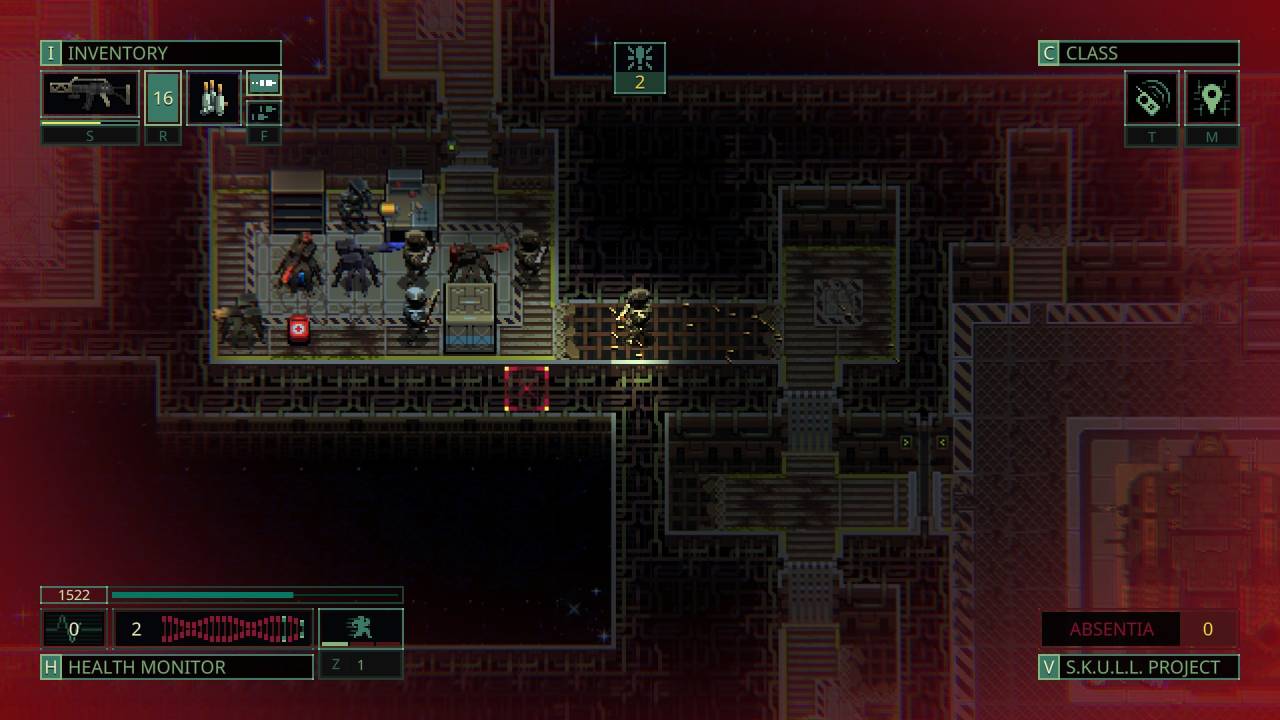
The pixel graphics are surprisingly compatible with the game's bleak sci-fi setting. Instead of photorealism, Quasimorph's visuals are employed to emphasize the weird environments, hostile creatures, equipment, and increasingly grotesque situations that characterize each expedition. The art style also helps to keep things clear during tactical encounters, with important objects and threats remaining recognizable.
In contrast, the world remains visually distinct from more conventional sci-fi RPGs. The audio design and environmental variety add to the atmosphere. The music is different in each location, and the soundtrack is a rough, dirty rock that fits with the industrial feel of the setting.
The music, the isolated locations, the cyberpunk technology, the supernatural threats - all of this contributes to a uniform mood in the game. The presentation helps keep the sense that every mission is happening somewhere hostile and extremely unstable, even when the systems are overwhelming.
Quasimorph is demanding because of the sheer number of interconnected systems, but that complexity is also its greatest strength.
Before the game becomes comfortable, there is a lot to learn. Clone abilities, classes, augmentations, durability, ammo, food, damage types, factions, reputation, trading, ship upgrades, influence, and extraction all compete for the player's attention. That learning curve can be intimidating, especially for those new to tactical RPGs and turn-based strategy.
But it rarely feels like all this complexity is for naught, as most systems have a direct impact on how well you can survive your next expedition. More importantly, Quasimorph gives players lots of reasons to experiment.
A new class or augmentation can completely change the role of a character, and another clone can change how a mission is approached. Better equipment means new possibilities, and faction relationships can impact what resources become available. Failure is useful because it reveals weaknesses in your preparation. The game is constantly rewarding those players willing to learn from their mistakes.
Quasimorph's 1.0 release succeeds because it turns survival into a long-term strategic challenge.
The power of Quasimorph is that all its individual systems feed each other all the time. A mission is more than a combat scenario, and progression is more than a collection of bigger numbers. Every expedition entails: preparation, tactical decision-making, resource management, extraction, and long-term planning. Your mercenary roster grows slowly, as does your ship, as does your faction, and this gives a nice sense that every successful operation builds toward something much larger.
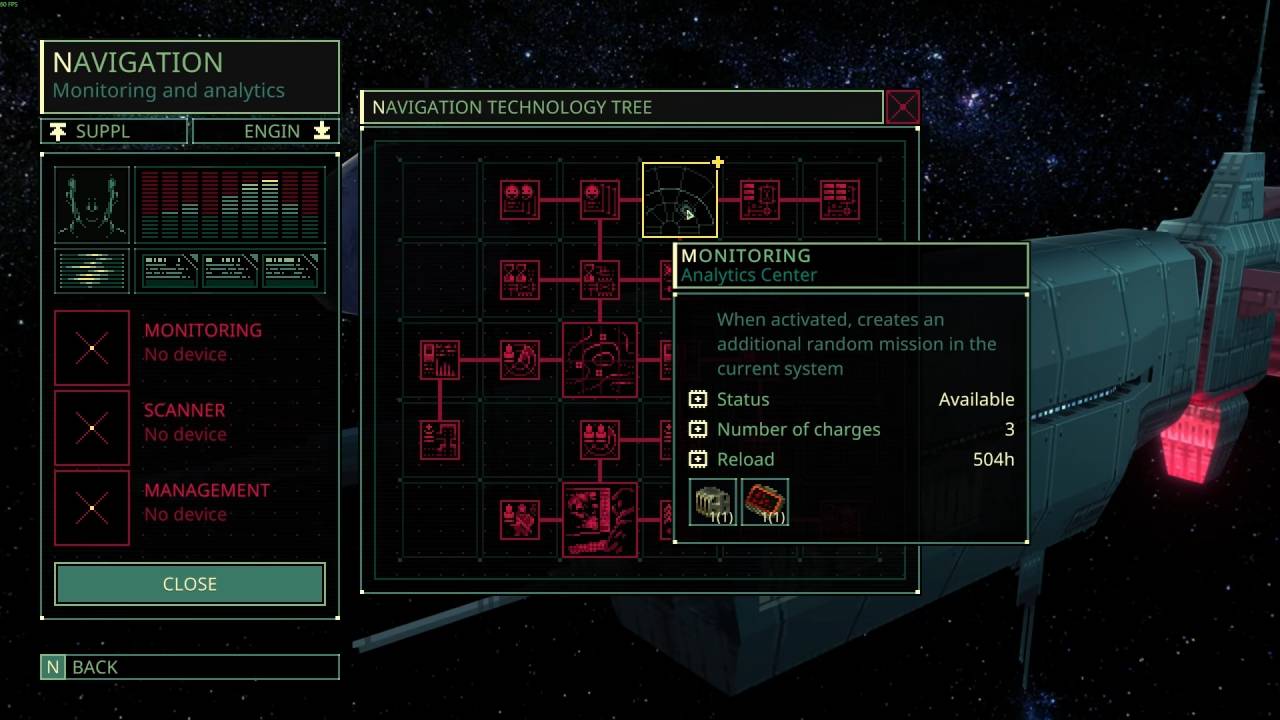
This makes Quasimorph especially easy to recommend to players who enjoy systems-heavy RPGs and turn-based strategy. The roguelike structure can punish you for making the wrong choice, and the extraction mechanics make it feel like your loot is actually worth protecting. Instead of blending the mechanics into another generic tactical RPG, the cyberpunk setting, cosmic body horror, and transhumanist ideas give the mechanics a unique identity. It takes patience, but it pays off richly.
Quasimorph is not supposed to be easy, and that is, in the end, its charm. Instead of polishing over all the awkward edges, version 1.0 leans into its tactical identity, crafting a singleplayer experience that focuses on preparation, adaptation, and consequence. It might take a little time to click, but once the systems do, the mix of mercenary management, turn-based combat, extraction gameplay, and RPG progression is remarkably compelling. If you like patient strategy, this is a satisfying 1.0 release.
Editor, NoobFeed
Verdict
Quasimorph delivers brutal turn-based combat, deep mercenary management, and exceptional replayability. Its steep learning curve may overwhelm newcomers, but the 1.0 release is a must-play for tactical RPG fans.
73
Related News
No Data.