
HYPERWIRED Review
Nintendo Switch
Hyperwired throws players into a collapsing digital world where technology has grown far beyond human control.
Reviewed by Maisie Scott on Jul 06, 2026
The roguelike genre has become crowded to the point where a lot of games start blending together after a while. Every few weeks, another pixel art shooter appears with randomized rooms, upgraded trees, enemy swarms, and permadeath systems. Some of them are fun for a few hours, but very few actually feel memorable once the novelty wears off.
HYPERWIRED avoids that problem almost instantly because its core mechanic changes the entire flow of the game. At first glance, it looks familiar. You control a small spaceship from a top-down perspective while enemies flood the screen with bullets and hazards. There are procedural levels, permanent unlocks, upgrades between stages, and all the usual systems players expect from a modern roguelike.
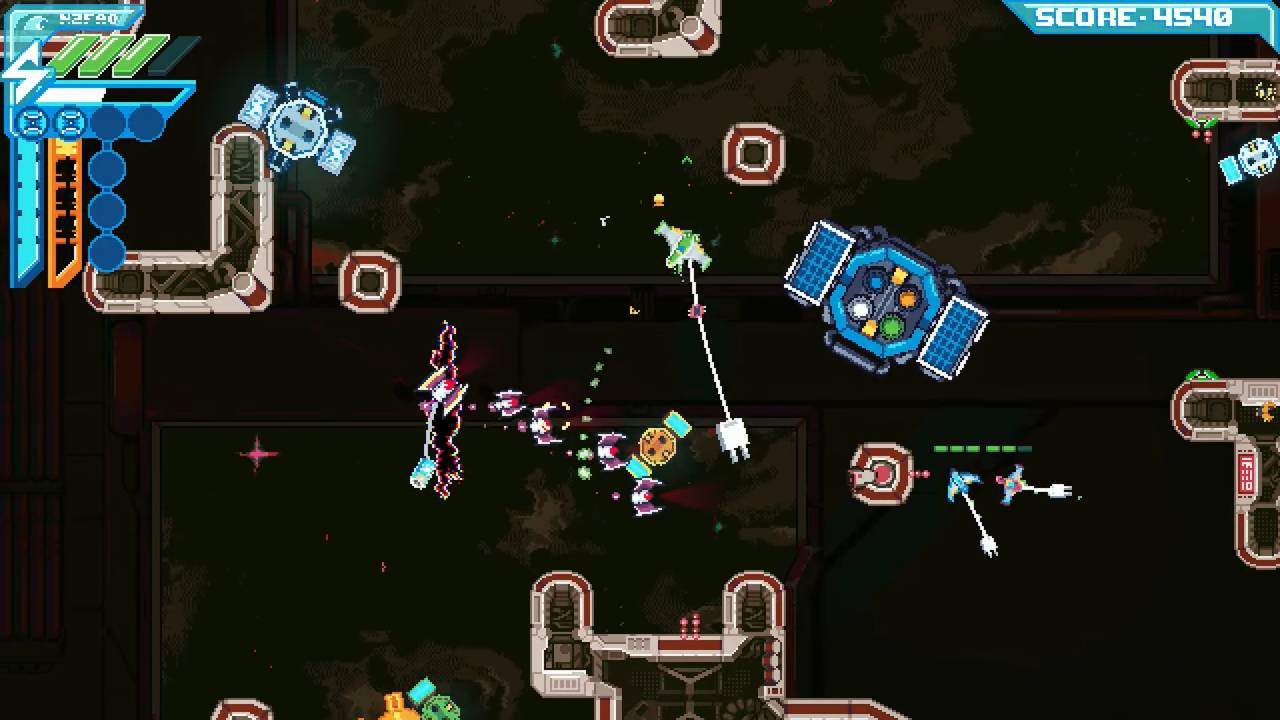
But within minutes, the game reveals the mechanic that makes it stand apart from almost everything else in the genre. Your ship drags a giant electrical cable behind it at all times. That cable is not just there for visual style or worldbuilding either. It is the foundation of the entire experience.
Throughout every level, players need to physically plug themselves into power sockets scattered across the environment. These sockets restore your health, recharge your energy, refill your ammo, activate objectives, and finally unlock the exit you need to advance to the next area.
It sounds simple, but the mechanic completely changes how you think during combat and exploration. In most top-down shooters, movement is entirely about dodging attacks and staying alive. In HYPERWIRED, movement becomes a resource management puzzle.
You constantly need to think about where your cable is stretching, whether you are trapped in a dangerous corner, and how safely you can reach the next station before your energy drains away completely. That constant pressure creates tension in a way most roguelikes do not.
Even quieter moments feel stressful because the game is always asking you to manage something. You are not just fighting enemies. You are fighting your own positioning, your energy supply, and the physical limitations created by the cable attached to your ship.
The game immediately feels more tactical because of that. It is not just another arcade shooter where survival depends entirely on reflexes. Planning and movement matter just as much as combat skill. Honestly, that single mechanic carries a huge amount of the game because it gives HYPERWIRED a personality most indie roguelikes desperately lack.
The presentation helps a lot, too. The pixel art looks fantastic without trying too hard to imitate retro nostalgia bait. Environments are colorful and detailed, enemy attacks remain readable during chaotic fights, and the different biomes have enough visual variety to stop runs from feeling repetitive too quickly. The game recognizes the importance of visual clarity in a bullet-hell shooter, especially as the screen fills with enemies and projectiles.
HYPERWIRED builds its atmosphere through survival and isolation.
HYPERWIRED is not a narrative-heavy experience. There are no long cinematic cutscenes, huge dialogue trees, or complicated lore dumps every twenty minutes. Instead, the game builds its atmosphere through gameplay and environmental design, which honestly works much better for this type of experience.
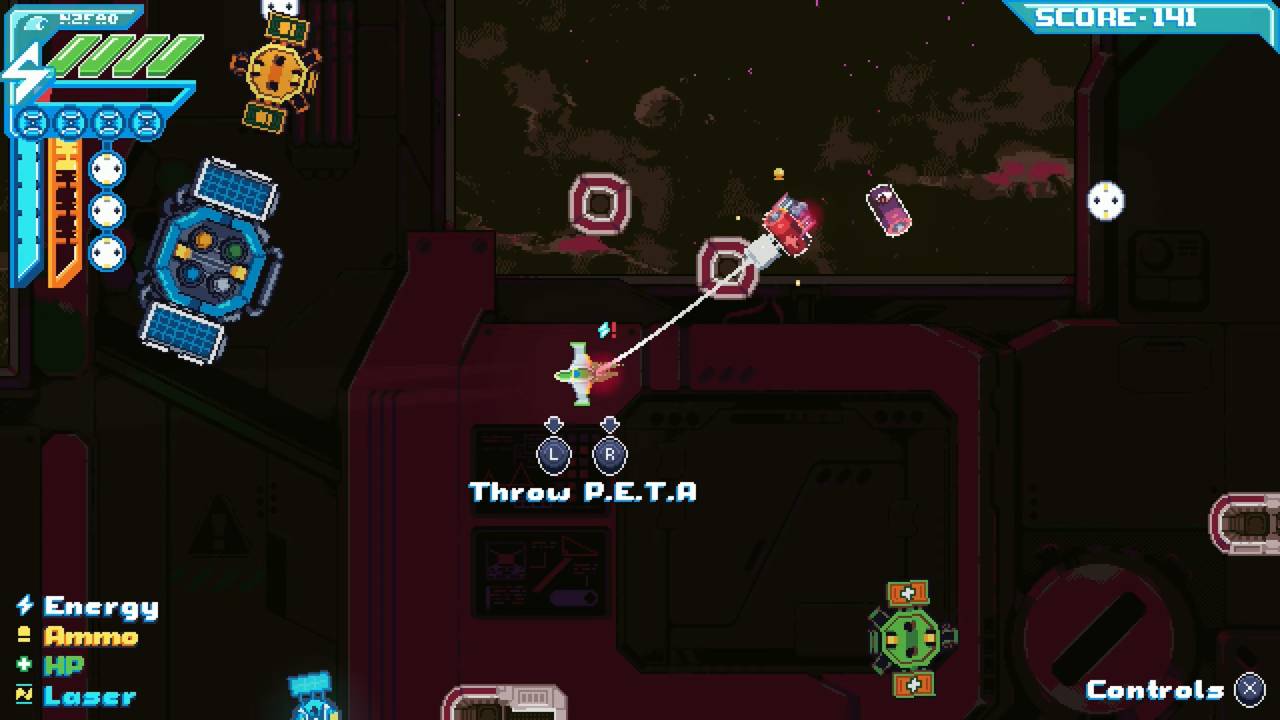
The world feels damaged and unstable from the beginning. Every environment looks partially broken, abandoned, or barely functioning, which naturally fits the game's overarching electrical theme. The constant need to restore power to systems makes the world feel as if it is permanently on the verge of collapse.
That atmosphere becomes stronger because of the game’s single-player survival focus. Every run feels isolated in a way that works surprisingly well. You are alone most of the time, moving through dangerous areas while desperately trying to keep your systems functioning long enough to survive another encounter. The game does not need long conversations to communicate that feeling because the mechanics already tell the story naturally.
That progression system helps with that feeling of slowly surviving impossible odds. After each completed level, players select upgrades that slowly evolve their weak starting ship into something much more powerful. Some upgrades improve health pools while others improve weapon behavior, recharge speed, movement efficiency, or energy capacity.
Over time, successful runs slowly evolve into chaotic builds filled with bouncing bullets, piercing projectiles, temporary invisibility, stronger firepower, and much larger energy reserves. It’s very satisfying to see a poor early run slowly evolve into a destructive late-game setup, and the game constantly pressures players into adapting their strategies depending on the upgrades they receive.
The unlockable ship system also gives players another reason to keep trying runs. During exploration, stranded ships occasionally appear hidden throughout levels.
Rescuing these ships temporarily gives players combat support during the current run, but it also permanently unlocks them as future playable ships. That creates a nice long-term progression loop without making the game overly complicated. HYPERWIRED understands that gameplay is the star of the show, so the progression systems are there to enhance the experience, not detract from it.
The real heart of HYPERWIRED is the resource management system.
The main reason HYPERWIRED works as well as it does is that survival isn’t just about shooting enemies. The game constantly forces players to manage resources while navigating increasingly dangerous situations. Energy is the most important resource in the whole game. Your ship will lose power over time, so standing still or wasting movement can be deadly quickly.
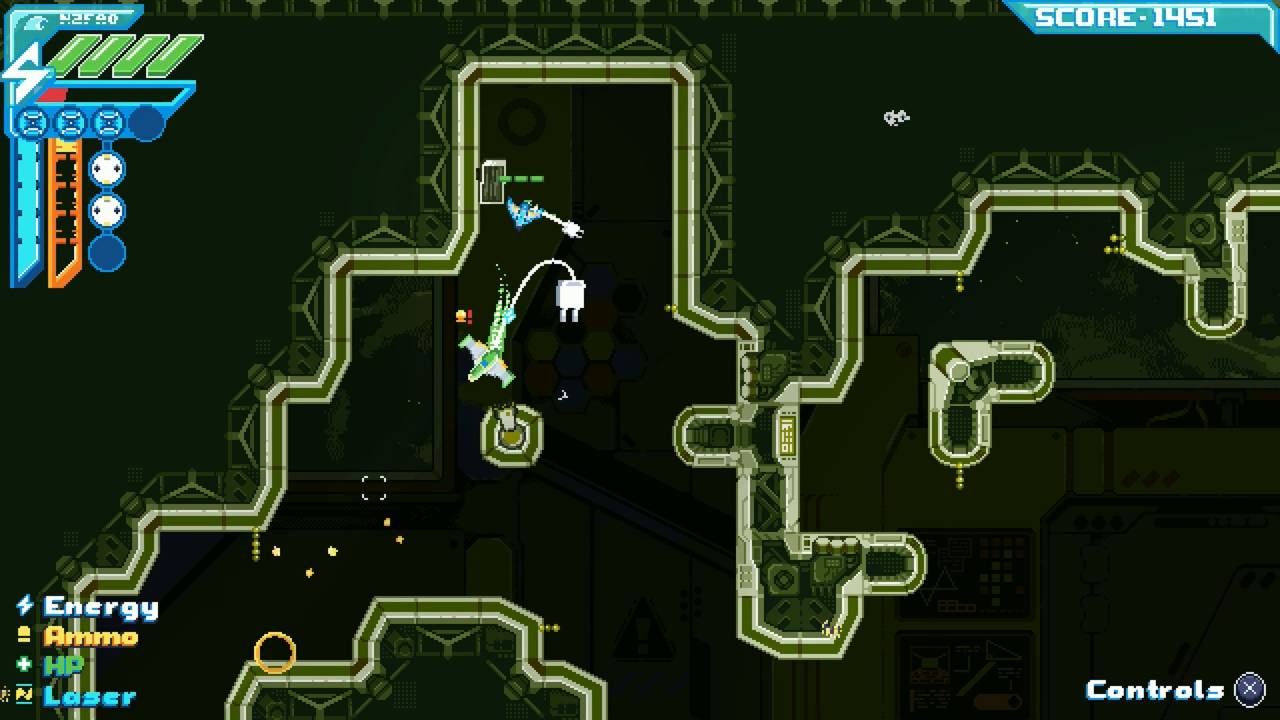
For longer runs, charging stations become vital lifelines, especially when the density of enemies increases and the levels become more complex. Various stations also provide various benefits. Some restore health, others reload ammunition or recharge energy stores. Since exits remain locked until enough systems are activated, players are constantly forced into risky situations where objective completion and survival overlap.
That creates some genuinely stressful moments during gameplay. There are times when you desperately need energy, but enemies completely surround the nearest charging point. Other times, you accidentally trap yourself because your cable limits how safely you can move around environmental hazards or enemy attacks.
The cable mechanic itself becomes increasingly important as runs continue. Early on, it mostly feels like a clever gimmick. Later, it starts shaping almost every decision you make. Certain upgrades let players extend cable length, which completely changes how levels can be approached and navigated.
That is where the resource management mechanics really shine. HYPERWIRED constantly forces players to multitask. You are never simply focused on combat alone. Every movement decision affects positioning, energy use, and survival potential simultaneously. On top of that, there’s the progression system, which is just another layer of depth to the mechanics.
At the end of each stage, players choose upgrades that slowly define their build throughout the run. Some upgrades promote aggressive play, while others reward defensive playstyles or efficient energy management.
Piercing bullets, bouncing projectiles, reduced charge times, temporary invisibility, increased firepower, stronger energy reserves, and longer cable reach all dramatically change the feel of the game from run to run. Further battery modifiers hidden throughout levels add even more variety by changing weapon behavior and combat efficiency.
That means runs never quite feel the same. One build could focus on crushing enemies with pure damage, while another focuses on careful survival and resource management. This flexibility gives the game decent replay value, even once players have learned its systems.
Bullet hell combat creates the game’s most exciting moments.
Combat in HYPERWIRED feels chaotic in the best possible way when everything is functioning properly. Enemy encounters gradually evolve into full-on bullet-hell scenarios where the screen fills with projectiles, hazards, explosions, and environmental threats.
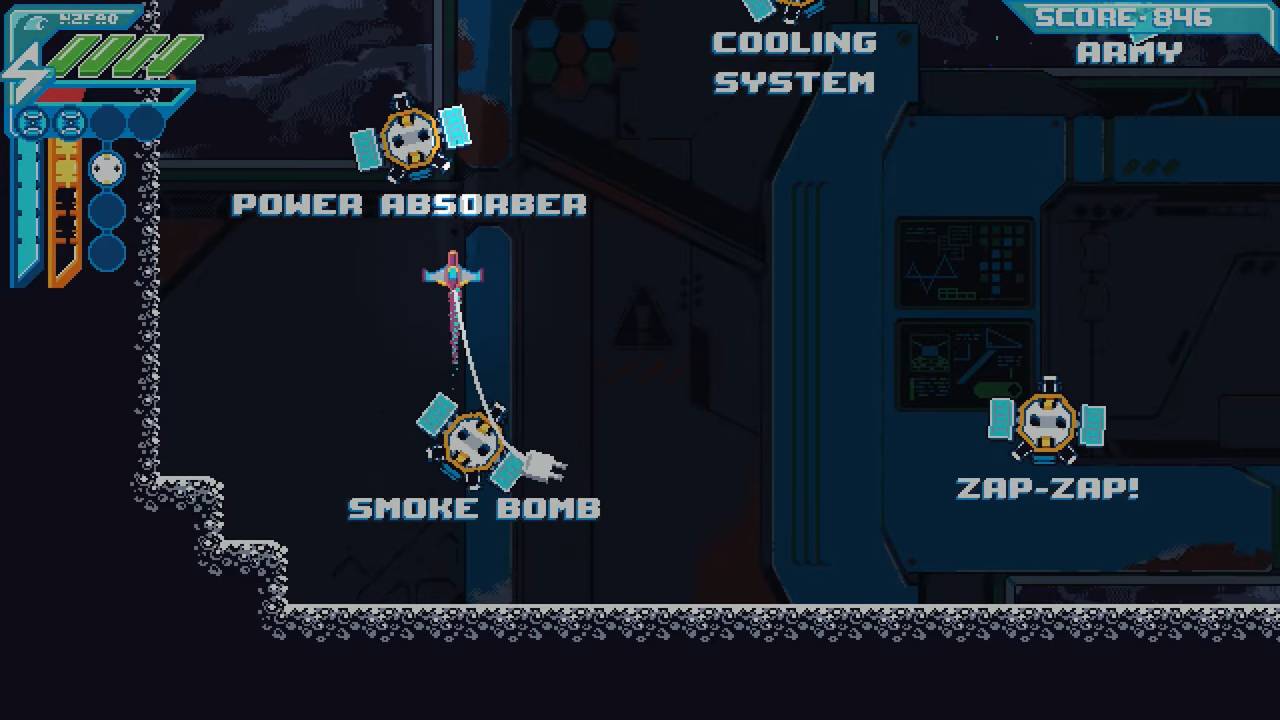
Enemy variety stays fairly strong throughout most of the experience. Some enemies charge the player, while others strike from a distance or limit movement by using environmental hazards and traps. Wall-mounted turrets add extra pressure during encounters by limiting safe movement options during already chaotic fights.
Boss fights easily become some of the strongest parts of the game. The Bosses aren’t just big guys with a lot of health, but they have their own attack patterns and mechanics that the player has to learn and adapt to in order to succeed. Some bosses are freely attackable while others demand exploiting openings or waiting for defensive patterns to end before damage can be dealt.
These encounters often turn into high-intensity bullet-hell battles where positioning is key. Dodging projectiles while managing energy and avoiding environmental hazards leads to some really satisfying moments, especially when players have already built up devastating upgrade combinations over longer playthroughs.
The game also manages to make fights feel discernible despite all the chaos going on screen. Visual clarity is crucial in bullet-hell shooters because excessive clutter can quickly ruin the experience. HYPERWIRED mostly succeeds at keeping enemy attacks visible even during extremely hectic moments.
The tutorial deserves a surprising amount of credit, too. The socket mechanic and energy systems are unusual enough that many players will probably feel completely lost if they skip it. The game does not naturally ease players into its mechanics during normal gameplay, so the tutorial is almost essential to understanding how everything actually works.
When the combat systems fully click together, HYPERWIRED becomes incredibly fun. There is something satisfying about balancing movement, survival, energy management, and combat all at once while the game constantly throws new problems at you. Unfortunately, this is also where the experience starts falling apart technically.
Technical issues and awkward controls constantly hold HYPERWIRED back.
As creative as HYPERWIRED is, the game is heavily damaged by problems that become harder to ignore the longer you play. The first major issue involves controller support. Mouse and keyboard controls feel smooth enough, but controller aiming feels awkward almost immediately. The ship often does not fire exactly where players expect it to, which can be frustrating during high-pressure encounters where precision matters.
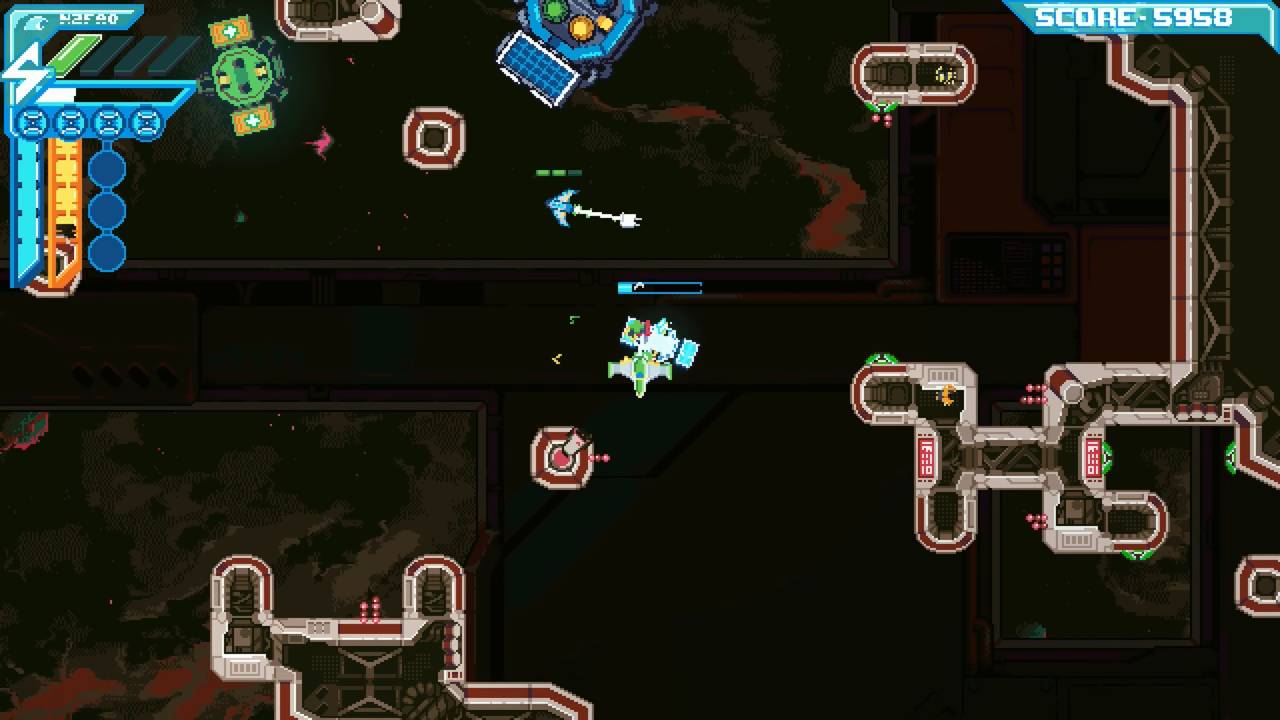
That problem becomes much more noticeable during boss fights and late-game encounters, where accurate movement and shooting are essential for survival. In a game built so heavily around constant combat and dodging, awkward aiming quickly becomes exhausting.
The game also starts showing its repetitive side after several hours. Procedural generation keeps layouts somewhat fresh, but players will eventually realize they have already seen most of the core gameplay loop. That issue is fairly common within roguelikes, so it does not completely ruin the experience, but it does reduce long-term excitement once the novelty of the socket mechanic begins wearing off.
The biggest problem by far involves technical stability, though.
During longer play sessions, the game suffers from crashes capable of completely deleting progress from entire runs. Losing a long run after defeating a difficult boss feels awful, especially because roguelikes already demand patience and repetition from players naturally. Those crashes hurt more than normal difficulty ever could because the frustration comes from the game itself rather than player mistakes.
It becomes difficult to stay motivated when progress can disappear because of technical issues completely outside your control. That is what makes HYPERWIRED so frustrating overall. The game underneath these problems is genuinely excellent. The survival mechanics work. The resource management systems feel unique.
The bullet hell combat becomes incredibly exciting once the builds start coming together. But technical instability constantly interrupts the experience before it fully reaches its potential. It feels like a game that desperately needed a little more development time before release.
HYPERWIRED still has the foundation of a fantastic indie roguelike.
Even with its flaws, HYPERWIRED is still one of the more creative indie roguelikes to come out in recent years. The core socket mechanic immediately gives the game an identity of its own, while the combination of single-player survival gameplay, resource management systems, and bullet hell combat makes for something that really feels different from most games of the genre.
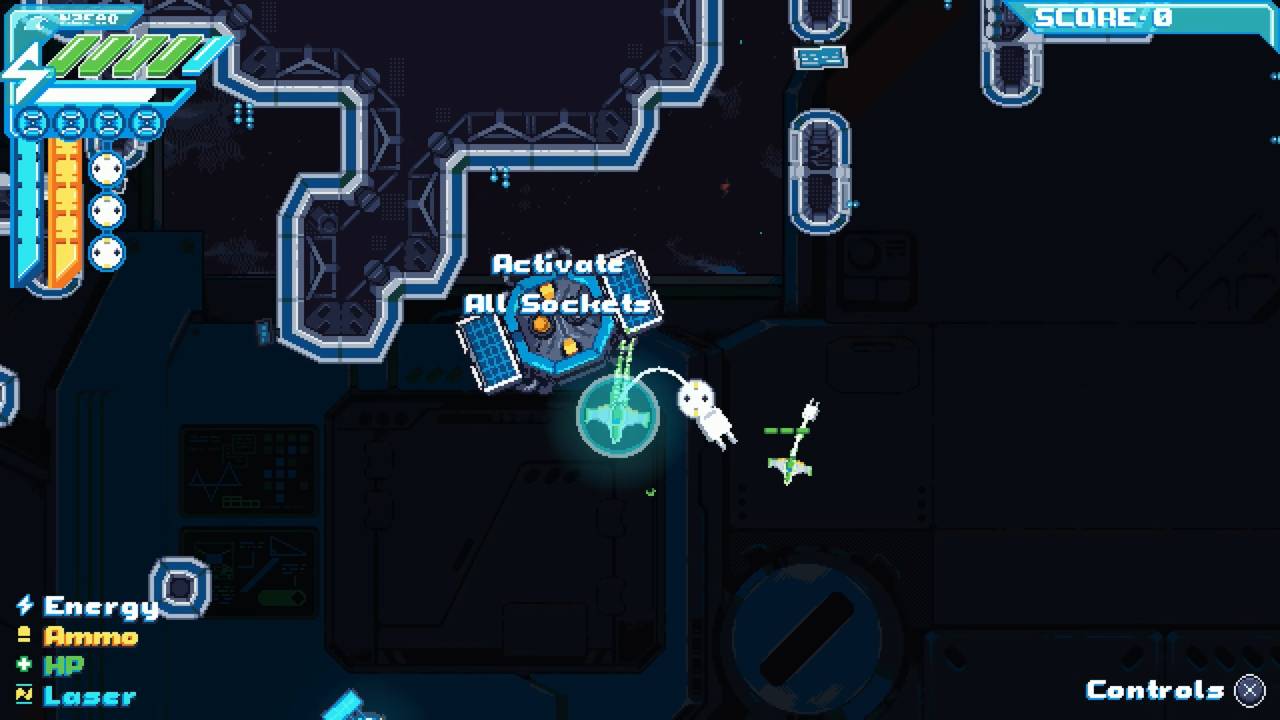
The visuals are beautiful, the boss fights are memorable, and the progression systems consistently reward experimentation. Every successful run feels satisfying because survival depends on far more than simply dealing damage. Players constantly balance positioning, movement, energy usage, and combat all at the same time.
At the same time, the technical problems are impossible to ignore. Frequent crashes and awkward controller support drag the experience down far more than they should. It is difficult to fully recommend a roguelike when long runs can disappear due to stability issues unrelated to player skill.
Still, there is clearly something special here. HYPERWIRED feels like the kind of indie game people could easily become obsessed with once its rough edges are polished out. If future updates improve stability and tighten the controls, this could absolutely become one of the standout roguelike shooters in the indie scene. Right now, though, it feels like a brilliant game fighting against itself. Beneath the crashes and rough controls lies one of the most interesting survival-focused bullet-hell roguelikes released in a long time.
Editor, NoobFeed
Verdict
HYPERWIRED delivers a visually striking cyberpunk experience with intense action and atmosphere, even if some systems feel rough around the edges.
78
Related News
No Data.