
Moadra Review
PC
A dark, Metroid-flavored trek across a hostile alien planet.
Reviewed by Adeela Tas on Oct 29, 2026
Gloomsoft, a small indie studio in southern Finland, developed Moadra, their first-ever video game. The title is available on popular platforms like Steam, XBOX, PlayStation, and Nintendo Switch, costs about $25, and was developed in Unreal Engine.
The concept is easy to grasp: Moadra is a 2D Metroidvania that heavily references Super Metroid, with a sci-fi horror-themed atmosphere. The Super Metroid references are clear, and sometimes the game walks the line between paying tribute and doing your homework. Still, it's refreshing to play a game that doesn't emulate Hollow Knight.
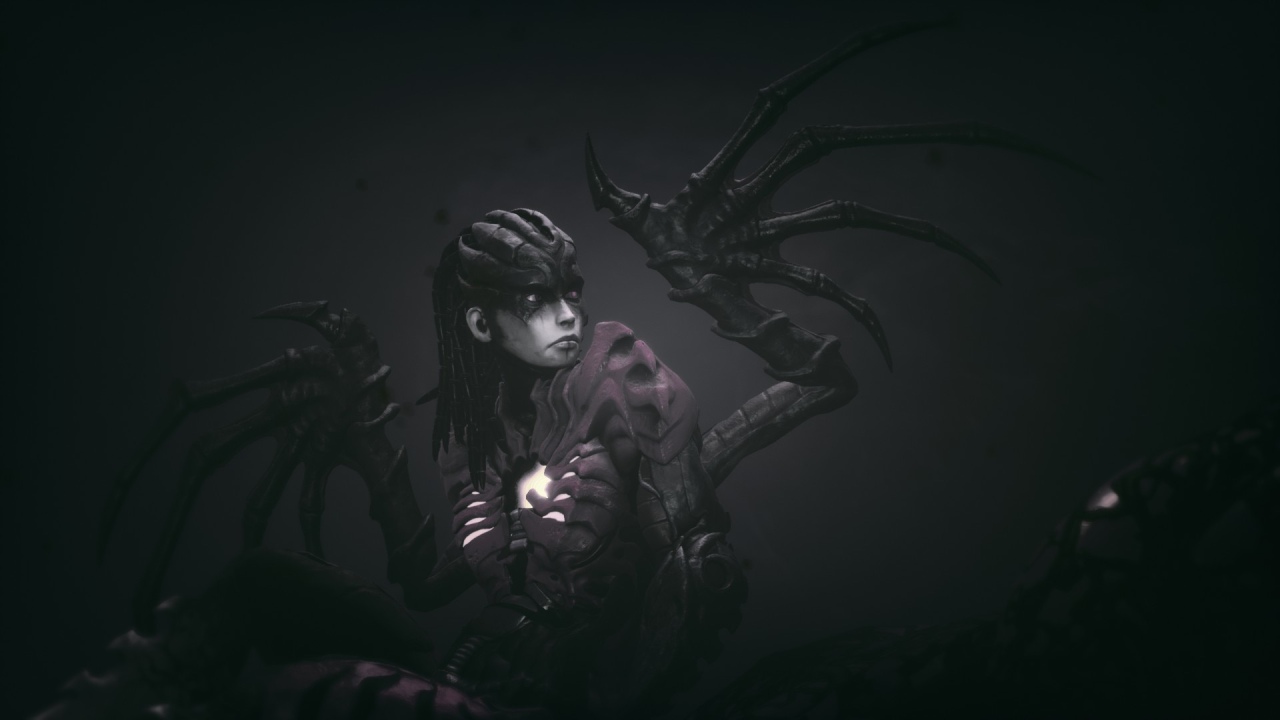
You play as Moadra Meras, a lieutenant in the Neera military.
Neera are an interstellar people trying to find their forgotten origins. Your orders send you to Protea VI, a lost planet where a high-value research team has stopped responding. One of the missing is Captain Amari Saram, a member of the royal family, and her name sits suspiciously close to Samus Aran.
Your ship crash-lands, the crew splits up to search for the researchers, and the rescue begins. You find the princess quickly, but she isn't acting like herself. The fight that follows is unwinnable. She takes you apart, rips off your arm, and leaves you behind.
A scientist finds you, fuses your body with the planet's bioplasm, and gives you a new arm cannon. You need to reach your scattered team, find survivors, work out why the princess turned on you, and learn why this expedition matters so much to the Neera Empire and its future.
Nothing intelligent lives on Protea VI anymore, so you shoot bugs and beasts in Moadra.
The story reaches you through the other Neerans you meet and through the scanner that lets you read your surroundings. Conversations branch, so how long they run depends on your answers, and most offer a way to wrap things up fast if you would rather get back to work. Cutscenes are rare and short.
Deeper in, you reach the ancient ruins of the Protea VI, and piecing together what became of them gives the world most of its pull. The writing in Moadra stays serious throughout. Item descriptions and scan entries contain no jokes, and nothing feels forced or embarrassing. You decide how much lore to take in, and that works well for a genre where the action should keep flowing.
The ending arrives quickly, and you may want a bit more, though no threads are left hanging and there is only one ending. The Neerans you rescue and send back to your ship take on jobs like repairs, support, or quests, and they act like believable survivors.
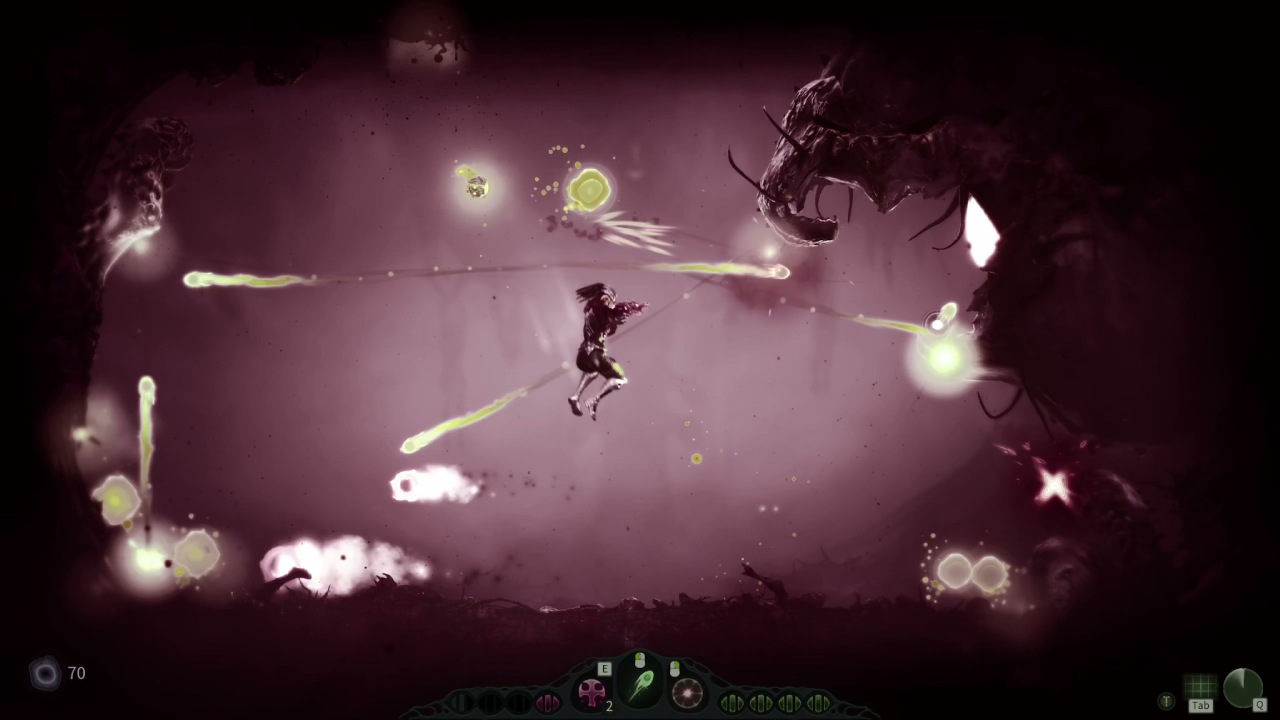
Most of the game has you exploring, shooting, scanning, and backtracking. Movement is fast and floaty, which fits a planet where you have no idea how its gravity works. Wall-clinging movement reminds one of the Mantis Claw from Hollow Knight, and Super Metroid's jump from a stationary position gives you some height but little horizontal distance.
Mid-air jumps trade height for distance, and your tools build on that.
In contrast, mid-air jumps give you more horizontal distance but less height. This makes small platforms harder than they should be. You can crawl and roll into a ball, with the latter serving as a dodge mechanic. Missiles can open doors, an outfit can help you travel across harsh terrain, and finally you'll get a double jump, then wings on your back.
One technique remains a mystery until you discover it yourself, and it's best to figure it out early: charge your beam, jump, and shoot downward for extra height. Moadra has only about five or six biomes on one big map, all underground. The game begins in dust-covered wastelands in a mustard-like color scheme before descending to the research station and ultimately to the ruins of Protea VI.
Instead of offering varied platforming environments, the biomes feature hazards such as a freezing atmosphere that drains your health points. Puzzles are light. You carry orbs to pedestals to open certain doors and hunt for passkeys to open others, but the real challenge is figuring out how to reach a spot or get somewhere. Platforming is mostly fair, with one early exception.
A run of tiny platforms that crumble under you, plus an unhelpful camera, turns every miss into a long trip back to the start. Nothing else in Moadra is that harsh, so don't let it put you off. The endgame has a string of tougher platforming trials, and they are great fun.
Your scanner is a small bot that follows you, and it is probably the smartest design choice here.
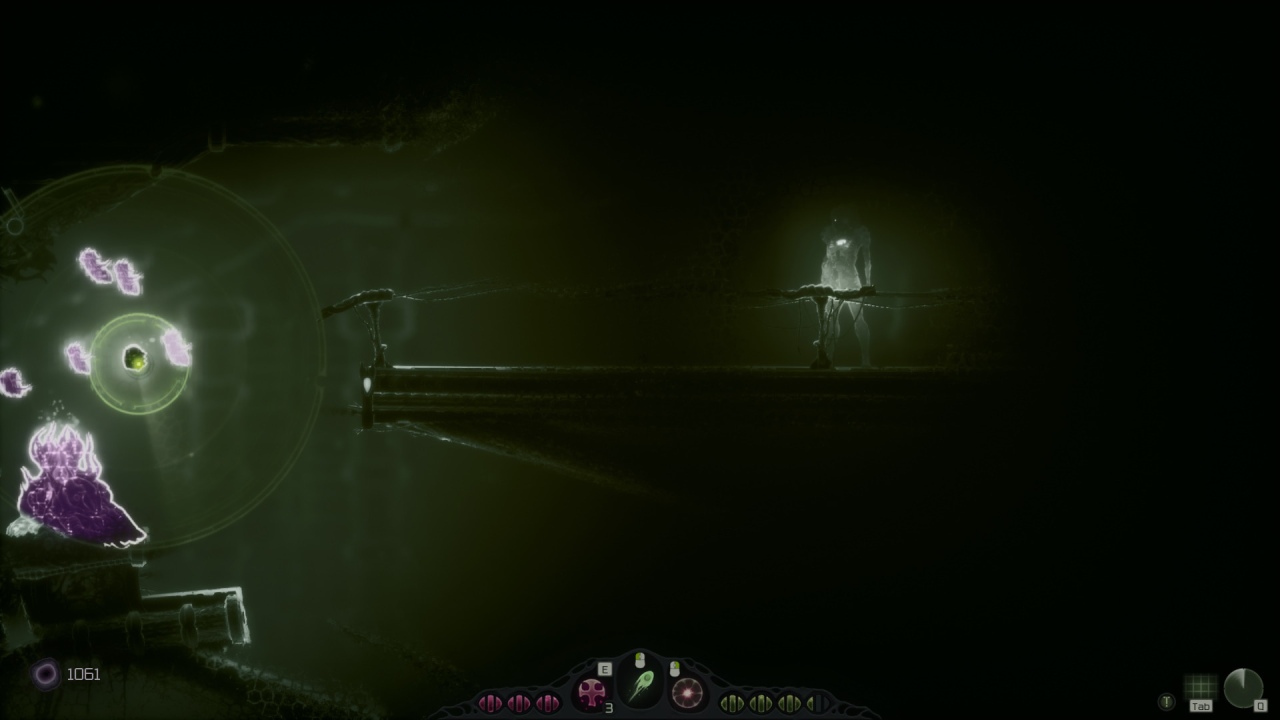
You enter scan mode, steer the bot on its own, and hold a button to examine what it finds. In that mode, you see things the lieutenant can't, like hidden passages and breakable walls, and because the bot passes through walls, you often spot secret rooms long before you know how to enter them.
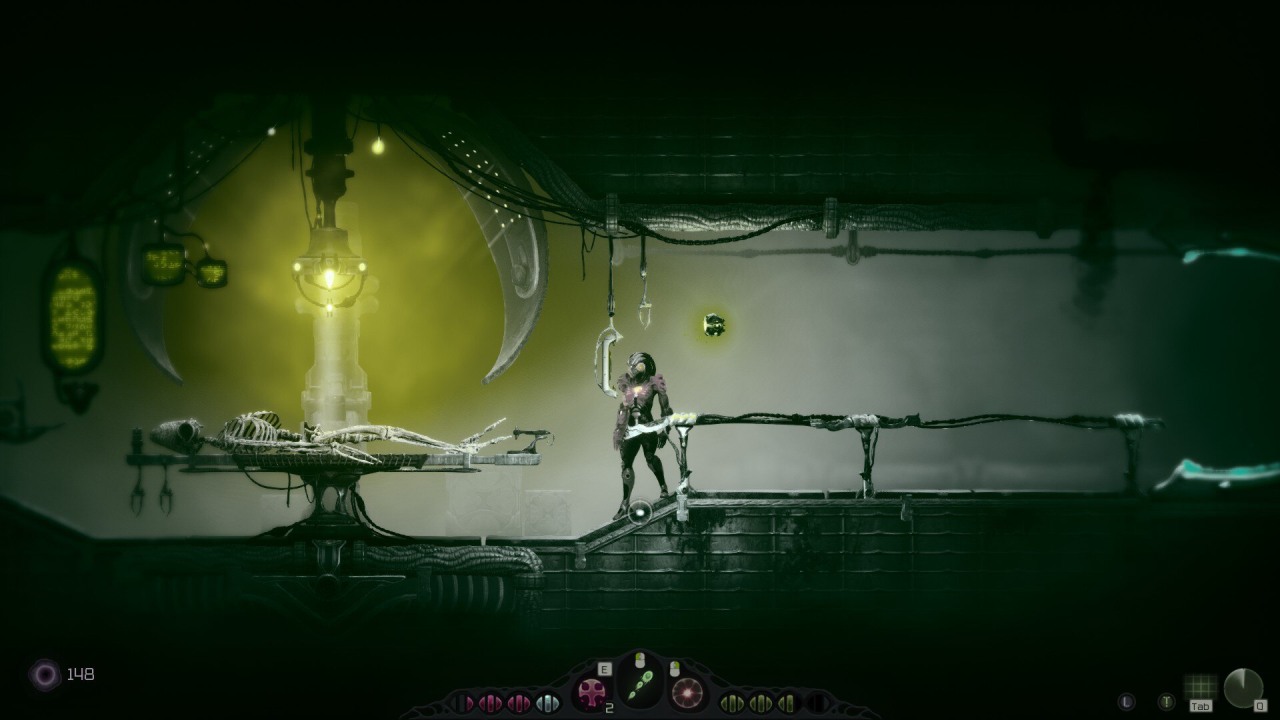
Scannable items glow purple and turn green once you check them, while secret passages stay purple so you can find them again. Scanning enemies reveals weaknesses and points you to the right weapon, which is handy but takes some of the learning out of fights.
Scanning objects gives you lore, and you also use it to activate elevators and download keys. Hidden paths only need the bot to drift over them, and you can move yourself at the same time. There are 200 scannable entries if you want them all, but you only need a few. The bot moves at a slightly different speed than you, which can get clumsy in some tunnels, and carrying it everywhere can wear you down if you're chasing a full count.
It's also important to watch the keys. Every door on the map requires a specific passkey and shows which keys you have and which doors they open. One easily overlooked detail is that an already scanned door stays green until you get the correct key and need to re-scan it to gain access.
As for directions, there are almost none.
You might end up needing two keys and not knowing how to find either, since the map doesn't mark them. All you get is the biome name where you can find them. However, because the biomes aren't colored, they can be tricky to locate. The map is very detailed, showing all rooms accurately and marking points of interest without you having to intervene.
Transport is another issue in Moadra. Fast travel has been unavailable for some time, and even when it is available, it's restricted. They don't transport you directly; you have to go through two portals: the first takes you to the central point, and the second takes you to your destination.
These portals aren't marked, and you have to guess which one is yours, and sometimes it takes three or four attempts to reach the destination. Additionally, enemies respawn each time you leave the area, and going through the same area five, ten, or fifteen times becomes repetitive.
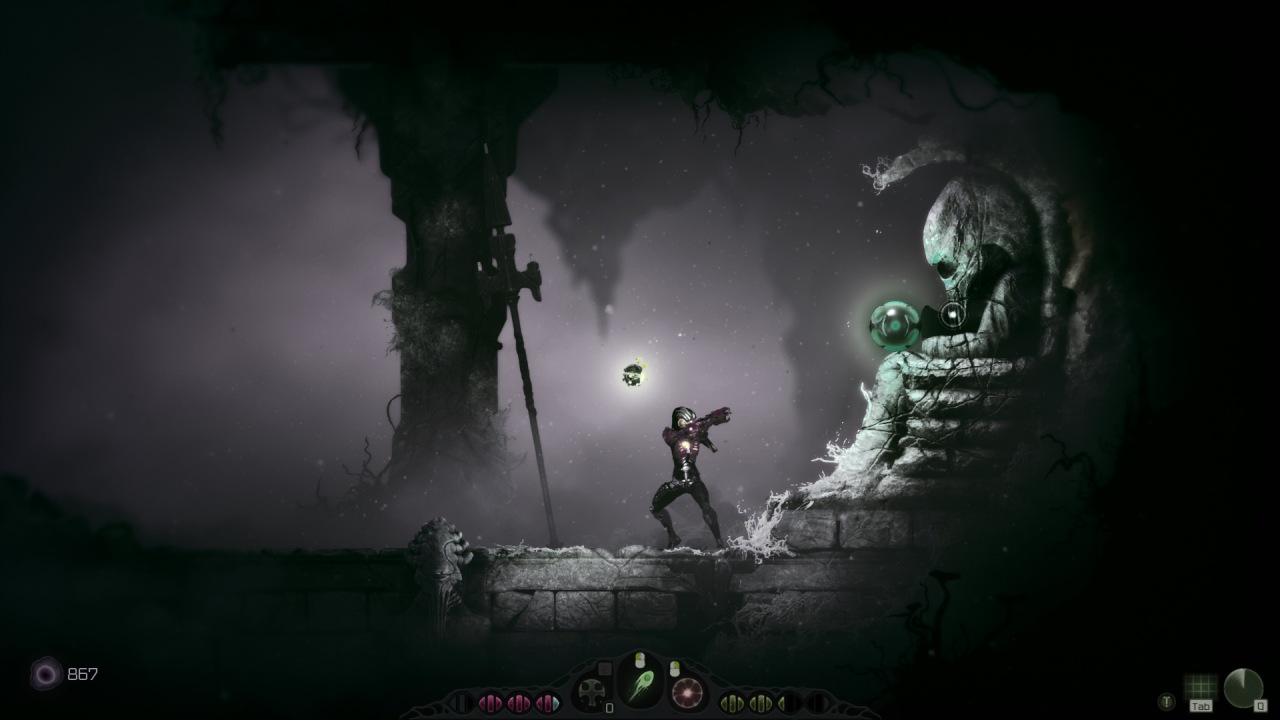
The battle in Moadra is all about using a blaster properly. It has a basic gun that fires as fast as you tap the button, plus a charged shot for tougher targets. There are three modes to choose from when it comes to aiming – aim where you are looking or moving to; aim that stays fixed for a full 360 degrees, even if you do not get off the ledge; and lock-on, which chooses your closest enemy and locks on the next one as soon as the previous one dies.
Lock-on handles swarms well, and your abilities all share one energy pool.
Lock-on works great when a swarm of bugs attacks you, since you keep dodging and jumping while the gun keeps shooting. You can swap weapons in the weapon wheel. Your other abilities are available whenever they're unlocked. A heal restores health and cures poison. The Proto Pulse clears rooms and hits enemies around corners, letting you stay hidden when you're low.
The Proto Cannon is a plain missile. Umbral Armor protects you from the elements and, at an energy cost, can redirect incoming attacks; Hyper Rush sends you streaking across the map, damaging enemies on contact, with no charge time.
They all draw from the same energy, so you decide mid-fight whether to take less damage or deal more. Later, you find a booster that constantly recharges energy, and after that there's little reason to take the armor off. It makes the already easy fights easier. Armored enemies are definitely the main frustration here. Normal shots bounce off them, and they relentlessly pursue you.
The only way to deal with them is to use missiles, and each missile costs one energy pip. Early in the game, you only have three of these missiles, and sometimes you need two for one enemy. Encounter two, and you may not have enough, and because energy pips replenish so slowly through pickups, you end up running out of the area.
Defense involves positioning.
There's no dash, block, or parry, and no invincibility frames to boot, so enemies can play with you and reduce your health in no time. Only one thing saves you from damage on your last hit: time slows, you become momentarily invulnerable, and you have time to heal. The healing process is the same as with Souls-like flasks.
You get armor that reflects all projectile hits, and Chitonite shields have gray pips along with red health. Moadra's bosses are the best part. They look good, and you have to read their moves and find their weak points, which favors caution over speed. All of them are mandatory and offer rewards, and their difficulty varies greatly: some require a lot of patience, while others are surprisingly easy.
In general, the game's difficulty is unbalanced, and that is just one setting. The early levels are the most difficult, with armored enemies, unforgiving platforming, and few save points. As you get more proficient, the game gets easier.
By the time you finish the game, you will almost feel invincible. This is the opposite of how a game is designed. You can get into a situation where there is no easy way to escape from a boss or jump. Teleporting to any discovered checkpoint gives you the chance to do so.
Progression in Moadra runs on protoplasm.
Enemies drop protoplasm, and you can also gather it from pulsing growths called gist sacs hidden around the world. You carry it to a green vat, which doubles as a save point and respawn point, and open your skill tree. There, you can upgrade every weapon and ability across several aspects, such as damage, fire rate, projectile speed, range, and duration.
It's flexible because you can reallocate your points however you like at any time without penalty, so you won't regret buying something you will have to replace later. Second-level upgrades will become available later. Your sacs will carry increased health, energy pips, and Chitonite.
You will change as you progress through the game, gaining wings at the double-jump point, a visible mouthpiece, and a helmet that falls off at the end. Playtime will take about 12 to 18 hours, depending on how much you explore and get lost. One achievement is available if you beat the game within three hours.
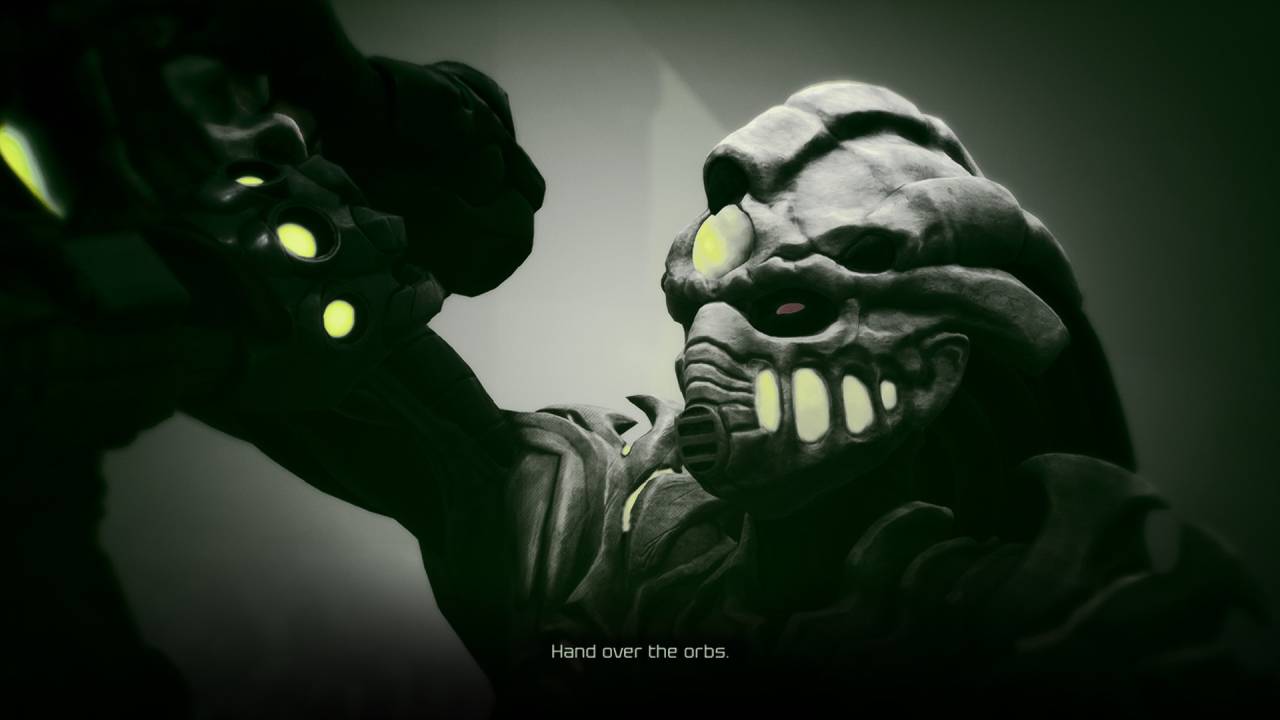
Visually, Moadra relies on muted colors, fog, and small rooms, which makes it feel claustrophobic. It fits a dying planet full of horrors. The 2.5D environments and character models are gorgeous in a grimy, alien way. Animation-wise, this is an indie game on a small budget, but it holds its own against bigger productions.
Everything runs smoothly, with fast loads and responsive controls on any setup.
Everything runs smoothly even on basic computers, loads quickly, and has no lag between pressing a button and seeing the action. Mouse and keyboard give you precise aim but make the platforming harder, while a controller feels more comfortable, though aiming a missile means holding down several buttons at once. It also runs smoothly on a Steam Deck.
Sound is a big part of Moadra's atmosphere. There's little music. Instead, you hear insects clicking in the dark, machines whirring, sparks popping down a distant, empty corridor, and monster howls. That choice keeps you tense, and the monster howls add a touch of horror. Voices are in an alien language, so there's no English dub, and the mumbling fits the setting.
Overall, Moadra is an impressive debut game. It nails the vibe, the gameplay hooks you, and wandering an alien planet with a scanner robot as your guide is a joy. Some armored foes, some early platforming, a lack of direction, and a poor fast-travel system keep it from being perfect.
Editor, NoobFeed
Verdict
Moadra is a dark, atmospheric Metroid-style adventure with fine exploration and flexible upgrades. Weak fast travel and a rough early difficulty hold it back, but genre fans should play it.
77
Related News
No Data.