
My Friendly Neighborhood Review
Xbox Series X|S
My Friendly Neighborhood turns muppets into monsters, and it is gloriously deranged.
Reviewed by Zahra Morshed on Jul 23, 2025
My Friendly Neighborhood emerges as a bizarre but compelling indie horror-satire, developed by brothers John and Evan Szymanski. Drawing heavy inspiration from survival horror classics like Resident Evil while delivering its content through the lens of children's television, My Friendly Neighborhood manages to subvert expectations at every turn.
Developed by a remarkably small team, this game takes the player on a psychological rollercoaster built from foam, felt, and fractured innocence. It's mix of nostalgia, humor, and fear gives well-known plots and tones a powerful new spin. As the goal to fix things quickly turns into a bizarre descent into madness, childhood icons start to act crazy.
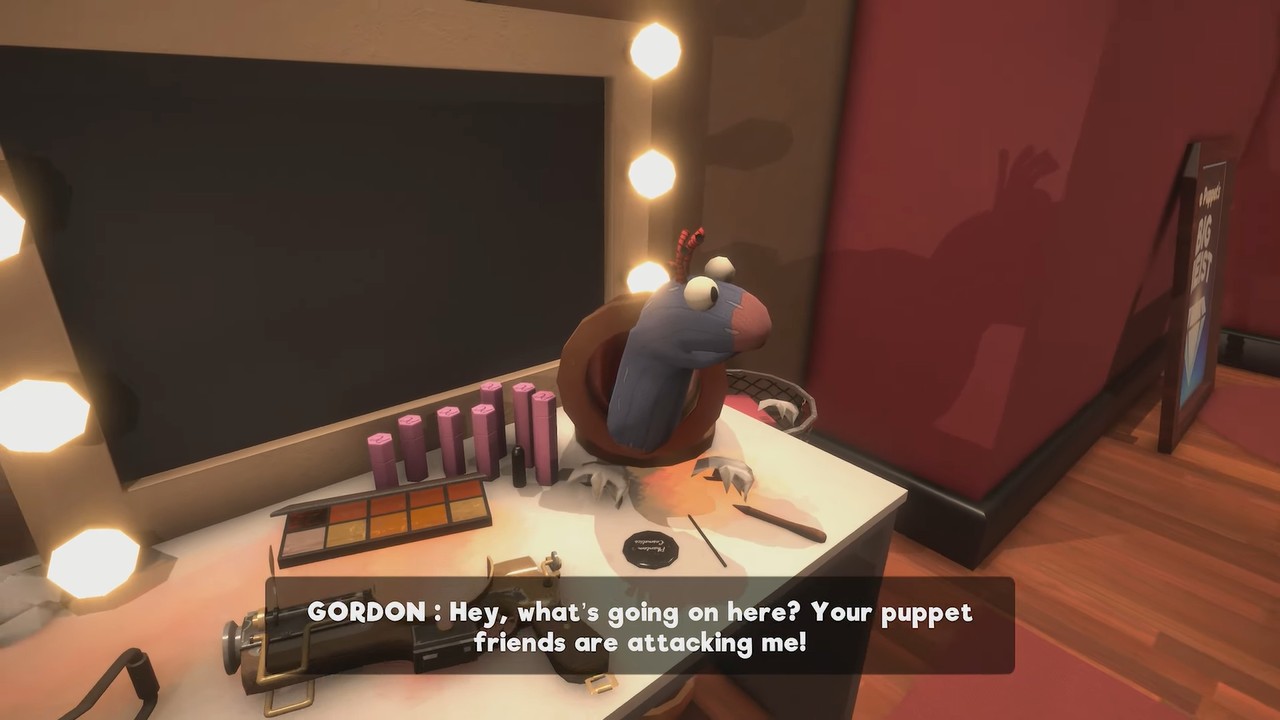
In My Friendly Neighborhood, players take on the part of Gordon O'Brian, a handyman who is called to an empty TV studio where old episodes of the puppet show My Friendly Neighborhood have mysteriously started playing again, overpowering the local news. The show was once a popular Saturday morning show, but now it's almost forgotten.
The sets are gathering dust, and the dolls are left to rot in the dark. But something—or someone—has resurrected it, and the studio is no longer empty. What unfolds is not just a technical mystery but a thematic exploration of decayed media, lost innocence, and post-war cultural trauma. As Gordon navigates the haunted studio, newspaper clippings and hidden documents gradually reveal a war-torn world still reeling from global conflict.
The story of the game skillfully blends the silly idea of murderous muppets with dark themes of society falling apart, creating a haunting metaphor for a world that has lost its way. My Friendly Neighborhood goes from being a silly show to a surprisingly profound statement on fun, trauma, and the ghosts of things that have been left behind.
Through a mix of old-school gameplay and funny horror themes, My Friendly Neighborhood is a love letter to survival horror. Players take control of Gordon as he explores the run-down studio, figuring out tasks, fighting or avoiding puppet enemies, and gathering things like coins and keys while keeping track of his limited resources.
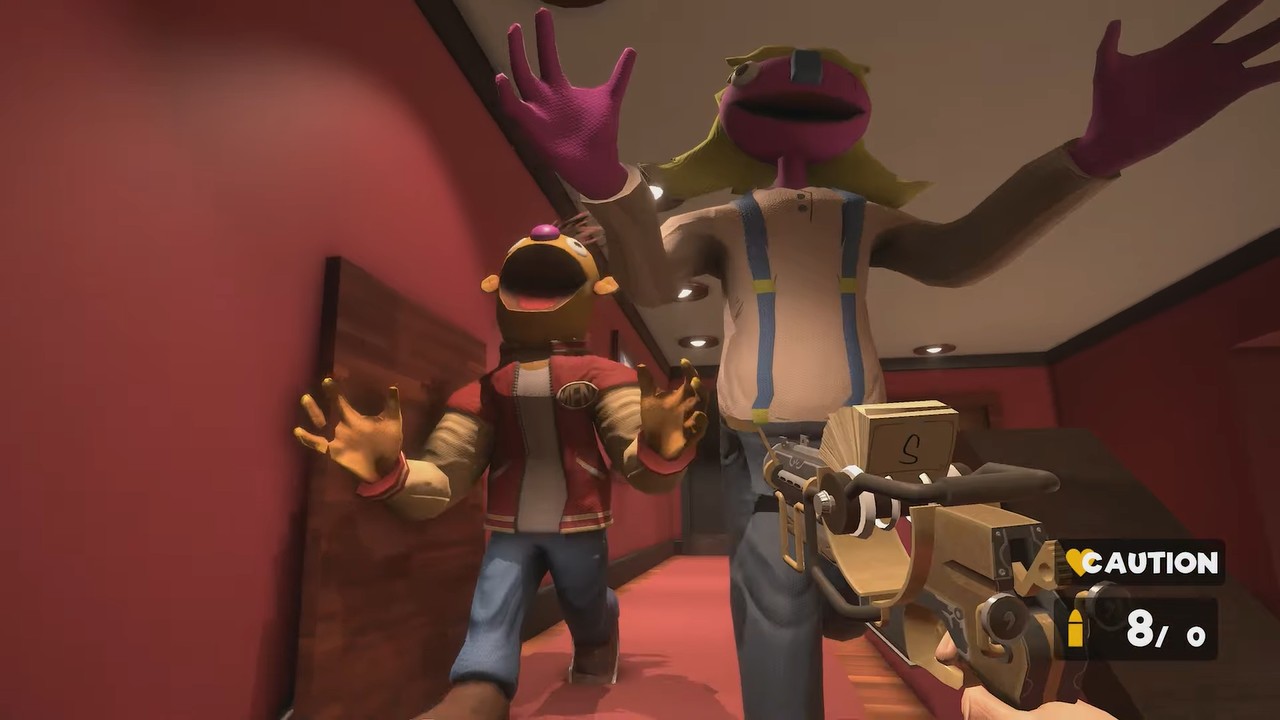
Managing your supplies is at the heart of it, and it's based on Resident Evil's famous grid-based system. It's important for players to think about what they need to take, save, and use when they're under a lot of stress. Combat comes in the form of weapons cobbled together from office supplies—guns that fire oversized letter blocks, wrenches for up-close encounters, and, perhaps most oddly, duct tape.
The latter becomes crucial, as defeated puppets don't stay down unless they're taped to the ground. This constantly produces a resource economy problem: should players use valuable tape to disable enemies permanently, or should they risk them coming back later?
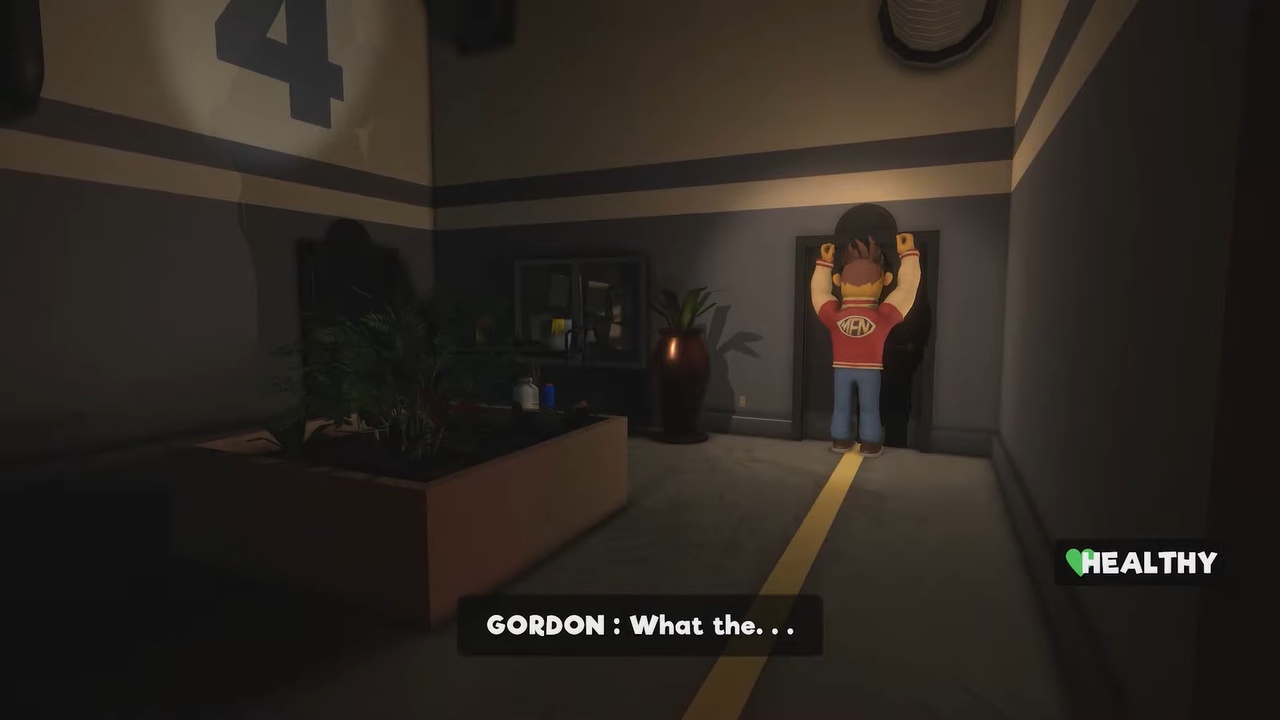
Backtracking plays a pivotal role. Locked doors, obscure keys, and progression-based map access ensure players revisit previously explored areas, often under new circumstances or with new tools. The game also implements a save token system, requiring players to find in-world currency to manually save, raising the stakes during exploration. This layered interaction of risk, exploration, and planning deepens My Friendly Neighborhood's core gameplay loop in meaningful and rewarding ways.
Combat in My Friendly Neighborhood is unapologetically absurd, yet structurally tight. Puppets attack with cheerful catchphrases, deadly hugs, or comically oversized objects. The mechanics are intentionally clunky but deliberate, echoing the survival horror genre's signature tension. Players must weigh their options—engage the puppet, flee, or try to disable it with tape. The combat is less about reflexes and more about choice under pressure.
Puzzles, on the other hand, are entirely built into the world. They make meaningful breaks between times of high stress by doing things like collecting letter tiles for a spelling test or solving environmental puzzles with the help of props and carefully chosen clues. As usual for the genre, the level of difficulty ranges from easy tasks like getting keys to more complicated logic puzzles with many steps. Importantly, the puzzles rarely feel disconnected from the setting—they're framed as part of the show's quirky logic or twisted educational tools gone rogue.
What makes the combination of the puzzle and battle dynamics so interesting is the way in which they complement one another and complement each other nicely. As a result of the fact that puzzles regularly generate circumstances for combat encounters, it is possible that considerable backtracking will occur if one of these conditions is not managed appropriately.
An excellent rhythm is often maintained between these two components throughout the game, which helps to keep the level of suspense and involvement high without allowing the game to become monotonous. This is especially true in situations where the player is unable to progress past a challenging section. In spite of this, there are some individuals who could find the repeated spoken lines from puppets to be monotonous.
In the vast majority of games, you are not able to accumulate experience points. Still, in My Friendly Neighborhood, your growth is mainly dependent on your ability to solve puzzles and explore the world. It is not necessary to level up to advance through the game; instead, you must visit different areas, find better equipment, or examine concealed documents to acquire additional information about the story.
The game pushes players to engage with their environment completely and presents them with incentives for their attentive observation by presenting them with cash for saving, ammo, or things that expand their lore through the use of these items.
Within the scope of this discussion, the experience system is, to a certain extent, more psychological than anything numerical. Players "level up" and proceed according to their level of familiarity, confidence, and grasp of the game.
Through the process of learning puppet patterns, resolving complex problems, and eventually gaining control of the labyrinthine studio, the players are able to achieve mastery not over the statistics, but over the area and the story as they progress through the game. Having said that, resource management continues to serve as a progression mechanism in and of itself; those that stockpile judiciously have a greater chance of survival.
Visually, My Friendly Neighborhood is a treat of twisted nostalgia. The game's environments mix set design that's both playful and unsettling—Sesame Street's urban simplicity viewed through a surrealist lens. Puppets are animated with exaggerated, erratic motion that becomes more unnerving the longer you stare. The combination of low-fi textures with stylized lighting evokes an old VHS horror feel, perfect for its setting.
Small visual touches—like desk scratches, faded posters, or lighting flickering as puppets pass—create a tactile atmosphere. Each studio room is uniquely dressed with a balance of childhood whimsy and quiet dread. From sewers inhabited by a Grouch-like villain to candy shops, theaters, and costume departments, every environment in My Friendly Neighborhood is visually consistent and steeped in lore.
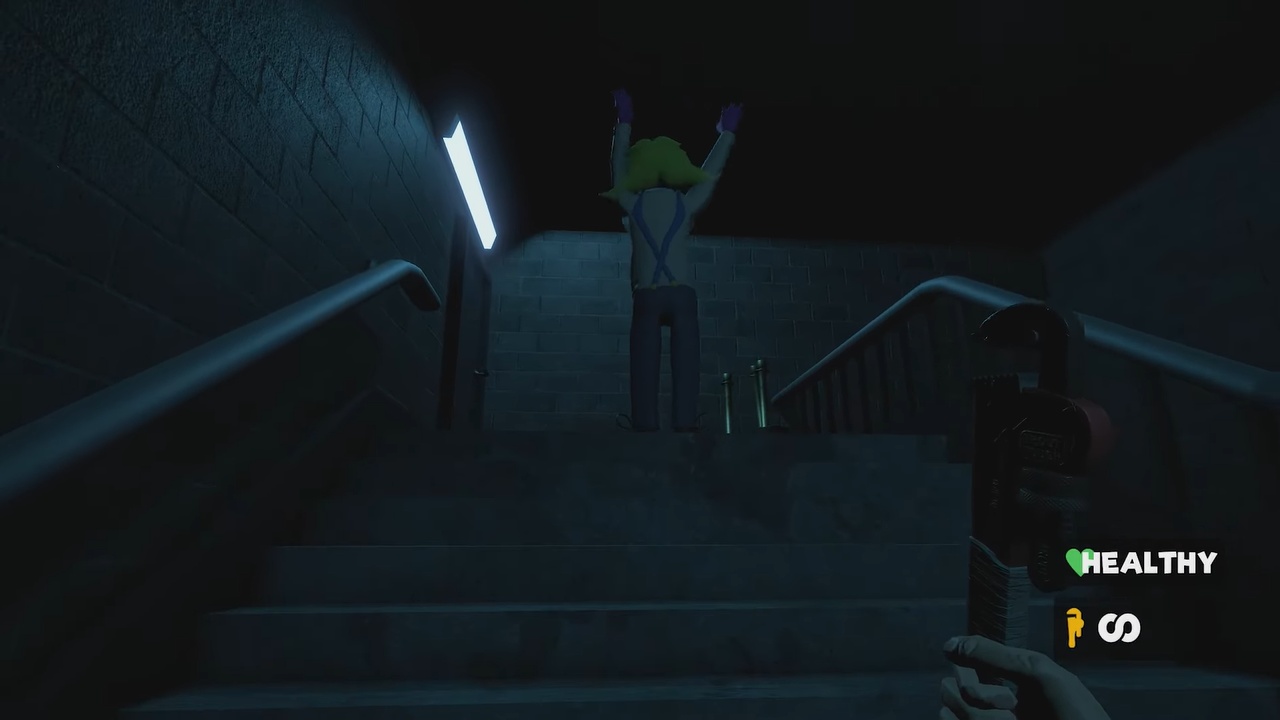
The game runs very smoothly, especially on Xbox Series S and Series X, where it stays at a smooth 60 frames per second and a clear 1080p to 4K quality. The picture quality is awe-inspiring when you consider how small the game's development team was and how small the file size was.
Sound design is a standout feature in My Friendly Neighborhood. The voice acting is purposefully over-the-top, imitating the cadence and diction of classic children's shows, yet twisted just enough to create unease. Repeated lines, even if they are annoying at times, fit the puppets' "broken record" characters and show how AIs don't work right.
Musically, the game nails its tone. Jazzy tracks accompany exploration, offering brief moments of levity amid the chaos. Before big fights, the music speeds up to get you pumped up, and the music in the safe rooms makes me think of old-school survival horror save rooms. The music doesn't just fill in the quiet; it adds to the emotional rhythm of the game, making you feel scared, funny, or mysterious as needed.
Sound effects like creaking sets, muffled giggles, and faraway singing add to the immersion and are often used to let players know when they are about to face an enemy. The small addition of sound cues to the game makes players more aware and increases their emotional connection.
My Friendly Neighborhood is a celebration of contradictions: colorful yet grim, comical yet disturbing, nostalgic yet subversive. It refuses to sit neatly within one genre box. Instead, it stitches together the familiarity of childhood programming with the mechanics of survival horror, and the result is something deeply original. Its puzzles are clever without being frustrating, its combat is functional and thematically hilarious, and its story grows richer with every corner turned.
For all its absurdity, My Friendly Neighborhood doesn't forget to ground itself in meaningful themes—cultural decay, memory, media saturation—and delivers these ideas through a world bursting with character. While some might lament the absence of traditional horror jump scares or longer runtime, the game compensates with strong design choices, excellent pacing, and genuine creativity.
There's a charm in every broken puppet and decaying set. My Friendly Neighborhood succeeds not just as a genre experiment, but as an experience that knows what it wants to say—and says it with flair, tape, and an arsenal of alphabet ammunition.
Contributor, NoobFeed
Verdict
A hilarious yet haunting love letter to survival horror and Saturday morning TV, My Friendly Neighborhood is one of the most original indie games of the year. Charm, dread, and puppets never mixed so well.
80
Related News
No Data.