
Romestead Review
PC
Early Access
A surprisingly addictive journey through the ruins of a collapsed Roman Empire.
Reviewed by Nusrat Choity on May 26, 2026
There is a tendency for survival games to mix together. Crafting, base building, exploration, and progression are all promised when a new one starts, and soon it seems like a slightly different version of something you've already played. At first glance, Romestead seems like it could easily fall into that trap.
Pixel-art landscapes, resource collection, farming, crafting stations, and swarms of adversaries are all depicted in screenshots. That doesn't sound all that novel. After that, you begin to delve more. Romestead bases its identity on a fallen Roman Empire rather than Vikings, fantasy realms, or generic post-apocalyptic wastelands.
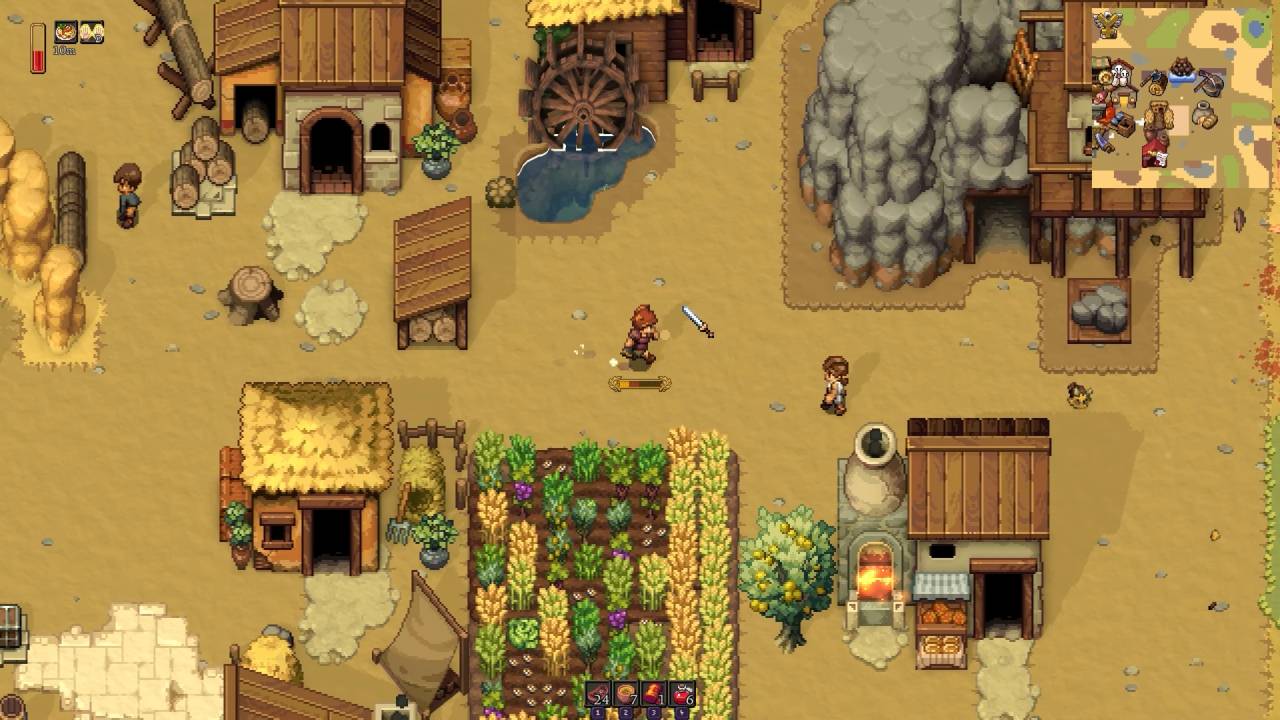
The gods have vanished, civilization has fallen, and every night the countryside is overrun with zombie creatures that want to destroy whatever flimsy colony you've managed to establish. More significantly, the game genuinely adheres to this odd setup. There is more to the Roman concept than just ornamentation. It affects advancement, technology, religion, architecture, and even how your community changes over time.
The end product is a survival game that at times feels like a town-building role-playing game, at other times like Valheim, and at other times like a colony simulator. It manages something that many survival games struggle with: it feels different, even though it doesn't always get those ideas right.
Romestead doesn't use protracted language or lengthy cinematic scenes to deliver its story.
Rather, the majority of the story is told by the planet itself. Rome has vanished. Whatever disaster destroyed the empire left ruins, scattered survivors, deadly monsters, and a planet where the dead are reluctant to stay buried. Your task, on paper, is simple: rebuild civilization from almost nothing. This involves finding survivors, establishing a community, gathering supplies, and slowly fighting back against the threats that dominate the outside world.
More personality than you expect from the Roman mythological angle. The gods have a direct effect on your development rather than just being background knowledge. Altars start to matter in everyday life. You can sacrifice resources, crafted items, and offerings to win the favor of various deities and unlock new technologies, structures, and perks.
It always leaves you with the feeling that you are rebuilding something bigger than a simple survival base. You’re not just getting through another night. You are trying to save a civilization that has already failed.
What stands out immediately about Romestead is its many systems layered atop one another. By day, you collect supplies, build buildings, grow crops, craft tools, rescue survivors, assign jobs, and explore new areas. When the sun sets, the focus changes dramatically. Your peaceful management techniques become all about survival when the undead come out and start attacking your colony.
The entire experience is built around that cycle.
The intriguing aspect is the sense of interconnectedness. The mechanics of many survival games are divided into discrete tasks. Here, crafting is practiced. There is farming there. Exploration has its own niche. Romestead is always bringing those systems closer together. Resources required for religious offerings may be found in a new biome.
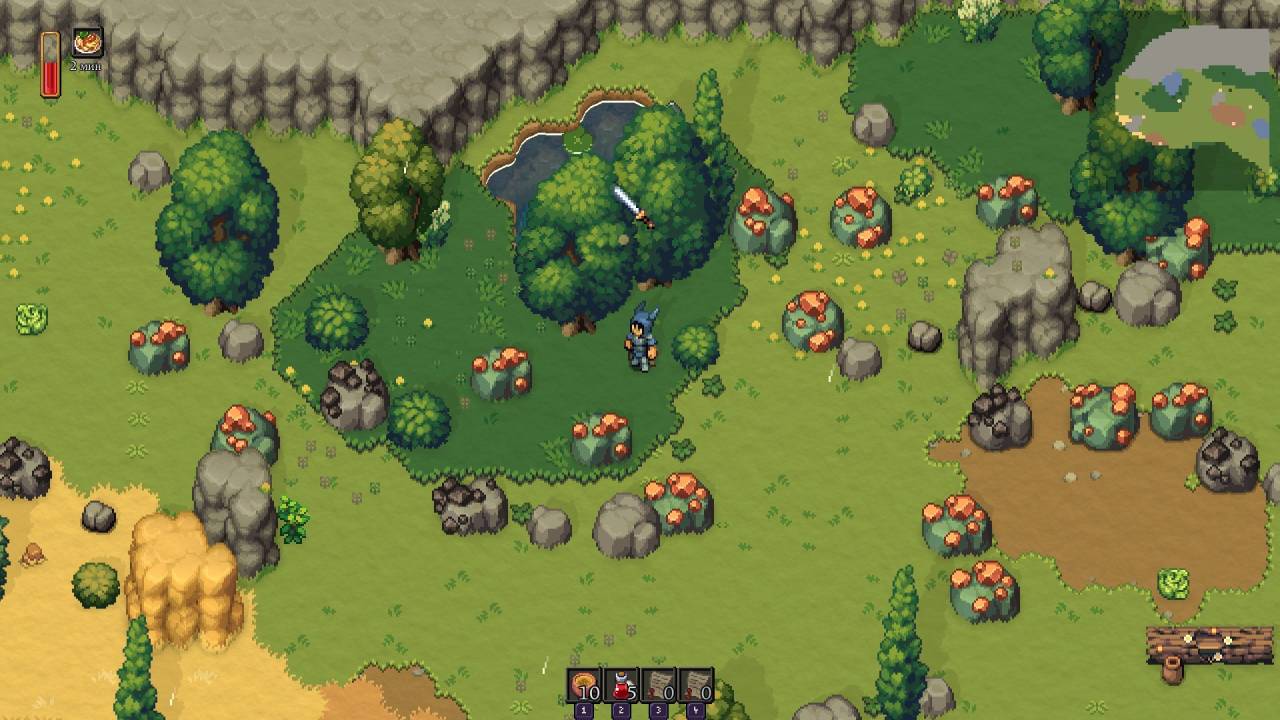
Technologies are unlocked by those offerings. Your settlement is enhanced by those technologies. You can explore farther because the upgraded town generates resources more effectively. Everything contributes to something else. The physical existence of resources in the world is one of the more peculiar mechanics. The logs that follow from cutting down a tree do not appear in an inventory overnight. They are real things that are resting on the ground.
You can load them into carts, transport them to construction sites, or pick them up.
This feels quite immersive at first. Compared to most survival games, hauling a massive log back to camp adds novelty to building and gathering, but that novelty wears off. After a few hours, something that seems immersive can get boring. Carrying supplies one piece at a time begins to feel more like extra effort standing in the way of the next project than like meaningful interaction.
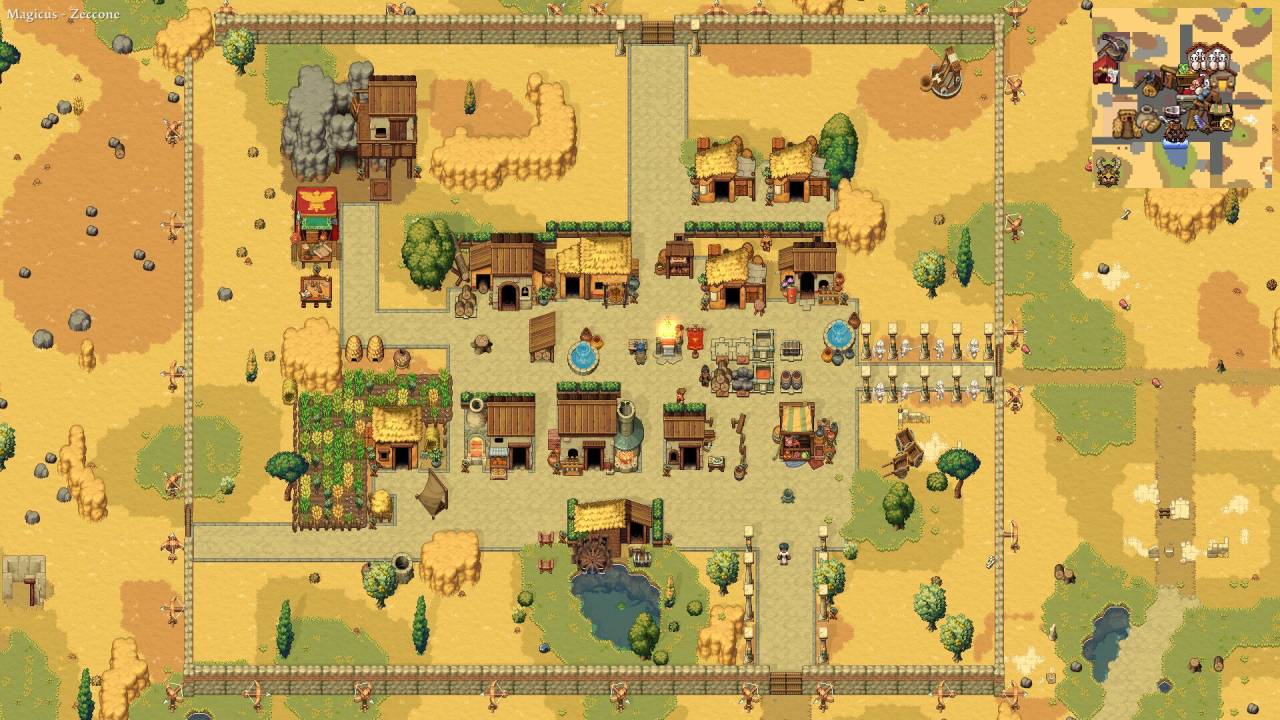
Although the opening hours can try your patience, the game ultimately offers greater transportation tools. As you build out your settlement, Romestead starts to hit its stride. From practically nothing at first, you gradually unlock farms, workshops, bakeries, walls, manufacturing buildings, homes and specialized facilities.
It’s quite satisfying to see a little camp grow into a thriving Roman settlement. Additionally, the citizen system is crucial. It is possible to find survivors and provide them with work all across the city. Workers gradually take over parts of the economy rather than making everything by hand forever. However, there are restrictions. Contrary to what some players may think, citizens are not nearly as autonomous.
Often they feel less like fully simulated inhabitants, more like specialized industrial plants.
They perform their duties, but they might not offer as much personality or vitality as lovers of colony management would want. However, because each new building feels practical rather than ornamental, the settlement advancement as a whole continues to be one of the best aspects of the game.
The most erratic aspect of Romestead is likely combat. It works fairly effectively against common foes. Light and heavy assaults, dodges, ranged weapons, consumables and equipment upgrades are all at your disposal. Encounters take time and mobility, not just clicking until they fall over. One little detail that makes chaotic interaction feel more fluid than expected is the ability to grab surrounding objects and throw them without opening menus.
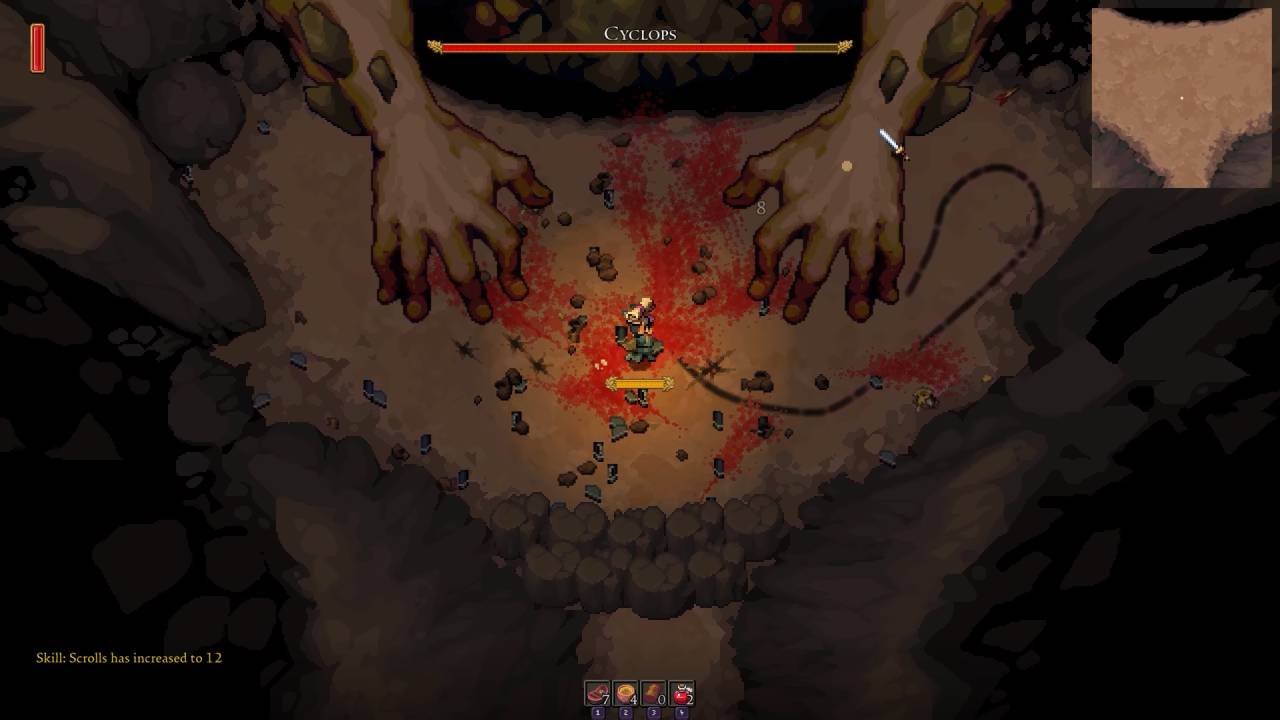
Combat for the most part does what it is supposed to. It gets more complicated during boss fights. Some supervisors are much more demanding than the surrounding structures would suggest. Large health pools, heavy hits and uneven telegraphing sometimes turn engagements into battles of endurance rather than skill.
It’s not uncommon to spend a lot of time preparing for a fight and find that surviving long damage exchanges is harder than learning the mechanics. Similar frustrations can arise when exploring a dungeon. Some traps seem to be badly explained, punishing you severely without providing you with enough information to avoid them. It is rarely rewarding to lose progress due to an invisible threat, particularly when recovering equipment necessitates another risky journey.
The combat is not nearly as powerful as the progression mechanism itself.
Upgrades to equipment are important. New technologies are important. New biomes are important. Rather than just adding more damage, each time you unlock something important, it typically opens up new possibilities.
Here, special attention should be paid to the religious advancement system. Your settlement is significantly impacted by the Roman gods you choose to worship. Different gods grant access to various benefits and technology, enabling communities to grow in various ways. Compared to the typical survival game, where everyone finally obtains the exact same upgrades in the exact same order, this produces more variety.
Depth isn't the main problem. It's dialogue.
Romestead frequently presumes you are familiar with systems before providing a thorough explanation. It is possible to overlook crucial mechanics. It is simple to forget skill points. Long after its instruction, worker management emerges. Some pathways for advancement are not always clear. As a result, especially for newbies, the first several hours may feel needlessly complicated.
The game's identity is heavily influenced by the visual style. Although Romestead employs top-down pixel imagery, it's among the best in the survival genre right now. Every biome can create its own vibe, and the environment feels complex without being cluttered.
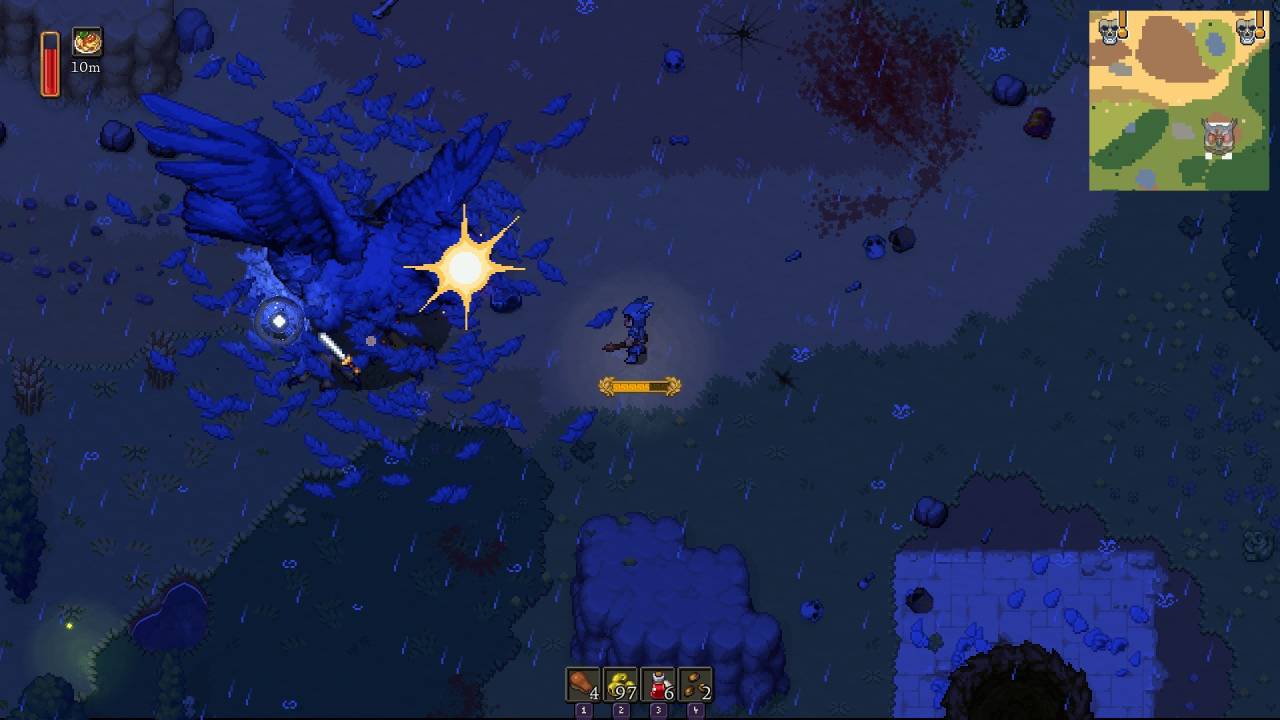
The starting areas are quite friendly and safe. The further away from your community you get, the darker, scarier and riskier the environment gets. That visual progression is a subtle but effective support to the gaming loop. Roman architecture aids in setting the game apart from rivals. Housing, fortifications, temples, and workshops all add to the impression that you're reconstructing a vanished civilization rather than setting up another standard survival camp.
Credit should also be given to environmental details. There are obvious remnants of battlefields. Ruins don't require conversation to tell stories. Despite being in a post-apocalyptic state, the world feels lived in. Unfortunately, the interface falls short of the same level.
Menus frequently seem incomplete. Finding crucial information might be challenging. Sometimes inventory management is awkward, and there are too many unanswered questions in certain lessons. The world is appealing and simple to lose oneself in. Sometimes it's less fun to navigate the processes underlying it.
Romestead 's approach to audio is somewhat conservative. The game benefits from the soundtrack's infrequent attempts to take over your attention. Naturally flowing in and out, music facilitates settlement management and exploration without becoming monotonous.
Mood is effectively created by ambient sounds.
Your settlement feels active and industrious during the day. As danger draws near at night, the atmosphere clearly changes. Resource-gathering actions provide enough weight to make routine tasks feel fulfilling, and combat impacts offer unambiguous feedback. The music continuously enhances rather than detracts from the experience, although nothing here is going to become an all-time favorite soundtrack.
One of those games that is easier to enjoy than to suggest to everyone is Romestead. There are times when everything works perfectly together. Workers are creating resources, new technology is being unlocked, your settlement is growing, and another hazardous area is just around the corner.
Every minor accomplishment automatically leads to the next objective, making it extremely difficult to break free from the cycle of advancement. Then there are times when it's hard to ignore the game's flaws. Questions are left unanswered in tutorials. It seems unclear how things are progressing. Combat balance becomes annoying. For certain mechanics, annoyance equates to depth.
But Romestead continues to draw you back in spite of those issues. The reason is simple. There is a really interesting basis underneath the crude presentation. The game has a personality that most survival games lack, thanks to its Roman background. Because of the interrelated systems, every action feels important.
Long beyond the opening hours, exploration is still worthwhile. Building settlements always has a sense of purpose. Early access games often sell potential. Even if Romestead still needs improvement, it already has enough content to stand on its own.
This might easily become one of the better survival-building games on the independent market if next updates enhance onboarding, refine the interface, and remove some of the most annoying progression obstacles. For now, the experience is messy, ambitious, sometimes frustrating, and far more successful than unsuccessful.
Contributor, NoobFeed
Verdict
Romestead's Roman apocalyptic scenario and intricately linked growth mechanics make it easy to lose dozens of hours in the game, even though it doesn't completely reimagine the survival genre. There are still some rough edges, but the base is unquest
72
Related News
No Data.