
Tears of Metal Review
PC
A clever mix of Musou combat, roguelike progression, and army-building turns this Scottish fantasy adventure into a rewarding action game that keeps every run feeling worthwhile.
Reviewed by Tahmid Mahi on Jul 30, 2026
Tears of Metal is the debut title from Paper Cult, an independent Canadian studio founded by developers with experience working on games like Bloodborne, Assassin's Creed, Far Cry, and Watch Dogs. Rather than trying to imitate one genre, the team combines several familiar ideas into a single experience.
At first glance, it looks like another hack-and-slash game where you charge into massive groups of enemies and swing a sword until nothing is left standing. But give it a little more time, and you'll discover there's a lot more happening beneath the surface.
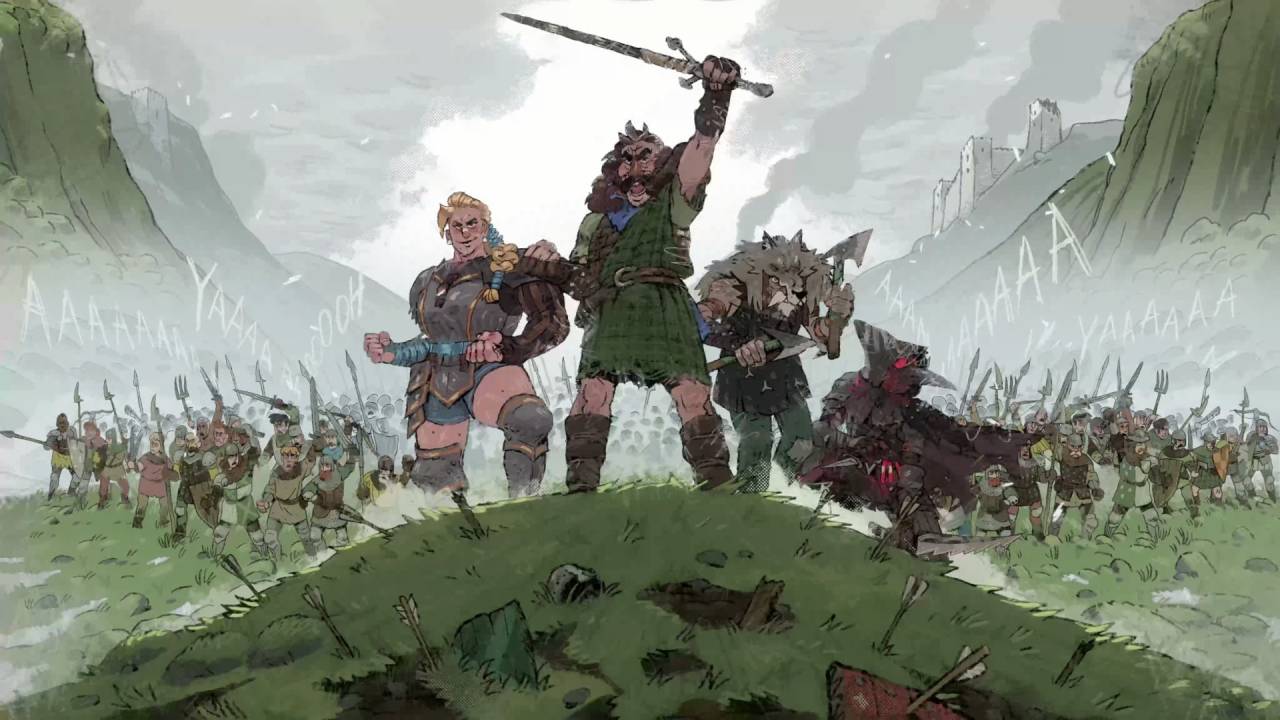
Tears of Metal isn’t just a high-speed action game.
It mixes Musou-style massive battles with roguelike progression, permanent upgrades, army management, and tactical decision-making. Each run will require you to adapt to new upgrades, improve your growing resistance, and slowly rebuild your forces after each victory or defeat.
The adventure is set in a fantasy version of medieval Scotland where your homeland has been invaded following the arrival of a mysterious meteor called the Dragonstone. Its effect endows the island with supernatural powers, giving strength to the armies of invaders and transforming ordinary soldiers into dangerous foes possessing strange powers.
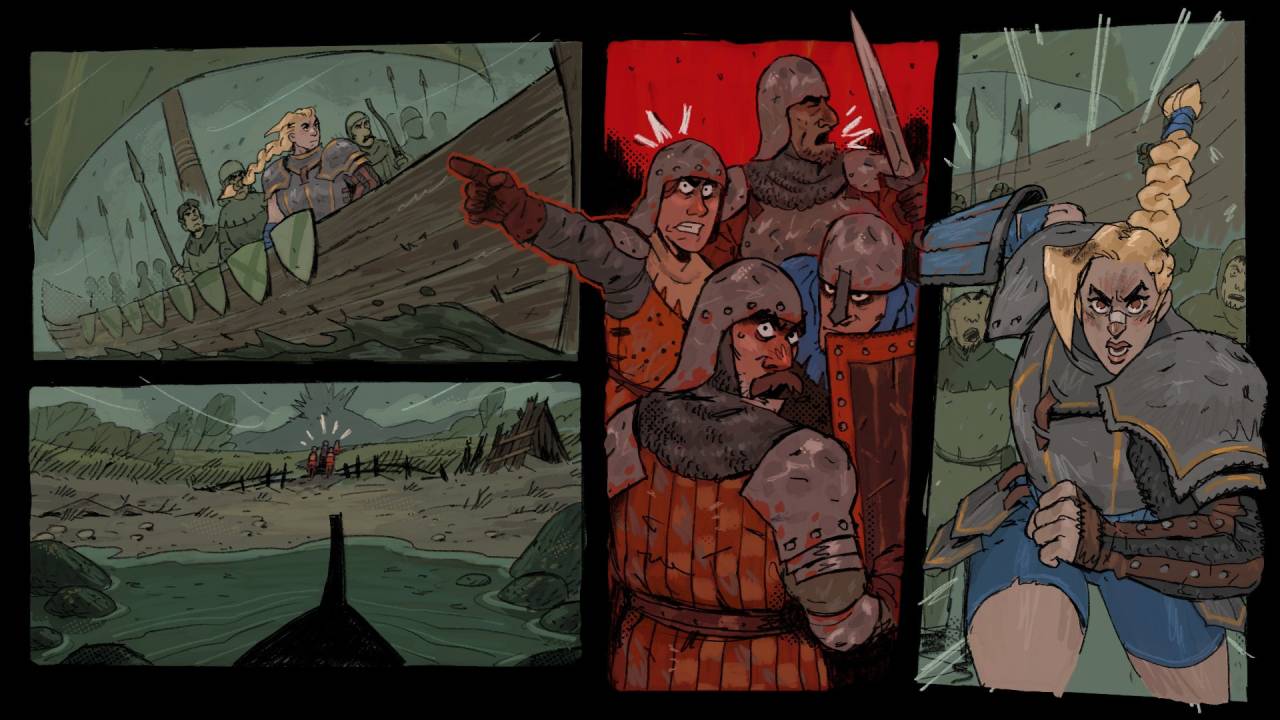
Tears of Metal doesn’t hit you with long cutscenes explaining everything at once. Instead, it slowly reveals more of its world as you continue to fight your way through the island. As you go further into enemy territory, you gradually discover the truth behind the Dragonstone, the invading forces, and the supernatural power threatening Scotland.
You won’t be controlling a single legendary hero, but members of the Scottish resistance. You can play as several different characters, each with their own weapons, abilities, and fighting style. But the various characters help keep the journey fresh without significantly changing the overall story, even if the goal remains the same: reclaiming Scotland and finding out what really happened with the Dragonstone.
The story of Tears of Metal never tries to outshine the gameplay.
Tears of Metal provides enough context to make every fight feel important and lets you spend most of your time actually playing. As you push deeper into enemy territory, rebuild your settlement, and build up your army, the world opens up, giving you more insight into the invading forces and the supernatural events threatening the kingdom.
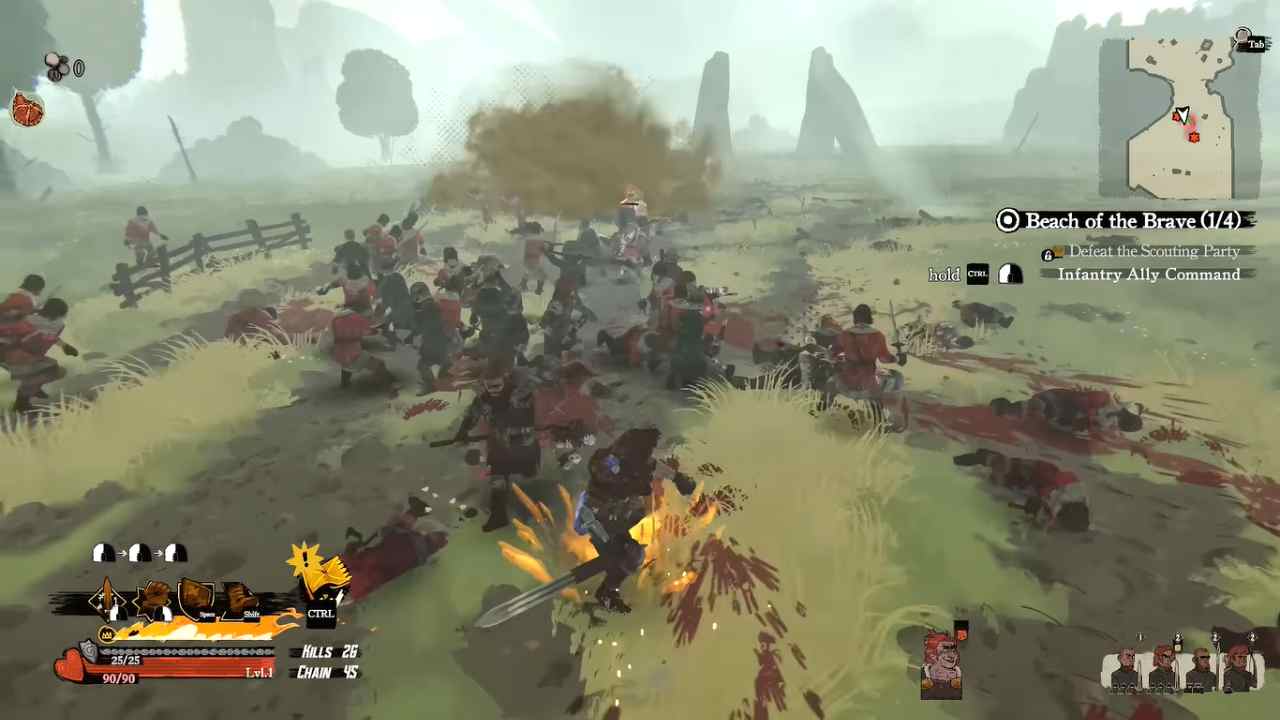
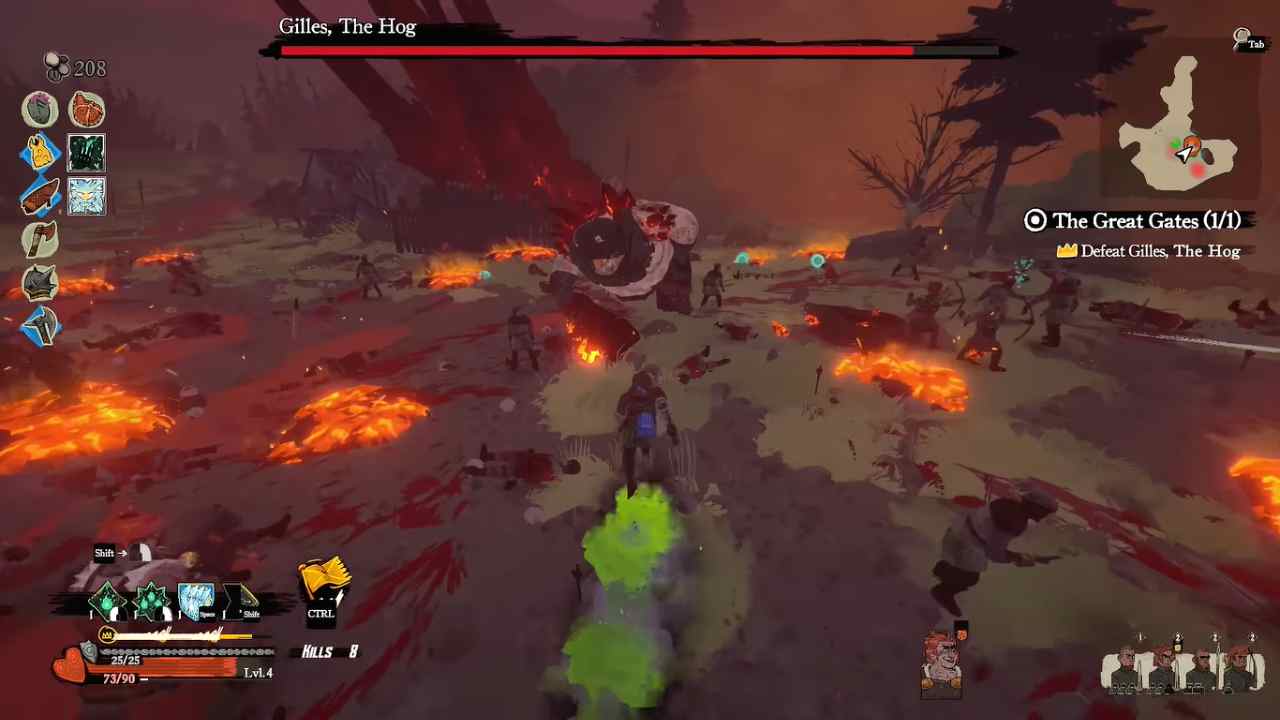
From the moment you begin playing, you'll spend most of your time charging into enormous battles filled with hundreds of enemies. The scale immediately brings games like Dynasty Warriors to mind, where overwhelming numbers become part of the excitement instead of something to fear.
Between these expeditions, you return to your settlement, the hub of your long-term progression.
This is the place where you can recruit more soldiers, unlock new abilities, upgrade your equipment, expand your village facilities, and invest the resources you earned on previous runs. The village grows over time as you advance, which adds to the sense that you’re not just leveling up your character but rebuilding an entire resistance.
One of the game’s best features is its roguelike structure. Each expedition presents different upgrade opportunities, artifacts, and rewards, so no two runs are quite the same. You aren’t learning the one perfect way to play, but you are encouraged to use whatever upgrades come your way.
One run may revolve around strengthening heavy attacks, while another rewards defensive abilities, area damage, or improving your companions. This constant variation keeps the gameplay loop engaging long after the opening hours.
Your army also becomes an important part of every mission. Instead of fighting alone, Scottish infantry, spearmen, archers, commanders, and unique companions join you in battle. Those allies are so much more than simple followers. They distract, reinforce attacks, carve holes in big fights, and help control crowded battlefields.
The branching world map adds an extra element of strategy.
Rather than following one set route, you can choose your own way across Scotland. Each location will give you different rewards, such as resources, artifacts, permanent upgrades, or opportunities to buff your forces before facing tougher encounters.
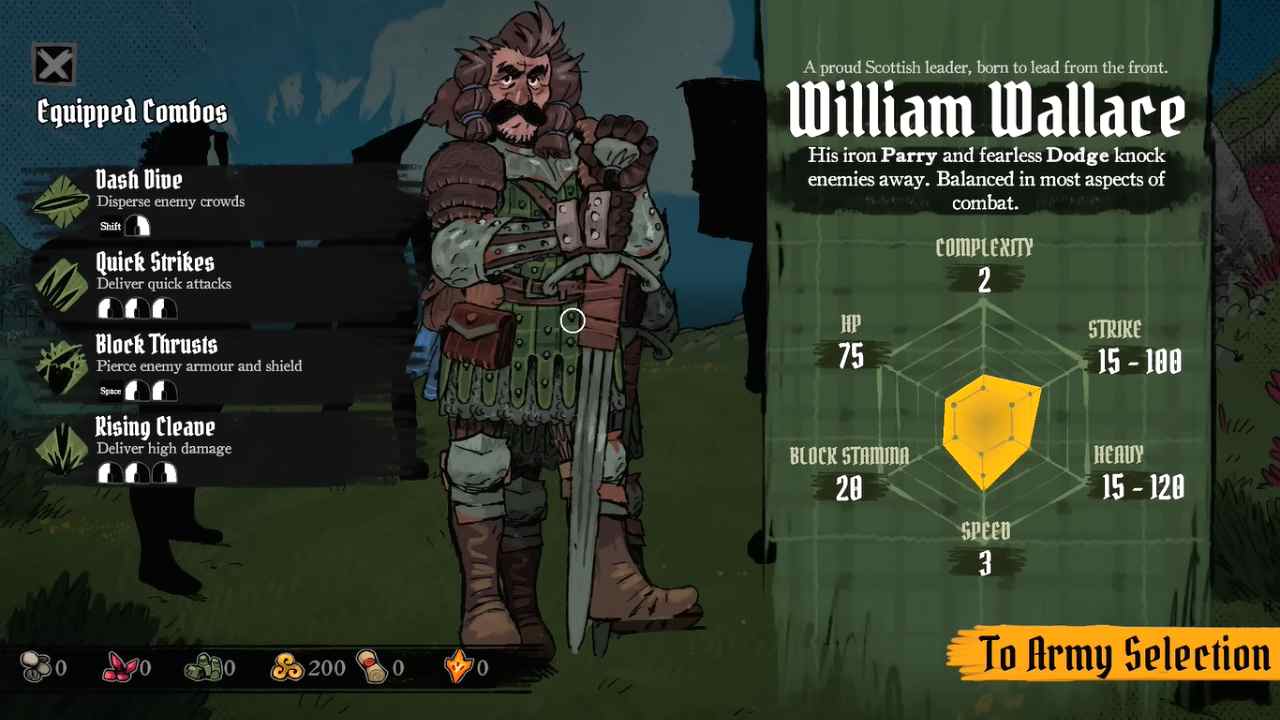
Although there are no traditional environmental puzzles, combat itself often feels like solving a constantly changing battlefield. Simply swinging your weapon as quickly as possible rarely works for long. You have access to light attacks, heavy attacks, thrusts, jumping strikes, dodges, blocking, and perfectly timed parries.
A large variety of enemies keeps combat interesting.
New opponents are constantly introduced, each demanding a different response. Some need to be dodged carefully, others interrupted before they can unleash powerful attacks, and the elites reward well-timed parries with openings for heavy counterattacks.
Most enemies are manageable one-on-one, but the challenge ramps up significantly when multiple elite opponents appear alongside hundreds of regular soldiers. Just as important as landing attacks is being aware of everything that’s going on around you.
Special abilities bring an entirely new level of strategy. They can clear out large groups of enemies or deal significant damage to tougher foes, but using them indiscriminately can leave you without valuable tools during the more difficult parts of a run. Health management is as important as ever.
Recovery options are still limited. Every mistake is counted, particularly at the beginning of an expedition, when unnecessary damage can influence your chances of surviving harder boss fights later on. That constant pressure makes every encounter matter, encouraging you to think carefully before rushing into the next fight.
The combat system balances well between accessibility and depth.
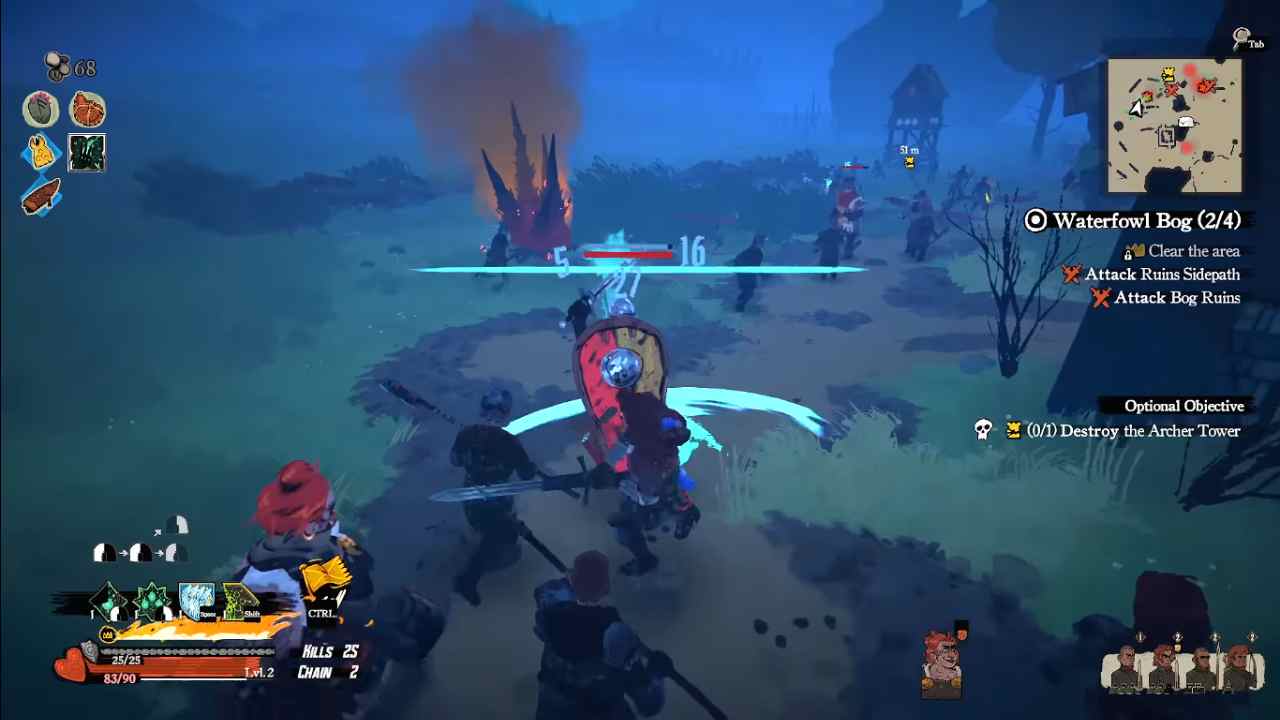
The controls are simple enough to pick up quickly for beginners, but getting the timing, positioning, and defensive mechanics down takes practice. Boss fights test all you have learned, requiring patience, pattern recognition, and smart use of your abilities, not blind aggression.
Progression is a big part of how you approach each run.
Even when you die, you can spend resources earned in previous runs on permanent upgrades back at your settlement. New equipment, stronger soldiers, new facilities, new companions, and improved abilities all help in future success.
Artifacts, emblems, and clan bonuses also provide you with further customization, allowing you to experiment with different builds rather than just one powerful setup. Because every failed expedition still contributes to your overall progress, defeat rarely feels like wasted time.
Rather than chasing realistic visuals, Tears of Metal embraces a colorful low-poly art style that fits its fast-paced action extremely well. The environments are easy to take in, even with hundreds of enemies on the screen, making it easier to keep track of incoming attacks during chaotic battles.
The bright visual effects, exaggerated animations, and satisfying weapon impacts make every encounter feel energetic without getting visually cluttered. Even during the largest battles, it's easy to keep track of enemy attacks and your abilities, which helps the combat remain readable from start to finish.
The journey also includes various hand-crafted locations, including forests, villages, open fields, and other uniquely Scottish landscapes. Some locations do reappear in later runs, but branching routes, evolving locations, and different combat situations keep the world from being too repetitive.
The soundtrack is the perfect accompaniment to the action, without ever attempting to dominate it.
Fast orchestral music accompanies big battles, building in intensity, while quieter tracks play during the downtime between expeditions. The traditional Scottish influences, especially the bagpipes, help to reinforce the setting and give Tears of Metal a unique identity.
Tears of Metal is a successful mix of ideas from several different genres, but it's still its own thing. On the other hand, it does get that Musou-style feel of being always outnumbered by impossible odds.
On the other hand, it adds meaningful roguelike progression, permanent upgrades, settlement management, branching paths, and army-building systems that always reward long-term investment. The result is a gameplay loop that constantly gives you another reason to jump back in, whether you're chasing stronger builds or expanding your resistance.
Experimentation is one of the game’s biggest strengths, with every expedition offering new decisions to make with randomized upgrades, artifacts, and route choices. Even failed runs help you move forward, motivating you to continue improving your characters, your settlement, and your burgeoning Scottish resistance.
Co-op multiplayer also adds another fun option, allowing up to four players to tackle the battlefield together while taking advantage of different combat styles and abilities.
Tears of Metal has its shortcomings. Additionally, repetition can begin to show up during lengthy sessions. Combat is the primary thing you do during the experience. Story-driven players expecting a cinematic storytelling adventure might find the story lighter than expected.
But those flaws don’t detract much from what Tears of Metal does well. Tears of Metal features satisfying action, meaningful progression, flexible build options, strategic army management, and a fun gameplay loop that constantly begs for another run.
Combining familiar mechanics into a coherent package, it offers a rewarding adventure that sits comfortably next to other modern action roguelikes while staking its claim with its unique Scottish setting. Even if it doesn't reinvent the genre, it delivers enough original ideas to make each expedition feel satisfying from beginning to end.
Editor, NoobFeed
Verdict
Tears of Metal is a thrilling adventure that mixes Musou action, roguelike progression, army management, and satisfying combat. It's a rewarding journey that sits with other modern action roguelikes while making its place with its Scottish settings.
80
Related News
No Data.