
Warhammer 40,000: Boltgun 2 Review
Xbox Series X|S
A second playable character, more varied enemies, and improved level design make this return to the grimdark universe worth your time, even if a few weapons and boss fights miss the mark.
Reviewed by Azfar Rayan on Oct 20, 2026
Warhammer 40,000 and the boomer shooter genre are a natural fit. The universe is packed with grotesque enemies, oversized weapons, endless wars, and plenty of reasons to turn any battlefield into a bloodbath. Add that to the fast-paced shooting and pixel-inspired visuals of old-school shooters like Doom and Quake, and you have a formula that pretty much sells itself.
Auroch Digital understood that Warhammer 40,000: Boltgun was a retro shooter that let you step into the boots of an Ultramarine and tear through the forces of Chaos. The original Boltgun got plenty right, particularly its combat, presentation, and commitment to the franchise's grim atmosphere.
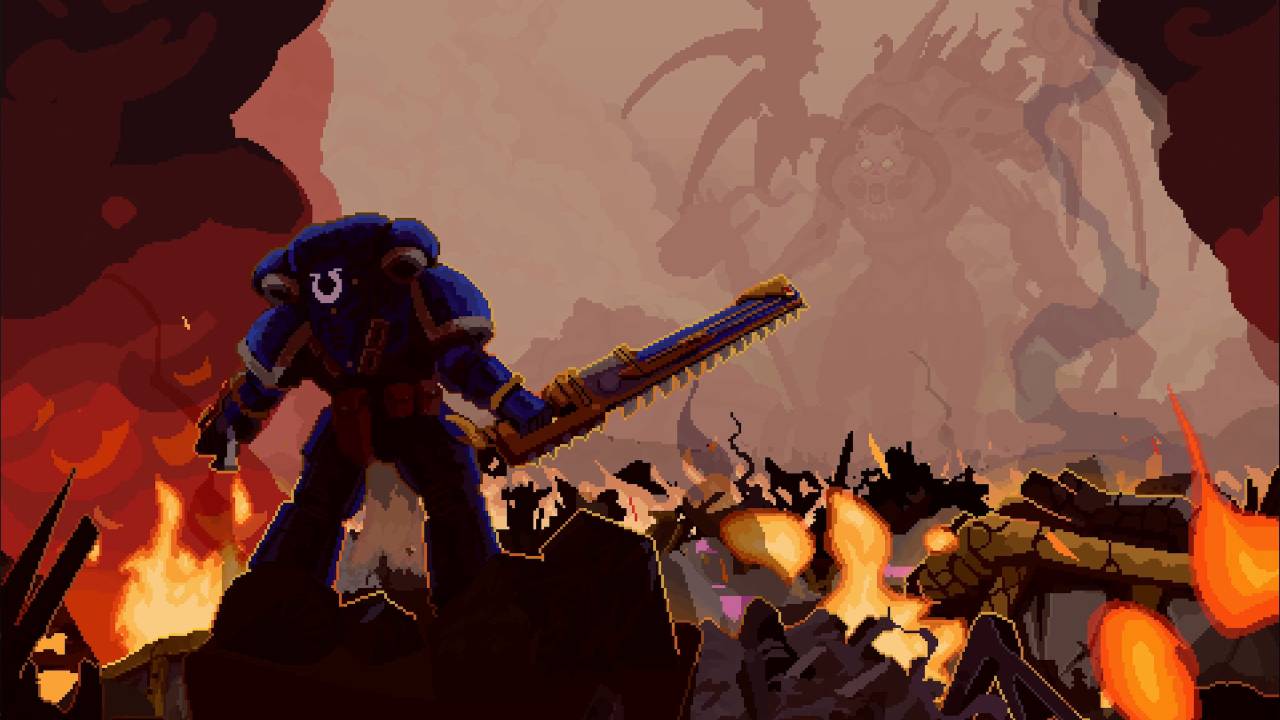
However, spending more time with it revealed some shortcomings. The level design could get repetitive, enemy encounters lacked variety, and the experience sometimes felt like it relied too heavily on throwing enemies into rooms for you to eliminate before moving on. The core idea worked, but it had room to grow.
Warhammer 40,000: Boltgun 2 builds on that foundation rather than reinventing the genre.
Developed by Auroch Digital, the sequel adds a second playable character, expands the enemy roster, introduces new weapons, and offers more interesting environments to fight through. It also experiments with moving set pieces, environmental hazards, and branching mission paths, making the campaign feel less predictable than before.
The result is a sequel that understands what made the first game enjoyable and tries to make those strengths count for more. It isn't a radical departure from the original, nor does it need to be. If you want a straightforward shooter that lets you switch off your brain and purge heretics for a few hours, Boltgun 2 delivers. It has some noticeable weaknesses, particularly with certain weapons and boss encounters, but the improvements make it a worthwhile return to the battlefield.
The story wastes little time getting you into the action.
As the Imperial fleet orbits Archamonus Prime, the planet becomes corrupted, and enemy forces run rampant. You are once again dealing with a threat that needs to be eliminated, and subtlety isn't exactly part of the plan. But this time the conflict is about Vashtorr the Arkifane, a powerful servant of Chaos Undivided and a bigger player in Warhammer 40,000 lore.
Vashtorr is an interesting antagonist because he works differently from the four major Chaos Gods. Known as the God in the Machine, he rules the Forge of Souls, where Chaos creates daemon weapons and daemon engines for its forces.
His association with invention, technology, and innovation takes these concepts somewhere much darker, resembling scientific curiosity without any moral boundaries. That gives the conflict a slightly different flavor than a straightforward invasion by Chaos forces.
Unfortunately, the narrative doesn't spend much time exploring those ideas in depth.
You're primarily here to fight through enemy forces, stop Vashtorr's plans, and survive whatever the game throws at you. The story provides enough context to hop from mission to mission, but it's not the main draw, especially if you're not familiar with the setting's vast collection of characters, factions, and lore.
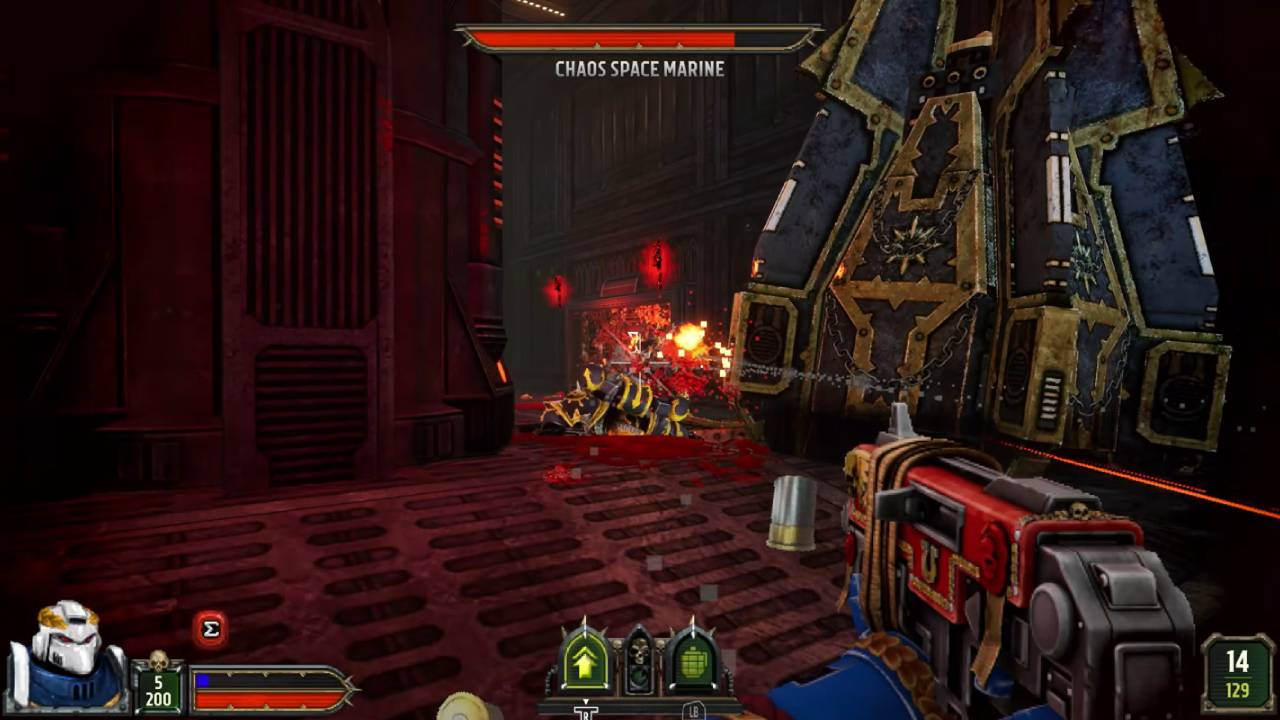
That isn't necessarily a problem. Boltgun 2 knows its audience is here for the shooting, and the narrative serves that purpose without getting in the way. You don't need to understand every reference to appreciate the basic premise. If you're already invested in Warhammer 40,000, you'll probably get more out of the familiar factions and lore connections, but newcomers can still enjoy the action without studying the setting beforehand.
The campaign offers two playable characters: Malum Caedo, the Space Marine protagonist from the original game, and Nairath, a newcomer from the Sisters of Battle. Both fight toward the same general goal, but their different abilities and weapon choices let you experience the campaign from both perspectives.
The campaign also features branching mission paths.
At several points, you can choose between different operations, each containing its own collection of levels. Some missions are mandatory, but you can skip others depending on your decisions. This means a single playthrough won't necessarily show you everything the game has to offer. You can finish the campaign with one character, then return with the other to experience the alternative missions along the way.
The branching structure doesn't alter the overall story too much, but it does make for more interesting playthroughs. You're not just playing the same set of rooms and encounters from beginning to end. You get different environments to explore, and the game gives you flexibility in how you approach the campaign.
The biggest improvement, however, is the level design. After a while, the original game can feel repetitive as you clear rooms, find keys, and move into the next encounter. Boltgun 2 still relies on familiar boomer-shooter conventions, but it adds enough environmental variety to keep the experience moving.
One mission puts you on a moving train, where you fight enemies while the environment changes.
Other sections involve navigating areas with trains passing through, forcing you to pay attention to where you move. Another mission has you following a tank as it is assembled inside a factory, giving the level a central mechanic beyond simply shooting everything in sight.
The game also uses open battlefields better. In some areas, you fight alongside the Death Korps of Krieg as Imperium forces fight their enemies. Ruined structures, defensive positions, and trenches give opposing forces cover, making these encounters active battlefields rather than conveniently laid-out shooting galleries. You can plow through the chaos, take out enemies at close range, and watch the conflict unfold around you.
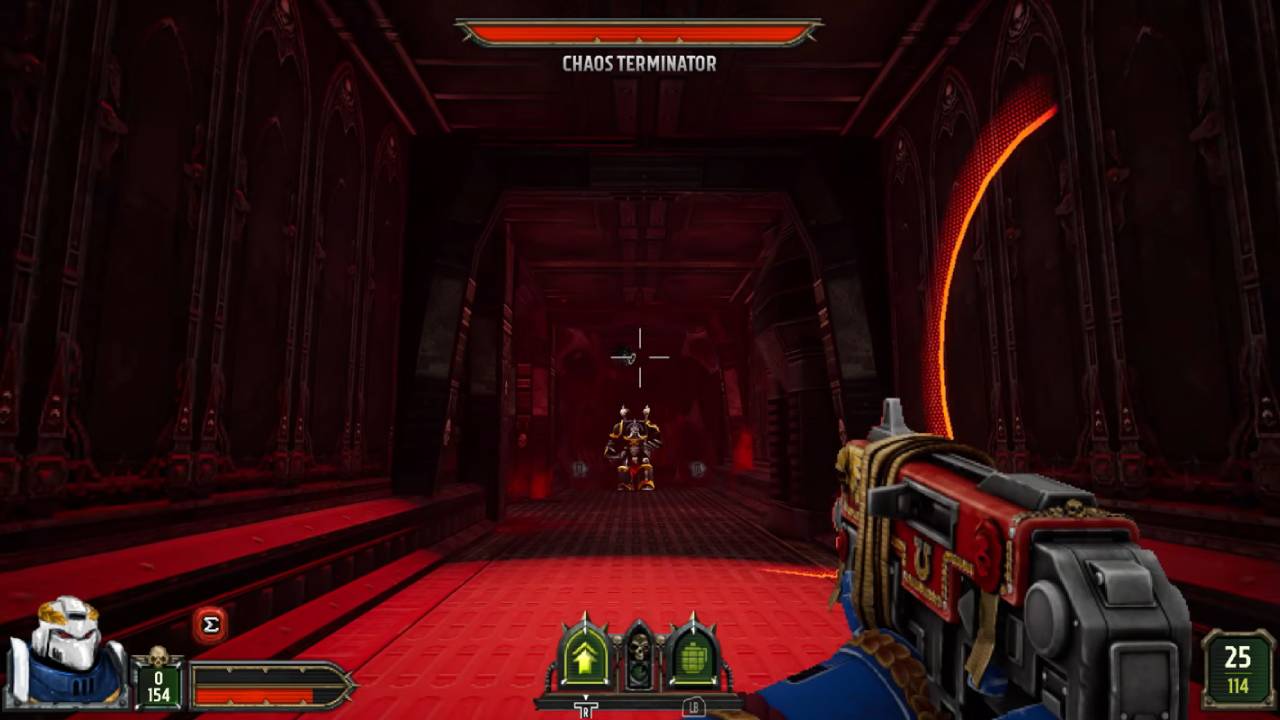
Other locations see you in a crumbling prison with claustrophobic corridors and enemies hiding behind sealed cells. Another memorable passage dives into the middle of a tainted moon, where cargo trains and mine carts are part of the journey.
The environments make the campaign feel more progressive, since you're always moving through different situations rather than clearing the same kind of rooms repeatedly.
The sequel even throws in a few platforming sections and environmental hazards to break up the routine. You still spend a lot of time looking for keys, finding objectives, and killing everything between you and the next area. Still, the added mechanics make those familiar activities feel less samey.
Not every level works equally well. Some early missions, like parts of Welcome to the Wilds and Breaking the Ice, are a little less interesting than the campaign's stronger sections. They're not bad, but the mechanics and overall design don't always match the more ambitious stages. Fortunately, the campaign improves as you progress, and a navigation feature helps when you lose track of your next objective.
The combat follows the same philosophy as the first game: keep moving, keep shooting, and never give enemies enough time to overwhelm you. You never want to stay in one place too long, especially when enemies can quickly chip away at your health or armor. Success means keeping momentum and adapting to whatever comes at you.
Malum and Nairath approach this system differently.
Malum is built around the durability and strength you'd expect from an Ultramarine. He has more health, can recover some of it out of combat, and carries a chainsword that lets him tear through enemies at close range. His charge attack lets him enter battle, knocking enemies back as he charges through them.
Nairath is more mobile, has more base armor, and can slide to reposition while fighting. Her movement has a short cooldown, and she can slow time while jumping out of a slide, giving her more control in crowded fights. She uses melta bombs instead of Malum's grenades; they take longer to explode but deal more damage. These differences are noticeable enough to make the characters feel distinct, though Nairath doesn't get off to as strong a start.
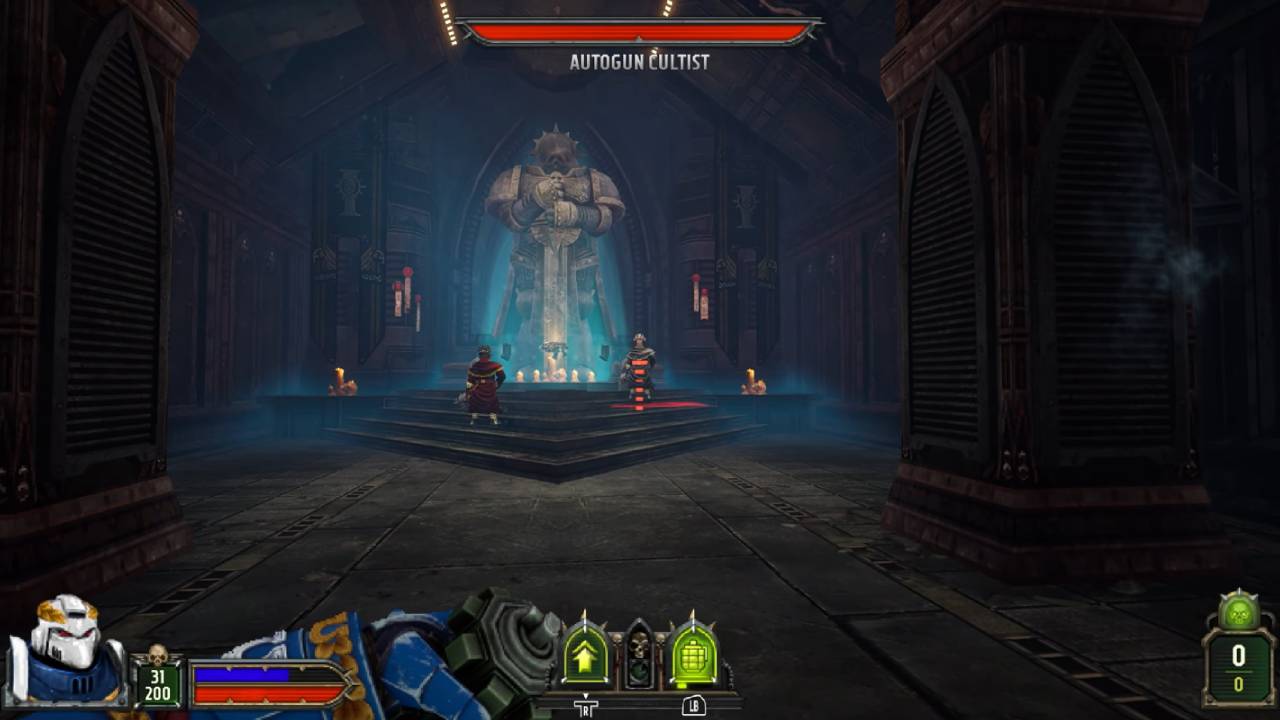
Her initial weapons are less satisfying to use than Malum's, and her early combat encounters can feel more awkward as a result. She becomes considerably more enjoyable once you unlock additional weaponry, but that delay is disappointing when the second character is one of the sequel's biggest additions.
Both characters rely on the same momentum-driven combat loop. Killing enemies restores health and armor, so staying aggressive becomes key to survival. The game doesn't reward hiding behind cover and carefully picking off enemies; it wants you to push forward, use your abilities, and eliminate threats before they can wear you down.
This system works particularly well when multiple enemy types surround you. The sequel features forces from all 4 major Chaos factions, so you face more threats. Slaanesh's Daemonettes flit around the battlefield, while Khorne's Bloodletters charge in, trying to close the distance. Different enemies require different tactics, whether you get up close and personal, deliver well-timed shotgun blasts, or simply dodge incoming damage.
Some enemies become more dangerous near death; others may try to confuse you with their attacks or move in weird ways that make them harder to hit. You also face Phase-shifting Scarab Occult Terminators, which add another threat and force you to react instead of relying on the same weapon against every opponent.
The larger variety does make a difference.
You're still mowing down large numbers of enemies, but encounters feel less interchangeable because the different factions and their abilities force you to adjust your tactics. Learning when to use a particular weapon, when to engage at close range, and when to retreat becomes part of the fun.
Your arsenal supports that variety, with nine weapons available to each character. Malum has his boltgun, while Nairath starts with a bolt pistol. The latter has a smaller magazine and feels less powerful at first, but a weapon blessing lets her dual-wield it, changing how it performs in combat. Their arsenals continue to diverge as you progress, with Malum eventually gaining a grav-gun and Nairath receiving a double-barreled flamethrower.
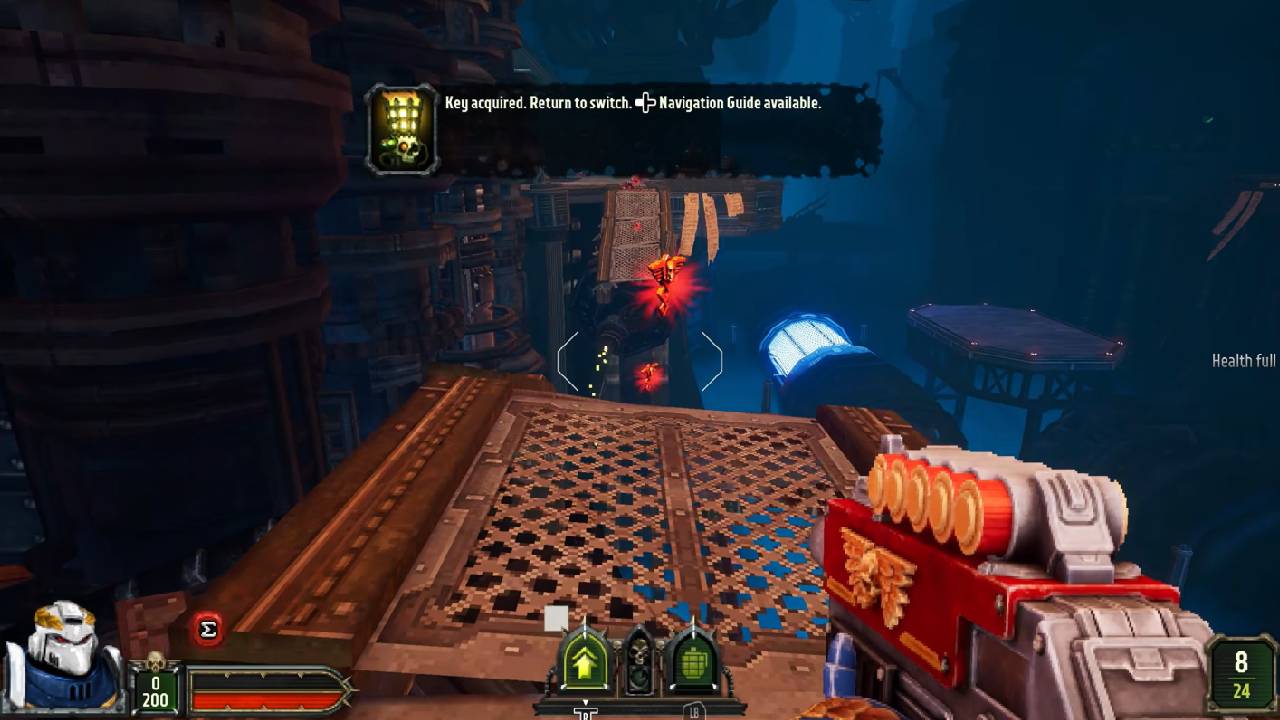
Not every weapon is equally enjoyable. Malum's new Frag Cannon is a welcome addition, but removing the Vengeance Launcher is disappointing. The Meltagun also feels different from its previous incarnation, functioning more like a mid-range beam than the thermal shockwave some players might remember.
The Heavy Bolter also doesn't feel quite as satisfying to ready as it did in the original.
Nairath's weapons are a mixed bag. Her Heavy Flamer and Stake-Thrower offer extra ways to handle enemies, but the Stake-Thrower can feel awkward. Her melta bombs deal substantial damage, although getting used to their delayed detonation takes some practice.
Her ultimate flamethrower is powerful, but the enormous pools of fire it creates can make it difficult to see what's happening during a fight. You can end up shooting blindly through the flames and hoping you've hit something.
Even with these issues, the weapons generally feel effective, and the game does a better job of matching your heavier armaments to the larger enemies. Regular foot soldiers can sometimes go down in a single boltgun shot, while tougher opponents require more effort. Some enemies are a bit too tanky for medium difficulty, especially the Tormentors, but overall balance is good.
The difficulty settings also let you tailor the experience.
You can choose between Low, Medium, Hard, and Exterminatus, with higher difficulties introducing more incoming damage and more enemies to fight. Hard offers a harder experience without losing the game's focus on movement and aggression, and the highest setting provides a bigger challenge for those who want it.
If you prefer a more relaxed experience, the game offers optional accessibility settings that function like built-in cheat codes. Invulnerability, unlimited ammunition, and other options can make the campaign significantly easier without disabling achievements. You can also unlock weapons and level select through the menus, letting you bypass some of the usual progression requirements.
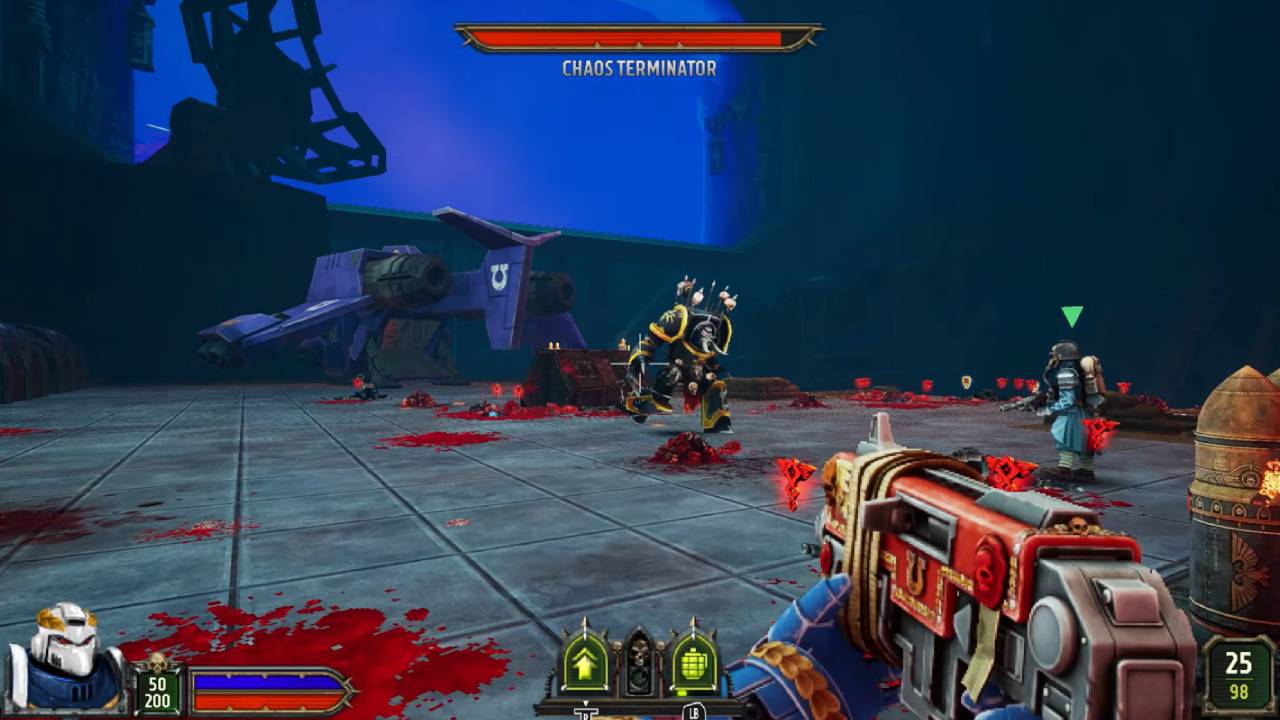
Progression itself is straightforward. You pick up weapons as you advance through the campaign, find level-specific power-ups, and search for secrets and purity seals. Hidden pickups can add extra ammunition capacity, empower your equipped weapon with an Omnissiah blessing, restore your armor, or even let you survive a fatal mistake. These bonuses give you good reasons to explore instead of rushing straight to the exit.
The secrets are generally better hidden than in the first game, and finding them can make a difference during difficult encounters.
However, you won't find a complex experience system or elaborate character-building. Your growth mainly comes from expanding your arsenal and collecting temporary advantages that help you survive the next stretch of combat.
Boss encounters are another area where the sequel falls short. There aren't many, and most leave little impression. Vashtorr is the notable exception, but several other encounters feel more like opportunities to recognize a character from the wider Warhammer universe than meaningful tests of your skills. The game shines when you're fighting through groups of varied enemies, so these underwhelming boss fights stand out.
The technical performance was generally solid during my playthrough. The main issue was occasionally getting stuck on level geometry, which forced me to restart a level once. Fortunately, the level-select system makes it relatively easy to return to where you were. Some players have reported significant frame-rate drops, though I didn't experience that personally.
The game is also verified for Steam Deck and runs well on the Steam Machine, with occasional frame-rate drops in certain areas on the handheld.
Visually, Boltgun 2 retains the pixel-art presentation that set the original apart. The sequel looks even better, adapting that style to a wider range of environments, from cramped prison corridors to open battlefields and industrial facilities. Auroch Digital does an excellent job of capturing Warhammer 40,000's grim atmosphere without sacrificing the retro aesthetic that makes the game recognizable.
The sound design also heightens combat intensity. These weapons have a nice heft, and you always hear your weapon clash with the enemy's during the fight, so it never feels stagnant. The soundtrack, however, isn't as consistent. TMick Gordon's final-boss music is a highlight, but the rest of the game can feel surprisingly quiet at times. The action could have been even more energetic with a more consistent musical presence.
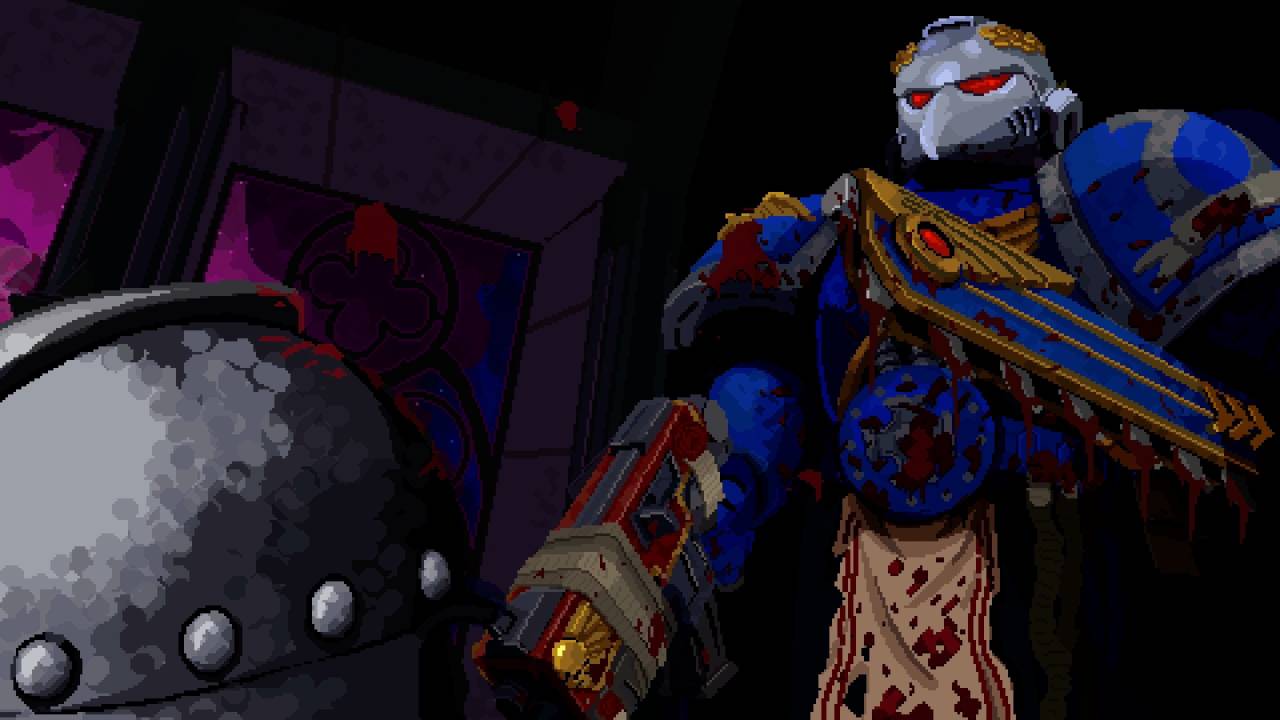
Ultimately, Boltgun 2 works because it understands what a sequel should be.
It expands the enemy roster, improves level design, introduces another playable character, and gives you more reasons to replay the campaign. Its weaknesses are noticeable, particularly Nairath's slow start, some awkward weapons, and forgettable bosses, but they rarely undermine the overall experience.
If you enjoy retro shooters, the Warhammer 40,000 universe, or simply want a game that lets you spend a few evenings tearing through hordes of enemies, this is an easy recommendation. A single playthrough takes roughly ten hours, and the branching campaign gives you reasons to return for another run. You can even complete the game without mastering every mechanic, thanks to the adjustable difficulty and optional accessibility settings.
At $25, Boltgun 2 offers satisfying action for the price. It doesn't reinvent the boomer shooter, but it builds on the original in the ways that matter most. Sometimes, all you need is a chainsword, a reliable boltgun, and a few thousand heretics standing between you and the next objective.
Senior Editor, NoobFeed
Verdict
Warhammer 40,000: Boltgun 2 improves on its predecessor with better levels, more enemies, and two distinct characters. Some weapons and bosses disappoint, but the fast, brutal combat makes it well worth $25.
84
Related News
No Data.