
XBOX Manager Sparks AI Debate After Saying Developers Need to Embrace the Technology
Concerns have been raised anew about how Microsoft and other gaming companies will use the technology after one XBOX business strategy manager deleted his X account, saying AI is becoming essential to game development.
News by Tahmid Mahi on Oct 20, 2026
Artificial intelligence continues to be a contentious issue for the gaming industry, and a recent controversy involving an XBOX employee has reignited that discussion. XBOX Business Strategy Manager Brandon Sturrup has been criticized for saying that developers who don't embrace AI will fall behind.
“His comments come as gaming companies are increasingly exploring AI tools while many players remain skeptical about their impact.” Less than 24 hours after his remarks attracted attention, Sturrup deleted his X account. His statements quickly sparked debate over AI's growing role in game development.

The controversy started when Sturrup shared his experience using AI-assisted coding to create a game over two days.
According to him, he spent only about three hours actively working on the project, producing something he described as bad but capable of improvement. His experience convinced him that creating games through AI prompts is becoming more accessible than ever. He argued that practically anyone could now build a game, even without following the traditional development process.
That claim reflects how quickly AI tools have developed over the past few years. You might have dismissed the idea of creating an entire game through prompts not long ago, but the technology is moving toward making that possibility more realistic. New AI models continue to arrive at a rapid pace, introducing capabilities that can make earlier tools seem outdated within months.
Going a step further, Sturrup said that ignoring AI means developers and studios are preparing for a future that doesn’t reflect where the industry is headed. He said that simple prompts already let people make games tailored to their preferences, opening up possibilities for different kinds of experiences.
While those creations might not match the quality of professionally developed games, the ability to produce something playable with limited effort is becoming harder to ignore. His position was that developers should recognize these changes rather than pretend the technology isn't advancing.
He also acknowledged that his statements could create problems for him professionally. “I’m willing to take the consequences if it makes people at XBOX stop sidestepping conversations about AI,” said Sturrup. He said XBOX uses AI, and the company is just like any other business using the technology in 2026.
Unsurprisingly, the reaction has been sour, particularly from those who are already against generative AI in gaming.
The conversations around AI often draw criticism on social media, where worries about job security, creativity, and corporate priorities remain common. Sturrup’s suggestion that developers need to get comfortable with the technology only heightened those concerns. His subsequent decision to delete his account soon after raised questions about whether he regretted the comments or just wanted to escape the backlash.
Deleting the account doesn't necessarily mean his position changed, however. When you publicly challenge an industry already divided over AI, significant criticism is almost inevitable. Sturrup could have ignored the responses or shut down the discussion, but deleting his account only brought the matter to the forefront.
Controversy aside, his argument is about something that has been going on in game development for years. The use of AI in games is not entirely new, and developers have been using many forms of AI for years to support gameplay systems and production. What’s different now is the increasing ability of generative AI to help with coding, content creation, and other development tasks.
That doesn’t mean AI’s growing presence is inherently a bad thing for gaming, though. When used well, these tools could help developers work more efficiently, experiment with ideas, and reduce the time spent on repetitive tasks. And smaller teams may also gain access to capabilities that previously required more resources or specialized expertise.
The larger question is, can you trust corporations to use those tools ethically? Publicly traded gaming companies are always pressured to grow revenues, reduce costs, and improve profitability. AI could give executives another reason to cut staff, adding to layoffs in an industry that has already seen big drops in the workforce.
And then there's the question of what happens to the quality of the game when efficiency is the goal. You might see more games with less resources, but that doesn’t mean you will have better experiences. If companies over-rely on produced content and don’t keep enough creative oversight, the output may come across as repetitive or lacking the attention players expect.
Conversely, dismissing all potential uses of AI could stop developers from exploiting really useful technology.
The difference is in the implementation, transparency, and choices companies make about their employees. AI has the potential to enhance development workflows while keeping creative direction in human hands. The challenge is finding that balance when companies are financially incentivized to automate as much as they can.

What makes XBOX’s situation particularly intriguing is Asha Sharma’s leadership, given her previous work on Microsoft’s Copilot business. Her background connects her directly to the company's broader AI efforts, making the technology's role in XBOX's future especially relevant. Since taking over, Sharma has also demonstrated an ability to communicate the brand's direction in ways that generate a more positive response.
You can see a similar communication strategy in how XBOX has discussed its approach to exclusive games. Although some of the messaging sounds different from what players heard under Phil Spencer, the underlying strategy still appears to involve decisions made on a case-by-case basis. Certain titles may remain exclusive to XBOX, while others will continue reaching competing platforms.
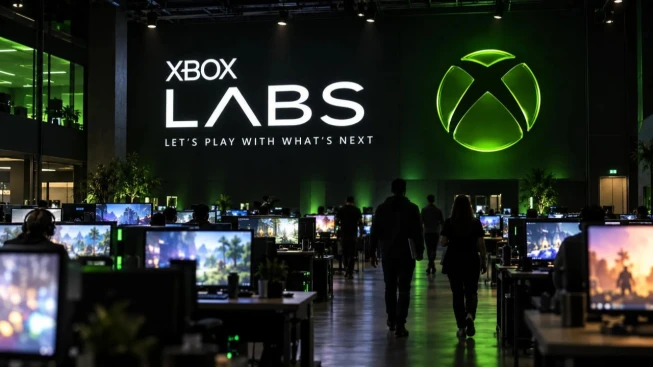
That same strategy could shape the way XBOX rolls out AI-related initiatives. The company can take the new technology as an opportunity to experiment and improve production, instead of focusing on automation or the potential to replace traditional development work. XBOX Labs is in that conversation, talking about new ideas, the development process, and how the public can get involved.
This type of messaging leaves you with a different impression than just a straightforward announcement that XBOX wants to expand its use of AI.
It’s not about the technology; it’s about what developers might do with it and how that might benefit players. It’s a useful PR tactic, especially when feelings about AI are still so mixed. We should view these initiatives positively, but there are still questions about how they will actually be implemented.
Sharma’s messaging has helped craft a more positive image for XBOX, but that doesn’t mean AI isn’t on the company’s development roadmap. Given Microsoft's investment in AI and Sharma's professional background, it's reasonable to expect the technology to remain part of XBOX's broader strategy.
That doesn't establish how extensively individual studios are using generative AI, though, or which development tasks currently depend on it. Those details would require more specific information from Microsoft and its teams. For now, the full extent of AI's role at XBOX remains unclear.
Sturrup's comments ultimately highlight the difference between accepting AI as an industry reality and supporting every way companies might use it.
It could mean faster workflows and new creative tools for developers and ultimately games for players made through more efficient processes. But the concerns about layoffs, creative quality, and corporate accountability are still real. The technology's potential doesn't automatically ensure that every company will make responsible choices.
His professional future is uncertain, and that’s without including the fact that Sturrup’s account has since disappeared in the wake of the backlash. His comments may have been controversial, but the larger conversation they sparked is not going away. The debate over AI's place in gaming is likely to continue as the technology advances.
As AI tools become more capable, gaming companies will feel more pressure to explain how they’re using them and what those changes mean for developers. Players’ adoption of that future will depend less on corporate promises and more on how AI actually affects the games they play.
Editor, NoobFeed
Related News
No Data.