
DLSS Mod Brings DLSS 5 and 4X Frame Generation to AMD Radeon GPUs
Latest DLSS mod pushes AMD Radeon graphics beyond official limitations with neural rendering, AI reconstruction, and advanced frame generation.
Hardware by Tanvir Kabbo on Oct 19, 2026
NVIDIA's DLSS technology has been a major reason to choose a GeForce graphics card, especially for gamers who love ray tracing, AI-powered image reconstruction, and higher frame rates. AMD's Radeon GPUs have their own upscaling and frame-generation tech, but historically, NVIDIA's neural rendering environment has been connected to its own hardware and software stack. Now a community-driven project is pushing against that threshold.
DLSS-NR-on-AMD: The latest advancement shows how far independent developers can push the limits of graphics hardware. Developer Daniel Blanco, known as danielblnc, has expanded the project to version 0.8.0, bringing several NVIDIA technologies to compatible AMD Radeon GPUs through a custom execution framework. The reported feature set includes DLSS Super Resolution 4.5, Ray Reconstruction, Frame Generation with Multi Frame Generation up to 4X, and DLSS 5 Neural Rendering.
This is more than another graphics modification that replaces one library with another. It represents an ambitious attempt to execute NVIDIA's proprietary neural graphics workloads on a competing GPU architecture, potentially exposing how much of the divide between graphics ecosystems comes from software compatibility rather than an absolute hardware limitation.
Ray Reconstruction, Frame Generation, and Neural Rendering
The most significant aspect of DLSS-NR-on-AMD v0.8.0 is the breadth of NVIDIA technologies it reportedly supports. Ray Reconstruction is particularly interesting because it uses AI-assisted reconstruction to improve the appearance of ray-traced lighting, reflections, and other effects while replacing conventional denoising techniques.
Running this workload on Radeon hardware would give modders another way to experiment with demanding ray-traced games without relying exclusively on NVIDIA GPUs.
The project also targets DLSS Frame Generation, including Multi Frame Generation modes reaching 4X. Frame generation creates additional frames between traditionally rendered images, increasing displayed frame rates without requiring the GPU to render every frame independently. But higher frame rates don't always translate into proportional responsiveness gains, and results vary by game, rendering performance, and implementation.
Meanwhile, the project's DLSS 5 Neural Rendering and DLSS Super Resolution 4.5 capabilities extend its goals beyond traditional upscaling. Neural rendering is particularly demanding because it relies on complex trained models rather than a basic resolution-scaling technique. This addition is particularly interesting for those interested in the intersection of graphics APIs, neural networks, and GPU architecture.
How the Mod Bypasses the Hardware Barrier
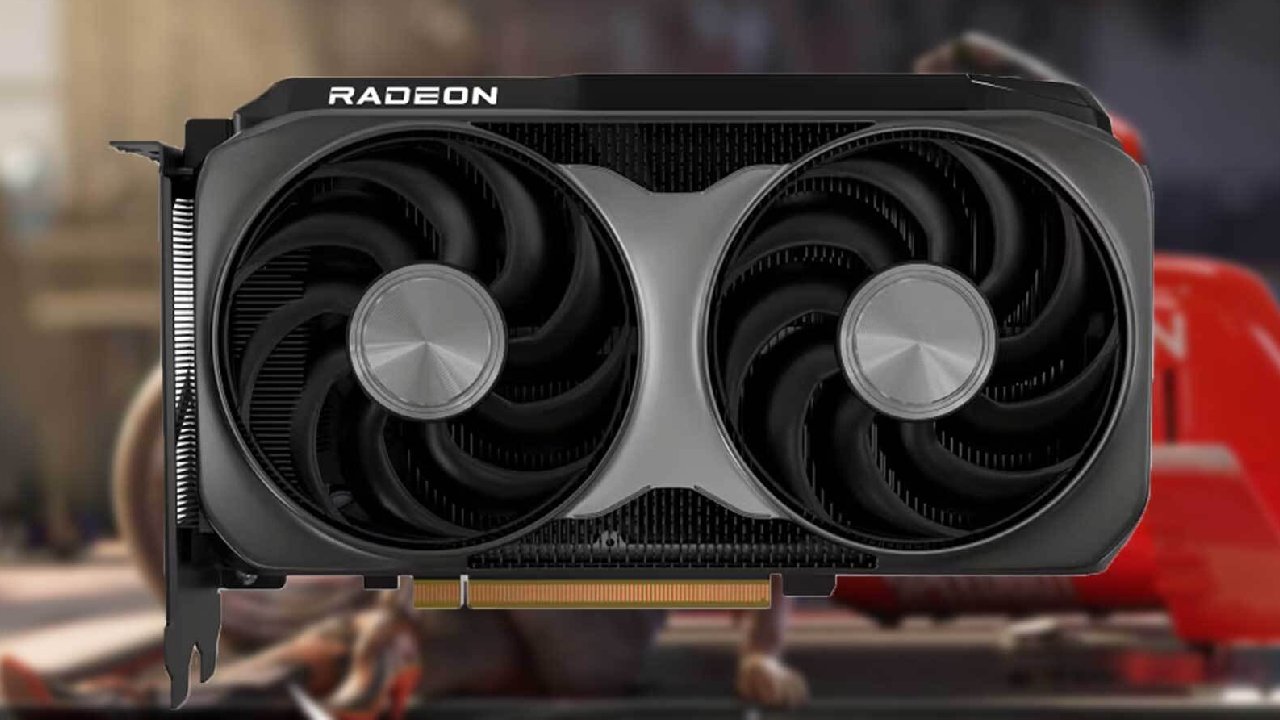
What sets this apart from your average DLL exchange is the engineering behind the project. DLSS-NR-on-AMD supposedly acts as a bespoke neural network runtime, using AMD's HIP kernels to run the math required by NVIDIA's neural models. HIP provides a framework for GPU computing on supported AMD hardware, letting developers translate workloads into operations Radeon GPUs can execute.
Instead of simply convincing a game to load an NVIDIA library and hoping it works, the runtime aims to run the underlying neural-network computations on AMD's RDNA 3 and RDNA 4 architectures. That distinction matters because proprietary graphics technologies often combine multiple layers, including game integration, runtime libraries, neural models, and hardware-specific optimizations.
Bridging those layers requires more than changing a vendor identifier. Users must also provide their own legitimate NVIDIA DLL files. The project does not distribute these proprietary binaries, so users must obtain the required files legally. Compatibility can vary by game, driver, and software version, and reported feature support should not be interpreted as a guarantee that every title will run flawlessly.
NeuralHub Makes Installation More Accessible
Version 0.8.0 also introduces NeuralHub, a management interface intended to reduce the complexity of configuring the mod. Instead of requiring every user to navigate the underlying injection process manually, NeuralHub reportedly helps install the necessary components and scan for compatible DirectX 12 games.
An in-game overlay, activated with the End key, lets you access settings while a supported game is running. This is a meaningful improvement for a project that would otherwise appeal primarily to technically experienced users comfortable with experimental software and manual configuration.
But a simpler interface doesn't eliminate the risks of unauthorized graphics hooks, compatibility issues, or driver conflicts. This project is still an experimental workaround, not an officially supported alternative for AMD's own graphics technologies.
Online Gaming Could Risk Account Bans
The biggest drawback is related to anti-cheat measures. DLSS-NR-on-AMD uses surprising graphics hooks and GPU spoofing tricks to convince games to reveal NVIDIA-specific settings on Radeon hardware, according to reports. Even when the goal is to improve graphics, these techniques may look like unlawful modifications to the game's execution environment.
Anti-cheat technologies in competitive online games may detect such modifications, which could result in an automated account ban. Players should limit this experiment to offline single-player games, such as Cyberpunk 2077, and not attempt it in competitive multiplayer settings. Even then, users should check the game's rules and understand that experimental changes can cause crashes or other unexpected behavior.
Senior Editor, NoobFeed
Gaming Hardware Updates
No Data.