
Warhammer Survivors review
PC
A grim battle against endless enemies and relentless grinding.
Reviewed by Elme Dhee on Nov 14, 2026
Warhammer Survivors draws on a setting that has grown over decades across tabletop games, novels, and digital adaptations. That history gives the indie action title a rich, unusual visual and thematic vocabulary. Rather than try to do a sprawling role-playing adventure, it shrinks the franchise's grimness into tight, repeatable battles centered on survival.
The result is an accessible entry point for newcomers and a recognizable collection of references for established fans. Its two settings, Warhammer 40,000 and Age of Sigmar, are separate corners of the larger universe, and familiar factions and battlefield imagery set the tone immediately. The idea is simple: take the overwhelming warfare and make it a focused arcade loop.
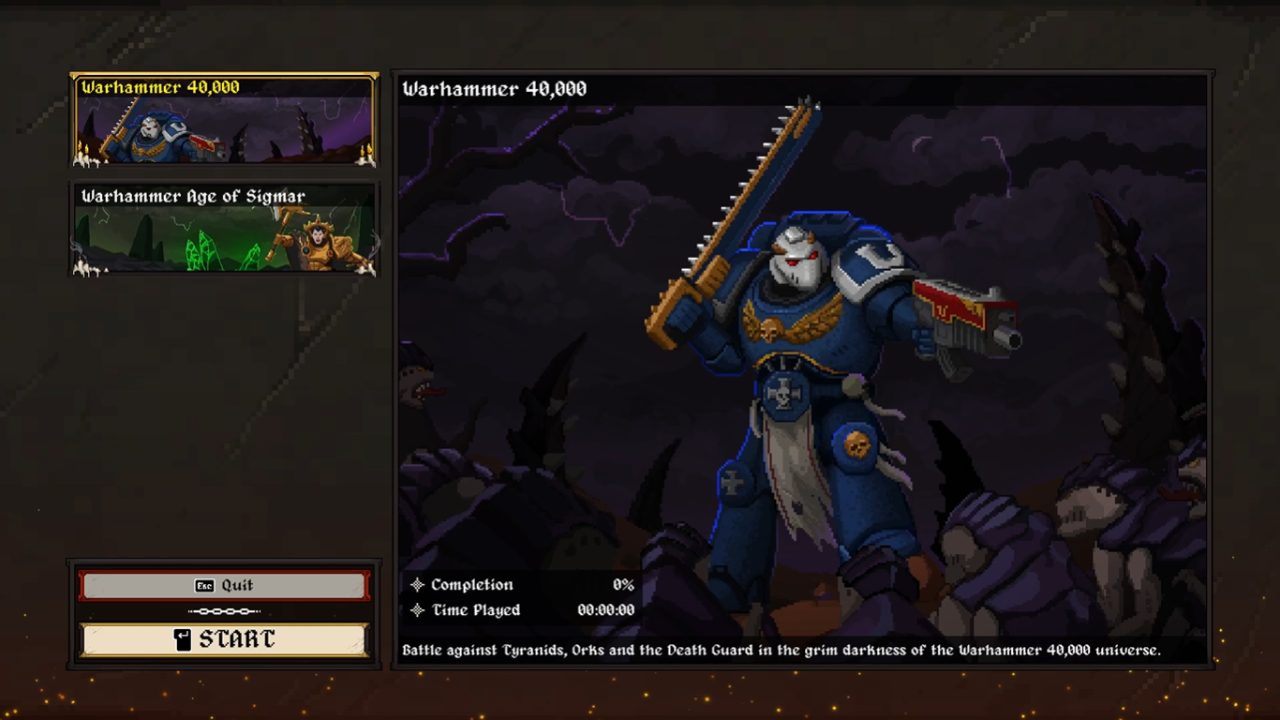
That strategy works for the survivors format, where a run can make its appeal known in minutes. Players don't need to know much about the lore to understand what they need to do right now, but knowing it helps add context to the characters, enemies, and equipment. Warhammer Survivors therefore combines franchise recognition with a structure that's still legible to a wider audience.
But adapting a universe known for armies, elaborate miniatures, and huge conflicts comes with expectations. Rather than detailed strategy or narrative depth, the game captures the spectacle with swarms, oversized weapons, and grim humor. What ties it closest to the source material is its atmosphere, and its weakest moments come when the underlying systems fail to support that spectacle.
Two campaigns offer different Warhammer identities.
Warhammer Survivors is not a traditional campaign story with a main character and a carefully orchestrated set of revelations. Rather, it is defined by two campaign choices, one drawing on the science-fiction savagery of Warhammer 40,000 and the other on the high-fantasy battlefields of Age of Sigmar. Each has its own roster and setting.
This split gives the game good variety without forcing players to follow a single storyline. Characters are playable combatants with their own traits, and the stages are arenas for increasingly crowded battles. The narrative framework is therefore light, a reason to revisit the settings rather than a substantial story driving each session.
Also, advancing through each campaign means uncovering its wider cast. Some characters are locked until you complete certain objectives, like finding figures surrounded by enemies or reaching distant relics placed around a stage. These tasks add small exploration goals to otherwise unrelenting survival attempts, pushing players to venture beyond the safest route through the arena.
Both campaigns are a welcome addition, especially for a game whose core structure is deliberately repetitive. But they aren't meant to be a complete tour of the Warhammer universe. The value is that they provide the same core format with two thematic identities and enough unlockable content to make early exploration worthwhile.
The usual survival loop with simple mechanics.
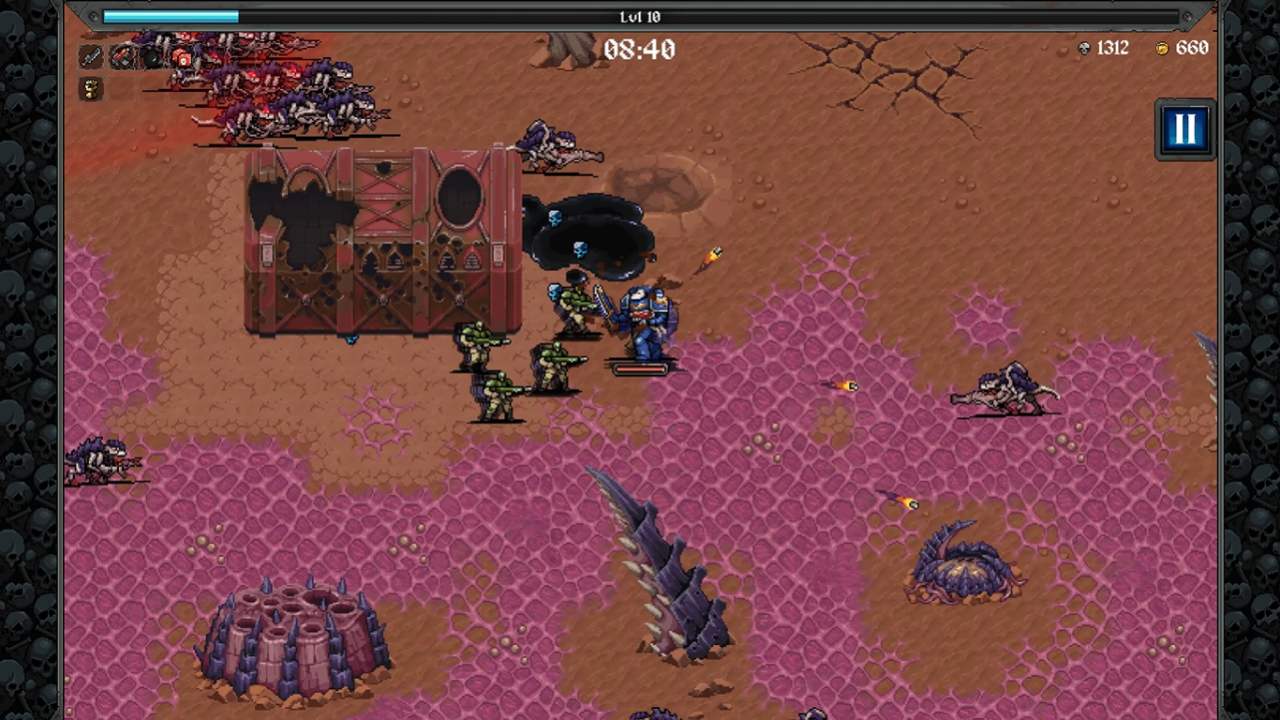
Fundamentally, Warhammer Survivors is a top-down 2D survival game where you're always moving, and attacks are automatic or semi-automatic. A run starts with character selection, then stage selection, and then waves of hostile units gradually fill the screen. The immediate goal is survival, gaining experience and improving the build.
When you kill an enemy, they drop an experience pickup to make your character stronger for this attempt. Each level lets you choose weapons or passive upgrades that define your offensive range, damage, and survivability. The selection is not broad, so your choice matters. A successful build brings together useful tools before the enemy overwhelms you in numbers.
The game is easy to understand because of the familiar loop: survive, collect, upgrade, and eventually drop dead. All currency earned during a run can be spent on permanent upgrades, giving you a slight advantage at the start of future runs. That cycle is key to the genre's appeal, because even a failed shot can yield a small gain that makes another try worthwhile.
The controls are meant for navigating the arena, not for handling a complex set of combat commands. Controller support makes movement and positioning easy, and the top-down view helps you track enemy formations as the battlefield fills up. The simplicity works at first, but the need for precise facing and constant evasion reveals flaws in some weapons' behavior.
The variety of weapons and the combat mechanics are somewhat mixed.
Combat has a unique twist: some weapons aren't held by the chosen character but by accompanying units. Soldiers can walk behind and fire their rifles. A tank can trail behind and shoot its cannon at intervals. It gives the illusion of a small fighting force and gives the battlefield a nice sense of scale.
These companions don't change the way a weapon works, but they do personalize the action. It's satisfying to watch an entourage of armed buddies walk through a crowd, especially when several attacks overlap. It also reinforces the franchise's military nature, making combat feel less like an abstract arena and more like a miniature, chaotic warzone.
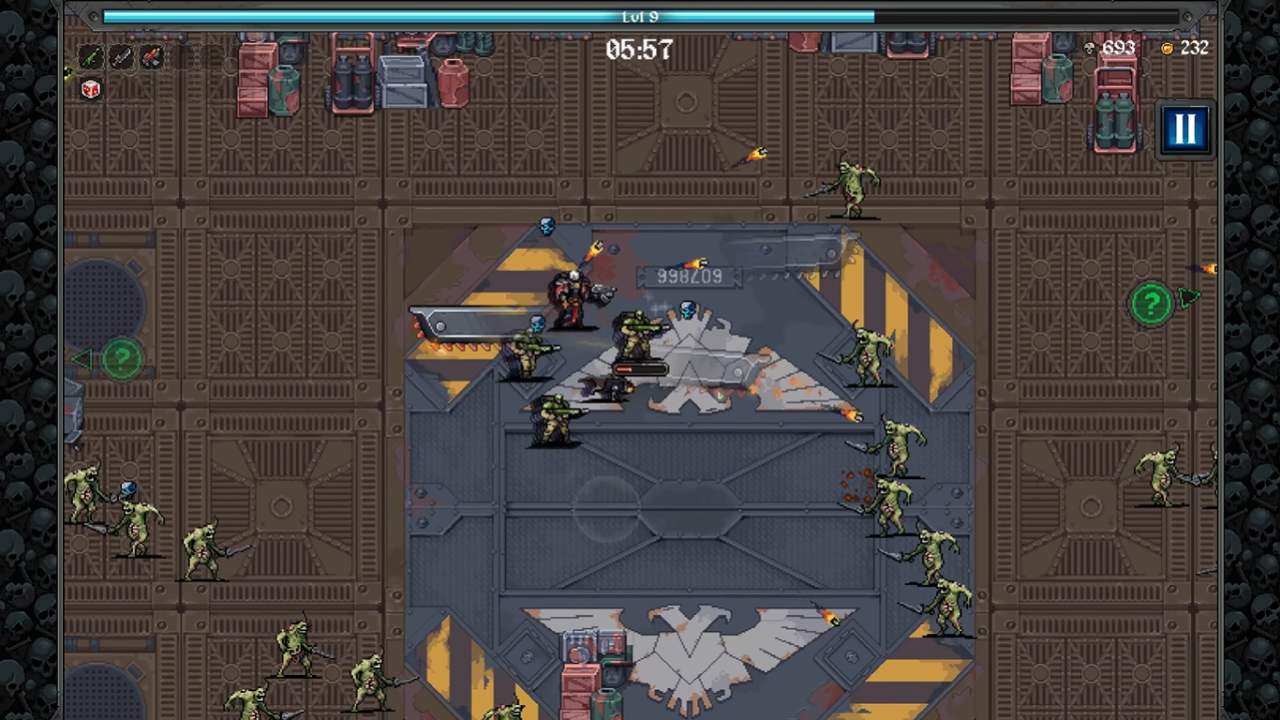
Status effects add another layer to encounters. Something like Nuln Oil applied as an effect opens up opportunities to follow up with fire, and makes combinations a useful part of combat planning. These interactions add more texture than just piling on damage, and they encourage you to pay attention to how different attacks interact as enemy packs close in.
But opponents can also inflict status effects, and their pressure can be hard to cope with at times. Certain enemies excel at applying debilitating effects, while bosses bring additional hazards and battlefield disruption. Ork leaders can call down huge stomping feet or drive nearby units into a frenzy, forcing players to react rather than rely on passive damage alone.
This makes the bullet hell structure more than a screen-clearing exercise. Constant repositioning is required to handle projectile patterns, dense enemy formations, and boss abilities, especially as space shrinks. The violence is over the top and often amusing, but staying alive depends on reading threats and moving smartly. It is rarely a sound strategy to stand still and rely on upgraded weapons.
Retro pixel graphics give it an atmospheric presentation.
Visually, Warhammer Survivors employs retro pixel graphics that fit its arcade origins and the grim nature of the source material. The 2D presentation keeps the action readable, while character sprites and enemy designs are more detailed than the otherwise plain stages. The result is a tight battlefield with a recognizable dark-fantasy, science-fiction identity.
Effects are often the most visually appealing part of a presentation. Explosions, weapon trails, and overlapping attacks can clutter the screen into a bright storm of activity, mirroring the game's violent tone. That spectacle is fun when the action is readable, but late-run fights can get so crowded that it's hard to spot threats or gauge safe movement.
Options to reduce screen shake and flashing effects, and to turn off blood, are nice touches. They provide some control over sensory intensity without taking away the game's basic identity. But visual clutter becomes an issue when the number of enemies rises dramatically. The presentation can convey overwhelming warfare, but sometimes it loses clarity in doing so.
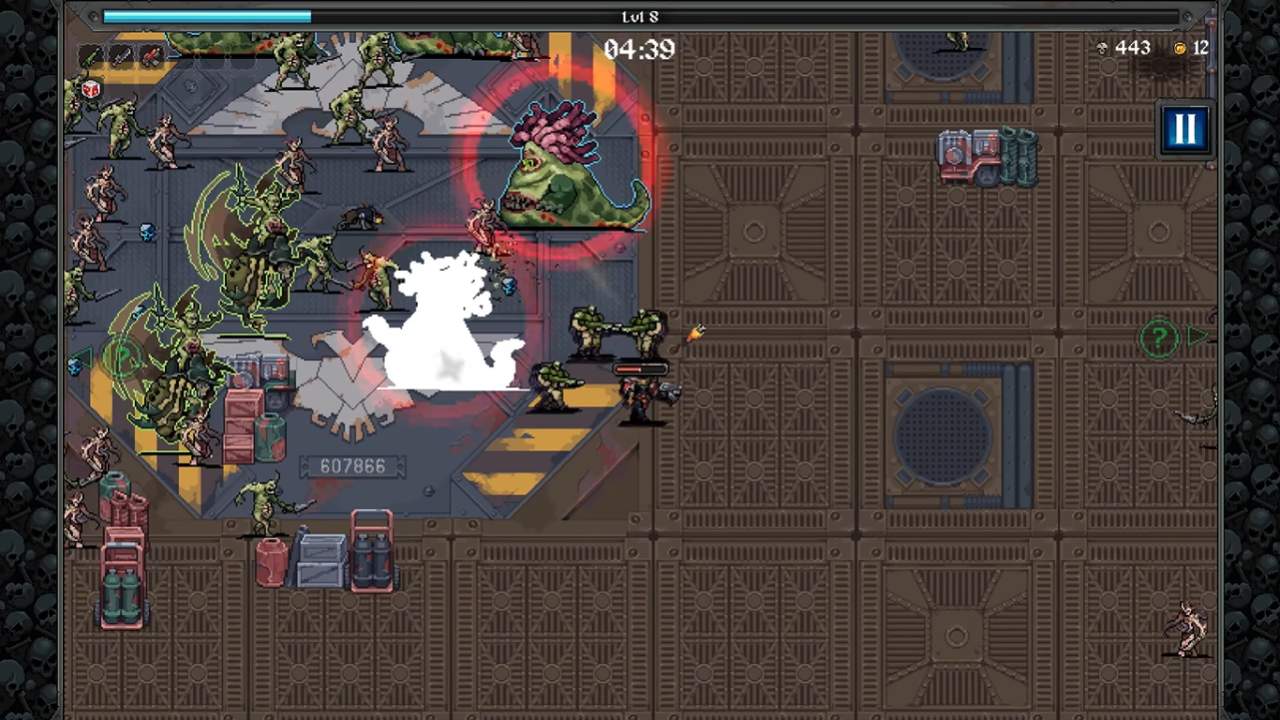
The soundtrack blends metal, rock, and dramatic orchestral passages to keep the mood suitably forceful. Its energy matches the constant motion and non-stop combat, giving even the most pedestrian of encounters a sense of urgency. Little touches like the skull-shaped experience pickups balance the grim imagery with a playful arcade vibe. The audio remains fine throughout.
Grinding and permanent upgrades can get boring.
The biggest challenge is the pace of progress. Early attempts set the stage for the pleasure of gradual improvement, but Warhammer Survivors quickly reveals a grind that can make individual runs feel longer than their structure warrants. Enemy pressure ramps up quickly, and character development doesn't always keep pace. The result is a loop that feels tiring rather than engaging.
Level progression also becomes restrictive toward the later stages of a run. Players can equip six weapons and six passive abilities, each with upgrade tiers, but each tier offers only a limited number of choices. So, building a balanced, powerful setup isn't easy, especially when the available upgrades don't fit the current situation.
Randomness is part of the genre, but here it can interfere with meaningful decision-making. A player could know what weapon or passive would buff a build but not be able to pick it. That uncertainty can spark exciting improvisation, but across multiple runs, success can feel like a roll of the upgrade dice rather than the result of careful planning and execution.
That frustration isn't helped much by the permanent upgrade system. Gold buys bonuses between attempts, and you can refund investments to try different builds. But the best upgrades maximize bang for the buck, and the cheapest ones are usually the least important. The long-term reward is seldom worth the effort.
Investment also raises costs, and each further improvement becomes more difficult to afford. Even more frustratingly, both campaigns have separate progression pools, meaning players have to go through the same slow accumulation process for each. This diminishes the feeling of a cohesive journey throughout the account, and makes experimentation feel costly, especially when the gains from each run are still small.
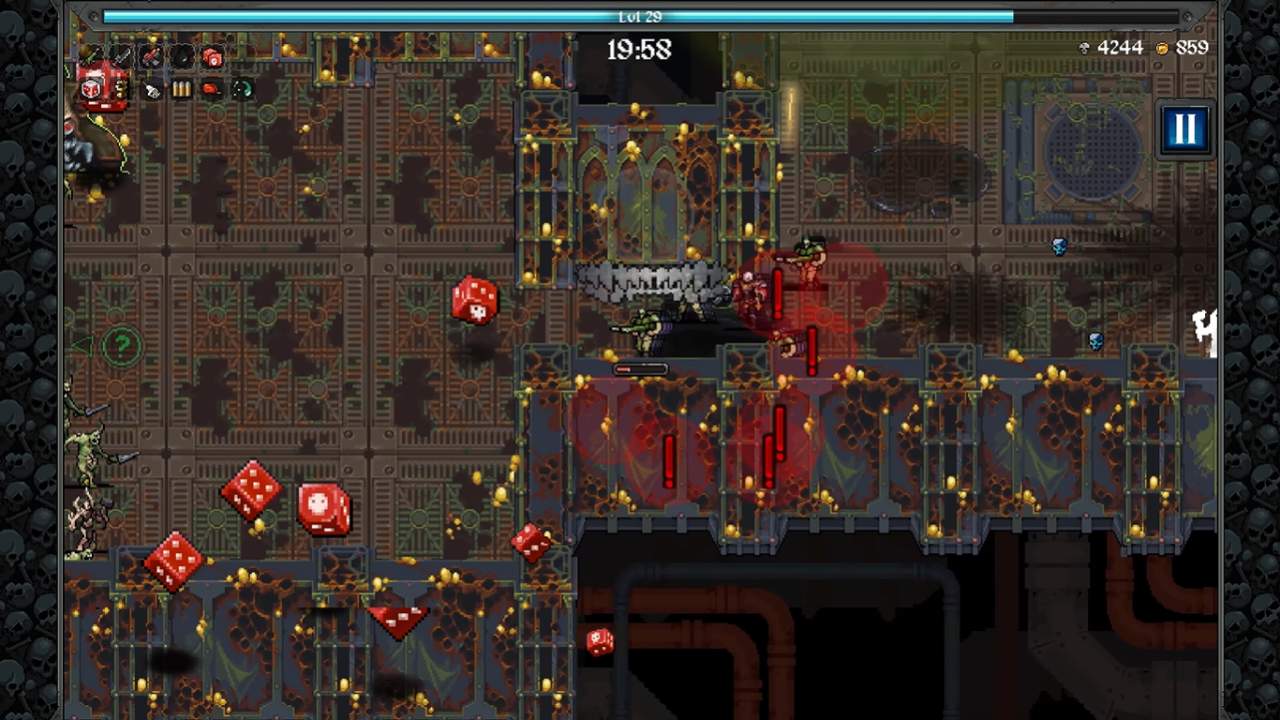
Boss fights are the game's hardest challenges.
It's particularly difficult when you've been trying to survive for a long time, and an Extremis boss appears. These large foes take up a lot of screen space and are framed as major encounters, giving a clear dramatic focus for the end of a run. Unfortunately, the fight can be heavily reliant on the player having obtained one particular weapon beforehand.
Without that particular tool, you may not be able to damage the boss at all, or it may be impractical, turning a challenge you seem to have earned into a test of luck. Players are encouraged to use a prescribed loadout, rather than the build they have developed. That limitation contradicts the appeal of a survival game where adapting to random opportunities should be part of the experience.
Some bosses make matters worse with attacks that can cut a run short. For example, one boss teleports on top of you, and one of his attacks can insta-kill you, leaving you with little chance to react. These moments feel less like tests of skill to be surmounted and more like arbitrary interruptions in an otherwise long effort.
Bosses can also have strange protection periods, like an encounter that cannot be damaged at the start. These climactic adversaries should be a certain level of spectacle and challenge, but their rules should be comprehensible and consistent. The payoff is hard to appreciate when the fight mechanics are unclear or when the fight ends suddenly.
A promising Warhammer adaptation weighed down by too much grinding.
Overall, Warhammer Survivors has a strong concept and a presentation that understands what makes its source material so appealing. Familiar factions, companion weapons, dual campaigns, and energetic pixel-art battles provide an inviting foundation. The indie production also benefits from a tighter focus, not having to match the scale of bigger franchise adaptations.
But the systems behind that presentation are not very convincing. The flow is constantly interrupted by clunky directional weapons, unreliable targeting attacks, steep enemy scaling, and random upgrades. Permanent progression is too stingy to feel productive, and some boss requirements constrain player choice at precisely the wrong moment, when a build should feel rewarding.
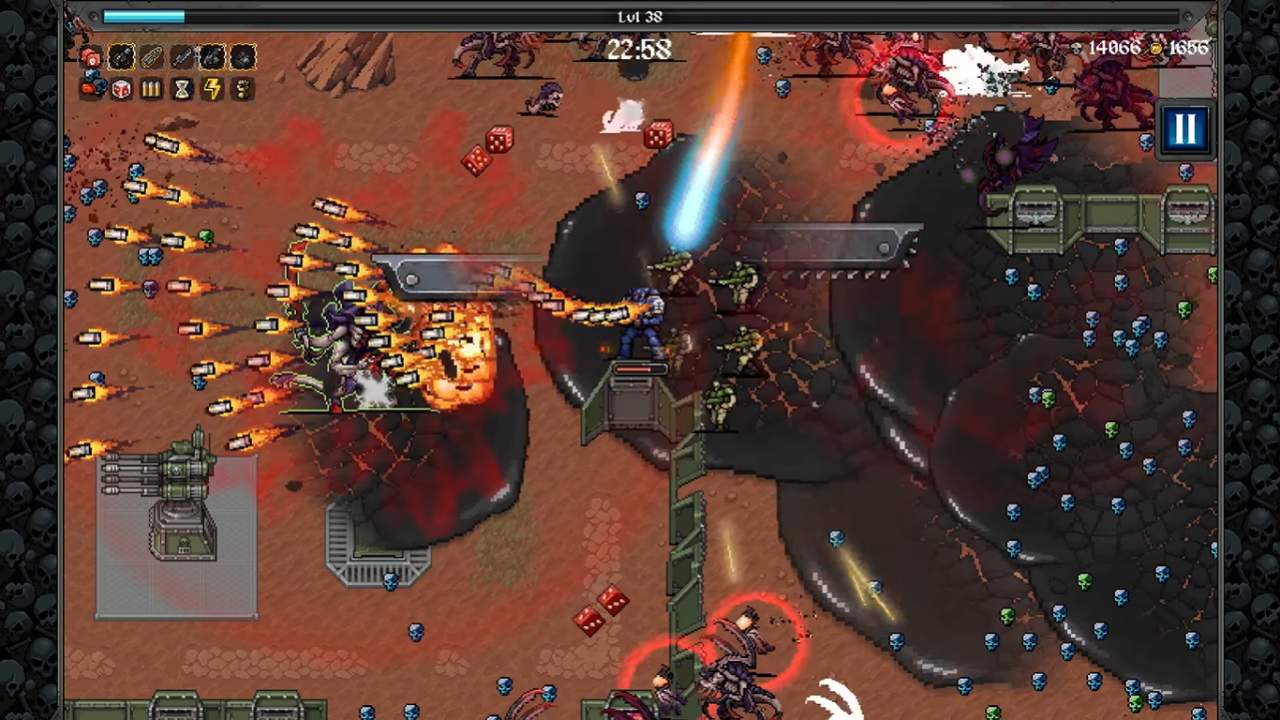
When weapons line up, status effects stack and a crowded screen turns into a satisfying chain of destruction, combat can be fun. These are moments that exemplify how perfectly the Warhammer setting fits the bullet hell format. Unfortunately, slow upgrades and difficulty spikes too often make progress feel like a chore.
However, Warhammer Survivors may appeal to diehard fans who care enough about its factions, dark atmosphere, and retro presentation to stomach the grind. For everyone else, better options in the survivors genre strike a more generous balance between challenge and progression. It has promising foundations, but the current experience demands too much patience without always rewarding it.
Editor, NoobFeed
Verdict
Warhammer Survivors delivers a stylish Warhammer experience, but frustrating weapon design, uneven difficulty, and excessive grinding make survival feel more exhausting than rewarding.
75
Related News
No Data.