
Final Fantasy Resonance Review
Xbox Series X|S
The HD-2D adventure blends classic Final Fantasy storytelling with strategic turn-based combat, and a flexible progression system rewards experimentation despite a few pacing and presentation issues.
Reviewed by Asura Kagawa on Oct 21, 2026
Final Fantasy has spent decades experimenting with different ways to tell stories and build RPG combat systems, but returning to the series' older foundations still feels special. Final Fantasy Resonance marries that classic formula with a modern presentation, blending classic turn-based battles, a fantasy adventure, and the HD-2D visual style beloved by fans of old-school RPGs.
It doesn't try to reinvent the wheel; instead, it offers a meaty adventure centered on exploration, character progression, and tactical combat. It also has an interesting tie to Final Fantasy Brave Exvius, as the game takes elements from the mobile RPG's world and characters and presents them for console and PC players.

That transition lets the adventure show its setting and cast to a wider audience, while long-time fans can enjoy familiar ideas in a different kind of game. Its retro-inspired design doesn't feel entirely old-fashioned. Modern systems make it easy to learn, with several ways to build your party and plenty of optional content to discover as you travel the world.
Final Fantasy Resonance's special appeal lies in combining those familiar elements. You get the comfort of a traditional Final Fantasy adventure. Still, the combat system makes you think carefully about your actions, and the Vision system lets you experiment with different character builds.
The best moments come when they combine to encourage you to explore, plan for the tough encounters, and find better ways to approach the battles ahead. But the experience isn't consistent everywhere. Some of the storytelling moves slower than it should, and the presentation doesn't always match the lofty standards set by some of the game's most impressive environments.
The story takes place in Lapis, a fantasy world connected to Brave Exvius.
You join Rain, Lasswell, and Fina as they become embroiled in a conflict involving Umbra and the Sworn Six. As the journey unfolds, the adventure brings the group into contact with the larger forces threatening the world while building on a familiar foundation of friendship, danger, and the responsibility that comes with facing a growing threat.
You're not just hopping from one battle to the next with no context. The story gives you a reason to travel, meet new characters, and learn about the conflicts unfolding around you.
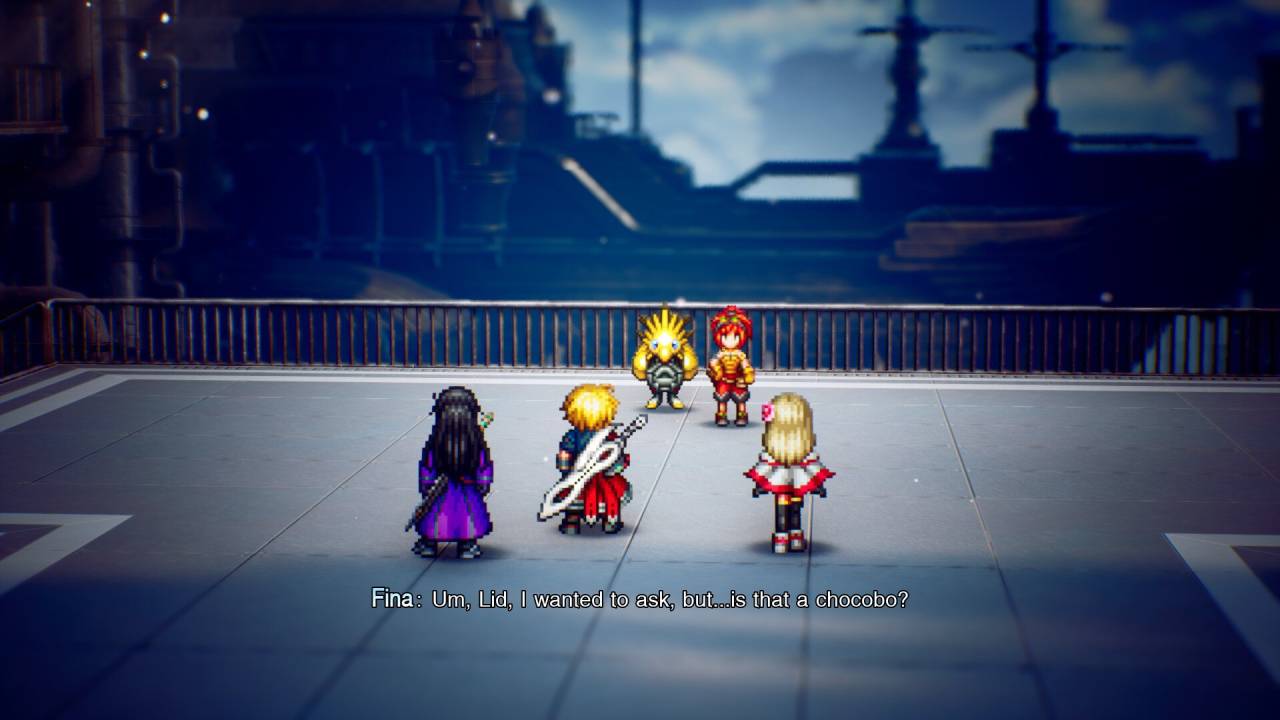
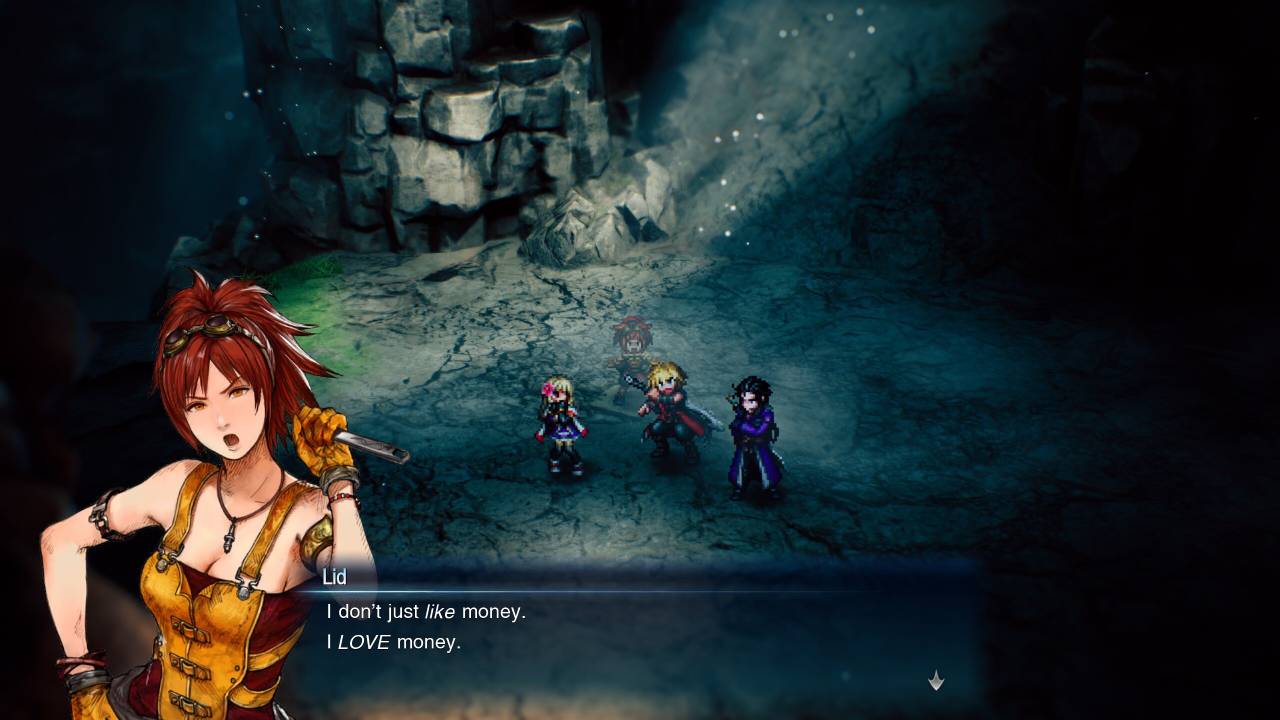
Rain and Lasswell play an important role in the central dynamic, while Fina adds another personality to the group. Their interactions add character between major encounters, and optional skits offer additional chances to see how the cast behaves outside the main story.
These little scenes are worth watching because they let the characters interact more without every conversation having to move the central conflict forward. They also make the party feel like a group traveling together rather than a collection of characters who only turn up when a major plot event requires them.
That said, the story doesn't always maintain the same momentum.
Some stretches drag longer than they need to, and the pacing can make certain developments feel less engaging than they might otherwise. Fina, especially, can be polarizing, with some scenes and character moments affecting the story's flow.
The cast has enough personality to carry the adventure, but the writing doesn't always fully capitalize on that potential. When the main story hits a lull, optional interactions provide much-needed character moments, though they won't necessarily fix all pacing issues.
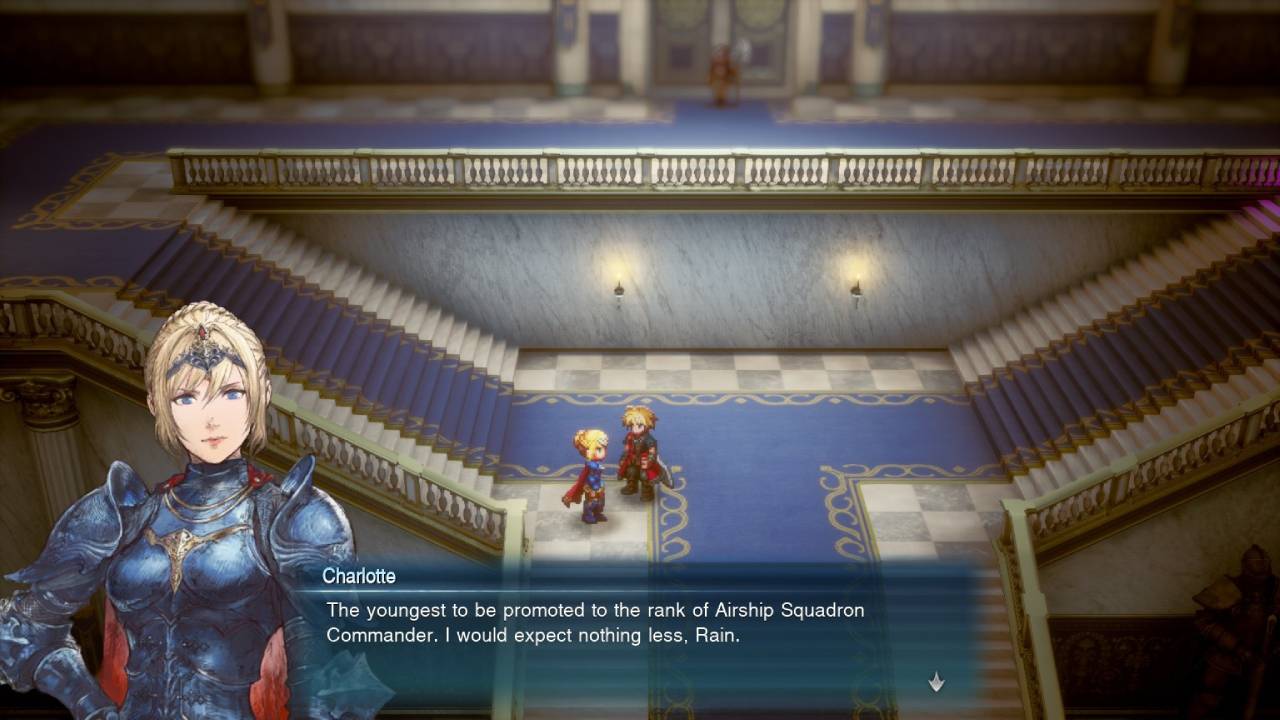
Despite these flaws, the story gives the game a clear sense of purpose and fits the classic fantasy setting it is trying to develop. The conflict with Umbra and the Sworn Six gives the adventure a bigger threat to work toward, and the party's journey provides smaller, character-driven moments that connect one part of the game to another. If you know Brave Exvius, the connection to Lapis provides yet another layer of context. If you're approaching the game without that background, the focus on a new journey through this world still gives you plenty to follow.
Once you're out exploring, Final Fantasy Resonance settles into a traditional RPG structure. As the adventure unfolds, you explore the overworld, visit towns, explore dungeons, complete side quests, and discover new areas. Towns let you regroup and prepare, while dungeons present the challenges and encounters that lead to the next major story beat. The world isn't merely a transition between boss fights and cutscenes.
Exploring your environment is worth it for the hidden rewards, optional challenges, and other things you can find by looking around.
Exploration is particularly useful when you are willing to leave the beaten path. Side quests, secrets, shrines, tablets, and other reasons to explore a location more thoroughly than just heading straight to your next objective. Optional dungeons and encounters also add variety, especially if you're looking for more challenges or chances to make your party stronger. These things make the world more fun to explore, even if you won't always want to do every optional task on your first pass.
The game balances the main story with side content so that you can dictate the pace of your journey. You can move forward with the story or spend more time exploring and preparing before continuing. The latter approach becomes especially useful when the battles start demanding more from your party.
Discovering an optional area can lead to useful rewards, and completing side content gives you another reason to experiment with the game's progression systems. Exploration therefore feels connected to the core RPG loop rather than an activity that exists simply to make the map look larger.
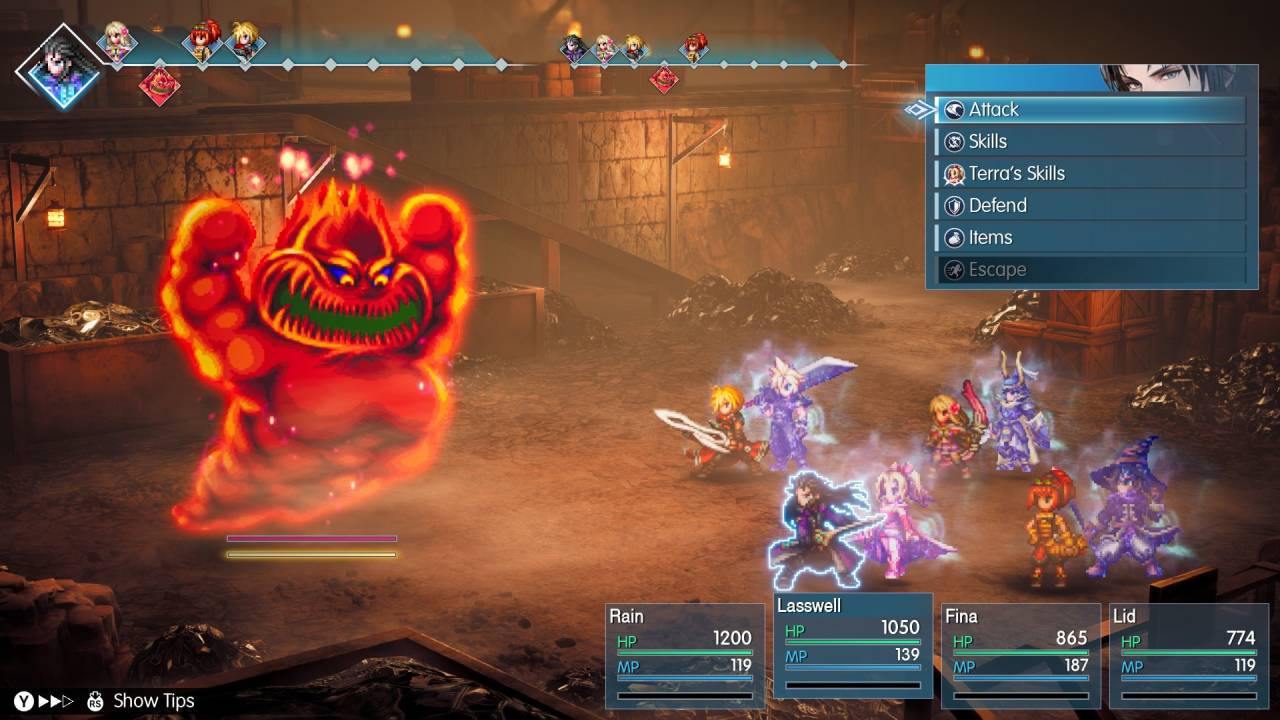
Combat is where Final Fantasy Resonance offers the most. The game features turn-based combat, giving you time to think about your next move rather than relying on action-based encounters. This way, your decisions matter, especially against enemies that punish an unprepared party.
You have to consider what your characters can do, who you will face, and the order in which you want to use your actions. Winning is more than just picking the best attack and spamming it until the enemy dies. Figuring out the battle system and working through the mechanics together can make a huge difference.
The timeline-based battle system adds another layer to those decisions.
You can't just do anything; you have to know the action order and how your choices affect the flow of a fight. This gives encounters a strategic rhythm, so you can plan around your party's opportunities rather than treating every turn as an isolated decision.
Enemy affinities and defensive shields also push you to find weaknesses rather than using a one-size-fits-all approach. If you can exploit an enemy's weaknesses, you can make the fight more manageable and create openings to deal more damage.
Staggering plays an important role in that operation. Target their weaknesses and use the right attacks to weaken enemies and create openings for your party. This gives you a reason to build a balanced ability set and pay attention to what each opponent resists or is vulnerable to. Once you get the mechanics down, combat becomes about setting up good situations rather than trading damage. Battles get tougher, and the system rewards preparation, so there's more to think about.
Resonances, Limit Breaks, and Espers add more options to combat. These mechanics offer more ways to handle tough encounters and, when you can, increase your damage potential. Limit Breaks are an effective tool for battle, and Espers add another layer of strategy to how you approach your party's abilities. Resonances also add depth and make you think about how parts of your setup work together. The result is a combat system with enough moving parts to keep it interesting beyond its base turn-based roots.
But the sheer number of systems can be a lot to take in. You need to know your enemies' weaknesses, manage your abilities, and know when to build toward a bigger attack instead of dealing damage now. It can be demanding for players who like simple combat, especially when multiple mechanics are active at once. However, the complexity often works to the game's advantage, as each system serves a distinct purpose.
Once you understand how they fit together, you can make better choices and face tougher encounters with confidence.
The Vision system is another reason to experiment and a key to character progression. Visions function something like a job or build system, letting you customize your characters' contributions to the party. You aren't limited to one narrow role; you can try different setups and change how you approach the problems that come your way. Collecting Visions multiplies your choices, and how you combine and upgrade them determines how your characters fight in combat.
The flexibility makes progression more enjoyable, because getting a new option isn't just seeing a number increase. You can think about where a Vision fits into your existing setup, whether it plays into a character's strengths, and how it might help you deal with enemies that have been giving you trouble.
Another aspect to consider is pairing-based development, which encourages you to think about how your choices interact rather than treating each upgrade as a standalone improvement. You can try different combos and find a style that suits how you want to play; the system allows for that.
Progression also ties into the difficulty you choose. More challenging fights might require a better knowledge of affinities, shields, staggering, and character builds. If an enemy is giving you a hard time, you may need to change your tactics rather than keep attacking.
That creates a useful relationship between preparation and performance: learning the system makes you more capable, while experimenting with your Visions can help you find a solution when your current strategy stops working.
Of course, a system with this much flexibility can also encourage some trial and error.
You may need time to understand which combinations work best, and collecting additional Visions becomes more appealing when you want to explore different possibilities. For players who enjoy customizing their party, that's a positive. Those who prefer a more straightforward progression system may find the number of choices a little overwhelming at first. Nevertheless, the ability to adapt your characters gives the game a sense of progression that extends beyond simply earning experience and becoming stronger.
The wider exploration loop supports that progression. Side quests, shrines, tablets, and optional dungeons give you more things to do, whilst Espers and other discoveries give you more reasons to look beyond the main story. These systems create a nice cycle: explore an area, find something useful, build your party, and return to the next challenge with more options. Not every player has to go through that cycle the same way, though, which makes it easier to tailor the experience to your preferred pace.
Lengthwise, you're looking at about 30 to 40 hours for the main story, depending on how quickly you blaze through the adventure and how much time you spend exploring. If you want to complete most of the content available, the total can rise to 60-80 hours.
That is a substantial amount of time for a retro-focused RPG, especially if you enjoy discovering optional areas and experimenting with the Vision system. The extra content gives you reasons to keep playing after the main narrative carries you through the central journey.
The game also offers some useful modern conveniences. Xbox Play Anywhere support is a welcome addition for players who want to move between compatible Xbox and PC versions without treating them as completely separate experiences. Another practical feature is the demo, which lets you try the game before you commit to the full adventure.
You can carry your demo progress, and the trial includes progression up to level 15, so you don't lose your early progress when you upgrade to the full game. These features don't change the underlying RPG design, but they make it easier to fit the game into your routine.
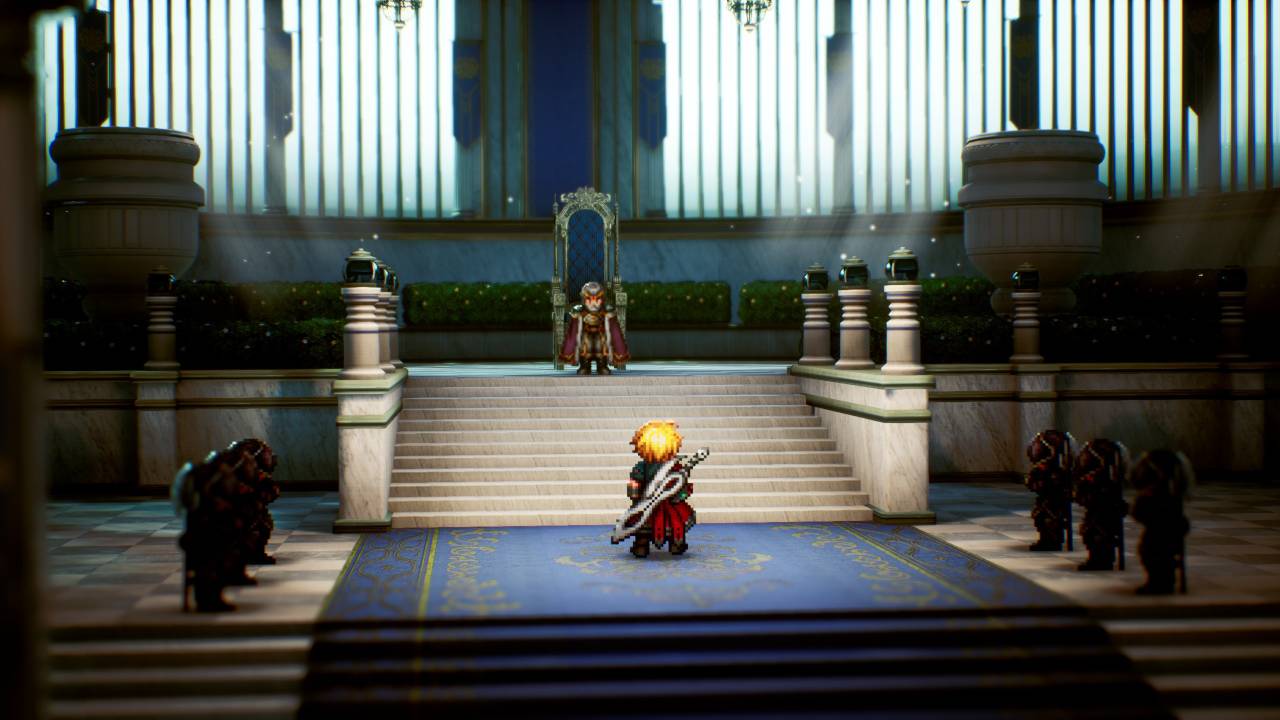
Visually, Final Fantasy Resonance uses the HD-2D style to bring a classic role-playing atmosphere into a modern presentation.
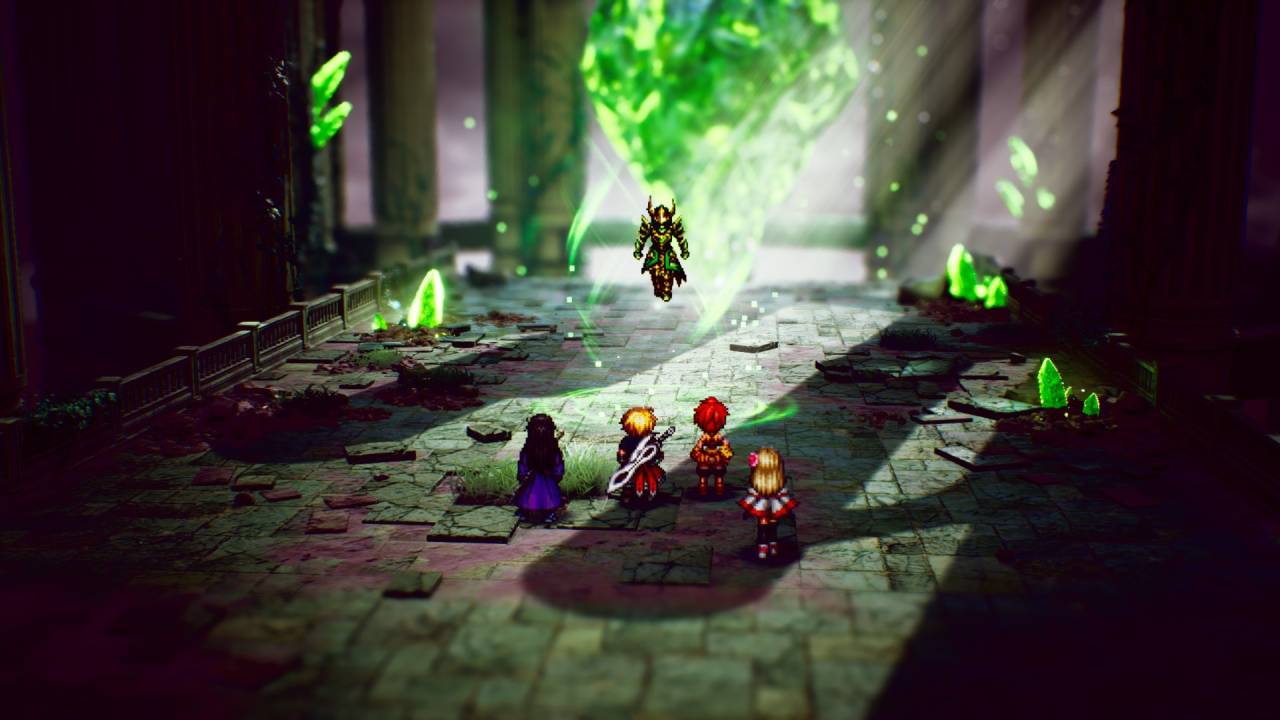
Pixel-art characters sit within environments that use depth, lighting, and layered scenery to create a world that feels more detailed than a traditional 2D RPG. The result preserves the look of older Final Fantasy adventures without making the game feel like a simple recreation of a past era. Rather than chasing realism, the art direction uses its stylized presentation to give each location its own identity.
Some environments particularly show what the visual approach can do. Siren's Tower is a memorable area in the adventure, for instance, and it shows how pixel art, combined with modern effects, can make a place feel different. The contrast between characters and their surroundings also helps keep the presentation readable during exploration and combat. When the environments, lighting, and effects come together, the game captures much of the appeal that has made HD-2D such a recognizable style.
The visual presentation isn't perfect throughout, though. In some areas, the overall approach is more impressive than in others, and the presentation doesn't always hit with the same impact. That inconsistency is striking because the strongest locations set a clear standard for what the art direction can achieve. Still, the visual style suits the game's old-school RPG roots and gives the adventure a unique identity. It feels nostalgic, but nostalgia isn't the only thing carrying the experience.
The soundtrack and sound design do a lot to maintain that atmosphere. The music also sets the adventure's mood, helping transition between exploration, character moments, and battles. A strong soundtrack makes familiar RPG activities feel more energetic, which is really effective. It also adds to the game's flow as you move from place to place. It also supports the story's emotional side, tying scenes and encounters to the larger journey.
But a few inconsistencies in the audio and presentation keep it from landing as well as it could. The soundtrack is still a nice touch, but the overall experience is not great. The voice work also heavily shapes how you perceive the characters, especially Rain and the other main cast members, though the writing and pacing can affect how well the performances land. Some good character interactions add more personality to the adventure.
When the story hits a wall, audio alone doesn't always keep the ball rolling.
Ultimately, Final Fantasy Resonance works because it knows what makes a classic RPG appealing and adds enough modern touches to keep it interesting. Its turn-based combat has meaningful decisions, the Vision system encourages experimentation, and exploration gives you worthwhile reasons to go beyond the main story.
The HD-2D graphics make the world look unique, and the soundtrack helps set the fantasy tone. The tie-in with Brave Exvius also gives the game a place within the wider Final Fantasy universe without stopping it from functioning as its own adventure.
Its failings are worth acknowledging. The story can move slowly, some character scenes work less well than others, and the presentation has a couple of inconsistencies. It may take some time to get your head around the many combat and progression systems, especially if you prefer a simpler approach to party building. These issues hurt the overall experience, but they don't take away from the strongest parts.
If you want a long RPG with strategic turn-based combat, customizable characters, and a nostalgic visual style, Final Fantasy Resonance has plenty to get stuck into. Optional activities and non-linear progression keep you busy long after you finish the main campaign, and the combat offers enough depth to reward players willing to learn it. The story's pacing isn't perfect from start to finish, but the best mechanics make the trip well worth it.
Staff Writer, NoobFeed
Verdict
Final Fantasy Resonance combines nostalgic HD-2D visuals, strategic turn-based combat, and flexible character builds into a rewarding RPG. Uneven pacing and presentation hold it back, but the adventure offers plenty to explore and master.
88
Related News
No Data.