
Windrose Review
PC
Early Access
A deep dive into survival, sailing, and chaos on the high seas in one of 2026’s most ambitious pirate adventures.
Reviewed by Mahi Araf on Apr 14, 2026
From what you can piece together across its development history, Windrose didn’t exactly start life as the game you’re playing now. Originally known as Crosswind, it began as a free-to-play MMO idea built around open-world piracy, PvP zones, and a premium economy designed to keep everything running. It was ambitious in the typical “we want to do everything at once” kind of way, aiming to mix survival, multiplayer chaos, and naval combat into one massive shared experience.
Over time, that vision shifted in a pretty dramatic direction. Instead of trying to serve every type of player at once, the developers pulled it back into something more focused. The MMO structure and PvP-heavy design were removed, and the game was rebuilt as a paid survival co-op experience.
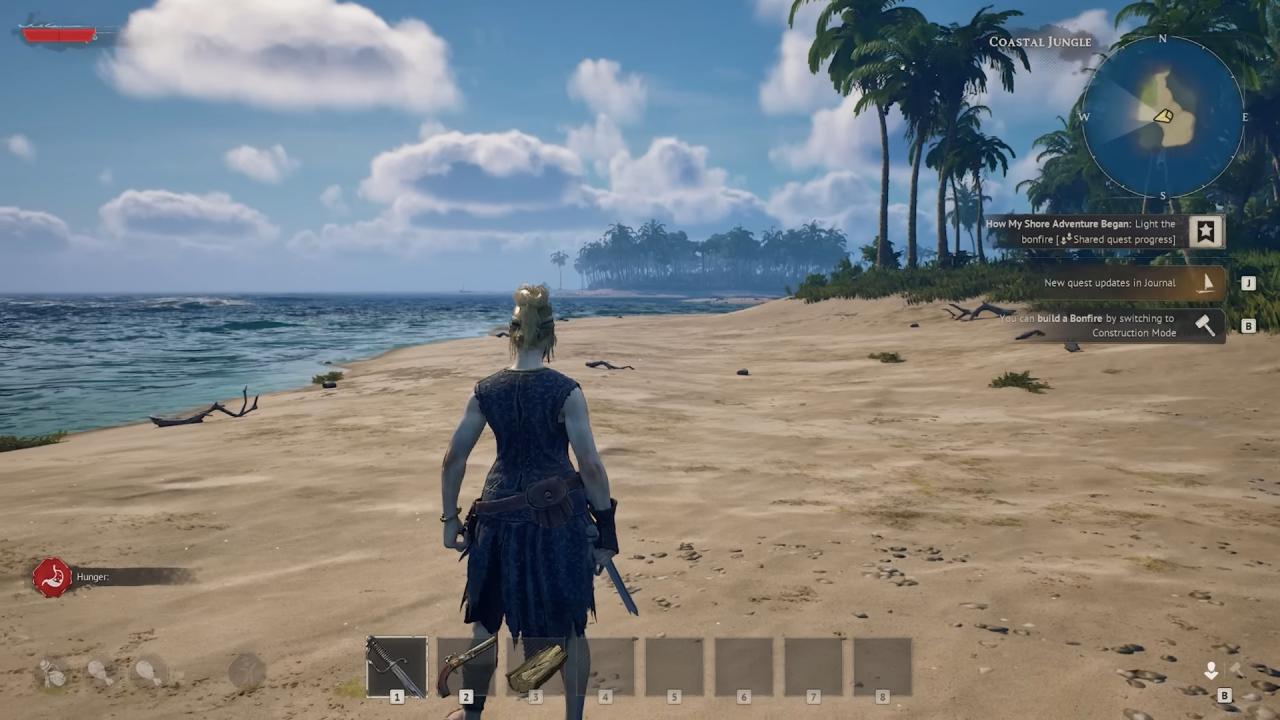
That change wasn’t just a small tweak either—it completely reshaped how Windrose plays today, turning it into something more structured, more contained, and arguably more playable for long sessions without the pressure of constant player-versus-player threats.
You step into Windrose in a world that feels like it’s already halfway through its own pirate legend.
The story leans heavily into classic pirate fantasy, with Blackbeard positioned as the main antagonist tied to something far bigger than simple naval rivalry. There’s talk of curses, necromancy, and supernatural forces spreading across the seas, giving the world a slightly darker edge underneath all the sailing and survival systems.
As you move through the early game, you’re not just dropped into chaos without direction. The story structure pushes you into familiar survival beats first—finding your crew, repairing your ship, and getting your bearings at sea.
That initial journey is more grounded, almost like the game is teaching you how to exist in its world before it starts throwing larger narrative threads at you. After that, things get more complicated with faction wars, mysterious journals, and bosses that feel like big steps forward in your progress instead of just random encounters.
The questing system plays a big role in how you experience the narrative.
In co-op, you can split quests between players or tackle them together, which changes how personal the story feels. Some players prefer to run through objectives independently so they can absorb everything at their own pace, while others stick together and treat it more like a shared campaign. Either way, the game constantly feeds you reasons to move forward, whether it’s uncovering new islands, unlocking journals that hint at bosses, or pushing deeper into faction-controlled waters.
There is also a strong sense of escalation in how the world unfolds. Biomes teach you about basic enemies and dangers that could kill you at first. As you go on, the tone changes to more dangerous areas controlled by groups like Blackbeard's forces.
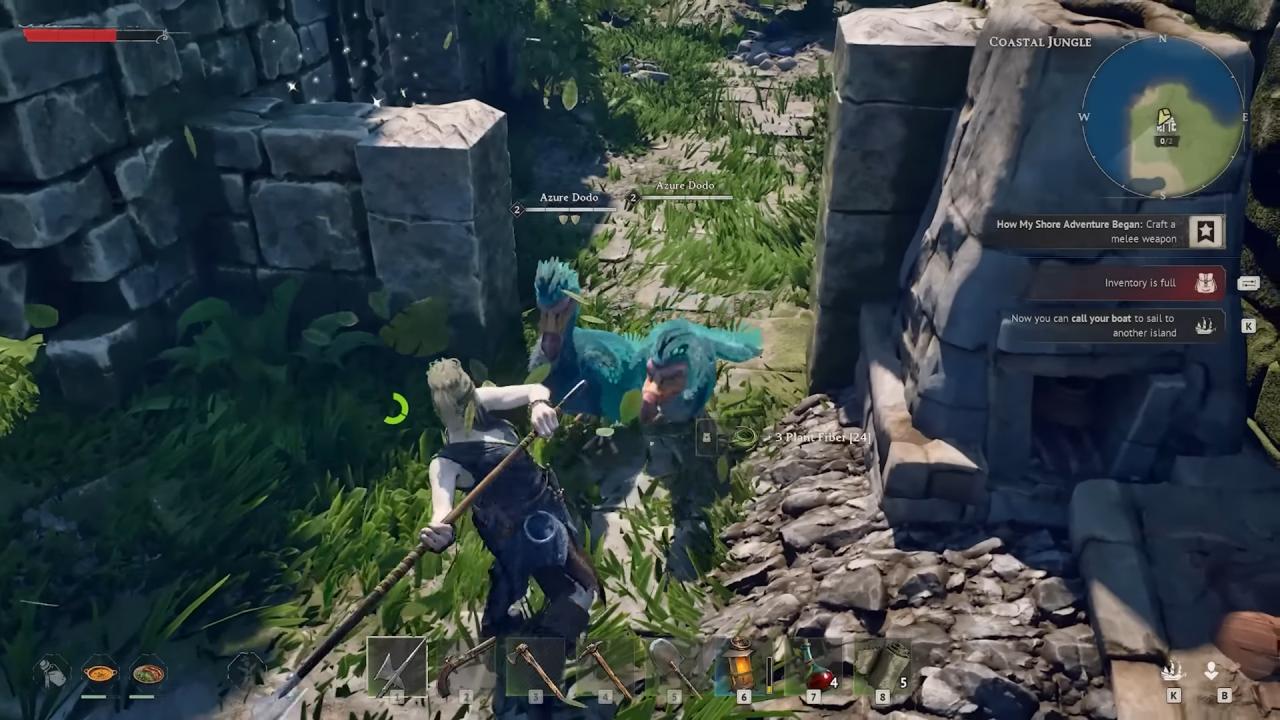
Boss fights are teased as big steps forward in the game, with hints of a corrupted captain-style boss, a ghostly presence, and even stranger threats from earlier builds. The game doesn’t hide what’s coming—it basically tells you what you’re walking into, then asks you to prepare for it.
Once you actually start playing, Windrose becomes a loop of survival, exploration, and constant movement across islands.
You’re gathering resources like wood, stone, copper, and iron, all while managing hunger, health, and crafting progression. Each island you land on feels slightly different depending on its biome, and you’re constantly pulled into side activities that distract you from whatever your original plan was.
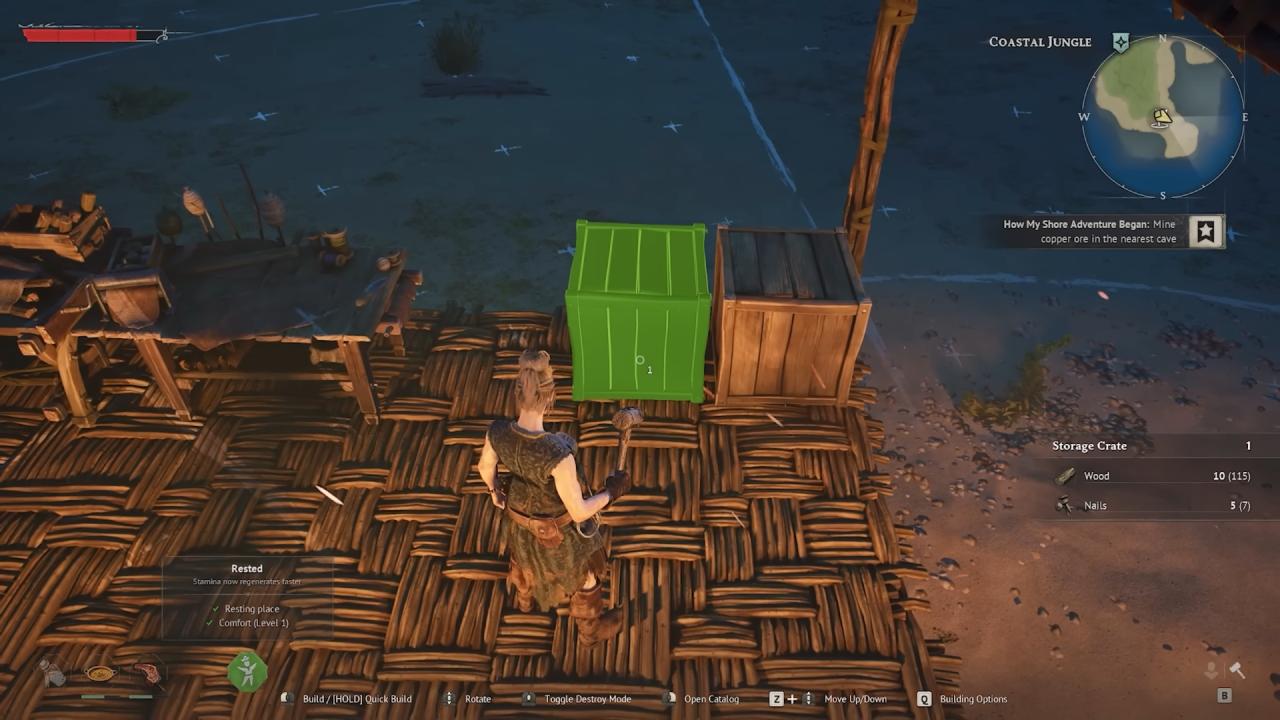
Base building is one of the most developed systems in the game. It starts simple, usually around a bonfire that defines your build radius, but quickly expands into something far more flexible. Within that area, you can place structures freely, build crafting stations, and gradually shape your own pirate outpost. The system is forgiving in a way that encourages experimentation, letting you overlap structures and build more naturally instead of forcing rigid placement rules.
One of the biggest quality-of-life features is how crafting works within your base. Any crafting stations inside your bonfire range can pull resources directly from nearby storage, which removes a lot of the usual survival-game frustration.
Even upgrades don’t require you to micromanage placement as long as they exist somewhere in your base area. That said, there is a small friction point: crafted items sometimes sit inside the station inventory instead of going directly to you, which can lead to you forgetting them entirely when you walk away.
You're always adding to your survival toolkit, not just when you build.
You can farm, fish, gather materials, and even hire NPCs who will help you build your base. These NPCs aren’t just decorative—they help with production and provide buffs, making your settlement feel like a functioning place rather than just a storage hub. You also spend time tomb raiding, clearing points of interest, and hunting wildlife like boar, wolves, dodos, and goats, all of which feed into crafting and progression.
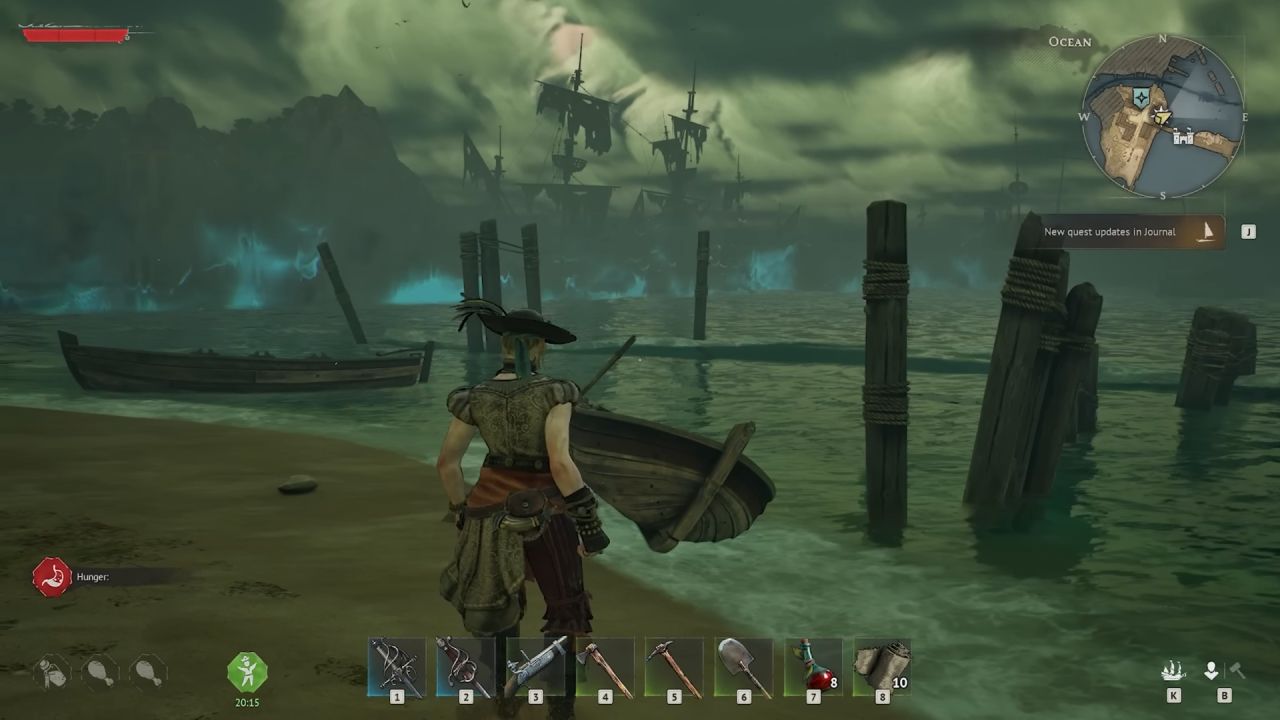
Exploration is where Windrose really locks you in. You travel between islands using ships, and the sailing system is easily one of the strongest parts of the game. It doesn’t feel like fast travel or filler travel time—it feels like actual travel.
The ocean is wide, often empty, and atmospheric in a way that makes long journeys memorable rather than boring. You get moments where you’re just out at sea with no land in sight, hearing the wood creak, waves shifting beneath you, and your crew moving around the ship while storms roll in the distance.
Your starting point is usually a small dinghy, but you quickly move into proper ships like The Catch, followed by larger vessels such as the Brig and Frigate. Every ship changes how you play, whether it's by changing its speed, firepower, or storage space.
You can also change their skins and variants and even give them new names, which makes your ship feel more personal as it becomes your main tool for survival. There are also faction rewards in the game that unlock ship skins and upgrades, which give you more reasons to use its reputation systems.
As you explore further, the world opens into multiple biomes.
At launch, there are three main ones: a coastal jungle-style starting area, foothills, and a cursed swamp, with an Ashlands biome planned for later updates. Each biome brings new enemies, resources, and environmental challenges. You might start off fighting basic wildlife and pirates, then gradually move into harsher regions where wolves, tougher enemies, and more dangerous encounters become standard.
The gameplay loop eventually becomes very clear. You sail to islands, clear points of interest, loot dungeons, gather materials, upgrade your base and ship, and then move on to the next destination. Some points of interest are repeated in structure, but they’re layered enough that you don’t feel like you’re doing the exact same activity every time.
Campsites, for example, often contain multiple chests, sometimes hidden behind environmental clues like buried loot under specific trees, which rewards exploration rather than just checklist clearing.
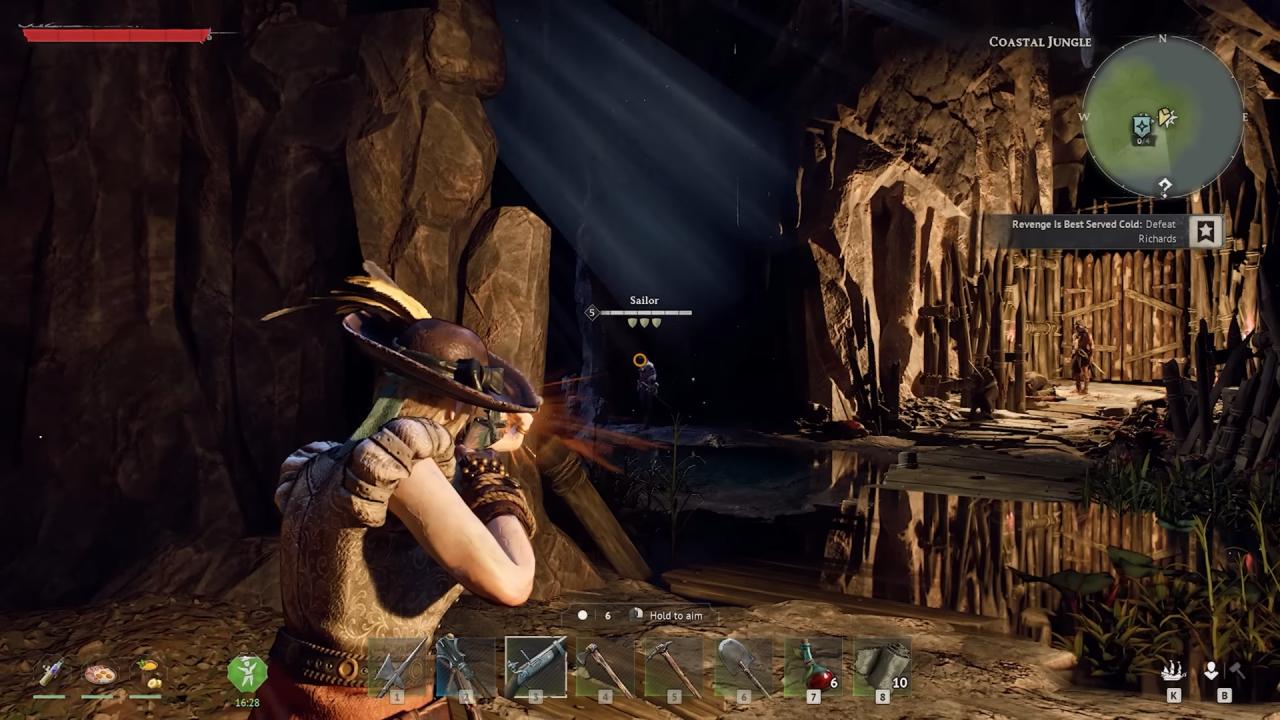
Combat in Windrose is where things get more complicated. On paper, it’s built around timing, blocking, and parrying. Enemies and players both have a shield or poise system that you need to break through. If you time your block correctly, you don’t just reduce damage—you actively punish enemies by removing their defenses and opening them up for counterattacks. When it works, it feels good and planned.
But when the encounters get bigger, the system starts to have problems. When you fight more than one enemy at a time, it often turns into chaos instead of skill-based timing. Even when your level matches the area, you can get overwhelmed quickly, especially when ranged enemies like musketeers are involved while you’re already engaged in melee combat.
The game strongly encourages parrying, but the moment you’re outnumbered, it becomes difficult to maintain that rhythm.
Ranged weapons like muskets and blunderbusses exist more as opening tools rather than constant combat options due to their slow firing and reload speed. This pushes you back into close-range combat where blocking and parrying dominate.
The issue is that there’s no real stealth system to help you control encounters. Once you enter enemy range, you’re spotted immediately, and even a single musket shot tends to alert everything nearby, which often leads to full group aggression rather than controlled fights.
Because of that, you end up relying on simpler strategies when things get overwhelming, like using heavier two-handed weapons and constantly repositioning instead of engaging with the intended parry-heavy system.
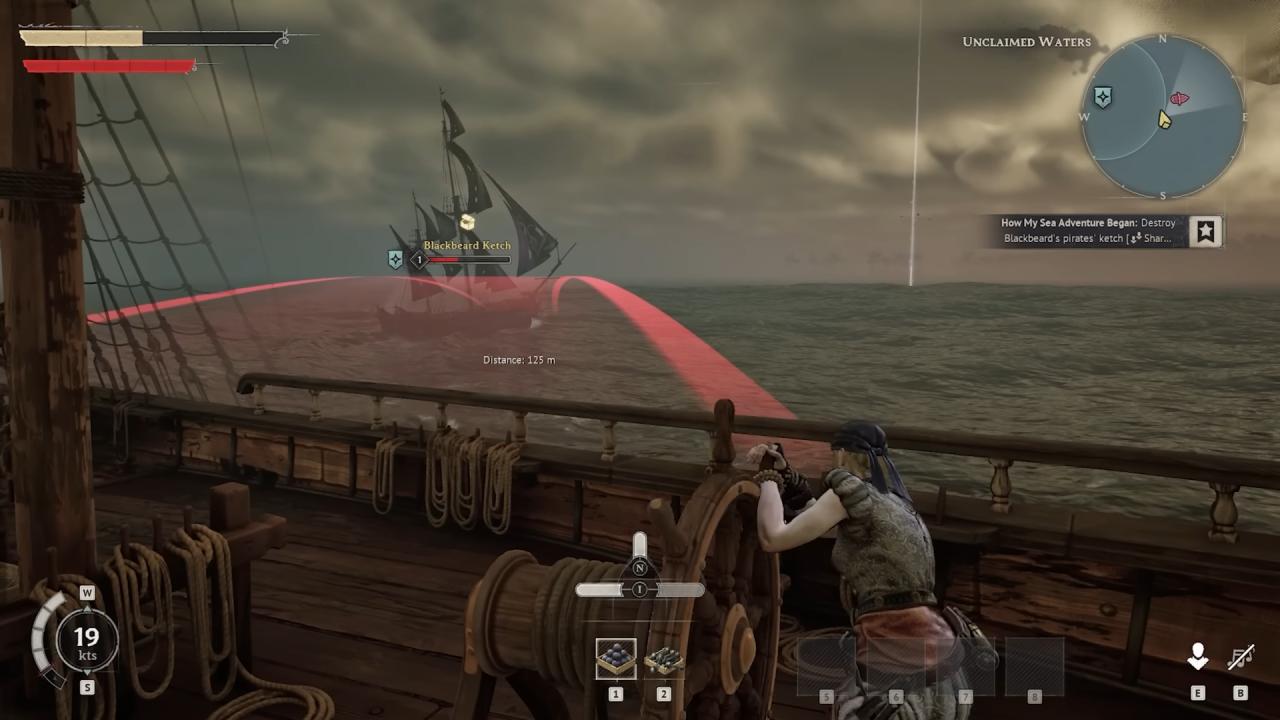
It works, but it doesn’t always feel like the most elegant solution. On the other hand, naval combat feels more alive. You're steering, firing cannons, fixing damage, and sometimes even repairing your ship in the middle of a fight just to stay alive.
Once enemy ships are weakened, boarding becomes an option, which turns combat into a close-quarters fight between crews.
Boarding gives you more loot than just sinking ships, and it also helps you move up in your faction. You get insignia, which raises your renown and lets you make new recipes for weapons, armor, and ship upgrades. You can also sell illegal goods and cargo for coins, which connects fighting, leveling up, and the economy in a big way.
Windrose has multiple systems that work together to move players forward. You get XP from quests and exploration, which lets you level up and get skill points that make you stronger, healthier, and able to deal more damage. There is also a skill tree that lets you focus on certain types of weapons or ways to play.
One way to do this is to focus on critical hit builds, which add armor bonuses and skill points to make your character a high-risk, high-reward damage dealer. Faction systems are also very important.
You can improve your standing with different groups by giving them tokens from battles and encounters. This unlocks blueprints for better gear, ships, and base upgrades, which makes factions feel like they are directly related to your power growth instead of just being numbers that show your reputation.
Windrose is very atmospheric in terms of how it looks.
The ocean and sailing scenes are where it really shines, especially when you're out at sea for a long time, and the lighting, waves, and weather do most of the talking. Early access performance is surprisingly good, and DLSS and FSR support help keep things stable even when bases and ships get complicated.
You don't usually expect frame drops to happen in a large-scale survival game at this point, but they do happen. Another thing that stands out is the sound design. The sea shanties are very noticeable and give the game its own style. When you add sounds from the environment, like creaking wood, wind, and distant storms, it really makes you feel like you're out at sea.
It's one of those games where the silence between fights is good because it makes the world feel bigger. There are some rough spots at the same time. It can be a little awkward to manage your inventory because crafting stations hold items instead of sending them straight to your inventory.
When you play alone and have to fight a lot of enemies at once, it can feel unfair. And when you fight harder enemies, some systems, like stealth or smoother crowd control tools, seem to be missing.
Still, it's clear that a lot of love went into making Windrose.
It has systems that already work well, especially sailing, exploration, and base building, and it shows potential to grow into something much larger over time. The Early Access structure means a lot of these issues could be adjusted, and the foundation is strong enough that improvements would genuinely elevate the experience rather than fix something broken.
It’s the kind of game that feels best when you’re sailing with purpose, building your base, and slowly unlocking more of its world at your own pace. When it clicks, it really clicks. When it doesn’t, especially in combat-heavy solo moments, it can feel a bit overwhelming.
Senior Editor, NoobFeed
Verdict
Windrose is a great pirate survival game with great sailing, exploring, and base building, but it has some problems with solo combat balance and the user interface.
78
Related News
No Data.