

AMD Threadripper 7995WX Review: 96-Core CPU Performance for Creators and 3D Workloads
Threadripper 7995WX delivers unprecedented multi-core performance with extensive PCIe lanes and massive RAM support for professional 3D workloads.
Hardware by Nakiro on Nov 28, 2025
The CPU over here is a big problem. A big problem because it's got 192 threads and 96 cores. Have you ever heard of a 96-core CPU? Many might say we're on the verge of a major climate shift. Yes, anyone can go to the shop or buy it on Amazon. But dare to look at the price point, and the day is going to go a lot worse when it's revealed. So, don't go into the description and look at the links.
The question many creators have is how good this 96-core CPU really is because it's obviously not for gamers. And how does it compare to the Ryzen 9950X, the cheaper, standard desktop CPU?
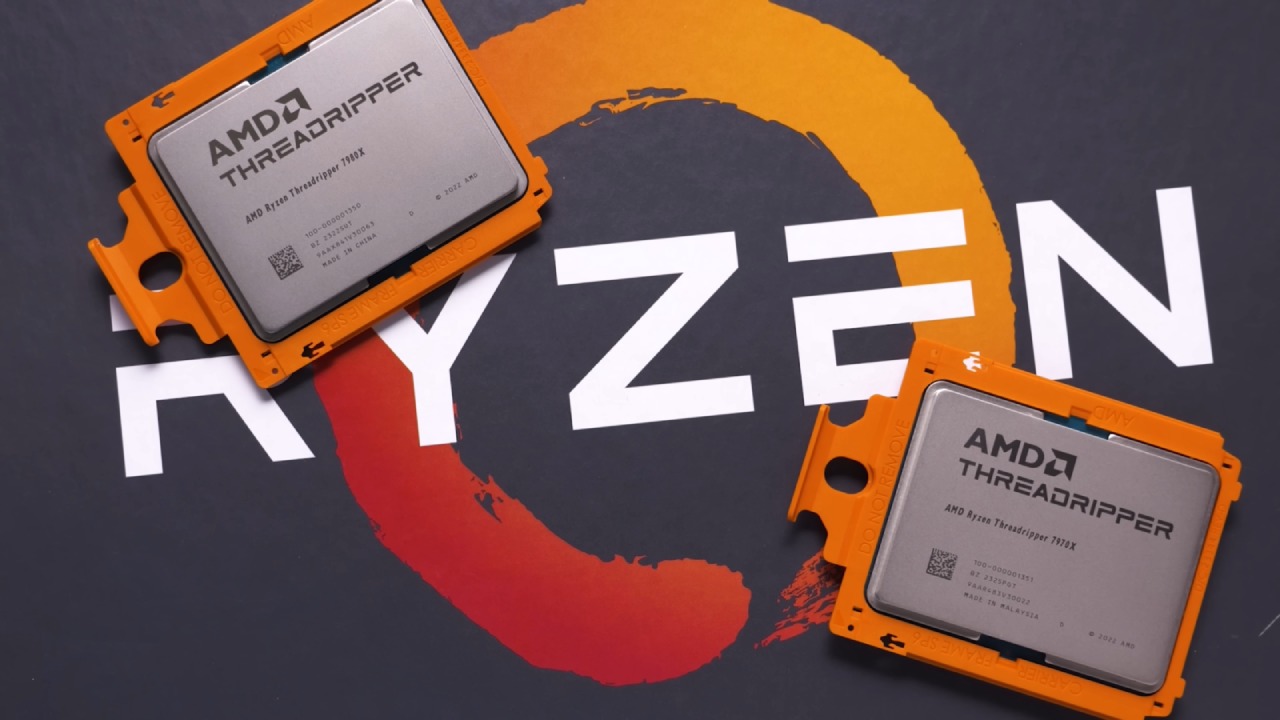
If you're one of those cheap skates, will you even be in the same league as this Ryzen Threadripper? That's what needed to be known. After continuing the review, another button in the BIOS appeared that you can turn on. Then this CPU goes into absolute beast mode.
Specs Overview
For those unfamiliar with Threadripper Pro, it's inside this PC and ready for testing. Comparing it to Intel's best and AMD's consumer best: the Core Ultra 285K has 24 cores and 24 threads, with one thread per core. More threads are usually better, but multi-threading isn't always faster. Intel uses one thread per core, but AMD uses two threads per core. The Intel CPU has 8 performance cores and 16 efficiency cores. On the 7995WX, we have 96 cores and 192 threads, which is bonkers to say the least.
The turbo frequency on Intel and AMD is 5.7GHz, but Threadripper boosts to 5.1GHz, 600MHz lower, but still impressive for a high-end desktop platform. It's based on Ryzen 7000 rather than Ryzen 9000. The PCIe lanes difference is huge: the desktop has 24 PCIe Gen5 lanes, while Threadripper has 128. The cache sits at 384MB L3 and 96MB L2—an absolutely ridiculous amount. Base TDP is 350W. The process node remains TSMC 5nm.
Testbench Setup
The Threadripper testbench uses the Gigabyte TRX50 AORUS motherboard, RTX 4090, 128GB RAM at 6400MHz, and RDIMMs instead of standard DDR5.
Cooling is handled by a 360mm AIO, and the system is powered by a 1600W PSU. The OS drive is the Samsung 990 Pro. AMD and Intel setups are available in the description.
Memory Controller Performance
The 7995WX has 8-channel RAM, while the desktop Ryzen 9 has only 2 channels. Ryzen 9 only uses 2 channels, even with 4 DIMMs. Threadripper operates all eight channels, which is great for tasks that need a lot of RAM. With 128GB of RAM, there are no limits on benchmarks. The maximum amount of RAM it can support is 2TB.
The supported RAM speed is 5200MHz, but because each channel maps directly to a DIMM, 6400MT/s was stable with no crashes. Ryzen9 9950X defaults to 5600MHz stock. Faster kits are possible, but Threadripper's architecture allows much greater scaling.
Power Consumption
Out of the box at stock, Threadripper pulls 350W—compared to Ryzen at 200W and Intel at 250W. Idle power consumption is also very high. It's like owning a Bugatti: you're not bothered about fuel consumption. Full utilization and idling both pull significantly more power.
Creator Benchmarks
Cinebench R24
- Single-core: 22% faster than 9950X
- Multicore: almost 3× as fast
- Compared to Intel: 33% faster single-core, over 2× faster multicore
Geekbench6
The 9950X is 23% faster in single-core. Multicore is only 16% slower on Threadripper because Geekbench doesn't know what to do with 96 cores.
Geekbench AI
9950X more than doubles performance in certain tests. Multicore is almost 10× faster on Ryzen9. Intel scores are inconsistent. This benchmark isn't ideal for evaluating AI workloads, as AI workflows rely on different systems.
Photo Editing
Photoshop: 9950X is 55% faster, and Intel is 22% faster. Photoshop gets confused when there are too many cores.
Lightroom Classic: 9950X and Intel are more than 60% quicker. Lightroom can't use 96 cores correctly.
Video Editing
Premiere Pro is 3–10% slower with the 9950X and 2–6% faster with the Intel Quick Sync. Even though it has a lot of raw rendering power, Threadripper isn't the best choice for altering timelines.
After Effects: multicore performance is 25% faster, but overall scores don't scale much. RAM preview benefits massively from Threadripper's memory capacity.
DaVinci Resolve: 9950X is 12–19% slower; individual tests show up to 30% slower performance. Intel is even further behind. It's faster, but GPU investment still yields more benefits.
3D Rendering: The True Purpose
Blender results are an absolute slaughterhouse. 9950X is 71% slower. Threadripper is more than 3× as fast as anything else on the market.
V-Ray shows the same trend: 70% slower competition across the board. Pretty much every CPU renderer scales similarly—Threadripper dominates everything in 3D rendering.
This CPU is built for professionals handling 3D production, heavy simulations, scientific workloads, automotive engineering, or large-scale RAM-intensive pipelines. In these cases, price becomes irrelevant because the workflow demands the hardware.
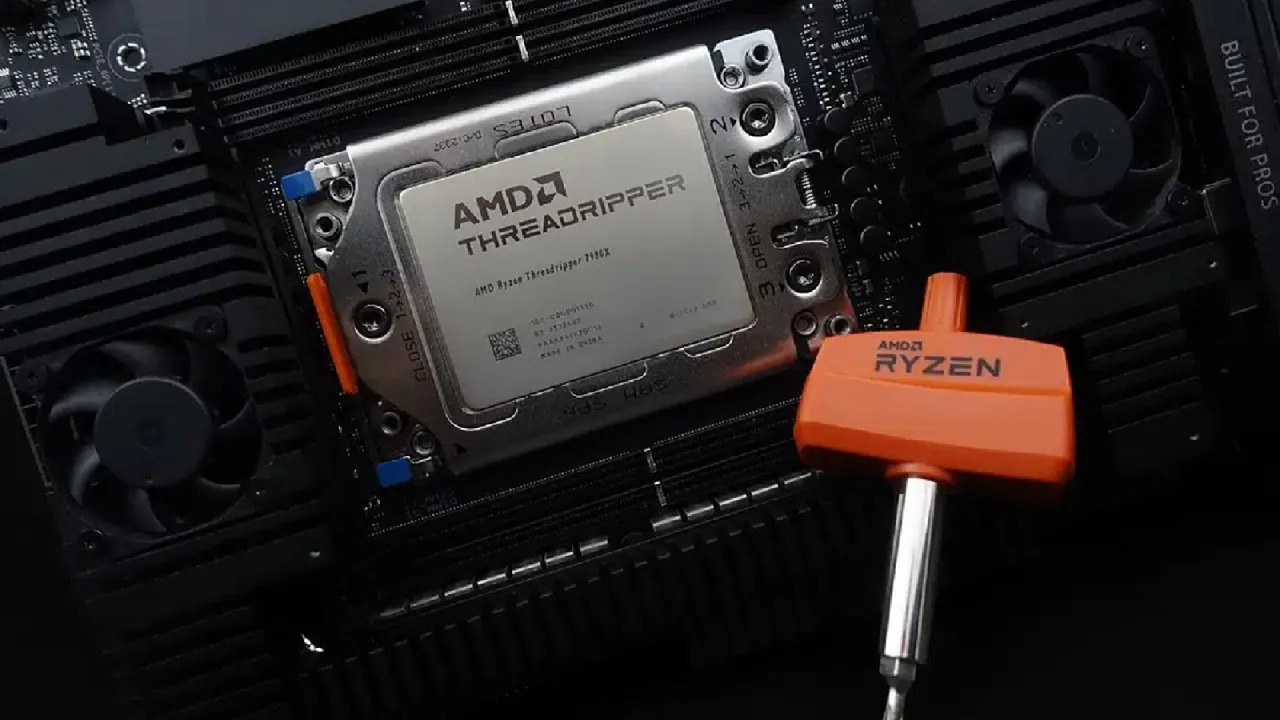
PBO Overclocking Mayhem
When you set the PBO limitations to "Motherboard" and turn on max clock override in the BIOS under Advanced > Precision Boost Overdrive, things change significantly.
Starting Cinebench:
- The package power is between 678W and 683W.
- The VRM temperatures reach 141°C.
- Scores go up by 35 to 40%.
- At its peak, the power draw exceeded 707W.
You can overclock Threadripper Pro, and just turning on PBO makes it a monster.
Unbeatable PCIe Expansion
Threadripper has 128 PCIe Gen 5 lanes, which means that x16 slots can hold numerous GPUs, NVMe storage, and accelerator cards. You may now make entire GPU arrays with an Asus WRX90 motherboard. There is nothing else on the market that can compare to this for rendering farms or compute stations.
Final Thoughts
The CPU costs more than a car, but for professionals who truly need it, there's nothing else like it. The performance, RAM capacity, PCIe bandwidth, and 3D scaling put it in a league of its own. Would you choose a car or this CPU?
Also, check our other AMD articles below:
- AMD Ryzen 9 9950X3D Review: Setting The Standard For 2025 Gaming CPU
- AMD Ryzen 7 9800X3D Review: 3D V-Cache Goes God Mode with Stunning Gaming Performance
- AMD RX 9070 Performance Review: Thermals, Clocks, and Real-World FPS
- AMD Ryzen 5 7600 Review: Best Budget Gaming CPU of 2025?
- AMD Radeon RX 7800 XT Review: RDNA 3 Power For Midrange Gaming
- Sapphire NITRO+ AMD Radeon RX 9070 XT Review: The Ultimate 4K Gaming GPU
- AMD Ryzen 7 7800X3D: Delivers Gaming Performance Far Beyond Expectations
- AMD Ryzen 9 7900X Review: Powering the AM5 Era with DDR5 & PCIe 5.0
- Intel Core i9‑14900K vs. AMD Ryzen 7 7800X3D: Power Profiles & Gaming Benchmarks
Editor, NoobFeed
Latest Articles
No Data.