
DREADMOOR Beginner's Guide | Tips and Tricks
Game Guide by Amaya on Nov 12, 2026
DREADMOOR is a fishing survival horror game where preparation, resource management, and boat upgrades are essential for surviving the flooded world. Whether you're exploring abandoned settlements, catching mutated fish, collecting crafting materials, or escaping dangerous creatures, understanding the game's mechanics early will make your journey through the Submerged Lands much easier.
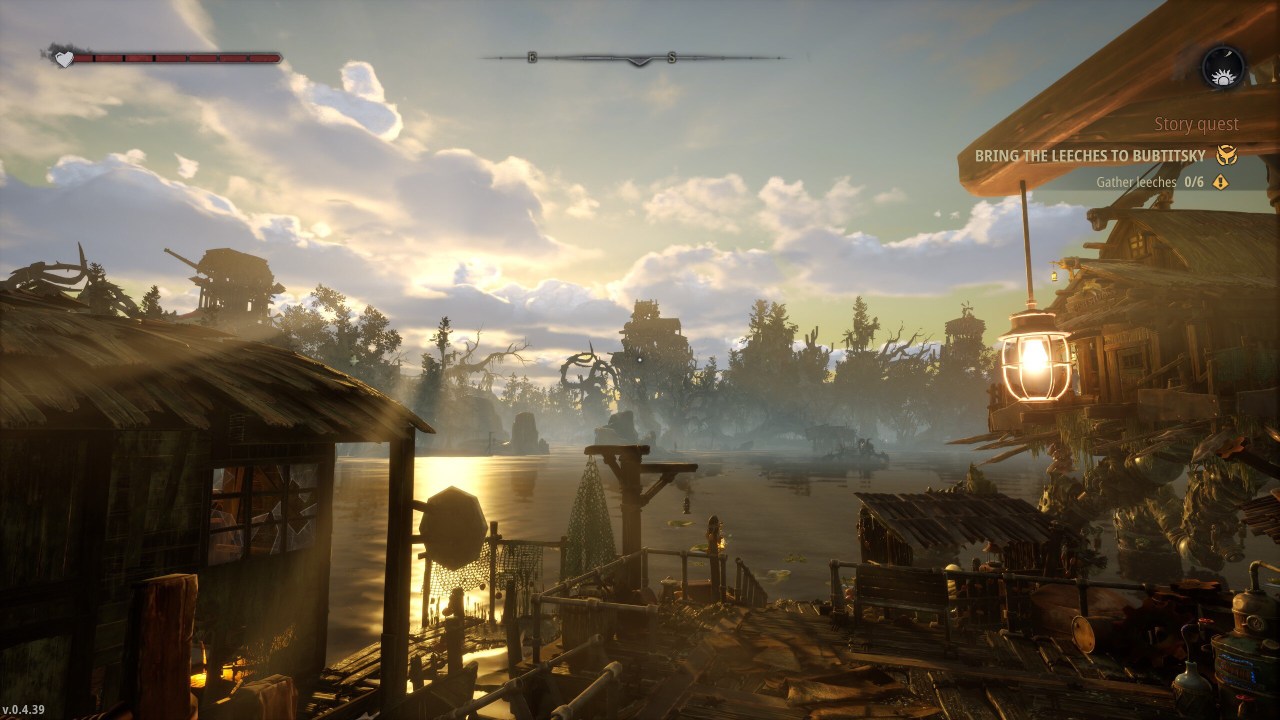
Understand the Basic Gameplay Loop
DREADMOOR revolves around a repeating cycle of exploration, fishing, scavenging, trading, and upgrading your equipment. Your boat is your primary way to travel between locations, while fishing and salvaging provide the resources you need to improve your survival equipment.
A typical expedition involves:
1. Preparing your boat with enough fuel, storage space, and protection.
2. Traveling to fishing grounds or abandoned locations.
3. Catching fish and collecting useful materials.
4. Avoiding hostile creatures and environmental hazards.
5. Returning to settlements to sell valuable catches and obtain supplies.
6. Using your earnings and collected materials to craft equipment and upgrade your boat.
Avoid traveling without a clear objective. Resources and carrying capacity are limited, and every unnecessary journey can expose you to additional dangers.
Explore the Starting Area Thoroughly
Before traveling into unfamiliar waters, take the time to explore your starting location and collect available supplies. Abandoned buildings, settlements, and submerged structures can contain important crafting materials, equipment, and clues about the world's history.
Pay attention to containers, discarded objects, and unusual environmental details. Materials such as scrap, metal plates, rope, and biological samples can become important when repairing equipment or unlocking upgrades.
Exploration also provides information about the catastrophe that submerged the world. Logs, abandoned laboratories, distorted radio transmissions, and environmental clues gradually reveal what happened.
Learn How Fishing Works
Fishing is one of the most important mechanics in DREADMOOR. It provides food, crafting materials, biological samples, and valuable catches you can sell to traders. However, fishing is not simply a matter of casting your line and waiting. You must understand fish behavior, stamina, and line tension to avoid losing your catch.
Keep these tips in mind:
- Watch the water: Different fishing locations contain different species. Pay attention to water movement, splashes, depth, and surrounding sounds.
- Choose the correct bait: Different fish respond to different bait categories. Using unsuitable bait can prevent you from getting a bite.
- Pull against the fish: When a fish moves in one direction, pull your rod in the opposite direction to drain its stamina.
- Watch your line tension: Reeling while a fish is actively fighting increases tension. Stop reeling before the tension meter fills.
- Reel when the fish gets tired: Once its stamina is depleted, bring it closer while watching for another sudden movement.
- Finish the catch: When the fish is close enough, use the Land Fish prompt to secure it.
One of the most common beginner mistakes is reeling continuously. This can cause your fishing line to snap, especially with stronger fish. It is better to let a fish pull some line away than risk losing the entire catch.
Keep Contract Fish Separate
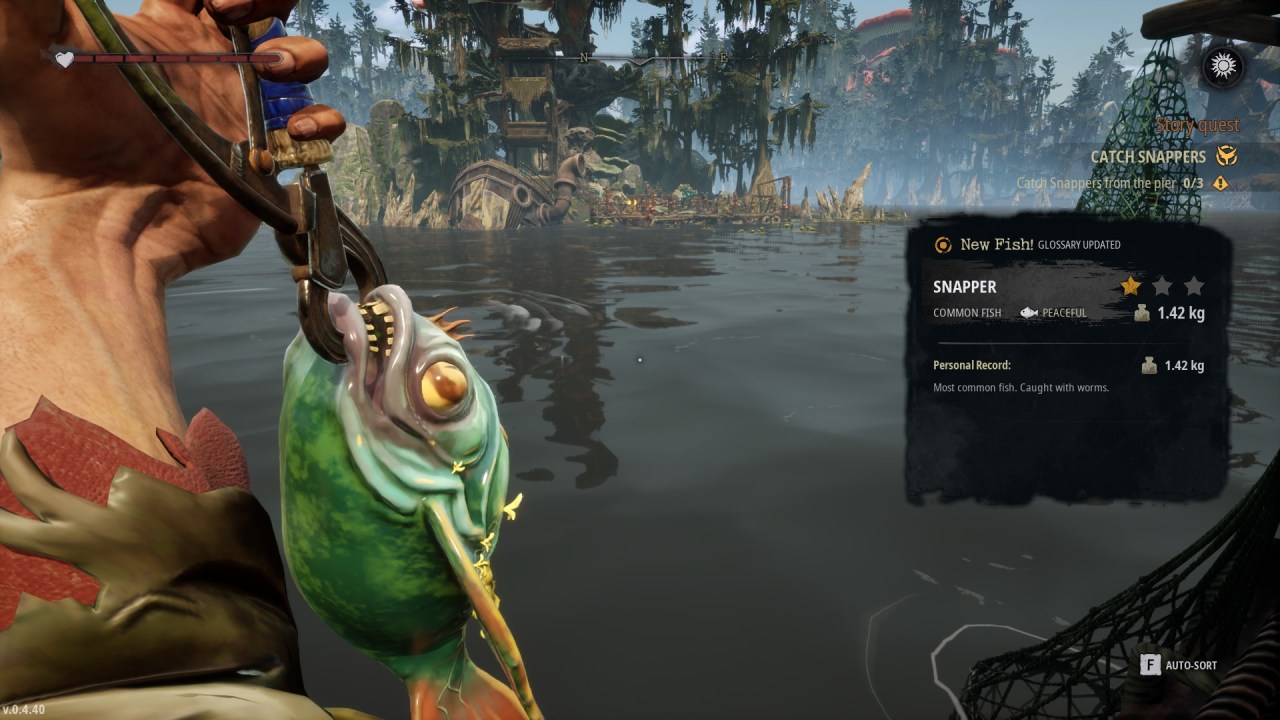
Early quests introduce fishing contracts that require you to catch specific species and deliver them to traders. Do not sell or process these fish before completing the relevant objective.
Your first major fishing contracts include:
- Five Snappers: Use the Simple Rod and Earthworm bait at the fishing platform behind the Dry Dock.
- Three Softgrazers: Use Wind-Up Tin bait at the marked peaceful fishing location.
- Three Harpooners: Use Rainbow Fin bait in a predator splash zone.
Keep all requested fish whole until you have delivered them. Processing or selling them beforehand means you will have to catch replacements.
Collect Resources Whenever Possible
Resources are essential for crafting equipment, repairing your boat, and progressing through the story. You will regularly need materials recovered from abandoned structures, fishing locations, and underwater environments.
Some important resources include:
- Scrap and Metal Plates: Used for crafting and equipment improvements.
- Rope: Useful for crafting and repairing equipment.
- Coral Fibers: Gathered from coral and used in crafting.
- Bug Slime: Collected from certain creatures found in the water.
- Biological Samples: Useful materials obtained from unusual organisms.
- Fish Meat: Can be used in crafting and bait production.
- Batteries and other mechanical components: Important for more advanced equipment.
Make resource collection part of every expedition. Even if you are primarily traveling to catch fish, check nearby salvage locations and abandoned structures for materials.
However, do not collect everything indiscriminately. Your inventory and boat storage have limits, so prioritize materials required for current quests and upgrades.
Beginner tip: Avoid selling crafting materials to get extra currency. Some resources are difficult to obtain and may be required later for essential equipment.
Upgrade Your Boat Early
Your boat is your primary means of transportation and acts as a mobile base throughout DREADMOOR. It allows you to reach fishing grounds, settlements, abandoned facilities, and submerged ruins.
However, your boat is vulnerable to environmental damage and hostile creatures. Improving it should be a top priority.
The most useful upgrades to prioritize are:
- Hull Protection: Reduces the risk of your boat being damaged by obstacles and hostile encounters.
- Storage Capacity: Allows you to carry more fish, scrap, and crafting materials during expeditions.
- Sonar: Helps identify underwater structures, hidden locations, and potential navigation hazards.
- Oxygen Equipment: Makes underwater exploration possible for longer periods.
- Fishing Equipment: Improves your ability to collect resources and catch more demanding fish.
- Movement Upgrades: Improve travel efficiency and help you escape dangerous situations.
A sensible upgrade priority is hull protection and storage first, followed by sonar, oxygen equipment, and fishing improvements. Movement upgrades become increasingly useful as you explore more dangerous regions.
You will eventually need to gather specialized materials from hazardous locations to unlock certain improvements, so don't expect to get everything right away.
Always Carry Enough Fuel and Repair Materials
Fuel management is another important part of surviving in DREADMOOR. Traveling between locations consumes resources, and running out of fuel far from a settlement can leave you in a dangerous situation.
Before leaving, consider how far you intend to travel and whether you have enough fuel to return.
Submerged obstacles, environmental hazards, and creature attacks can also damage your boat. Make sure you have the necessary repair materials before committing to longer expeditions.
The general rule is simple: never assume that your boat will remain in perfect condition throughout a journey.
Be Careful When Exploring Underwater Locations
DREADMOOR features a semi-open world containing flooded cities, abandoned residential districts, industrial facilities, laboratories, isolated islands, and underwater ruins.
Some areas you can explore immediately, while others require better equipment or specific environmental conditions.
Pay attention to:
- Water Depth: Certain areas require improved equipment before you can explore them safely.
- Weather: Severe weather can make traveling and navigation more difficult.
- Tides: Low tides and changing environmental conditions can influence access to certain locations.
- Sonar Readings: Use sonar to identify submerged structures and possible hazards.
- Landmarks: Recognizable buildings and structures can help you navigate when visibility is poor.
Don't assume every location is accessible as soon as you discover it. If you encounter an obstacle that you cannot overcome, mark the location mentally and return after upgrading your equipment.
Exploration also helps you understand the story. Abandoned buildings, research facilities, logs, and unusual transmissions reveal information about the catastrophe that destroyed civilization.
Avoid Fighting Every Creature
DREADMOOR contains several hostile creatures, including mutated fish, enormous underwater organisms, and corrupted creatures found inside abandoned locations.
Not every creature will immediately attack you. Some may observe you from a distance, while others react aggressively to movement or sound.
Combat is available, but it is not always the best solution.
You have different defensive options depending on where you encounter enemies. Land encounters can involve melee weapons and environmental traps, while your boat can use defensive modules and ranged tools against threats in the water.
Large underwater creatures are particularly dangerous because their movements and behavior can be difficult to predict. Avoid approaching them unless the objective requires it.
Prepare for Nighttime Expeditions
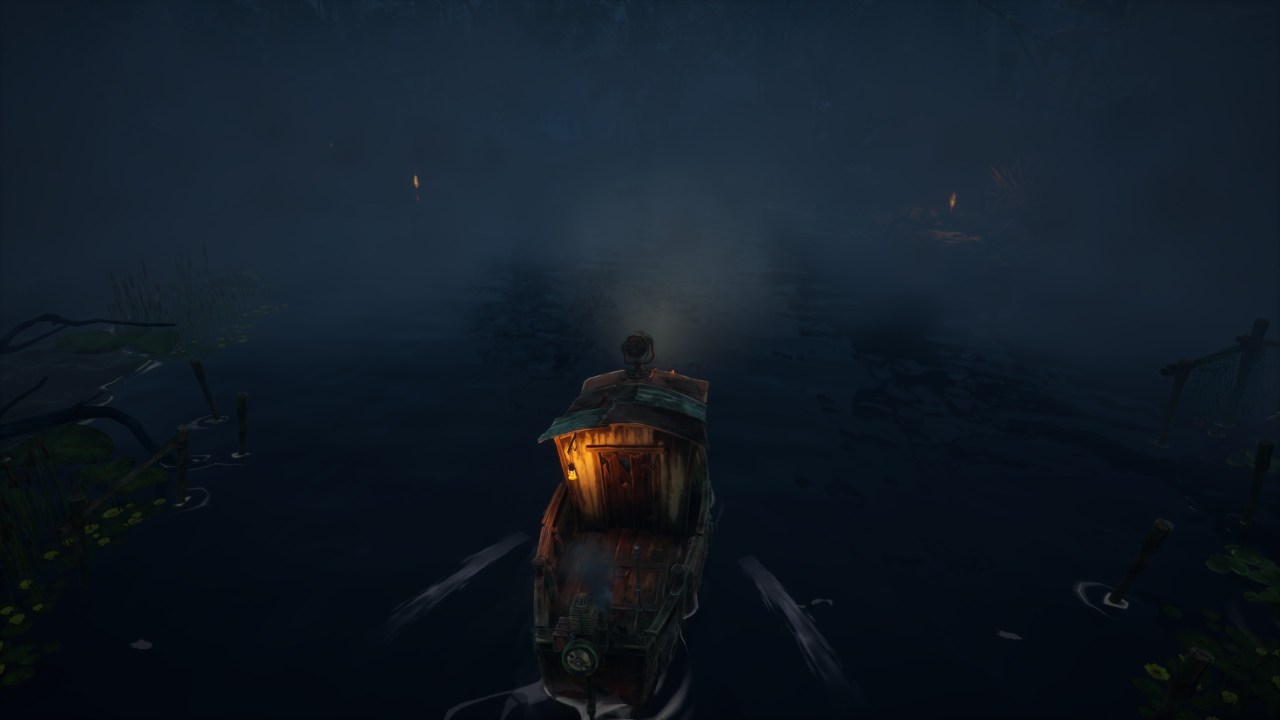
Weather and the day-night cycle influence exploration in DREADMOOR. Traveling through unfamiliar waters becomes more dangerous when visibility drops and hostile creatures are nearby.
Nighttime expeditions can also provide opportunities to encounter unusual fish and rare resources, making them potentially rewarding.
However, beginners should avoid traveling into unfamiliar regions at night without proper preparation.
Before leaving, make sure you have:
- Enough fuel for the journey.
- A boat with adequate protection.
- Sufficient storage space.
- Appropriate fishing equipment and bait.
- A way to defend yourself against hostile creatures.
Pay attention to environmental sounds and changes in the water. Poor visibility can make it hard to spot obstacles or tell where a threat is coming from.
If you are still learning the navigation system, explore familiar locations during safer conditions before attempting longer nighttime journeys.
Make Use of Trading and Settlements
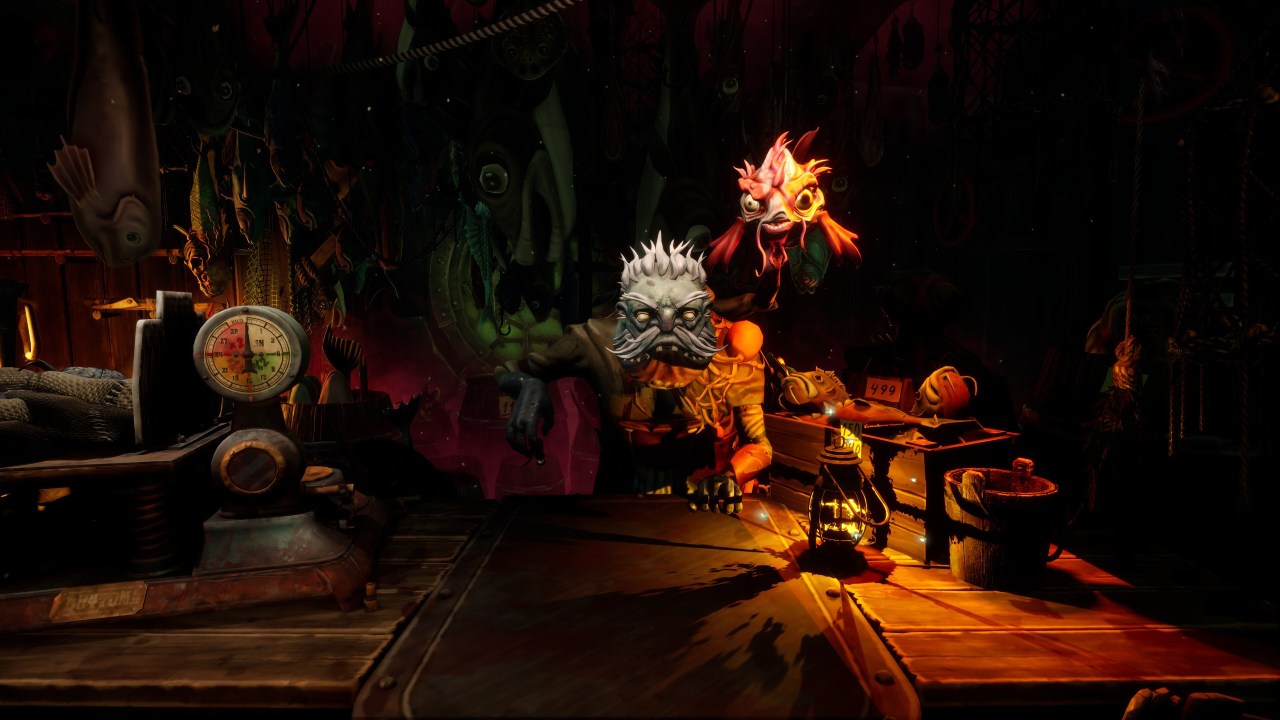
Trading connects fishing, exploration, and equipment progression. You can exchange fish, recovered materials, and valuable finds for currency or other resources.
Different settlements and regions may offer different trading opportunities, so don't assume every item has the same value everywhere.
To make the most of trading:
- Sell ordinary catches when you need money for upgrades.
- Keep quest-related fish until you have delivered them.
- Hold on to rare crafting materials when possible.
- Explore additional fishing grounds to find more valuable catches.
- Check available supplies before spending your currency.
- Prioritize equipment that helps you reach new areas.
Settlements also matter because they offer chances to meet characters, take quests, and learn more about the world.
The traders Gill and Bozur at Betsy and Sons are especially important early on, while John the Fifth becomes central to your boat upgrades at the Dry Dock.
Follow the Opening Quests in the Correct Order
If you are unsure what to do during your first few hours, following the main objectives is the easiest way to unlock important equipment and progression systems.
Here is a recommended starting route:
1. Search the Abandoned House: Collect the available supplies, including Metal Plates and Rope. Pick up the Axe, which will become useful for harvesting materials and breaking obstacles.
2. Tune the Radio: Interact with the radio until the signal is clear and the conversation begins.
3. Visit Betsy and Sons: Travel west to the Trading Post and speak with Gill and Bozur.
4. Accept the Essence Treatment: This is necessary for progressing through the opening quests. The treatment creates a debt that you will repay through your work.
5. Collect the Bunkhouse Key: Speak with the traders and obtain access to your new accommodation.
6. Move Your Chest: Carry your personal chest from the pier into the Bunkhouse and place it in the designated position.
7. Repair the Bunkhouse: Patch the hole in the wall using the available repair materials.
8. Sleep Until Morning: Once the room is secured, sleep to advance the quest.
9. Collect the Simple Rod: Make sure you pick up the fishing rod before leaving. You need it for your first fishing contract.
10. Complete the Snapper Contract: Use Earthworm bait at the fishing platform behind the Dry Dock to catch five Snappers.
This opening sequence introduces the main fishing mechanics and leads you to John the Fifth and the Dry Dock, where you can start improving your boat.
Final Thoughts
Start by completing the opening quests, learning how to fish, and collecting materials whenever possible. Prioritize boat protection and storage before attempting longer expeditions, and avoid unnecessary confrontations with hostile creatures.
Most importantly, take your time exploring. The Submerged Lands contain valuable resources and clues about the catastrophe, but not every location is safe to investigate immediately.
FAQ
Q. What should you do first in DREADMOOR?
A. Search the Abandoned House, collect the Axe and available materials, tune the radio, and travel to Betsy and Sons. Follow the opening quests to obtain the Simple Rod and complete your first fishing contract.
Q. What is the most important upgrade in DREADMOOR?
A. Hull protection and additional storage are excellent early priorities. They improve your ability to survive longer expeditions and carry more resources.
Q. How do you catch fish in DREADMOOR?
A. Choose the appropriate rod and bait, cast into the correct fishing area, and manage the fish's stamina and your line tension. Pull against the fish's movement and reel when it becomes tired.
Q. Can you fight monsters in DREADMOOR?
A. Yes. You can use melee weapons and other tools during land encounters, while your boat has defensive equipment and ranged options for dealing with aquatic threats.
Editor, NoobFeed
Latest Articles
No Data.