
Forza Horizon 6 Guide | How to Build a Rally Car
Here's a guide on how to build a rally car in Forza Horizon 6.
Game Guide by Navid Kabbo on Aug 12, 2026
Rally racing in Forza Horizon 6 is all about maintaining grip over dirt, gravel, jumps, and uneven surfaces. A good rally car needs more than raw horsepower. You need the right tires, suspension, ride height, drivetrain, differential, and gearing to keep the car stable while still allowing it to rotate through tight corners.
This guide covers the essential upgrades and tuning settings you need to build a reliable rally car in Forza Horizon 6.
Choose the Right Car for Rally
For beginners, all-wheel drive (AWD) is usually the easiest platform for rally racing. AWD gives you better traction when accelerating on loose surfaces and makes the car more forgiving when exiting corners.
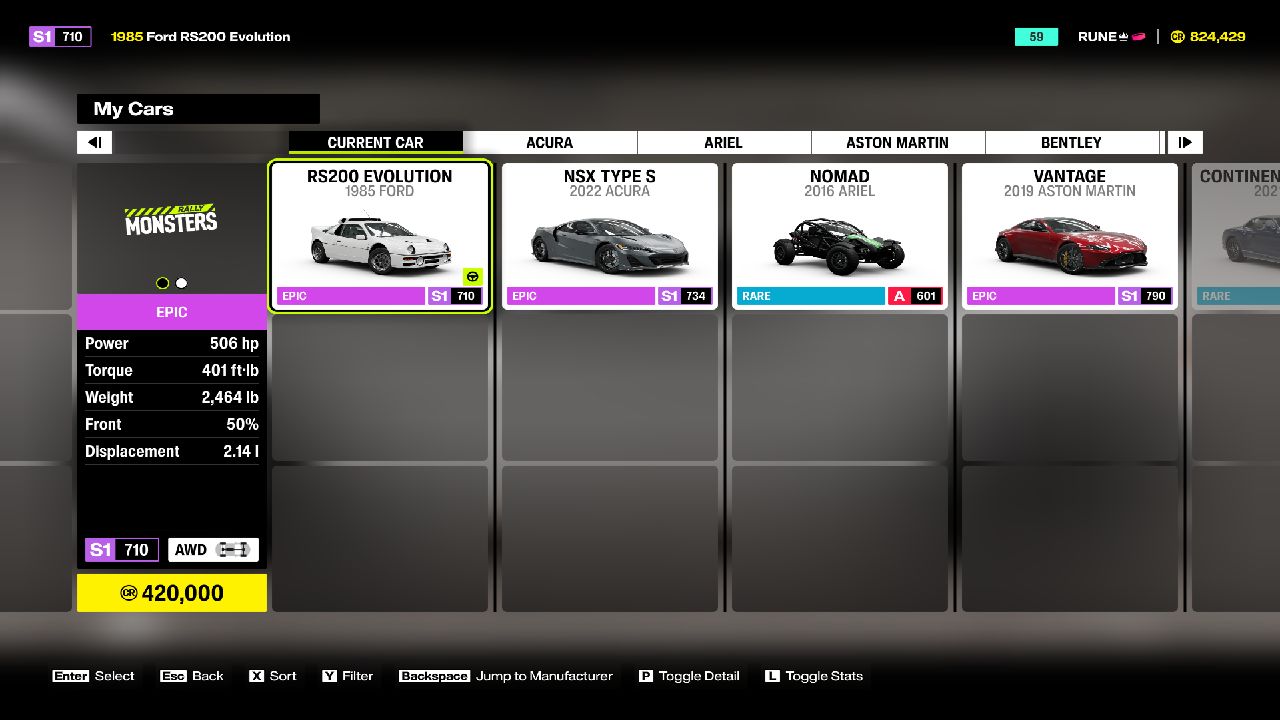
Rally-friendly cars such as the Mitsubishi Lancer Evolution, Subaru Impreza, and other AWD performance cars are strong starting points because they combine traction with predictable handling.
When choosing a car, prioritize:
- AWD drivetrain
- Good weight distribution
- Strong acceleration
- Reasonable weight
- Good suspension travel
- A manageable PI rating
You do not need the most powerful engine available. On dirt, putting power down consistently is more important than having a huge top-speed advantage.
Install the Essential Rally Upgrades
Focus on Grip and Suspension
Start by installing parts designed for dirt and rally racing. Your goal is to make the car absorb bumps while keeping the tires connected to the surface.
The most important upgrades are:
- Rally tires
- Rally suspension
- Race transmission
- Race differential
- Weight reduction
- Upgraded brakes
- Wider tires where the PI allows it
- Appropriate engine upgrades
Rally tires should be one of your first upgrades because they provide the grip needed on dirt and gravel. Community FH6 tuning guides consistently recommend rally compounds for dedicated dirt builds, particularly in lower and mid-performance classes.
Don't Overbuild the Engine
It can be tempting to spend most of your PI on horsepower, but that can make a rally car harder to control.
A better approach is to build the chassis first, then add enough power to make the car competitive. Weight reduction, tire width, and suspension upgrades can often provide a bigger improvement on technical rally stages than simply adding more horsepower.
Set Up the Tires for Dirt
Use Rally Compound and Lower Pressure
Rally tires are designed to maintain grip on loose surfaces, making them the preferred choice for most dedicated rally builds.
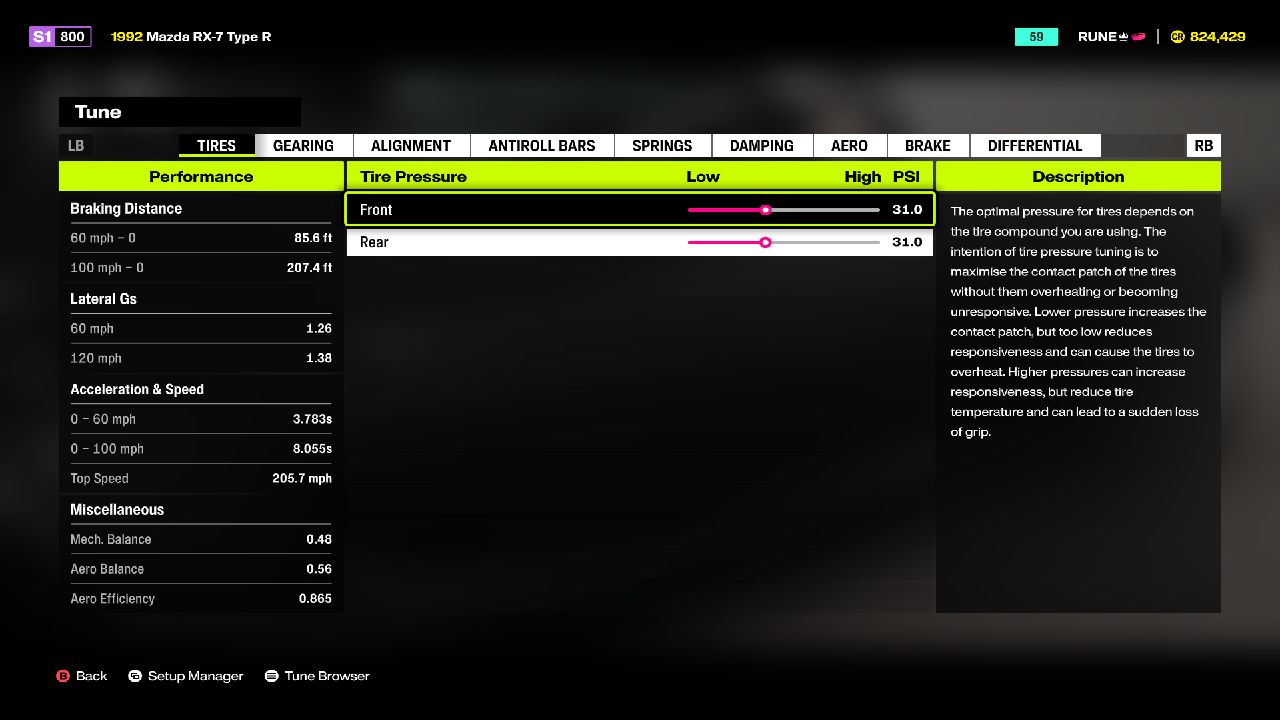
As a starting point, try approximately 28–30 PSI and adjust from there. Some community setups use values around 28.5 PSI at the front and 30 PSI at the rear, while other guides recommend dropping closer to the mid-20s. This means tire pressure should be treated as a baseline rather than a universal setting.
If the car feels nervous and slides too much, experiment with slightly lower pressure. If the steering feels slow or the car feels excessively soft, increase it gradually.
Don't Chase Maximum Grip at the Expense of PI
Wider tires provide additional grip, but they also consume PI. If upgrading tire width pushes your car into a higher class, consider whether the extra grip is worth sacrificing other upgrades.
For rally builds, a balanced package of tires, suspension, and drivetrain is usually more useful than maximizing a single stat.
Tune the Suspension for Rough Surfaces
Soften the Springs
Rally stages are full of bumps, jumps, crests, and uneven surfaces. A suspension that works perfectly on asphalt can become too stiff on dirt.
Start with softer springs so the wheels can follow the terrain instead of bouncing over it. One current FH6 rally tuning guide recommends using substantially softer spring rates than a road setup and maintaining enough ride height to prevent the car from constantly bottoming out.
Raise the Ride Height
Do not slam a rally car to the ground.
Increase ride height enough to give the suspension room to work over bumps and landings. A current community tuning guide recommends roughly 1.5–2.5 inches more ride height than a road setup, while other rally setups use a large portion of the available ride-height range.
If the car bottoms out after jumps or becomes unstable over rough sections, raise it slightly more.
Keep the Anti-Roll Bars Relatively Soft
Soft anti-roll bars can help the suspension cope with uneven terrain because each wheel can react more independently to bumps.
A useful starting point is to keep both bars toward the softer side and then adjust them based on handling. Current FH6 rally guides differ on exact anti-roll-bar values, so testing is more important than copying a single setup.
Tune the Differential and Gearing
The differential determines how power is distributed between the wheels. For an AWD rally car, avoid automatically using the same aggressive differential settings you would use for a road or drift build.
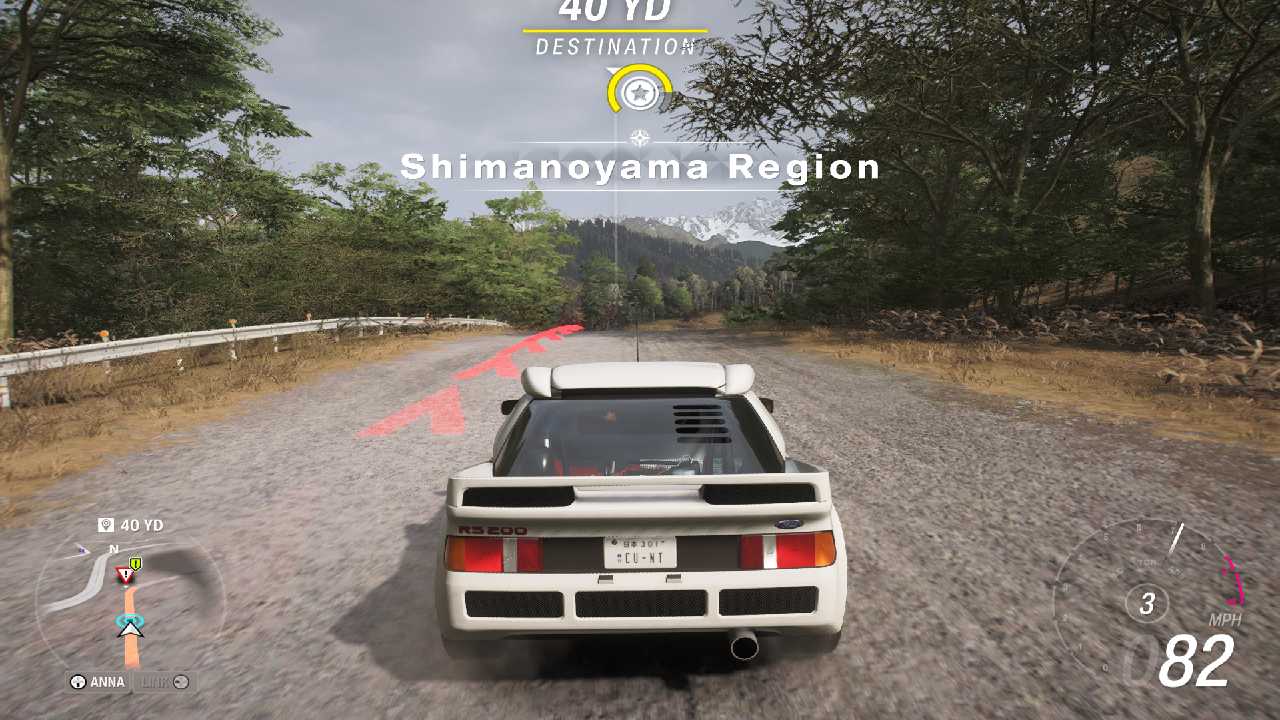
A common starting point is to keep the front differential relatively open and give the rear more influence, with the center differential biased toward the rear if you want the car to rotate more easily. Community rally setups commonly use a rearward center bias around 60–70%, although the ideal value depends heavily on the car.
If the car pushes wide through corners, increase rear bias slightly. If the rear becomes too loose under power, move the balance back toward the front.
Tune the Brakes and Alignment
Keep the Car Stable Under Braking
Braking on dirt requires a little more care than braking on asphalt. Too much rearward bias can make the car rotate aggressively when you hit the brakes.
Start with a slightly front-biased brake balance, then adjust according to how the car behaves during corner entry. Current rally tuning guidance generally recommends more front braking force than a drift setup because loose surfaces make rear instability easier to trigger.
Don't Overdo Camber and Toe
Rally cars do not need the aggressive alignment settings often used for road racing or drifting.
A mild camber setup is a good starting point, while keeping toe close to neutral can make the car easier to control over bumps. One current rally setup recommends approximately -1° front camber and zero toe as a starting point.
Make small adjustments if the car understeers or becomes unstable during high-speed transitions.
Final Thoughts
Building a rally car in Forza Horizon 6 is about creating a car that can survive the terrain while maintaining enough speed to stay competitive. Start with an AWD platform, install rally tires and suspension, raise the ride height, soften the suspension, and use gearing that prioritizes acceleration.
Most importantly, do not build your rally car like a road racer. A stiff, low car with extreme grip may feel excellent on asphalt but can become difficult to control once the surface gets rough.
Once you have a stable baseline, fine-tune the differential, tire pressure, damping, ride height, and gearing to match your driving style. A well-balanced rally build will let you attack corners, absorb jumps, and put power down consistently without fighting the car through every stage.
Editor, NoobFeed
Latest Articles
No Data.