
Intel Arc B580 at $250: A Deep Dive into Performance and CPU Overhead Issues
Intel Arc driver updates reduce optimization concerns, making B580 a viable budget choice against Radeon and GeForce alternatives.
Hardware by Tanvir Kabbo on Oct 04, 2025
Intel Arc B580 recently hit its $250 MSRP, and it is now fairly easy to purchase one at that price. After almost a year, this is exciting news, especially when compared to alternatives like the GeForce RTX 5050, which struggles in terms of performance.
The RTX 5060 offers better performance but comes at a price of $300 US. Meanwhile, the Radeon 9060 XT 8GB is available for as low as $270 US, making it a direct competitor to the Arc B580.
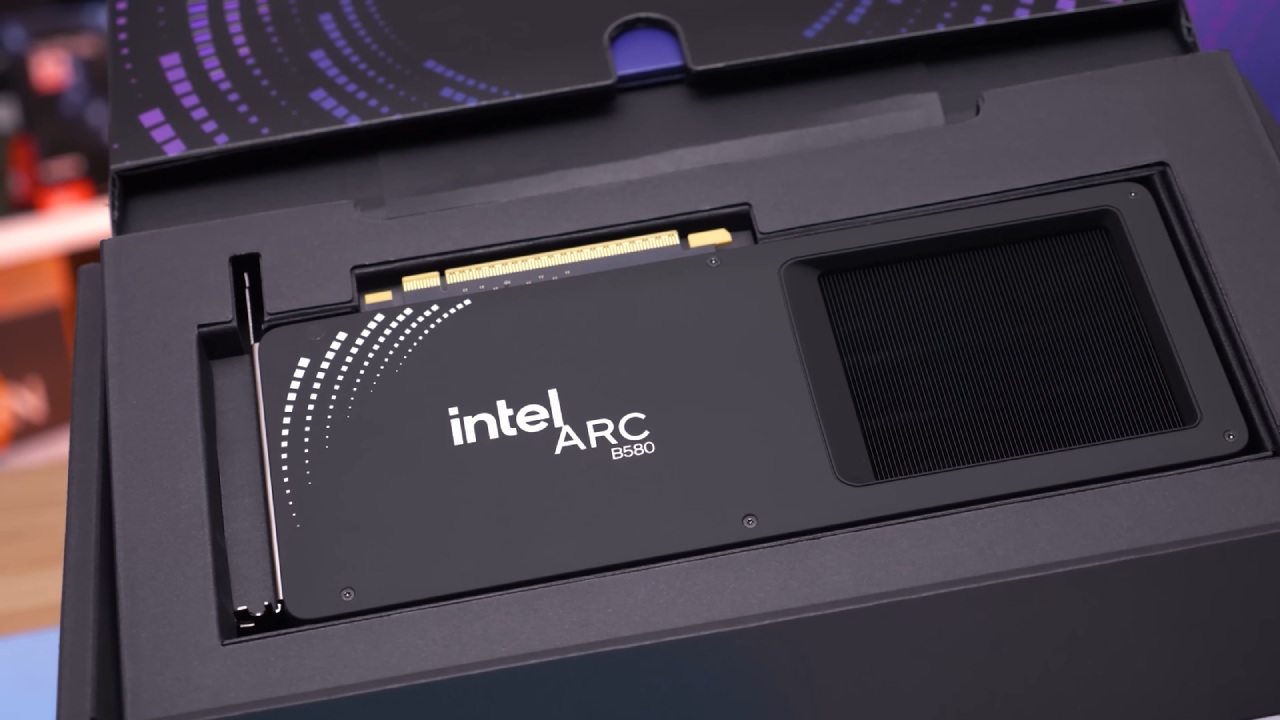
The catch is that both Radeon and GeForce options come with only 8GB of VRAM. The Arc B580’s advantage lies in its 12GB memory, which is enough to avoid issues even at 1440p. For budget gamers, VRAM capacity has become an increasingly important factor, and that is where Intel’s GPU shines.
However, the Arc lineup has also faced challenges with availability and CPU overhead issues, something we revisited to see if Intel has improved upon.
Revisiting the CPU Overhead Problem
We set out to retest the Arc B580’s performance against the RTX 5050, the 9060 XT 8GB, and the RTX 5060, with a specific focus on the CPU overhead issue. To do this, we paired the B580 with the Ryzen 7 9800X3D, Ryzen 5 5600, and Ryzen 5 2600.
The Radeon 9060 XT served as a benchmark to determine whether performance was CPU- or GPU-limited. This allowed us to confirm where Intel’s driver optimizations had made progress and where issues persist.
Game Benchmarks and Overhead Observations
Rainbow Six Siege
The Arc B580 matched the 9060 XT when paired with the 9800X3D or Ryzen 5 5600, showing no overhead problem on modern CPUs. However, when tested with the Ryzen 5 2600, the overhead issue became clear. Instead of being entirely CPU-limited, the B580 lagged behind, indicating a bottleneck.
Horizon Zero Dawn Remastered
On the 9800X3D, the B580 was just 14% slower than the 9060 XT but showed larger 22% drops in 1% lows. When paired with the 5600, the B580 dropped to 99fps while it was capable of 126fps on a stronger CPU.
This confirmed CPU overhead issues. On the 2600, both GPUs were CPU-limited, but the B580 was still 20% slower.
Kingdom Come Deliverance 2
No major issues appeared here. Both the 9800X3D and 5600 provided similar results, though the Radeon GPU maintained a 25% lead. Even with the 2600, performance scaling stayed consistent.

Space Marine 2
This title remained problematic. The B580 was capped around 60fps regardless of CPU, highlighting GPU limitations. With the Ryzen 5 2600, the overhead penalty appeared again, dropping performance by 21% compared to the 9060 XT.
Borderlands 4
The B580 performed well with the 9800X3D and 5600 but fell dramatically to 54fps on the Ryzen 5 2600, compared to 81fps with the 9060 XT. That’s a 33% overhead hit, making it an issue for older systems.
Spider-Man 2
Performance was lackluster. The B580 hit 64fps on the 9800X3D, 60fps on the 5600, and just 44fps on the 2600—almost 40% slower than the 9060 XT.
Marvel Rivals
The B580 held up well, delivering similar results across CPUs. On the 2600, there was only a 9% overhead penalty, much smaller than other demanding titles.

Dying Light the Beast
No major issues were found here, as the B580 maintained similar performance across all three CPUs with only minor drops on the 2600.
Cyberpunk 2077 Phantom Liberty
This was the biggest surprise. Previously, the B580 struggled badly in this game on weaker CPUs, but now it matched the 9060 XT when paired with the 5600. This suggested that recent driver updates had greatly decreased problems with overhead in this title.
Driver Optimizations: The Turning Point
We discovered that Intel’s recent driver updates had a massive impact on CPU overhead. Testing across multiple driver versions revealed that version 7028, released in late August, was a breakthrough.
On the Ryzen 5 5600, the B580 went from 87fps in earlier drivers to 118fps with the latest update, matching the 9060 XT. This represents a 36% improvement entirely from driver optimizations.
After reaching out to Intel, we confirmed that the Arc team introduced game-specific optimizations starting with driver version 7028, targeting titles like Spider-Man Remastered and Cyberpunk 2077. These updates have proven that Intel can, at least partially, mitigate CPU overhead issues.
Overall Comparison with Radeon 9060 XT
Across 10 tested games, the Radeon 9060 XT averaged 34% faster on the Ryzen 7 9800X3D and 30% faster on the Ryzen 5 5600. On much older CPUs like the Ryzen 5 2600, the Radeon GPU still held a 27% lead due to the Arc overhead problem.
At $270 US, the 9060 XT costs around 8% more than the $250 B580 but delivers around 30% higher performance. However, the trade-off is VRAM—12GB on the B580 versus 8GB on the Radeon card. While VRAM isn’t everything, the extra capacity on the B580 can help extend its usability at higher resolutions like 1440p.

Final Thoughts
The Arc B580 has come a long way in the past year. Thanks to driver version 7028 and subsequent updates, CPU overhead issues have been significantly reduced in key titles, making the GPU a more reliable option for those with mid-range CPUs like the Ryzen 5 5600.
For users with newer hardware, the Radeon 9060 XT remains a stronger performer. But if you value VRAM and are looking for a card at $250 US, the B580 is now a much more compelling choice than it once was. Intel’s active driver support has made us more confident in recommending the Arc series and suggests an improving future for Intel GPUs.
Check Our Other Intel Chips Articles:
- Intel Core Ultra 9 285K Review And Performance Breakdown (2025)
- Intel Core Ultra 9 285K vs AMD Ryzen 7 9800X3D: In-Depth Gaming Performance and Benchmark Comparison
- Intel Core i5-13400F Gaming Performance: Still Worth It in 2025?
- Intel Core i9‑14900K vs. AMD Ryzen 7 7800X3D: Power Profiles & Gaming Benchmarks
- Intel Core i9 14900K: Specs, Benchmarks, and Competitor Comparison
- Intel Core Ultra 5 245K Review: Gaming, Productivity & Power Efficiency Tested
- Intel Core Ultra 9 285 K's iGPU Gaming: In-Depth Benchmarks & Analysis
- Intel vs. AMD Gaming Laptop: Performance, Thermals & Battery Life Compared
- AMD Ryzen 7 9800X3D vs.7800X3D vs. Intel Core Ultra 7 265K: Gaming, Thermals & Price Analysis
Senior Editor, NoobFeed
Latest Articles
No Data.