

Intel Panther Lake Core Ultra Series 3 Hands-On: Performance, AI, and Gaming Redefined
Intel emphasizes local AI execution, blending on-device processing with cloud assistance for privacy, efficiency, and responsiveness.
Hardware by Vecna on Jan 21, 2026
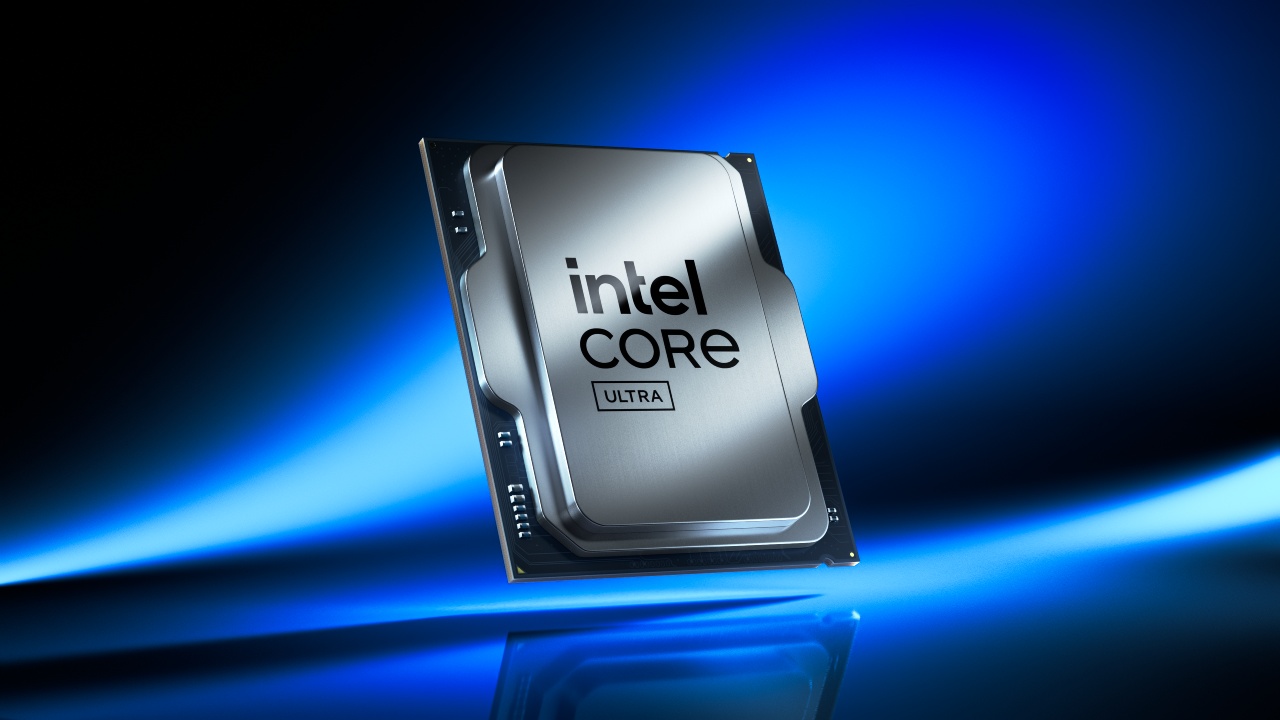
The Consumer Electronics Show, or CES, was once again the place where big tech news was announced. Intel stood out by putting customers first in a year when many companies focused on corporate and enterprise messages. Intel showed off its new Core Ultra Series 3 processors, also known as Panther Lake, at CES.
It was one of the most important launches in the company's recent history. Panther Lake, built on Intel's 18A node, is the result of years of work in both hardware engineering and semiconductor development. Early signs show that the hard work is paying off.
A Practical Approach to AI and Hybrid Computing
Artificial intelligence was a big part of Intel's CES booth, but they approached it in a very useful way. Instead of putting everything in the cloud, Intel stressed the importance of AI processing happening locally on user devices. The strategy is built on a hybrid AI infrastructure that combines cloud-based capabilities with fast on-device performance.
This way, systems can do many things without always needing to connect to remote servers. This method sets a long-term goal for home computers to remain strong, private, and fast, while still allowing use of the cloud when needed.
One Architecture, Many Use Cases
Intel made it clear that Panther Lake is meant to be a highly scalable system. The same base can power thin and light laptops, robots, smart cities, automation, and other edge-focused applications. With over 200 plans for building around Panther Lake, the goal is to be flexible without sacrificing the best features.
Intel wanted to combine the low power consumption of the Core Ultra 200V Lunar Lake chips with the faster speed of the Core Ultra 200H Arrow Lake chips to make the best of both worlds.
Performance, Efficiency, and Battery Life Gains
Panther Lake is designed to work with very little power, but it can also handle higher power levels well. Intel says that system-level improvements have made the battery last all day, and that the new generation has up to 50% more multi-threaded speed at the same power level.
Architectural changes like Darkmont E-cores, Cougar Cove P-cores, and many other small tweaks aimed at making the system faster and more efficient are what enable these gains.
Built as an AI Powerhouse
Panther Lake is designed to be more than just a fast CPU. It is also a real AI platform. The platform can reach up to 180TRIPS when the CPU cores, the next-generation NPU5, and the XC3 GPU are combined.
Portable computers with up to 96GB of memory can handle heavy workloads, such as large local language models. Memory performance also improves, and some configurations can reach speeds of up to 9600 MT/s. This makes Panther Lake an even better mobile workstation platform.
Connectivity and Platform Capabilities
One more thing that the Core Ultra Series 3 platform does well is connect to other devices. Some configurations support up to 20 PCIe lanes, and 12 of those lanes support the latest PCIe Gen5 standard. Intel also supports Thunderbolt, Wi-Fi7, and Bluetooth Core6, so these computers can work with a wide range of peripherals and environments without any issues.
From Keynote Claims to Hands-On Reality
Numbers used in a keynote speech are one thing, but real-world testing is what really sets the standard. Intel fixed this by giving extensive hands-on access to Panther Lake computers manufactured with the 18A process.
We worked directly with computers that had the new Core Ultra Series 3 processors for a few hours after the keynote. This gave us a better idea of how the technology works outside of slides and demos.
Exploring the Core Ultra Lounge
Several systems in the Core Ultra Lounge showcased different aspects of Panther Lake's powers. Local models running directly on the hardware were shown in AI demos. These models included fully offline chatbots and hybrid AI scenarios. The battery life tests were based on real-life scenarios, like videoconferencing on computers that weren't plugged in.
The amount of power used was similar to what Intel says its batteries can deliver for an entire day. Workflows for creating content were also shown, including jobs for editing videos, such as object masking, that used the new hardware to speed up creative work.

Gaming Takes Center Stage
The game area was the most popular place. The mood was set by the comfortable chairs, the big screen, and games like Battlefield 6. There were other systems that let people play a wider range of games in a more personalized way.
These demos showed that Panther Lake isn't just about AI and speed; it's also about making sure that integrated graphics provide a great gaming experience.
A Deep Dive Into Intel Arc and XC3 Graphics
To learn more, we spent an hour in the Intel Arc Zone with Tom Peterson, who is also known as TAP. He talked to us about how the new XC3 GPUs were designed. Some Panther Lake configurations feature up to 12XC3 cores, designed to improve AI processing, ray tracing, and overall gaming performance.
Intel says that the GTX 1080 has more than 40% better graphics performance per watt than Arrow Lake, more than 50% better performance than Lunar Lake, and up to 77% faster performance than the Core Ultra 9 288V.
Software Improvements and XeSS3
Intel also stressed the importance of mature software, especially with the release of XeSS3. This new version adds features like multi-frame generation to the built-in graphics, which makes three AI-generated frames for every rasterized frame. Frame generation often struggles with speed and latency. Still, Intel put in a lot of work to ensure XeSS3 delivers a smooth experience with minimal delay.
Real-World Gaming Impressions
The Arc B390 integrated GPU performed especially well in hands-on tests. We were free to try and benchmark a wide range of games, both those that came with the computer and those that the users chose. The rasterized performance alone was better than expected.
Still, the quickness and smoothness of the multi-frame generation really stood out. There was no noticeable latency, and the visual quality stayed high. There were no ghosting or other issues that can happen with other AI upscaling options.
A New Standard for Integrated Graphics
The picture quality stayed the same and was clean on both laptop screens and the bigger external screens. Native speed, good power efficiency, and useful AI features all worked together to deliver a graphics experience that feels much better than previous generations could.
Games ran at higher settings than expected, with smooth frame rates and responsive controls. This shows that Intel's version of the XC3 GPU strikes a good balance.
Looking Ahead to 2026
Core Ultra Series 3 devices are already available for pre-order. Panther Lake sets the tone for Intel's future. The platform shows how far Intel has come in a short time since Lunar Lake, from efficiency and AI performance to games and connectivity.
In 2026, Panther Lake is one of the most exciting things to come out for PC games and mobile computing. You should definitely keep an eye on it as these systems become more widely available.
Also, check our other Intel chips Articles below:
- Intel Core Ultra 9 285K Review And Performance Breakdown (2025)
- Intel Core Ultra 9 285K vs AMD Ryzen 7 9800X3D: In-Depth Gaming Performance and Benchmark Comparison
- Intel Core i5-13400F Gaming Performance: Still Worth It in 2025?
- Intel Core i9‑14900K vs. AMD Ryzen 7 7800X3D: Power Profiles & Gaming Benchmarks
- Intel Core i9 14900K: Specs, Benchmarks, and Competitor Comparison
- Intel Core Ultra 5 245K Review: Gaming, Productivity & Power Efficiency Tested
- Intel Core Ultra 9 285 K's iGPU Gaming: In-Depth Benchmarks & Analysis
- Intel vs. AMD Gaming Laptop: Performance, Thermals & Battery Life Compared
- AMD Ryzen 7 9800X3D vs.7800X3D vs. Intel Core Ultra 7 265K: Gaming, Thermals & Price Analysis
Editor, NoobFeed
Latest Articles
No Data.