
Neural Texture Compression Explained: NVIDIA and Intel Reduce VRAM Usage with AI
AI-based texture compression from NVIDIA and Intel introduces significant VRAM savings while maintaining near-original visual fidelity in games.
Hardware by Shinji Okazaki on Apr 16, 2026
A new way to use less VRAM in modern graphics rendering is neural compression. Each company, NVIDIA and Intel, is working on a different method.
The goal of these technologies is to replace the old way of compressing textures with AI-driven methods that rebuild data while rendering. This could keep the quality of the images while using less memory.
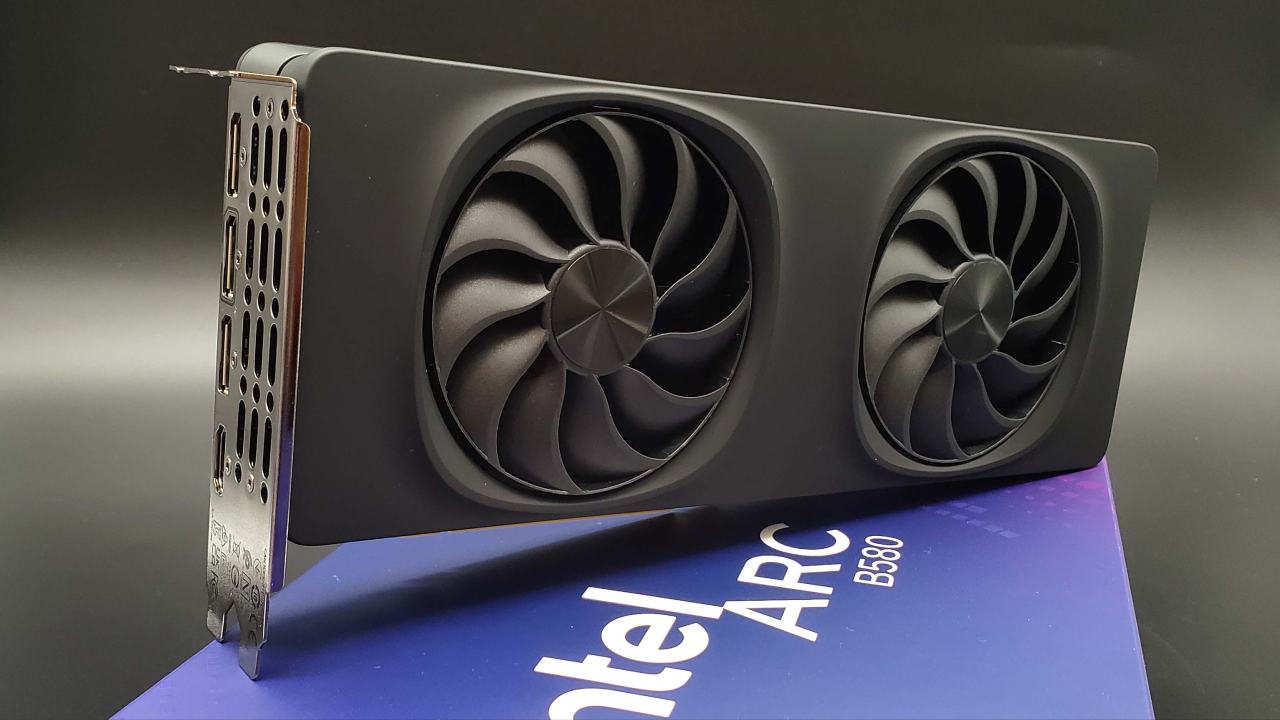
Reducing VRAM and Neural Compression
When it comes to AI, neural compression is coming for VRAM, and both Nvidia and Intel are in a race to get it out the door. This week, each of them demonstrated new neural texture compression technology. NVIDIA's neural texture compression showed that VRAM use dropped from around 6.5GB with regular compressed textures to just 970MB, while preserving image quality close to the original.
The main idea is that NTC doesn't use traditional block compression, which breaks textures into small blocks and approximates them. Instead, it employs an artificial neural network that learns a much more efficient way to compress the texture data and reconstructs it on the fly during rendering. We need to see it work.
Intel's Method for Compressing Texture Sets with Neural Networks
Intel, on the other hand, used texture set neural compression, which showed two different versions of the same thing. Variant A can compress files up to 9 times without significant loss of quality, with a difference of about 5% in perceived quality. Variant B reaches 18x compression, but it starts to show artifacts.
Intel's method works on the level of texture sets. The method doesn't compress each texture separately. Instead, it looks at all of the textures for a material at once, including colors, normals, roughness, and more, and trains a neural network to find patterns across all of them. A small AI model reconstructs the entire set from the compressed data while the program is running.
If these results hold in real games, they might have a big impact on how things work in real life, such as smaller installs, lighter updates, and more space for better assets on the same GPU technology.
Neural Materials and How Well They Render
NVIDIA also showed off a related concept dubbed neural materials. It doesn't save many texture channels or perform extensive shading calculations. Instead, it encodes how materials behave into a tiny representation that a small neural network decodes as it renders.
For instance, a 19-channel material arrangement was reduced to 8 channels, which made rendering at 1080p 1.4 to 7.7 times faster. Color, roughness, normals, and metallic characteristics are examples of channels, the different texture layers that make up a single surface.
What Makes it Different from DLSS
One important difference is that this isn't DLSS 5.There has been some uncertainty lately about how DLSS works at the end of the pipeline on the final image. These neural compression methods are built into the render engine itself and handle decoding textures and evaluating materials, rather than being a separate layer applied after the process.
That difference is important, since both developers and players have strong feelings about how DLSS alters the artistic goal. When there are many layers of interpretation, people worry about how far the final product can stray from the initial idea.
.jpg)
Concerns About Image Quality
We're worried about how these layers of processing will work in real life. You might also be curious about how well the results will work across different systems. If problems like visual instability or artifacts show up, like texturing acting strangely, it could slow down adoption.
There is also a bigger concern about combining multiple AI-driven processes. It starts to look like the telephone game, where mistakes get worse as the data passes through more hands. The question is how many layers can be added before the output stops being dependable.
We also know that people were just as skeptical about DLSS in prior iterations. Over time, improvements made it usable without a second thought in many circumstances. That makes it worth waiting and seeing instead of just throwing the technology away.
Final Thoughts
Intel claims an alpha SDK will be released later this year. NVIDIA hasn't offered a precise date, but it has said this is part of its larger neural rendering strategy alongside DLSS 5.
Anything that lowers the amount of VRAM needed is hard to ignore right now. At the same time, we are still careful. Early demos, especially those shown before the product is finished, can change how people see it in ways that don't align with the final product. The most practical thing to do is to wait and observe how it works in the actual world.
Also, check our other hardware articles:
- AMD Ryzen 9 9950X3D Review: Setting The Standard For 2025 Gaming CPU
- Amazon Luna 2025 Review: Is Prime Gaming's Cloud Service Your Go-To For Casual Fun?
- AMD RX 9070 XT Review: AMD's RDNA 4 Champion for 1440p Gaming
- GeForce Now Ultimate: Ditching Your Gaming PC For Cloud RTX 4080 Power?
- NVIDIA GeForce RTX 5080 Review (2025): Still A 4K Gaming Powerhouse?
- Intel Core Ultra 9 285K Review And Performance Breakdown (2025)
- AMD Ryzen 7 9800X3D Review: 3D V-Cache Goes God Mode with Stunning Gaming Performance
- Intel Core Ultra 9 285K vs AMD Ryzen 7 9800X3D: In-Depth Gaming Performance and Benchmark Comparison
- NVIDIA GeForce RTX 5080 Super Performance In Cyberpunk 2077: Path Tracing & DLSS 4.0 Tested
- AMD Radeon RX 9070 XT In Cyberpunk 2077: Ray Tracing & FSR 4.0 Tested
- Intel Arc B580 Review: The $250 GPU Revolutionizing 1440p Gaming
- Intel Arc B570 Vs. B580: Value, Specs, And Real-World Gaming Performance
- RTX 5090 Laptop Vs. M4 Max MacBook Pro: Ultimate Raw Performance Vs. Battery Endurance
- Intel Arc b580 Vs. RTX 4060: Game Performance And Value Analysis
- RTX5090 Hell Is Us Demo 4K Ultra Benchmark: DLSS Vs. Native Performance Guide
- NVIDIA RTX 5070 Review: Mid-Range Muscle or Marketing Hype?
- Nintendo Switch 2 Review: Handheld Performance, Features & Value Breakdown
- RTX 5070 Ti Review: Performance, Thermals & Power Efficiency Tested
- Samsung Odyssey OLED G81SF Review 2025: Ultimate 32-Inch QD-OLED Gaming Monitor
- AMD RX 9070 Performance Review: Thermals, Clocks, and Real-World FPS
- AMD Ryzen 5 7600 Review: Best Budget Gaming CPU of 2025?
- AMD Radeon RX 7800 XT Review: RDNA 3 Power For Midrange Gaming
- Asus ROG RTX 5090 Astral OC Vs. Founders Edition: The 4K Gaming Benchmark
Editor, NoobFeed
Latest Articles
No Data.