

Ultimate OLED Monitor Buying Guide 2026: 4K, 1440p, Ultrawide Picks
W OLED panels now lead in black depth, brightness consistency, and ambient light handling compared to QD OLED alternatives.
Hardware by Vecna on Jan 09, 2026
A lot of new products and significant price changes have occurred in the OLED monitor market in 2025. Because of this, these are now the most up-to-date suggestions. Due to price changes, getting monitors has become more difficult than usual.
However, there are still many great OLED options across a range of sizes, resolutions, and refresh rates. This guide is about OLED monitors that have been fully tested or are closely similar to tested models.

This way, the suggestions are based on how they really work, not on marketing claims or sponsorships. When it's time to buy an OLED display, there should be at least one choice here that meets your needs, since there are so many different ones offered around the world.
32-Inch 4K 240Hz OLED Displays: The Best Format Overall
The 32-inch 4K 240Hz OLED is one of the best monitor types right now. These displays feature large screens, high resolution, very fast refresh rates, and great HDR performance.
This makes them perfect for both immersive single-player experiences and competitive games. This category has two main panel types: QD-OLED and W-OLED. Both work very well, but each one has different benefits.
It's mostly clear who won the battle for the 32-inch 4K QD OLED and W OLED models as we move toward the end of 2025. At this point, W OLED panels have the best total performance, but QD OLED panels tend to offer the most value. Your decision comes down to whether you value success or cost-effectiveness more.
Best 32in 4K OLED Monitor Overall
The Asus ROG Strix XG32UCWMG is the number one choice in this group. It's a 32-inch 4K W OLED monitor with a 240Hz response rate.
Its best feature is a shiny, perfectly black surface that keeps blacks dark no matter how much light is in the room, unlike QD OLED screens, which can show blacks that look more grayish in brighter rooms. Because of this, it is very attractive for places where different types of activities happen together.
At the same time, W OLED panels maintain higher HDR brightness levels without harshly dimming the panel in bright scenes. They can also hit up to 1000 nits peak brightness. Another big benefit is that the monitor can work in two modes.
This lets you switch to a 1080p at 480 Hz mode for very clear competitive games. A very full set of features is rounded out with proximity sensing, OLED anti-flicker modes, improved motion clarity options, and unlocked color settings.
The biggest problem is the cost. This monitor has a pretty high price tag compared to QD-OLED monitors, so it's a top-of-the-line choice rather than a value pick. It might be worth it for some people to pay more for top performance and flexibility, but not everyone would think the extra cost is fair.
Best Value 32in 4K OLED Options
If you care about value, the 32-inch 4K240Hz QD OLED panels are the best mix of price and performance. These displays offer almost the same level of motion clarity, very quick response times, and great HDR picture quality with per-pixel control and deep blacks. They don't have the 1080p480hz dual mode that W OLEDs have, but they are still great for games and general use.
Brightness handling in very bright scenes isn't as good as W OLED, but HDR gaming performance is still great, especially in darker scenes with bright highlights.
The factory settings and text clarity are usually pretty good. Since there is basically just one 32-inch 4K240Hz QD OLED screen across many brands, there isn't much difference in performance between the models.
When picking a QD OLED in this group, it's smart to focus on price and basic features rather than fancy extras. If you don't really need features like DisplayPort 2.1 or Dolby Vision, it's usually best to pick the cheapest one that still works for you.
165hz 4K OLED Alternatives
Choosing a 165Hz OLED over a 240Hz one is another option in the 32-inch 4K space. At this refresh rate, both QD OLED and W OLED screens are available.
They usually offer small savings compared to the 240 Hz versions. The performance is still great, and even though the price drop isn't huge, it could be a good deal if you're looking to save money without sacrificing OLED picture quality.

27in 4K OLED Gaming Monitors
If users prefer a smaller screen, 27-inch 4K OLED monitors offer the same performance and a higher pixel density as 32-inch monitors. These monitors provide the same OLED experience, just in a smaller package. Performance across types is very similar, so price and features must be used to choose between them.
In this group, the Dell Alienware AW2725Q is the best value choice. At a very reasonable price, this TV offers great HDR gaming, deep blacks, strong brightness, and a shiny panel finish. It also offers great HDR gaming performance.
It doesn't have some high-end features like USB-C display input, but it's so well-made that you can't really justify spending much more on other models.
Costlier options include extra features such as proximity sensors, KVM switches, DisplayPort 2.1, and Dolby Vision. However, it's hard to explain the 20% to 50% price increase for these additions when the core performance is so similar. For most people, the AW2725Q is still the best pick.
1440p OLED Gaming Monitors: A Shift Toward W OLED
The 1440p OLED market has become highly competitive, with many options and downward price pressure. In the past, QD-OLED panels usually offered the best combination of performance and value. However, the arrival of fourth-generation primary RGB tandem W OLED panels has changed that suggestion.
These new W OLED screens are a lot brighter in both SDR and HDR. They get up to 330 nits in SDR and over 300 nits in HDR scenes, with peak brightness of almost 400 nits.
They do this without the panel dimming problems that often occur on QD OLED in bright scenes, which makes the viewing experience more consistent. It also handles ambient light better, keeping blacks deep even in bright rooms.
Better subpixel structure and color gamut have filled the gaps that used to exist between W OLED and QD OLED. This makes fourth-generation W OLED the best choice for 1440p gaming in most cases.
Best 1440p OLED Monitor Overall
The Asus ROG Strix XG27AQWMG is the main suggestion in this group. It is a 27-inch, 1440p, 280-Hz monitor that uses a fourth-generation W OLED screen. Its glossy, true-black cover makes the colors and sharpness look great, with no grain.
This makes games look extra poppy. At 280 Hz, motion performance is great, and factory tuning is excellent, with plenty of ways to adjust settings for both SDR and HDR.
Adding features like black-frame insertion, anti-flicker modes, and proximity sensing improves the overall experience. At that price, it gives a great combination of performance, features, and picture quality.
A somewhat cheaper version with a matte coating that reduces reflections is available with the same panel. However, people still prefer the glossy finish for greater visual impact.
When QD OLED Still Makes Sense at 1440p
It's still possible for QD-OLED monitors to compete in the 1440p market. They can be a good deal when they're much cheaper, usually about 20% less than fourth-generation W OLED choices. In these cases, the efficiency trade-offs make sense, and QD OLED remains a good option, especially for those looking to save money.
There are also QD OLEDs with a 360 Hz refresh rate, which offer slightly better motion clarity and lower input lag for competitive games. Even though the difference from 280hz is small, it might still interest people who care about doing well in eSports, as long as the price isn't too high in their area.
The best 1440p OLED for fans
The Asus ROG Swift PG27AQWP-W is the best 1440p gaming monitor on the market for people who don't care about price. This screen has a fourth-generation W OLED panel with an amazing 540 Hz refresh rate, which makes motion clear and fast. It also has a dual mode that lets you set up 720p720hz for special competition cases.
While it performs very well, the price is a lot higher, and the benefits of 540hz over 280hz are only useful if you always play at very high frame rates. At this level, QD OLEDs with high refresh rates are a better option, as many people won't consider the price difference fair.
Ultrawide OLED Gaming Monitors
When it comes to getting lost in a game, ultrawide OLED TVs remain among the best options. The LG 45GX950A is a high-end TV with a huge 45-inch 5120x2160 W OLED screen that runs at 165 Hz.
The higher resolution of this 45-inch ultrawide compared to older models makes it better for both desktop use and gaming, thanks to its higher pixel density and text clarity.
This monitor does a great job with HDR, handling ambient light, and overall realism. It also has a dual-mode that lets you play competitive games at lower resolution and a higher refresh rate.
But because its aggressive curve is hard to get used to and it costs a lot of money, it's only really good for people who love it, have a big desk, and have special reasons for using it.
Best Mainstream Ultrawide OLED Option
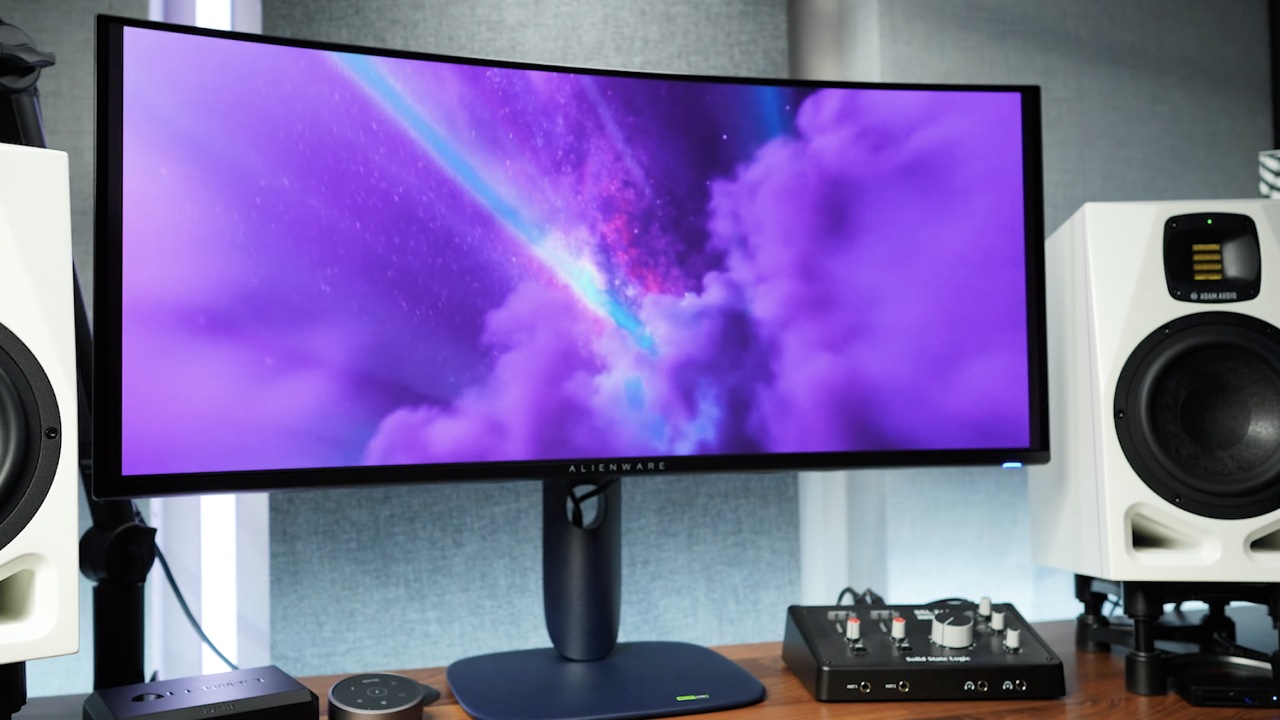
If you're looking for a more useful ultrawide format, 34-in 3440x1440 OLED monitors are a great way to get immersion, speed, and a good price.
The Dell Alienware AW3425DW is a great pick for HDR gaming because its 240Hz frame rate and fine-tuned settings make the graphics look amazing. Because it is so accurate, well-made, and reasonably priced, it is easy to suggest over other, more expensive options.
If you can get an older version of this panel at a low price, it may still be useful, but for most people, the new model is still the safest pick.
Super Ultrawide OLED Displays
49-in 5120x2160 QD OLED monitors have a 32:9 aspect ratio, which is equivalent to two 27-in 1440p displays side by side for people who want a wider format.
These monitors are very immersive and great for racing and flying simulations. At today's prices, they are a good deal for their size and features, especially compared to what they cost when they first came out.
Final Thoughts
Right now, OLED game monitors have the most options and the most competition. Thanks to new products from both big panel makers and low prices in many areas, there are great choices for almost every kind of user.
No matter if you care most about getting a good deal, top-notch performance, or an immersive ultrawide experience, the OLED monitors available at the end of 2025 will make great choices that continue to advance display technology.
Also, check our other Monitor articles:
- ASUS ROG Strix XG27AQWMG Review: 280Hz 1440p OLED Gaming Performance
- Samsung Odyssey OLED G81SF Review 2025: Ultimate 32-Inch QD-OLED Gaming Monitor
- Adaptive Sync Explained: FreeSync vs. G-Sync for Modern Gaming Monitors
- Gigabyte MO27Q2 QD OLED Review: Performance, HDR, and Gaming Experience
- ASUS ROG Swift PG27UCDM Review: Blazing Fast 240hz 4K OLED Performance
Editor, NoobFeed
Latest Articles
No Data.