
Radeon RX 7900 XTX vs GeForce RTX 4090 Performance Breakdown and Updated Benchmark Analysis
Comprehensive benchmark analysis of the AMD Radeon RX 7900 XTX versus the Nvidia GeForce RTX 4090, covering rasterization, ray tracing, and real-world gaming workloads.
Hardware by Tanisha Aria on Nov 22, 2025
The latest test between AMD's Radeon RX 7900 XTX and Nvidia's RTX 4090 shows the gap between the two is widening in terms of performance and price for top GPUs.
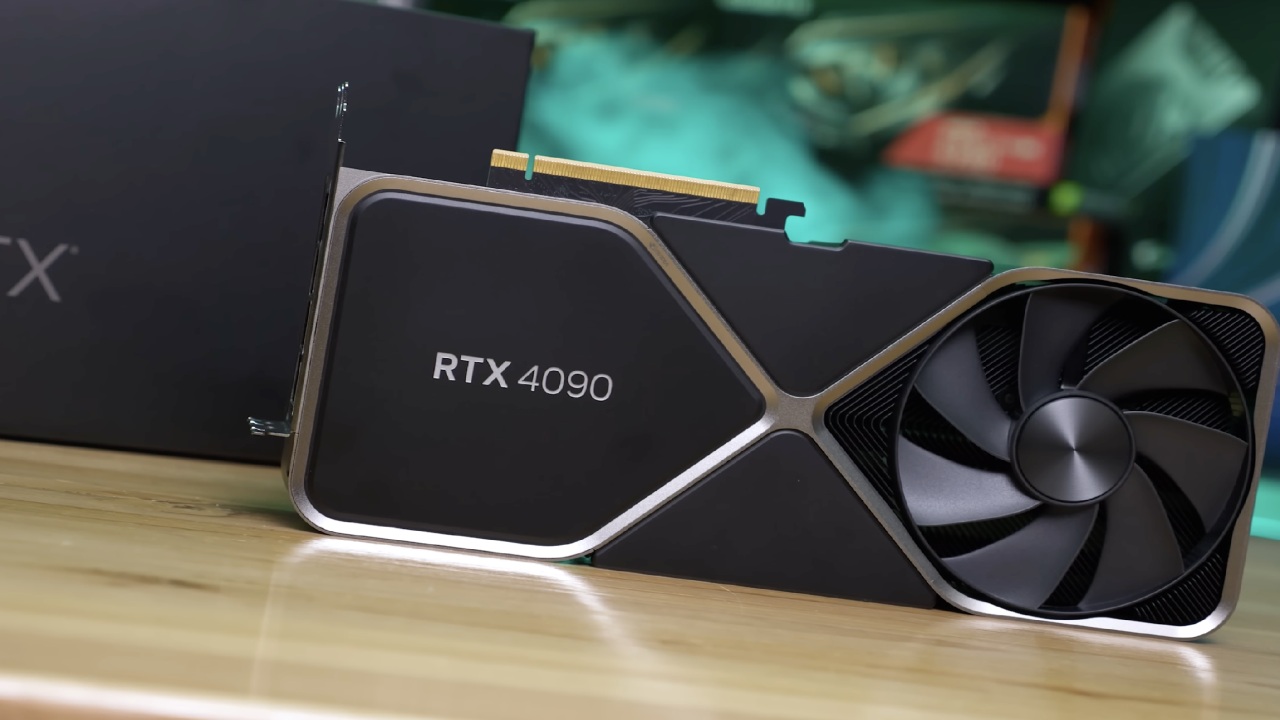
While the RTX 4090 is still the performance leader, the debate becomes more complicated when we consider that the RTX 4090 costs around $2,000, and the 7900 XTX is often for just under $1,000.
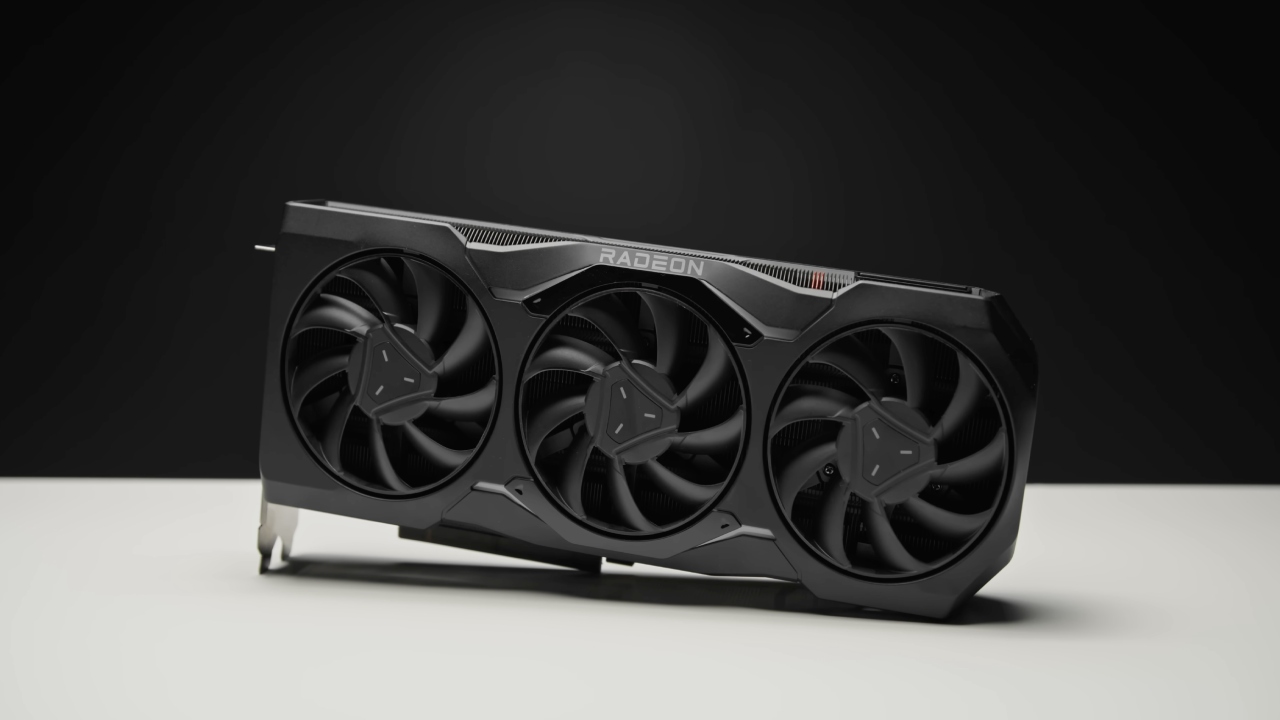
That difference makes each percentage point more important, especially when we compare how well pure rasterization works to how well ray tracing works.
How the Comparison Came Together
There is a lot of interest in this match-up after a Q&A segment in which someone asked whether we would choose an RTX 4080 or a made-up "GTX 4090" that didn't have any tensor cores but had full 4090-level rasterization speed at a lower price.
As a surprise, many watchers said a product like that already exists: AMD's RX 7900 XTX. That claim made it possible to look at the numbers again, especially after several visually demanding game launches and driver updates.
Ryzen 7 7800X3D and DDR5-6000 CL30 memory we use for testing keep the CPU from slowing down too much at 1080p.
Rasterization Performance in Modern Games
7900 XTX continues to do a good job of rasterizing new games like The Last of Us Part I, Starfield, Assassin's Creed Mirage, and Ratchet & Clank: Rift Apart, especially given its price.
Based on the resolution, the AMD GPU is usually behind the 4090 by a range of mid-19s to low-20s. The XTX even beats the X in some situations, like competitive shooters or games with limited CPU power like Marvel's Spider-Man Remastered and Hogwarts Legacy, because it has less CPU waste.
Around 12% of the time, the rasterization loss is too small at 1080p. It grows to 18% at 1440p and 21% at 4K. These gaps are very similar to those observed on launch day, even though the newer CPU platform eliminated early bottlenecks. Because of the huge price gap, AMD still has much more rasterization performance.
Ray Tracing Remains a Critical Weakness
Once ray tracing is added, the scene changes very significantly. Games like Cyberpunk 2077: Phantom Liberty, Alan Wake 2, Ratchet & Clank, and Forza Motorsport show how different the two GPUs are in their architecture. 7900 XTX is often forty to sixty percent behind.
In some tasks, the difference is more than 100% in Nvidia's favor. Even with upscaling enabled, the XTX struggles to maintain usable performance at very high RT workloads, especially in games that use many RT pipelines.
At 1080p, average RT speed drops by 22%. At 1440p, they drop by 28%; at 4K1, by over 30%. When RT and upscaling are combined, the gap widens, reaching over 40% at 4K. Depending on how important RT functions are to the user, these differences have a big impact on the case for or against value.
Upscaling Behaviors and Game-Specific Quirks
The comparison also shows that some names behave in unpredictable ways. In Forza Motorsport, FSR scaling is almost nonexistent, while DLSS continues to deliver the improvements it was predicted to. When RT is turned on, Fortnite is surprisingly competitive in DX12.
7900 XTX gets stuck at around 200 frames per second at lower levels in Warzone, which seems to be a driver problem. RTX 4090, on the other hand, can push much higher. These extremes might change in future updates, but they show how different engines and APIs differ in how they optimize things.
Competitive Gaming Performance
There are times when the 7900 XTX keeps frame rates above 100, and even several hundred, in games and fast-paced shooters like Rainbow Six Siege, Counter-Strike 2, Fortnite, and Warzone.
When exact maximum frame rates are needed, especially at 1080p and 1440p, Nvidia still has the upper hand. However, the XTX delivers sufficient performance for most high-refresh setups, unless users are seeking extreme FPS.
Final Thoughts
When you compare the 7900 XTX to the RTX 4090, you can see that they are significantly different. On price or location, they don't directly compete with each other.
Users who are already considering a $2,000 4090 probably won't consider the 7900 XTX as an alternative. On the other hand, people shopping for an AMD card likely see the 4080-class section as the natural upgrade path.
Rasterization and ray tracing are two features that the RTX 4090 still has that no other GPU can match. It pretty much sells itself to people who want the best efficiency, no matter what. But the 7900 XTX is still the best high-end choice for those looking for value.
It works well for the price when it comes to rasterization, and when RT functions are not important, it's a good deal. We still like it better when the price gap is about 20% smaller than the RTX 4080, especially for people who mostly use rasterized tasks and don't play RT-heavy games.
7900 XTX can't be the made-up "GeForce GTX 4090," though. It still has a gap in raw rasterization, and its RT speed is a long way behind Nvidia's best.
It is still a powerful, efficient, and reasonably priced GPU, but without tensor cores, it can't match the 4090's performance. When it comes to pure rasterization workloads, the best choice always relies on how important ray tracing, absolute speed, and long-term feature support are to the user.
Also, check our other NVIDIA articles:
- NVIDIA GeForce RTX 5080 Review (2025): Still A 4K Gaming Powerhouse?
- NVIDIA RTX 5070 Review: Mid-Range Muscle or Marketing Hype?
- RTX 5070 Ti Review: Performance, Thermals & Power Efficiency Tested
- ASUS GeForce RTX 5090 LC Liquid Cooled GPU Review: Unmatched Silence & Speed
- MSI GeForce RTX 5090 32GB SUPRIM SOC Review: Power Efficiency, Cooling, and Gaming Performance
- INNO3D RTX 5060 Ti 16 GB X2 Review: Gaming Benchmarks, Temps, and Power Efficiency
- HP Omen 45L Review: RTX 5090 Performance, Thermals, and Value Analysis
- ASUS TUF Gaming GeForce RTX 5060 Ti Review: DLSS 4, Power Efficiency, and Gaming
- ASUS Prime RTX 5060 Ti OC 16GB Review: DLSS 4, Ray Tracing, & Thermals Tested
- NVIDIA GeForce RTX 5060 Review: Specs, Gaming, and Cost per Frame
- MSI GeForce RTX 5090 GAMING TRIO OC Review: A Monster Power GPU
Contributor, NoobFeed
Latest Articles
No Data.