
Ryzen 9 9950X3D2 Gaming Performance Explained Why Extra Cache Does Not Improve FPS
Dual CCD 3D V-Cache design increases cache capacity but faces inter-CCD latency limitations in gaming workloads.
Hardware by Shinji Okazaki on Mar 30, 2026
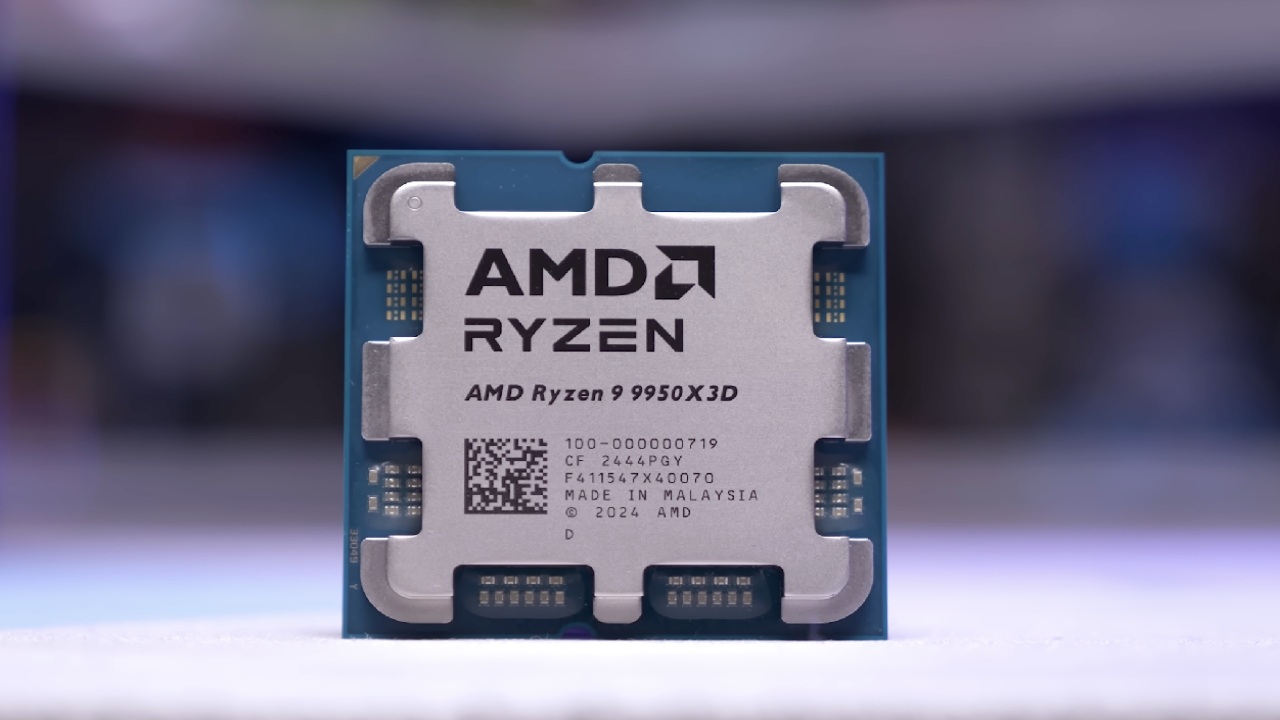
Ryzen 9 9950X3D2 dual edition is the next step in advancing 3D V-Cache. It is a desktop CPU with two CCDs and 3D V-Cache. AMD finally introduced its newest flagship CPU after months of waiting.
It has a larger L3 cache and a higher TDP. The boost clock, on the other hand, has gone down from 5.7GHz to 5.6GHz. The most important question is whether the extra cache improves gaming performance.
The Behavior of the Clock and the Architecture
The processor is still a Zen5 CPU with 16 cores and two CCDs. There are two X3D CCDs in this instead of one, which is what makes it different from the ordinary 9950X3D. The lower boost clock can make it seem like the performance is worse than the conventional version, but that's not true.
In the 9950X3D, one CCD without 3D V-Cache runs at 5.7 GHz, while the other runs at 5.5 GHz. 9950X3D2, on the other hand, operates both CCDs with 3D V-Cache, meaning the cores with the extra cache get at least 100MHz more speed. This also explains why the TDP went up from 170W to 200W.
What to Expect from Gaming Performance
You might think that higher clock speeds and larger caches will make games run better. The updated version does work better, but the more cache isn't what makes it better. The advantages instead stem from the higher clock speed.
Inter-CCD delay is what limits it. In twin CCD processors, the time it takes for cores in the same CCD to talk to each other is shorter than the time it takes for cores in different CCDs to talk to each other. When games send work to different cores across different CCDs, the Infinity Fabric must be used for communication. This makes the process slower than communication within the same CCD.
Effect of Inter-CCD Latency
You can presume that 3D V-Cache speeds up the whole system. It does reduce the time it takes for the CPU and RAM to communicate, but it doesn't reduce the time it takes for CCDs to communicate. The extra cache does not speed up communication as data flows from one CCD to another.
This restriction is associated with the architecture of twin CCD processors. In many gaming situations, cross-CCD communication is unavoidable, and the extra cache doesn't help. This means that game performance doesn't improve much with the 9950X3D or other similar processors.
Improvements in Productivity Performance
The processor's performance gets better when it has to do a lot of work. AMD says that different applications see improvements of 5% to 13% compared to the single X3D model. The higher TDP, higher clock speed, and extra cache all work together to create these advantages.
Some productivity apps work better with larger cache sizes and are less affected by inter-CCD delay than games are. The twin X3D CCD architecture works better in these situations.

Expectations for Prices
9950X3D costs $699, which is $100 more than the non-X3D version. Because of this, the 9950X3D2 should cost about $799. This makes it more expensive than certain high-end GPUs.
Final Thought
Because of inter-CCD latency limits, we don't expect the 9950X3D2 to make big advances in gaming. You might see performance benefits in office workloads, but in gaming, the extra cache doesn't make much difference.
Also, check our other hardware articles:
- AMD Ryzen 9 9950X3D Review: Setting The Standard For 2025 Gaming CPU
- Amazon Luna 2025 Review: Is Prime Gaming's Cloud Service Your Go-To For Casual Fun?
- AMD RX 9070 XT Review: AMD's RDNA 4 Champion for 1440p Gaming
- GeForce Now Ultimate: Ditching Your Gaming PC For Cloud RTX 4080 Power?
- NVIDIA GeForce RTX 5080 Review (2025): Still A 4K Gaming Powerhouse?
- Intel Core Ultra 9 285K Review And Performance Breakdown (2025)
- AMD Ryzen 7 9800X3D Review: 3D V-Cache Goes God Mode with Stunning Gaming Performance
- Intel Core Ultra 9 285K vs AMD Ryzen 7 9800X3D: In-Depth Gaming Performance and Benchmark Comparison
- NVIDIA GeForce RTX 5080 Super Performance In Cyberpunk 2077: Path Tracing & DLSS 4.0 Tested
- AMD Radeon RX 9070 XT In Cyberpunk 2077: Ray Tracing & FSR 4.0 Tested
- Intel Arc B580 Review: The $250 GPU Revolutionizing 1440p Gaming
- Intel Arc B570 Vs. B580: Value, Specs, And Real-World Gaming Performance
- RTX 5090 Laptop Vs. M4 Max MacBook Pro: Ultimate Raw Performance Vs. Battery Endurance
- Intel Arc b580 Vs. RTX 4060: Game Performance And Value Analysis
- RTX5090 Hell Is Us Demo 4K Ultra Benchmark: DLSS Vs. Native Performance Guide
- NVIDIA RTX 5070 Review: Mid-Range Muscle or Marketing Hype?
- Nintendo Switch 2 Review: Handheld Performance, Features & Value Breakdown
- RTX 5070 Ti Review: Performance, Thermals & Power Efficiency Tested
- Samsung Odyssey OLED G81SF Review 2025: Ultimate 32-Inch QD-OLED Gaming Monitor
- AMD RX 9070 Performance Review: Thermals, Clocks, and Real-World FPS
- AMD Ryzen 5 7600 Review: Best Budget Gaming CPU of 2025?
- AMD Radeon RX 7800 XT Review: RDNA 3 Power For Midrange Gaming
- Asus ROG RTX 5090 Astral OC Vs. Founders Edition: The 4K Gaming Benchmark
Editor, NoobFeed
Latest Articles
No Data.