
Sony PS6 Patents Reveal Game Streaming and Neural AI Breakthroughs
Hardware shortages and AI demand reshape gaming launch timelines and component pricing across the industry.
Hardware by Nahe Yan on Feb 16, 2026
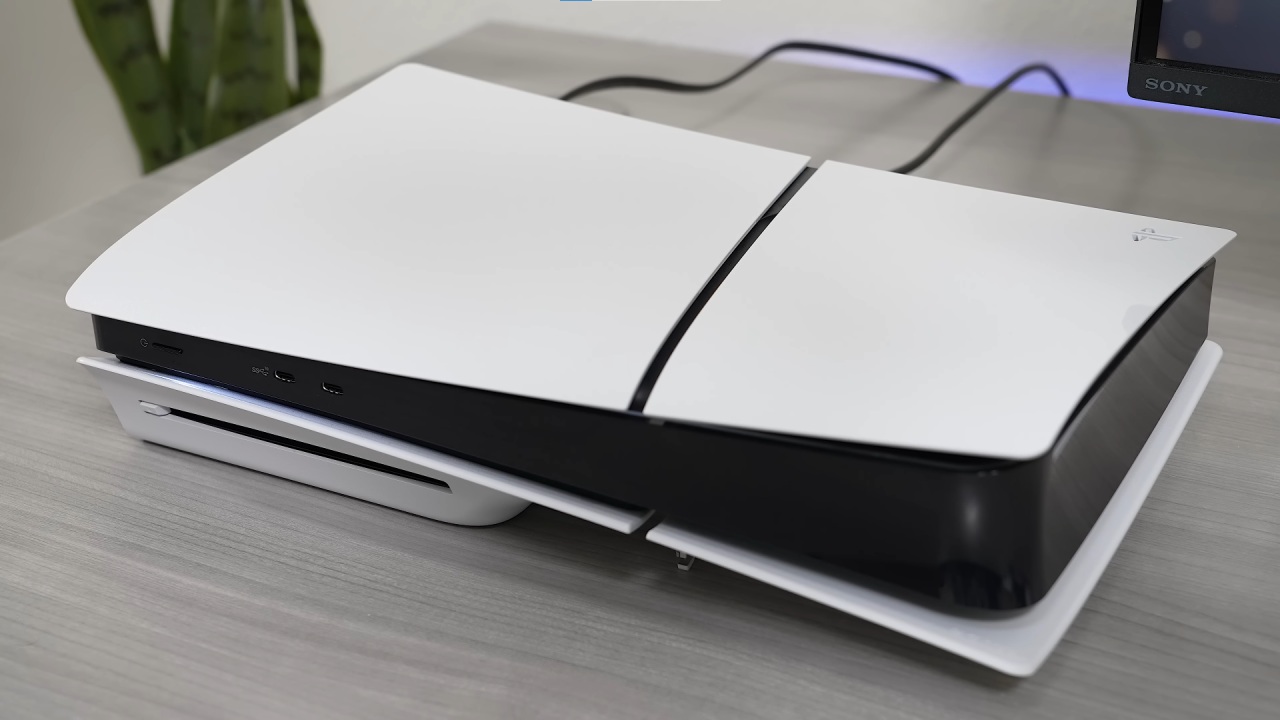
Sony might be preparing to make a major change to how games run on new hardware. Recent patents suggest a system in which high-detail assets stream straight from servers while the main game runs on the console. The local download may be as small as 100MB instead of 100GB, with the remainder streamed. Storage would no longer be the main problem, especially as SSD costs rise.
But these concepts are still patents, not goods that have been made. Companies typically file ideas years before they actually happen, and many never ship. The talk about Project Amethyst, a joint effort between Sony and AMD, is what makes this situation stand out. Mark Cerny and AMD's Jack Huynh have discussed new developments in graphics and AI for future platforms. Even though no system was specified, the trend is evident.
.jpg)
Neural arrays are an important idea. FSR and PSSR are two current upscaling approaches that require substantial GPU memory and processing power. Neural arrays would let compute units work together instead of on their own, which might make them more efficient. That might make upscaling go faster, ray tracing work better, and overall performance improve as game environments get bigger.
They also talked about neural radiance caching and radiance cores. These methods all aim to improve lighting and ray tracing performance without placing too much strain on the CPU. By removing the CPU from lighting calculations, more system resources could be allocated to simulation and environmental detail. The idea is to improve the graphics without requiring major hardware changes.
Universal compression could be just as crucial. The main idea is to compress data as it travels into system memory in real time. Lower bandwidth and power use, and better picture quality would all help the system run more smoothly. As of now, all of these technologies just exist as simulations, with no real hardware attached.
A DualSense Idea That Is Smarter
Another patent is more about how controllers change over time than how powerful they are. The idea doesn't replace traditional inputs; instead, it builds on the DualSense design that is already there. The central touchpad might work as a touchscreen without losing the physical buttons, sticks, and adaptable triggers.
The touchscreen could feature dynamic interface elements that let players move controllers around, resize layouts, and adjust settings to make them more comfortable. Pressure and heat sensors recommend trying out haptic feedback that feels like real buttons. When you touch it, the surface may push back by vibrating, providing tactile feedback on the glass.
Concerns about losing tactile sensation remain valid, especially in competitive genres. But patents are often more like experiments than sure things. One possible path is to make an improved DualSense that's easier to use and more customizable, without sacrificing traditional inputs.
Delays and Pressures in the Hardware Market
Problems with hardware go beyond Sony. Valve had said the next Steam Machine would be out in early 2026 and cost a certain amount. Still, those plans have changed because the prices of memory and storage have gone up significantly. Prices for RAM and SSDs are changing, making it harder to plan launches and set prices.
Sony told investors that it has secured a supply of parts until about 2027. Nintendo, on the other hand, said that things would stay stable in the short term but that costs could rise in the long run. When big console makers buy parts in bulk, they save money. Smaller corporations like Valve don't have that kind of power, which makes them more likely to be affected by pricing changes.
Reports say Nvidia has shifted its focus to data center needs. Some people say that GPU models were delayed because AI servers make more money by using more memory. Data center contracts increasingly use up hardware resources at levels that gaming systems can't match. Because of this, gaming products are lower on the list of things to get in the supply chain.
These conditions point to ongoing price pressure and possible launch uncertainty for gaming gear. Smaller device makers are still at the most risk.
The Live Service Reality and Highguard
Highguard started as a free-to-play team-based raid shooter that had about 100,000 players at its peak. In just two weeks, the daily peak numbers dropped to just a few thousand. The Wildlife development team revealed that they were laying off some people, leaving a smaller core to keep the game going.
The quick drop shows how competitive the market is for live service shooters. Players are most interested in well-known games like Apex Legends, Warzone, Fortnite, Destiny, and Helldivers. New submissions must have a unique identity and keep people interested to survive.
Some people said that the reduction was caused by review bombing or bad stories online. But when a launch gets almost 100,000 players and most of them leave, retention becomes the most important issue. Sustainability depends on players' engagement. If you blame the audience, you might miss out on gameplay feedback that could help you improve.
Momentum is important for live service projects. If that momentum disappears too soon, it will be hard to get back on track, no matter what you plan to do in the future.
Monster Hunter Wilds and PC Performance
Beyond 10 million copies were sold in its first month, making Monster Hunter Wilds the fourth best-selling game of 2025. However, PC performance problems slow down long-term progress. Reviews were not good because of problems with frame rate and optimization, especially from PC players.
Later, Capcom released a major PC performance patch that improved CPU and GPU performance, added visual settings, and made the game more stable. Reports say that the Steam Deck works better and is even playable. There was some talk about how DLC scanning would hurt performance, but Digital Foundry said it wasn't the main reason.
Even when things are getting better, it takes time to become better. Reviews affect what people buy, and bad first impressions last. While core admirers remained interested, the number of people who started using it slowed significantly after the initial rush.
Console hardware gives you a set goal to work with. In contrast, PC development has to deal with thousands of different hardware combinations. Wilds began meeting financial goals, but trade-offs in performance hurt the company's reputation. Capcom's finances remain stable because the Resident Evil, Street Fighter, Devil May Cry, and Monster Hunter Rise expansions continue to sell well. The plan now is to make the fundamental game more stable before adding more features.
Remakes of Project Stardust and Assassin's Creed
Assassin's Creed may be at a turning point with Project Stardust. Ubisoft is working on several remakes, starting with Assassin's Creed IV: Black Flag. Reports say the RPG systems will be larger, and the game will focus more on Edward Kenway's pirate era and less on modern-day events.
Skull and Bones, which was once pitched as a new take on the pirate idea, had a hard time living up to expectations. Reworking parts that have worked in the past lowers risk and builds on the brand's existing strength. Ubisoft's leaders said that more remakes are in the works, and Assassin's Creed 1 is often mentioned as a possible option.
The tone and structure of the series were set by the first game, but the missions were too identical. It's possible that a remake could make the goals better, bring the parkour systems up to date, and give the story more meaning while still keeping the original feel. It looks like the performance of Black Flag's remake will have an effect on production, which means a careful rollout plan is needed.
Ubisoft is still juggling big RPG games like Codename Nebula with smaller, more focused games like Mirage and Hexe. Remakes could help these different design approaches work together and support the franchise's growth in other ways.
Final Thoughts
The last Crimson Desert trailer focused more on world systems than on fighting. The Greymane camp is a focal hub that changes as you gather resources and make improvements. Over time, players can cook, manage their supplies, farm, and build their infrastructure.
Allies you meet along the way can return to camp and be sent on missions. The technology adds a managerial layer, making things feel bigger. How well it works depends on how dynamic and meaningful the mechanics feel while you play.
There are blacksmiths, tailors, side missions, and choices that affect the story in all of Pywel's cities. Guard reactions, penalties, and jail systems make players responsible for their actions. Exploring outside cities includes discovering secret villages, solving environmental riddles, and encountering dynamic characters.
Gathering, hunting, mining, and making potions are all things that help you survive and get ready for battle. You can change your character's hair, tattoos, clothes, and hair color. The design makes the planet itself the main focus by using interconnected systems instead of programmed events.
These mechanisms will only work if they are in balance. If each part encourages exploration and advancement without getting boring, the globe may keep people interested for a long time.
Also, check our other hardware articles:
- AMD Ryzen 9 9950X3D Review: Setting The Standard For 2025 Gaming CPU
- Amazon Luna 2025 Review: Is Prime Gaming's Cloud Service Your Go-To For Casual Fun?
- AMD RX 9070 XT Review: AMD's RDNA 4 Champion for 1440p Gaming
- GeForce Now Ultimate: Ditching Your Gaming PC For Cloud RTX 4080 Power?
- NVIDIA GeForce RTX 5080 Review (2025): Still A 4K Gaming Powerhouse?
- Intel Core Ultra 9 285K Review And Performance Breakdown (2025)
- AMD Ryzen 7 9800X3D Review: 3D V-Cache Goes God Mode with Stunning Gaming Performance
- Intel Core Ultra 9 285K vs AMD Ryzen 7 9800X3D: In-Depth Gaming Performance and Benchmark Comparison
- NVIDIA GeForce RTX 5080 Super Performance In Cyberpunk 2077: Path Tracing & DLSS 4.0 Tested
- AMD Radeon RX 9070 XT In Cyberpunk 2077: Ray Tracing & FSR 4.0 Tested
- Intel Arc B580 Review: The $250 GPU Revolutionizing 1440p Gaming
- Intel Arc B570 Vs. B580: Value, Specs, And Real-World Gaming Performance
- RTX 5090 Laptop Vs. M4 Max MacBook Pro: Ultimate Raw Performance Vs. Battery Endurance
- Intel Arc b580 Vs. RTX 4060: Game Performance And Value Analysis
- RTX5090 Hell Is Us Demo 4K Ultra Benchmark: DLSS Vs. Native Performance Guide
- NVIDIA RTX 5070 Review: Mid-Range Muscle or Marketing Hype?
- Nintendo Switch 2 Review: Handheld Performance, Features & Value Breakdown
- RTX 5070 Ti Review: Performance, Thermals & Power Efficiency Tested
- Samsung Odyssey OLED G81SF Review 2025: Ultimate 32-Inch QD-OLED Gaming Monitor
- AMD RX 9070 Performance Review: Thermals, Clocks, and Real-World FPS
- AMD Ryzen 5 7600 Review: Best Budget Gaming CPU of 2025?
- AMD Radeon RX 7800 XT Review: RDNA 3 Power For Midrange Gaming
- Asus ROG RTX 5090 Astral OC Vs. Founders Edition: The 4K Gaming Benchmark
Editor, NoobFeed
Gaming Hardware Updates
No Data.