
Windows vs. Linux with AMD and Nvidia GPUs: Retesting Gaming Performance
Linux gaming performance shows significant improvements with AMD GPUs, often matching or exceeding Windows in many titles.
Hardware by Masaru Hoshino on Aug 14, 2025
In a follow-up to earlier tests, a new series of benchmarks has been carried out to compare gaming performance between Windows and Linux, this time including both AMD and Nvidia graphics cards.
The purpose of the retest was to determine how each operating system performs under identical hardware conditions and to see whether Linux can match or even surpass Windows in specific scenarios.
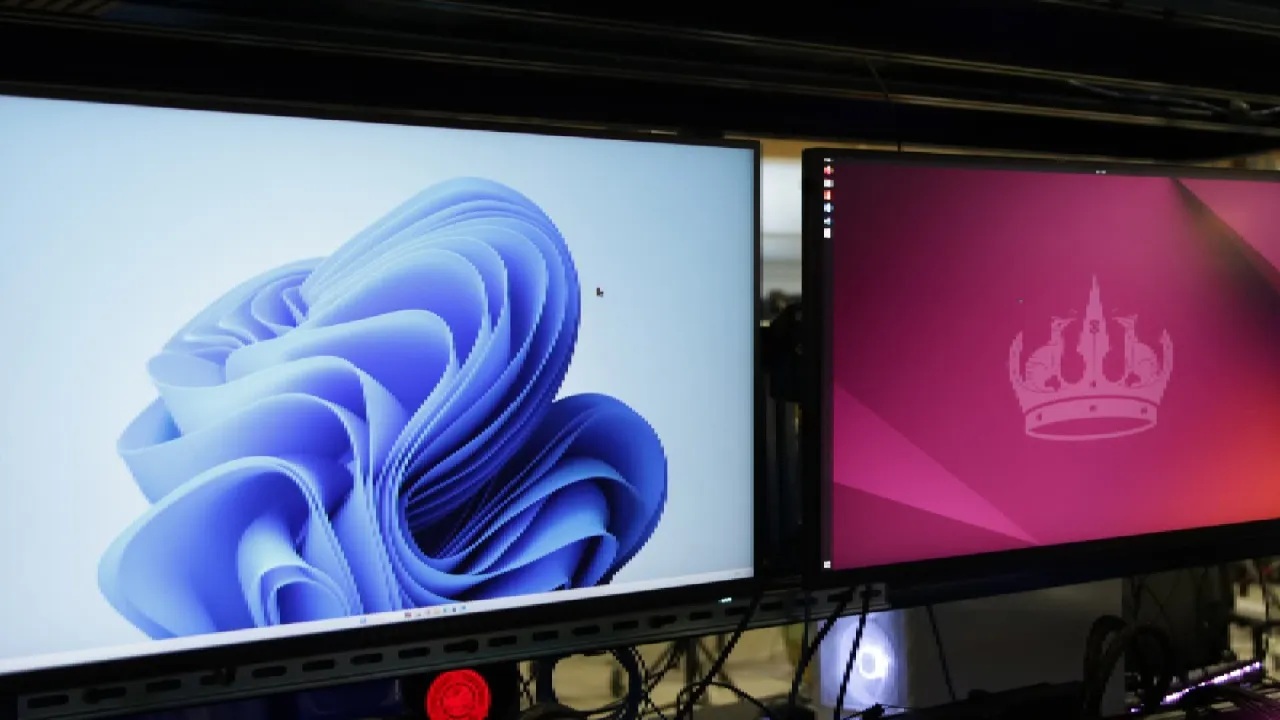
The hardware remained the same across both platforms, and games were run at the same graphical settings and resolutions. On Linux, Proton and native ports were used where available, while Windows relied on the latest DirectX drivers.
Nvidia cards were tested using the proprietary Linux driver, while AMD used the open-source Mesa drivers.
AMD Performance on Linux
The results for AMD hardware were particularly impressive on Linux. Linux performance was on par with or marginally better than Windows in a number of games, particularly those with well-optimized Vulkan compatibility. Stuttering was rare, and frame timing was fluid, making the experience highly playable.
The combination of the AMDGPU open-source driver and Mesa's ongoing refinements appears to deliver gaming performance that is not only competitive with Windows but, in some cases, superior, without the drawbacks often associated with proprietary software.
Nvidia's Mixed Results
NVIDIA's performance on Linux presented a more mixed outcome. Some games had noticeable lag, but others performed well and had frame rates similar to those of their Windows equivalents.
Given that Nvidia's Linux drivers continue to exhibit flaws, in particular Vulkan and OpenGL implementations, these variations appear to be mostly related to driver optimization.
Some games have framerate stability issues and microstutters that weren't seen in the Windows environment, which could be signs of driver-level inefficiencies.
The Vulkan Advantage
One of the key factors influencing the results was the use of Vulkan. Games developed around Vulkan or featuring well-implemented Vulkan backends generally performed better on Linux, regardless of whether AMD or Nvidia hardware was used.
In many of these cases, Linux offered not only comparable frame rates but also faster load times and more consistent frame pacing, benefiting from reduced overhead and more direct communication between the GPU and the graphics API.

Key Takeaways
As a gaming platform, overall, Linux has made substantial progress, as the retest indicates. Linux offers a solid and dependable gaming experience for AMD users, frequently matching or beating Windows in terms of performance.
Although Nvidia users can still play a wide range of games on Linux, their experience may differ depending on the game's compatibility and driver maturity.
The difference between the two operating systems is getting smaller, even though Windows still has an advantage in some games, especially those that are directly related to DirectX.
Linux gaming is now a feasible alternative for daily use thanks to continuous improvements in Proton, Mesa, and native game support.
Also, check our other hardware articles:
- AMD Ryzen 9 9950X3D Review: Setting The Standard For 2025 Gaming CPU
- Amazon Luna 2025 Review: Is Prime Gaming's Cloud Service Your Go-To For Casual Fun?
- AMD RX 9070 XT Review: AMD's RDNA 4 Champion for 1440p Gaming
- GeForce Now Ultimate: Ditching Your Gaming PC For Cloud RTX 4080 Power?
- NVIDIA GeForce RTX 5080 Review (2025): Still A 4K Gaming Powerhouse?
- Intel Core Ultra 9 285K Review And Performance Breakdown (2025)
- AMD Ryzen 7 9800X3D Review: 3D V-Cache Goes God Mode with Stunning Gaming Performance
- Intel Core Ultra 9 285K vs AMD Ryzen 7 9800X3D: In-Depth Gaming Performance and Benchmark Comparison
- NVIDIA GeForce RTX 5080 Super Performance In Cyberpunk 2077: Path Tracing & DLSS 4.0 Tested
- RTX 5090 Performance Testing In GTA 5 – 1080p, 1440p, and 4K Max Settings Benchmark
- AMD Radeon RX 9070 XT In Cyberpunk 2077: Ray Tracing & FSR 4.0 Tested
- Intel Arc B580 Review: The $250 GPU Revolutionizing 1440p Gaming
- Intel Arc B570 Vs. B580: Value, Specs, And Real-World Gaming Performance
- Intel Arc B570 Review: Efficient Xe2 Performance At An Affordable Price
- RTX 5090 Laptop Vs. M4 Max MacBook Pro: Ultimate Raw Performance Vs. Battery Endurance
- Intel Arc b580 Vs. RTX 4060: Game Performance And Value Analysis
- RTX5090 Hell Is Us Demo 4K Ultra Benchmark: DLSS Vs. Native Performance Guide
- NVIDIA RTX 5070 Review: Mid-Range Muscle or Marketing Hype?
- Nintendo Switch 2 Review: Handheld Performance, Features & Value Breakdown
- RTX 5070 Ti Review: Performance, Thermals & Power Efficiency Tested
- Samsung Odyssey OLED G81SF Review 2025: Ultimate 32-Inch QD-OLED Gaming Monitor
- AMD RX 9070 Performance Review: Thermals, Clocks, and Real-World FPS
- AMD Ryzen 5 7600 Review: Best Budget Gaming CPU of 2025?
- AMD Radeon RX 7800 XT Review: RDNA 3 Power For Midrange Gaming
- Asus ROG RTX 5090 Astral OC Vs. Founders Edition: The 4K Gaming Benchmark
- ASUS ROG Astral RTX 5090 OC Edition Review: 32GB GDDR7 & 4K Gaming Benchmark
- Intel Core i5-13400F Gaming Performance: Still Worth It in 2025?
- ASUS GeForce RTX 5090 LC Liquid Cooled GPU Review: Unmatched Silence & Speed
- ASUS ROG Ally X Handheld Review: Double the Battery, Double the Comfort
- Lenovo Legion Go S Review: The Ultimate Steam Deck 2 Alternative
- Sapphire NITRO+ AMD Radeon RX 9070 XT Review: The Ultimate 4K Gaming GPU
- Alienware 16 Area 51 Review: The Ultimate 2025 Gaming Laptop
- Alienware Area-51 Review: Unmatched 4K, Thermal, and Acoustic Performance
- AMD Ryzen 7 7800X3D: Delivers Gaming Performance Far Beyond Expectations
- AMD Ryzen 9 7900X Review: Powering the AM5 Era with DDR5 & PCIe 5.0
- Intel Core i9‑14900K vs. AMD Ryzen 7 7800X3D: Power Profiles & Gaming Benchmarks
- Intel Core i9 14900K: Specs, Benchmarks, and Competitor Comparison
- ASRock Radeon RX 7800 XT Challenger OC Review: Best Price-to-Performance GPU of 2025
Editor, NoobFeed
Latest Articles
No Data.