
XBOX Project Helix GPU Clock Speed Could Reach 3.2GHz
Project Helix GPU clock speeds could exceed PlayStation 6 while offering more compute resources and performance.
XBOX by Nahe Yan on Sep 25, 2026
XBOX Project Helix is expected to use a GPU with a higher clock speed than the Xbox Series X, with leaks pointing to around 3.2GHz. This higher frequency would mark a change from the Xbox Series X, which launched with a GPU clocked at around 1.8GHz.
XBOX Project Helix GPU is expected to run at around 3.2GHz. This figure comes from two sources. The first comes from an earlier leak discussing AMD’s RDNA5-based APU and its expected clock speeds. That leak suggested that the RDNA5 GPU could run anywhere between 3.1GHz and 3.4GHz.

XBOX Project Helix Could Reach 3.2GHz
At the time, it was unclear whether those figures applied to XBOX Project Helix or PlayStation 6, since the information appeared to describe the RDNA5 APU in general. The clock speed for XBOX Project Helix can also be estimated from the leaked teraflop and compute unit figures. With the number of teraflops and compute units available, it is possible to roughly calculate the GPU clock speed.
Based on those numbers, XBOX Project Helix appears to be heading toward around 3.2GHz. This figure is still based on leaks and is not official. The teraflop figure is also described as rough and could end up around 54, 55, or 56 teraflops. Even after chips have been finalized, specifications can change before launch.
The Xbox One shows how clock speeds can change near launch. Its CPU clock speed was expected to be 1.6GHz but ended up at around 1.75GHz. Small clock-speed changes can therefore happen before a console reaches the market. The current figures point toward 68 compute units, around 56 teraflops, and a GPU clock speed of around 3.2GHz.
68 Compute Units and 56 Teraflops
Compared with Xbox Series X, this would represent a significant increase in GPU clock speed. Xbox Series X runs its GPU at around 1.825GHz, or roughly 1.8GHz. By comparison, the PlayStation 5 operates at around 2.2GHz. The clock-speed difference was one factor discussed when comparing the two consoles early in the generation.
Xbox Series X has a wider GPU and more shaders, and developers eventually used those resources. However, during the first year and a half to two years, the performance did not always reflect the additional GPU resources. Lower clock speeds were one factor because taking advantage of the larger GPU required developers to spend more time.
Earlier expectations were different. With RDNA5 clock speeds reported between 3.1GHz and 3.4GHz, the initial assumption was that those figures were mainly related to PC hardware. At the time, 3GHz for XBOX Project Helix would have already been a notable target. PlayStation 6 was expected to have a smaller GPU, which could have meant higher power efficiency and a higher clock speed.
GPU Clock Speed Is Only Part of the Performance
The general expectation was that a smaller GPU could be faster while a larger GPU could run slower. However, the reported power figures for XBOX Project Helix change that expectation. Tom of Moore’s Law Is Dead reported that Project Helix's TDP could exceed 300W. That would require more power for the GPU as well as the RAM, cooling system, and other components.
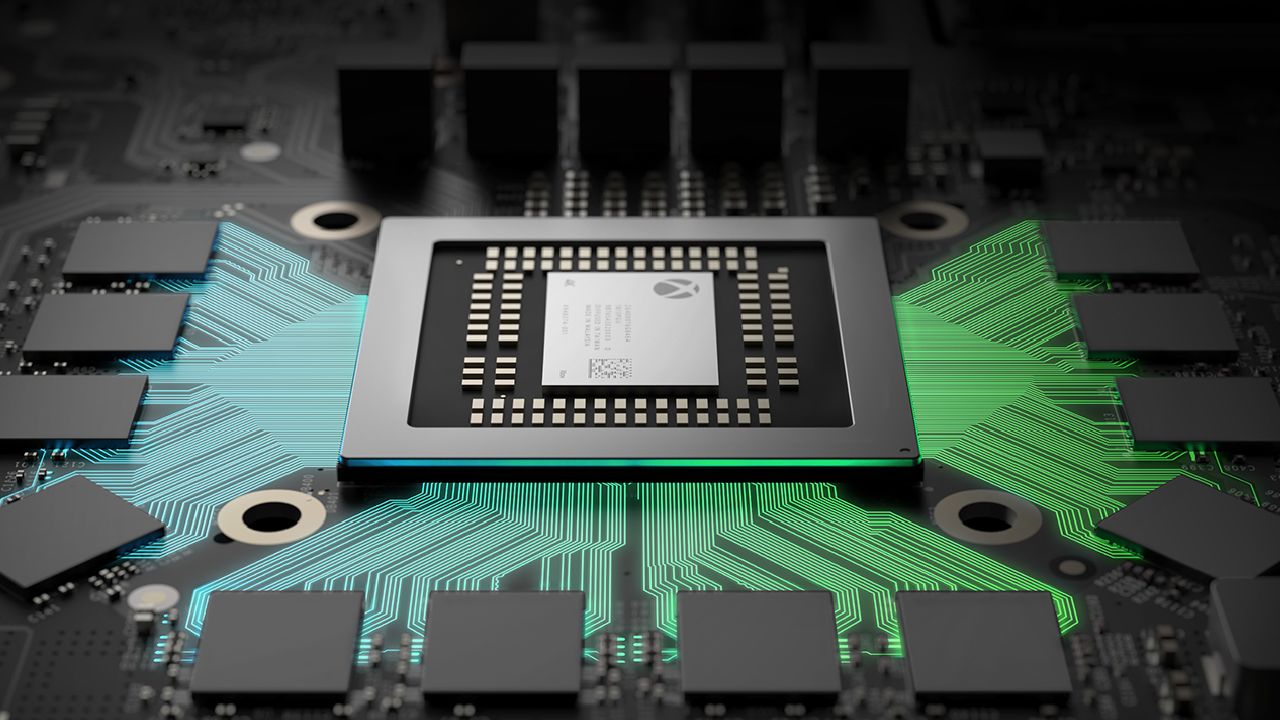
Using the same calculations for PlayStation 6, its GPU appears to be closer to 3GHz, possibly around 3.01GHz or a similar figure rather than 3.5GHz. The difference isn't massive, but the leaked figures still point to a higher GPU clock speed for Project Helix. The Magnus chip, the project name associated with the XBOX Project Helix APU, is expected to deliver more performance.
However, you can't determine the performance difference between consoles based only on teraflops or clock speeds. PlayStation 5 showed that higher performance on paper doesn't always translate directly into games running 40% or 50% faster. The way developers use the hardware also matters.
If Microsoft does subsidize the hardware, a price around $999 has been suggested.
Integration with Windows could also shape the final pricing strategy. If Project Helix functions as a PC, users could purchase it for both gaming and PC use. However, Microsoft would need to consider whether subsidizing hardware that can be used primarily as a Windows machine makes sense for its business.
For now, the leaked specifications point toward a console with a GPU clock speed around 3.2GHz, 68 compute units, and roughly 56 teraflops. The hardware could offer a significant increase over the Xbox Series X, but final gaming performance will depend on the final specifications, software, and developer optimization.
Editor, NoobFeed
Latest Articles
No Data.