
AMD 7GHz CPUs and Intel X3D Competitors: Next-Gen Performance Explained
Intel’s potential X3D-style L3 cache expansion could rival AMD’s 3D V-Cache for desktop gaming performance.
Hardware by Tanisha Aria on Dec 02, 2025
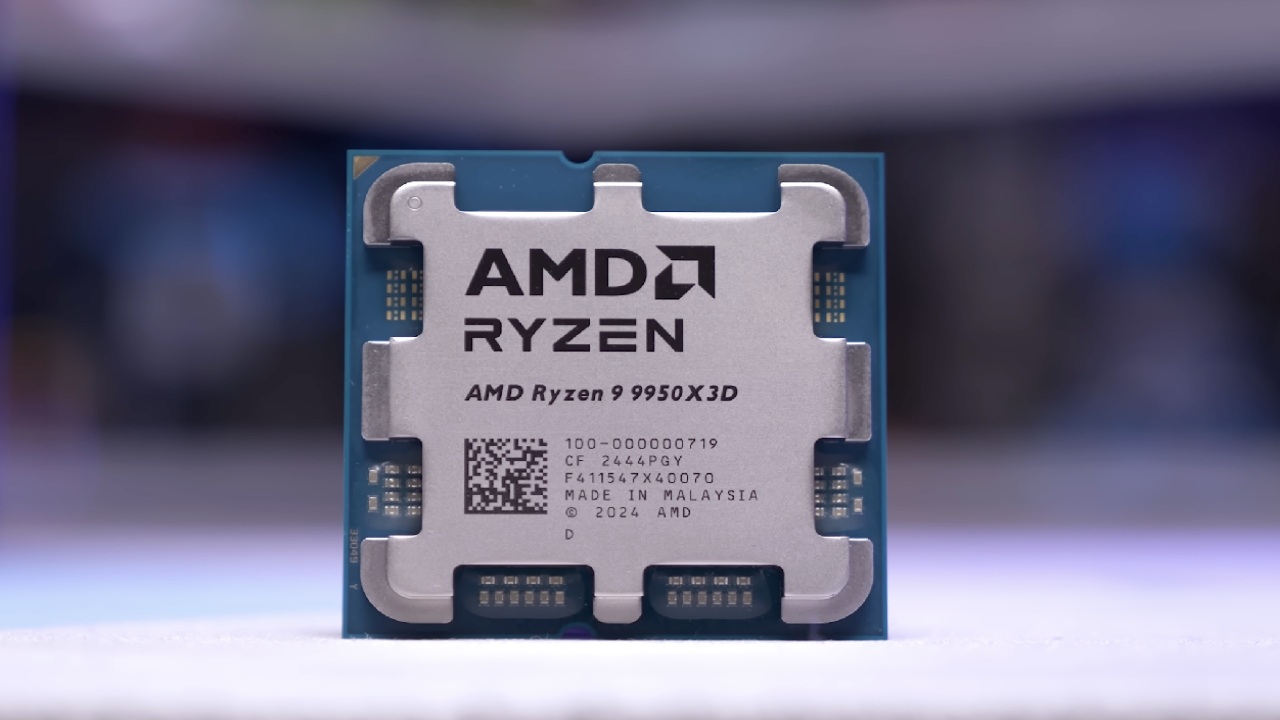
As next-generation designs get closer, people are increasingly talking about rumored 7GHz CPUs and Intel's possible X3D-style parts. The fact that people are talking about Zen 6, TSMC's N2 family, and Intel's cache-stacking directions shows how quickly CPU design goals are changing.
As people assume higher frequencies, better efficiency, and more L3 cache space, the possibility of big changes in how well games and work get done naturally becomes a main topic of discussion.
Evaluating the 7GHz Rumor
When we first hear that a CPU is 7GHz, we are skeptical. Not because those speeds are impossible, but because they sound crazy at first. Still, look at what modern CPUs can already do: they can reach high 5GHz clocks and even close to 6GHz in some cases. To get to 7GHz, that's not even a 20% jump. That's important, but not impossible to imagine.
We also need to consider that Zen 6 would be a jump between two groups of process nodes. The 4nm and 5nm methods used by TSMC enable Ryzen chips, but Zen 6 is said to use TSMC's N2 or N2X process.
In this case, that's not a small step. It is a whole new family, with the performance-per-watt and scaling claims that TSMC usually makes, like about 20% more performance at the same power or much better efficiency at the same frequency.
We know these measures are always nuanced. They rely on test vehicles, fake metrics, and assumptions about the architecture's configuration. It depends a lot on the design whether the improvement is in the form of IPC or raw frequency space.
Still, adding two generations of improvements together makes 7GHz a real option. It's still unlikely that a desktop CPU will ship at 7GHz, but it's not a crazy idea to think about.
How Frequency Gains Could Impact Performance
If Zen 6 can combine higher clock speeds with real IPC gains and IO die improvements, performance will be much better in the real world. While frequency remains a key factor in how well games run, IPC is useful for a wide range of tasks, from content creation to handling heavy computational workloads.
We've already seen cases where IPC gains are workload-specific. Overall, Zen5 saw significant IPC improvements, but they didn't always translate into performance gains in games people care about. Users would see real benefits if Zen 6 could align frequency scaling with IPC improvements that are useful for games.
Intel's Possible X3D Competitor
The Big Last Level Cache (B LLC) system from Intel is already used in servers and is built on a tile-based architecture. It is found in products like the Clearwater Forest Xeon CPUs.
We haven't tested those parts directly, but we understand the idea behind them. Fans have been wondering for years if Intel would ever get this technology to work on desktop computers.
Recent reports say that the Nova Lake architecture, set to launch in 2026, might include desktop models with a B LLC-style design. One claim says an 8-core model could come with up to 144MB of L3 cache, more than the 128MB in a Ryzen 9950X3D.
While nothing has been proven and no solid proof has been found, Intel may use this to compete with AMD's X3D graphics cards.

Why Cache Matters So Much for Gaming
It's been known for a while that L3 cache plays a big role in how well games run. Before AMD released the 5800X3D, we ran tests that showed better game performance increased as core count or frequency increased from Core i3 to Core i5 to Core i7, and so on. Higher L3 cache was the main factor in this happening.
We separated factors such as frequency and the number of cores and found that cache size was the most important.
That was a big find that proved AMD was on the right track with 3D V-Cache. Plus, it makes a clear way for Intel to follow. Intel will need to add much more space to the L3 cache if it wants to compete with AMD's game parts that stack the cache.
We know that the benefits depend heavily on the architecture, though. Because Intel's switch to P-cores and E-cores changed how cache scaling works, the latest generations of processors haven't been able to improve gaming speed through cache like older generations did.
Would Intel's Cache-Stacked Desktop Chips Actually Work?
We think Intel would only release B LLC for desktops if its own tests showed it really improved game performance. No company wants to make an expensive "3D-cache-variant" CPU that doesn't work any better than the regular model.
AMD purposely didn't add more cache to some dual-chiplet parts, even though doing so would have helped them. Intel would make the same choices.
Also, it's important to keep in mind that early rumors are often based on internal goals or aspirational designs rather than official market specs. In the early stages of planning, a company may set its sights on 7GHz or large cache tiles, but later find that issues such as heat, cost, or returns make those goals impractical.
Final Thoughts
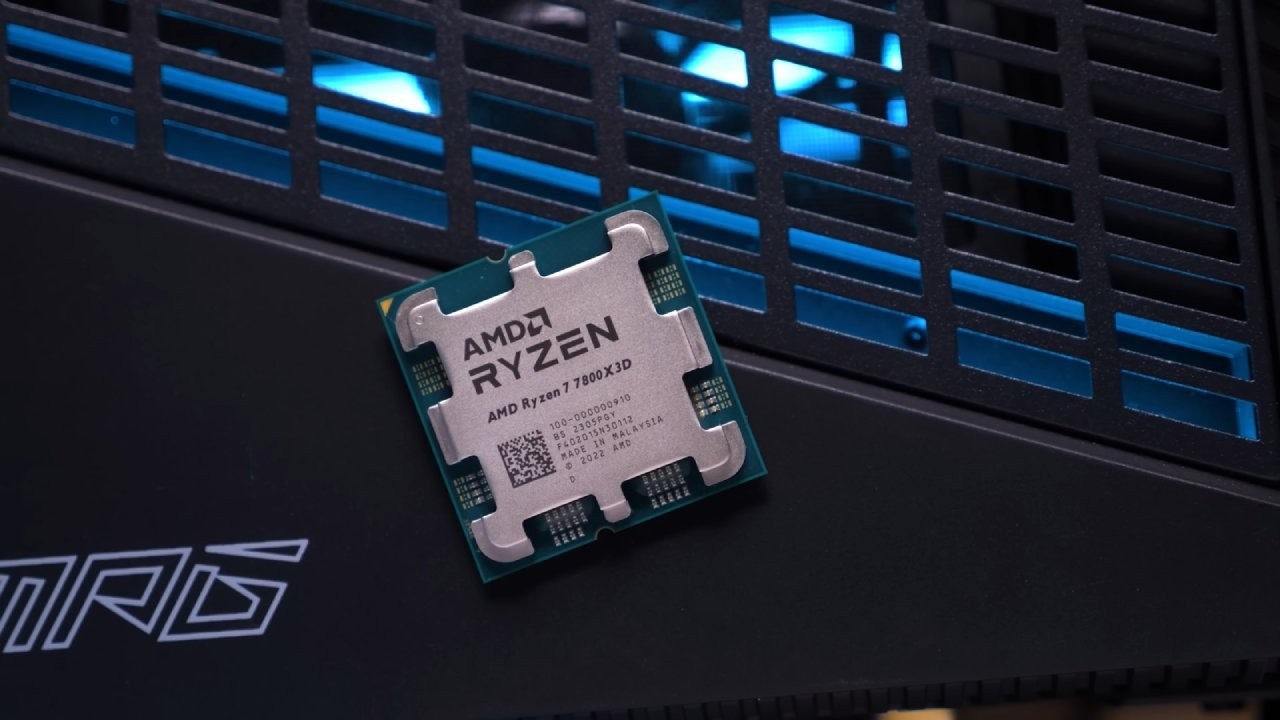
Right now, we're deep in rumor land. Zen 6 could offer faster speeds, better efficiency, and improved input/output (IO), while Intel's Nova Lake could respond with larger L3 caches.
The ideas make sense, and based on how things are going now, neither way would be a surprise. Whether these rumors come true or not depends on the realities of engineering, which often change long before the final silicon is made.
As launch dates get near, we expect more concrete information and expectations. For now, the idea of 7GHz CPUs and Intel desktop processors with stacked cache remains an interesting one with strong technical support, but nothing is certain.
Also, check our other AMD and Intel articles below:
- AMD Ryzen 9 9950X3D Review: Setting The Standard For 2025 Gaming CPU
- AMD Ryzen 7 9800X3D Review: 3D V-Cache Goes God Mode with Stunning Gaming Performance
- AMD RX 9070 Performance Review: Thermals, Clocks, and Real-World FPS
- AMD Ryzen 5 7600 Review: Best Budget Gaming CPU of 2025?
- AMD Radeon RX 7800 XT Review: RDNA 3 Power For Midrange Gaming
- Sapphire NITRO+ AMD Radeon RX 9070 XT Review: The Ultimate 4K Gaming GPU
- AMD Ryzen 7 7800X3D: Delivers Gaming Performance Far Beyond Expectations
- AMD Ryzen 9 7900X Review: Powering the AM5 Era with DDR5 & PCIe 5.0
- ASRock Radeon RX 7800 XT Challenger OC Review: Best Price-to-Performance GPU of 2025
- Intel Core i9‑14900K vs. AMD Ryzen 7 7800X3D: Power Profiles & Gaming Benchmarks
- Intel Core Ultra 9 285K Review And Performance Breakdown (2025)
- Intel Core Ultra 9 285K vs AMD Ryzen 7 9800X3D: In-Depth Gaming Performance and Benchmark Comparison
- Intel Core i5-13400F Gaming Performance: Still Worth It in 2025?
- Intel Core i9‑14900K vs. AMD Ryzen 7 7800X3D: Power Profiles & Gaming Benchmarks
- Intel Core i9 14900K: Specs, Benchmarks, and Competitor Comparison
- Intel Core Ultra 5 245K Review: Gaming, Productivity & Power Efficiency Tested
- Intel Core Ultra 9 285 K's iGPU Gaming: In-Depth Benchmarks & Analysis
- Intel vs. AMD Gaming Laptop: Performance, Thermals & Battery Life Compared
- AMD Ryzen 7 9800X3D vs.7800X3D vs. Intel Core Ultra 7 265K: Gaming, Thermals & Price Analysis
Contributor, NoobFeed
Gaming Hardware Updates
No Data.