
AMD EXPO UL Memory Tested on Ryzen 9700X and 9800X3D
EXPO UL memory tuning improves Ryzen 9700X performance more than Ryzen 9800X3D across selected gaming and CPU benchmarks.
Hardware by Nahe Yan on Aug 17, 2026
Pricing for memory remains the main topic of conversation in PC hardware, and new information has emerged on both the product and legal fronts. AMD's newest memory standard has officially launched, but at prices much higher than the company originally promised.
A new lawsuit against major memory makers adds to the ongoing discussion about what is really driving up DRAM costs. AMD's Expo ULL, short for ultra-low-latency memory, has officially launched.
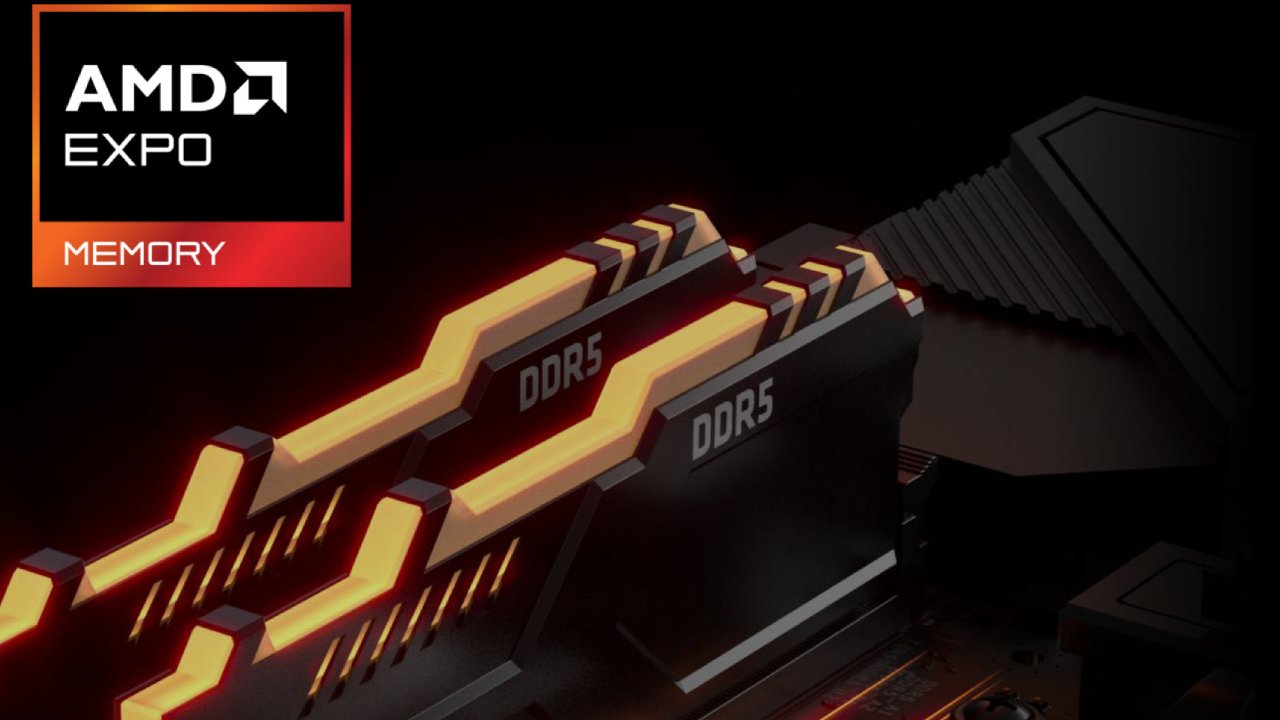
Rather than relying on higher clock speeds to reduce latency, Expo ULL extends sub-timings to extract additional performance, since Ryzen CPUs tie interconnect frequency to system memory frequency at a one-to-one ratio.
That shift means you would need to go significantly higher than DDR5 6000 to offset the resulting performance loss, which is the gap Expo ULL is designed to address. In testing, Expo ULL delivers a 13% average FPS boost and a 15% boost to 1% lows compared to standard JEDEC memory, along with a 4% boost in both average FPS and 1% lows compared to regular Expo memory.
Retail Pricing Breaks AMD's Original Promise
AMD had previously stated that Expo ULL memory would be priced similarly to standard Expo kits, but that has not held up with the first kits to hit the market. G.Skill's initial Expo ULL kits are priced up to 79% higher than comparable standard Expo memory. One kit moves from $699.99 to $1099.99, while another goes from $559.99 to $999.99.
The remaining kits carry smaller increases, though none come close to matching standard Expo pricing. Prices may decline as more kits reach the market, but current pricing represents a significant premium for a technology AMD originally positioned as cost-equivalent.
A new class action lawsuit has been filed against Samsung, SK Hynix, and Micron, the three companies that together control roughly 90% of the global DRAM market. The lawsuit, filed on June 25 in the Northern District of California by 17 plaintiffs, alleges that the companies used AI-driven memory demand as cover to shift toward HBM production while reducing output of older DDR3 and DDR4 memory modules.
RAM Manufacturers Face a New Price-Fixing Lawsuit
Both Samsung and SK Hynix previously pleaded guilty to DRAM price-fixing in 2005, providing historical context for the current allegations. There is reason to be skeptical that this lawsuit will succeed.
AI-driven demand for memory is real and clearly reflected in earnings reports from companies like Nvidia, even when accounting for financing arrangements in the AI space that can make revenue figures appear larger than they are.
Market forces alone could reasonably explain a shift toward HBM production, given that it carries significantly higher margins and that manufacturers were already moving away from older memory standards toward DDR5, regardless of AI demand.
Building a modern DRAM semiconductor plant costs billions of dollars, which makes manufacturers cautious.
None of this fully clears DRAM manufacturers of wrongdoing, since they have been caught coordinating in the past, and this lawsuit could potentially prove that such behavior is occurring again.
That possibility carries some weight, given memory module makers have started producing DDR4 again, which could suggest pressure is already building for manufacturers to increase output of older memory standards regardless of how the lawsuit plays out.
Between the pricing of new memory standards like Expo ULL and the ongoing legal scrutiny of the manufacturers controlling supply, RAM pricing looks unlikely to settle down in the near term, and both developments point to the same underlying tension between limited supply and rising demand.
Editor, NoobFeed
Gaming Hardware Updates
No Data.