
AMD Fights Rising PC Prices With New X3D CPUs and AM4 Comeback
AI infrastructure companies continue shifting toward lower-cost inference hardware as alternatives to Nvidia gain traction.
Hardware by Nahe Yan on May 21, 2026
There is now a new competition theme in the AI and PC hardware market: seeking alternatives to the market leader and delaying major PC upgrades due to rising component costs. The market may be entering a more competitive period, as reports have emerged about new AI infrastructure, new CPUs, and AMD's gaming-focused processors.
As Nvidia continues to establish its dominance in artificial intelligence, it is facing growing rivals. But NVIDIA is starting to lose its monopoly, it seems, as the investment firm Evercore recently sent out a channel check highlighting the difference between GPUs and ASICs.
.jpg)
It's worth noting that the report focuses on the buildout of AI infrastructure, but it is the ASICs, which have supplanted GPUs in Bitcoin mining, that have helped alleviate demand there. What if both Ethereum and Bitcoin had stuck to GPUs for mining? The cost would have been much higher back then.
Consumers have been Further Delaying new Pc Builds
While NVIDIA found its niche by being one of the first companies to recognize the promise of the AI revolution and make massive investments, monopolies are never ideal. Evercore held discussions with more than 25 AI engineers and experts from various companies to better understand the current AI landscape.
The initial transition is from training to inference workloads, one of the primary transformations currently underway in AI. Rather than continually training models, companies are starting to leverage models they have already trained. As a result, inference workloads are now more concerned with cost per token, power consumption, cooling requirements, and efficiency.
Companies are also discontent with NVIDIA's 70% gross margins and are willing to seek out “good enough” options, the report added. NVIDIA's inference market share will drop to 50% by 2028, according to Evercore.
They still believe that Nvidia will dominate more than 70% of the training market, but the long-term shift from training to inference could dramatically alter the balance. In the end, it's nice to see more competition entering the AI sector, and hopefully, it will keep coming.
Intel's Nova Lake CPUs Start Shipping
The engineering samples of the next generation of Intel's desktop Nova Lake CPUs have reportedly begun shipping, according to Silicon and Wccftech. The leaks predict it will be approximately 20% faster than current-generation parts in single-threaded performance on the 52-core. Considering that this is a 52-core processor, those numbers are notable.
The leak also reveals that multi-threaded performance would be 1.8x to 2x faster than that of Intel's current-generation CPUs. Intel's next-generation platform is also expected to feature its own version of 3D V-Cache called BLLC. At present, it is not obviously a stacked 3D cache design, but has been implemented as a huge extra cache block attached to the processor.
This might just be Intel's way of making a comeback in the gaming performance space. But the price will be a major factor in the platform's success. While it is really a consumer platform, its price may be closer to that of HEDT processors. Should that be the case, Edge users might still opt for Threadripper for features such as more memory channels and broader I/O support.
What Intel Ultimately Offers the Gaming Industry
Fewer people are building or purchasing new PCs than anticipated, according to the latest polling results. Tom's Hardware previously polled readers about when they would buy or build a new computer. About 60% said they would wait more than 2 years, with 15% saying the second-highest option, waiting 2 years.
Over 3,500 people participated in a separate poll, which yielded even stronger responses. Over 70% indicated they would NOT buy or build a new PC for at least 2 years. Approximately 11% were intending to upgrade in the next 2 years, 7% in the next 1 year, and 8% in the next 6 months.
A drawback to the poll was the lack of an option for those who recently built a computer. If someone has already built a new build, it's unlikely they'll want to upgrade again in the very near future. Nonetheless, the data strongly indicate that consumers have become more price-sensitive in the current hardware market, particularly for memory and storage costs.
AMD's 5800X3D Anniversary Edition is on its Way Back
AMD is now seemingly set to release products designed to ease the pressure it has been facing due to skyrocketing PC component prices. One of those products is the rumored Ryzen 7 5800X3D, which marks the 10th anniversary of the AM4 socket platform.
The processor seems to have reappeared via the retailer's trailer listing, and AMD has reportedly said it plans to release the product, at least for the anniversary edition. The list price is approximately $ 310 US (including taxes). If the extra costs hadn't been added to the price, it would be closer to $260 US–$270 US. That's pretty high, but still not the inflated resale prices seen in the secondary markets.
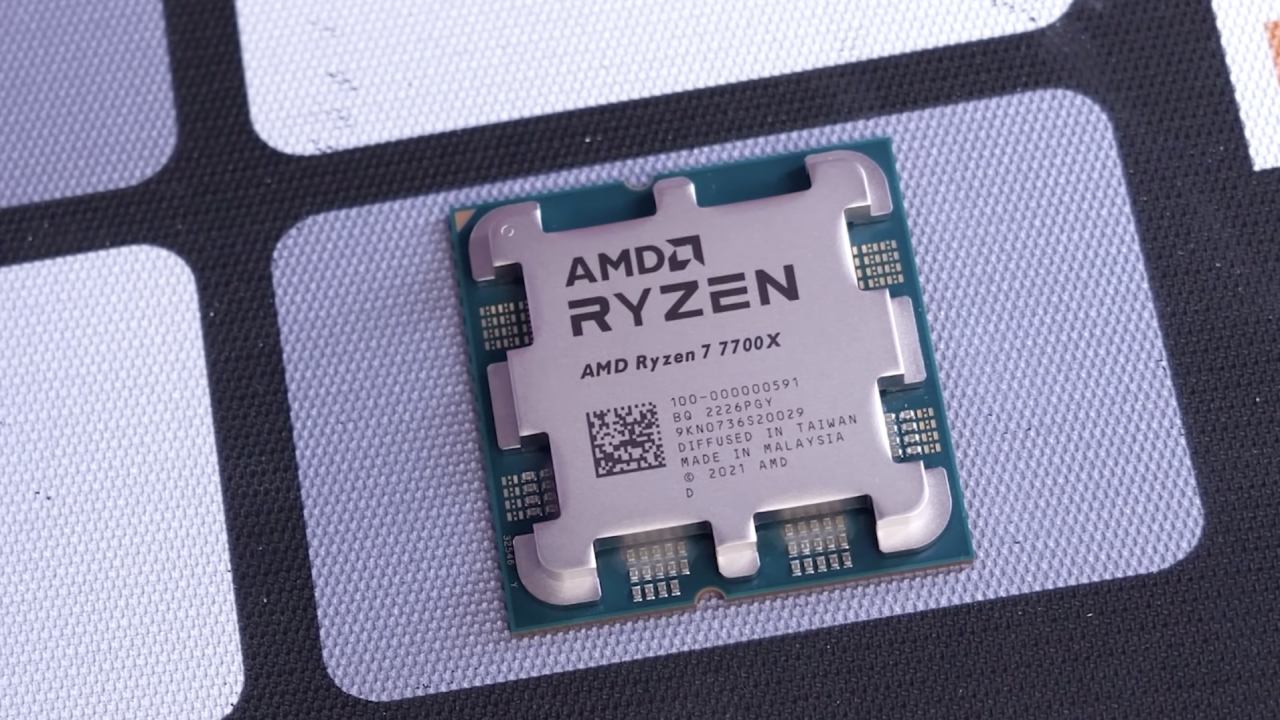
This may be a way to upgrade the AM4 platform without switching to AM5 for those who are still running it. Ryzen 7 7700X3D may have a lower price tag than the high-end parts. Ryzen 7 7700X3D could be a value gaming part. AMD could also be aiming to launch another gaming chipset. The company is developing a Ryzen 7 7700X3D, as per a popular leaker on X.
Based on the leak, the processor closely resembles the 7800X3D.
The 8-core, 16-thread is said to consume 120W and feature 96MB of L3 cache. The biggest distinction is in clock speeds. The rumors suggest that the Ryzen 7 7700X3D will have a 4 GHz base frequency and a 4.5 GHz boost frequency. 7800X3D, in comparison, is clocked at 4.2GHz base and can boost up to 5GHz.
The lower frequencies suggest AMD might be using binned chips for the processor; however, manual overclocking may help offset some of that performance loss. At a sub-$300 US price, the chip may well be the best value-for-money gaming CPU on the market. While the 5800X3D will return, and maybe even the 7700X3D, AMD seems to be prioritizing more budget-friendly gaming CPU choices for those looking.
Editor, NoobFeed
Gaming Hardware Updates
No Data.