
AMD Ryzen 400G Desktop APUs Announced With Zen 5 Hybrid Cores and RDNA 3.5 Graphics
AMD introduces Ryzen 400G desktop APUs with Zen5 hybrid cores, reduced iGPU compute units, and significantly higher AI processing capability.
Hardware by Masaru Hoshino on Mar 05, 2026
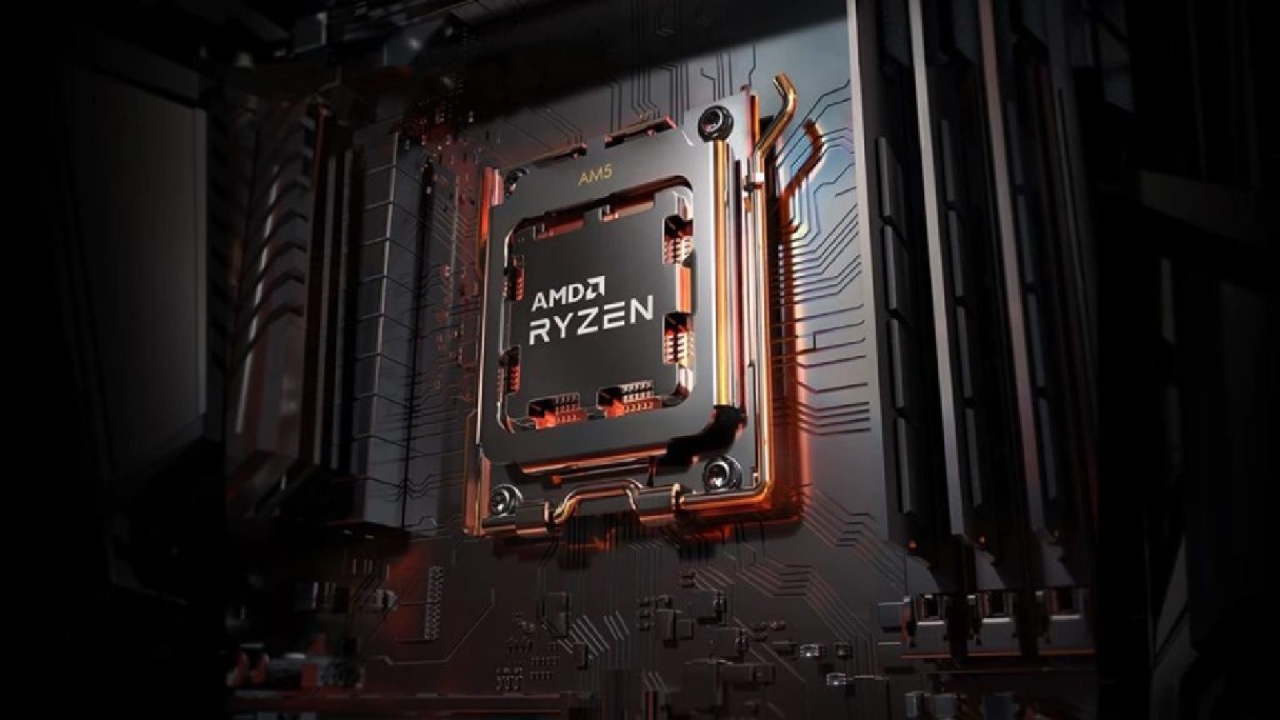
AMD has officially introduced its new 400G series CPUs, which will be the next generation of desktop APUs. There are both Pro and non-Pro models in the lineup, aimed at both business users and average people. The company's marketing materials are mostly aimed at professionals, but there are also consumer versions available.
The actual hardware between the consumer and enterprise versions is mostly identical. The main differences include ECC memory support and AMD’s additional platform software features for Pro chips. Aside from those enterprise-focused capabilities, the core specifications remain largely the same across both versions.
Hybrid Zen 5 Core Design Raises Performance Questions
However, once the specifications are examined closely, the new lineup becomes somewhat disappointing compared to the previous generation. The highest-end processor in the series is the Ryzen AI 7 450G. Despite being based on the newer Zen 5 architecture, the chip only includes up to 8 CPU cores.
At first glance, eight cores might seem reasonable for a desktop APU. The issue becomes clearer when looking at the actual configuration. Instead of offering 8 full Zen 5 cores, the processor uses a hybrid structure with 4 Zen5 cores and 4 Zen 5C cores. Because of this design, the processor effectively feels like a downgrade compared to the previous generation Ryzen 7 8700G.
Clock speeds reinforce that concern. The base clock on the Ryzen AI 7 450G is only 2GHz, while the 8700G offered a much higher 4.2GHz base clock. Lower clock speeds combined with fewer full-performance cores raise questions about the overall CPU performance of the new chip.
Integrated RDNA 3.5 Graphics See Unexpected Reduction
The integrated graphics configuration also introduces some surprises. AMD upgraded the architecture from RDNA 3 to RDNA 3.5, which technically represents an improvement. However, the total number of compute units has been reduced.
The previous Ryzen 7 8700G included 12 CUs in its integrated GPU, while the new 450G only offers 8 CUs. That reduction becomes even more confusing when considering that some AMD notebook processors can reach up to 16 CUs. As a result, the desktop APU appears more limited than expected in terms of graphical performance.
AI Acceleration Becomes the Key Upgrade
One area where the processor does improve significantly is AI acceleration. The new chip delivers 50 AI TOPS, which is a large jump compared to the 16 AI TOPS found in the previous generation. While this may benefit AI workloads and productivity applications, many gamers prioritize CPU and GPU performance over AI capabilities.
It is still possible that AMD will release higher-end SKUs later in the product cycle. For now, however, the announced specifications represent the initial launch lineup. AMD hasn't said how much the chips would cost yet, but they have said that they should be ready in the second quarter of 2026.
.jpg)
Ryzen 5 5500X3D Expansion Signals Continued AM4 Support
Another intriguing thing is that AMD is making the Ryzen 5 5500X3D more widely available. This processor first came out in the middle of 2025, although it was only available in a few places. The CPU has 6 cores and 12 threads, as well as AMD's 3D V-Cache technology.
The processor includes a large 96MB L3 cache and runs on the AM4 platform. Early listings suggest a price around $175 after currency conversion, which positions it as a strong gaming option under $200.
Expanding the availability of this processor also signals continued support for the AM4 platform. With DDR5 memory prices remaining relatively high, many gamers still prefer building or upgrading systems using DDR4 components.
By continuing to support AM4, AMD provides a more affordable upgrade path for users who want solid gaming performance without moving to the newer DDR5 ecosystem.
Mixed Outlook for AMD’s Latest APU Generation
All things considered, AMD's most recent announcements evoke a combination of enthusiasm and anxiety.
Even while AI performance and platform longevity are improving, it's unclear if the new APUs are a significant improvement over the previous generation given their smaller CPU arrangement and less powerful integrated graphics.
Also, check our other hardware articles:
- AMD Ryzen 9 9950X3D Review: Setting The Standard For 2025 Gaming CPU
- Amazon Luna 2025 Review: Is Prime Gaming's Cloud Service Your Go-To For Casual Fun?
- AMD RX 9070 XT Review: AMD's RDNA 4 Champion for 1440p Gaming
- GeForce Now Ultimate: Ditching Your Gaming PC For Cloud RTX 4080 Power?
- NVIDIA GeForce RTX 5080 Review (2025): Still A 4K Gaming Powerhouse?
- Intel Core Ultra 9 285K Review And Performance Breakdown (2025)
- AMD Ryzen 7 9800X3D Review: 3D V-Cache Goes God Mode with Stunning Gaming Performance
- Intel Core Ultra 9 285K vs AMD Ryzen 7 9800X3D: In-Depth Gaming Performance and Benchmark Comparison
- NVIDIA GeForce RTX 5080 Super Performance In Cyberpunk 2077: Path Tracing & DLSS 4.0 Tested
- AMD Radeon RX 9070 XT In Cyberpunk 2077: Ray Tracing & FSR 4.0 Tested
- Intel Arc B580 Review: The $250 GPU Revolutionizing 1440p Gaming
- Intel Arc B570 Vs. B580: Value, Specs, And Real-World Gaming Performance
- RTX 5090 Laptop Vs. M4 Max MacBook Pro: Ultimate Raw Performance Vs. Battery Endurance
- Intel Arc b580 Vs. RTX 4060: Game Performance And Value Analysis
- RTX5090 Hell Is Us Demo 4K Ultra Benchmark: DLSS Vs. Native Performance Guide
- NVIDIA RTX 5070 Review: Mid-Range Muscle or Marketing Hype?
- Nintendo Switch 2 Review: Handheld Performance, Features & Value Breakdown
- RTX 5070 Ti Review: Performance, Thermals & Power Efficiency Tested
- Samsung Odyssey OLED G81SF Review 2025: Ultimate 32-Inch QD-OLED Gaming Monitor
- AMD RX 9070 Performance Review: Thermals, Clocks, and Real-World FPS
- AMD Ryzen 5 7600 Review: Best Budget Gaming CPU of 2025?
- AMD Radeon RX 7800 XT Review: RDNA 3 Power For Midrange Gaming
- Asus ROG RTX 5090 Astral OC Vs. Founders Edition: The 4K Gaming Benchmark
Editor, NoobFeed
Gaming Hardware Updates
No Data.