
AMD Ryzen 5 7500 Leak: Zen 4 AM5 CPU Reportedly Brings Integrated Graphics
AMD’s Ryzen 5 7500 could make Zen 4 and AM5 more accessible to budget-conscious PC builders seeking integrated graphics.
Hardware by Tanvir Kabbo on Sep 09, 2026
AMD's AM5 platform continues to expand in directions that make the ecosystem increasingly difficult to ignore. The company has already populated the socket with everything from high-end X3D processors to affordable Zen 4 models, and now another entry-level chip appears ready to join the lineup.
According to a fresh revelation by Roland Quandt, AMD appears to be working on a Ryzen 5 7500, a CPU that could be an interesting addition between the current Ryzen 5 7500F and Ryzen 5 7600. What makes the leaked Ryzen 5 7500 noteworthy is that it's not just another 6-core Zen 4 processor.
.jpg)
The 65W power target, integrated graphics, and AM5 compatibility are modest, but this could make it a more versatile alternative for builders who don't necessarily need a discrete GPU right away. For AMD, the SKU also represents another opportunity to lower the entry barrier to AM5 without abandoning the older but still capable Zen 4 architecture.
Ryzen 5 7500 Leaks With Familiar Zen 4 Hardware
The Ryzen 5 7500 is reportedly based on AMD's Raphael family, meaning this is fundamentally a Zen 4 desktop processor rather than a newer architectural design. That matters because AMD can presumably position the chip as an economical AM5 option without introducing a completely new silicon configuration.
The leaked specifications point toward 6-core/12-thread processing, giving the Ryzen 5 7500 the same fundamental core and thread configuration as the Ryzen 5 7500F and Ryzen 5 7600.
Clock speeds are also fairly conservative. The processor reportedly carries a 3.7 GHz base clock and can reach up to a 5.0 GHz boost clock. That puts it in familiar territory for a mainstream Zen 4 desktop CPU, while its reported 65W TDP should make it relatively straightforward to cool.
Cache is listed at 38 MB, consisting of 6 MB of L2 cache and 32 MB of L3 cache. Nothing here radically changes the Zen 4 formula, but that is precisely the point. AMD appears to be using a well-established platform and architecture to create another price point rather than trying to reinvent its entry-level desktop segment.
The Integrated GPU Could Be the Real Selling Point
The biggest difference between the Ryzen 5 7500 and Ryzen 5 7500F is expected to be graphics. The Ryzen 5 7500F deliberately removes integrated graphics, so it requires a discrete graphics card for display output. That makes the 7500F attractive to gaming-focused builders who already plan to install a dedicated GPU, but it also adds another dependency.
The Ryzen 5 7500 reportedly brings back a standard RDNA 2 iGPU, likely using two compute units. This is not intended to compete with a discrete Radeon graphics card. Instead, its value comes from simply being there. For a budget PC, that distinction can matter. A builder could assemble the system first, use the processor's integrated graphics for basic desktop workloads, and add a discrete GPU later.
.jpg)
Troubleshooting also becomes considerably easier because the system can still produce a display signal if the dedicated graphics card develops a problem. That makes the Ryzen 5 7500 a fundamentally more flexible product than its F-series counterpart. The integrated graphics could also make the chip attractive for office systems, home servers with basic display needs, secondary PCs, and machines where gaming performance isn't the immediate priority.
Ryzen 5 7500 vs. 7500F vs. 7600
AMD's biggest challenge is product positioning. The Ryzen 5 7500F already provides six Zen 4 cores and twelve threads without an iGPU, while the Ryzen 5 7600 offers a similar six-core configuration with integrated graphics and higher clocks. That leaves the leaked 7500 needing to occupy a relatively narrow gap between the two.
The 7500's 5.0 GHz boost clock is particularly important here. If the leaked specifications are accurate, AMD is not simply creating a heavily cut-down processor. Instead, buyers are effectively getting a slightly more restrained Zen 4 configuration with the practical advantage of integrated graphics.
For gamers buying a dedicated GPU right away, the 7500F could remain the more compelling choice if it is meaningfully cheaper. Meanwhile, buyers willing to spend more for additional clock speed may naturally gravitate toward the 7600.
So for users looking for flexibility, rather than the best performance per given price, the Ryzen 5 7500 makes the most sense. The €230 Price Needs Careful Examination. The launch price is said to be €230, or around $267 USD, before any regional pricing, taxes, and merchant margins are added. And that's when it becomes tough to judge the Ryzen 5 7500. At that price, AMD risks a product that is technically interesting but commercially problematic.
If the Ryzen 5 7600 can often be found for around the same price, then for many performance-oriented purchasers, it makes more sense to pay more for the 7600. Similarly, if the 7500F is heavily discounted, the lack of integrated graphics can be enough to make it worth picking.
AMD therefore needs the retail price of the 7500 to land in a meaningful gap. The processor becomes far more attractive if street pricing falls below the reported launch figure. A reasonably priced six-core Zen 4 CPU with integrated graphics could become a useful foundation for affordable AM5 systems, particularly when paired with inexpensive DDR5 memory and a lower-cost motherboard.
Availability uncertainty matters too. AMD has a history of introducing certain lower-tier processors through specific markets or OEM channels rather than immediately offering every SKU as a universally available DIY product. If AMD follows that pattern with the Ryzen 5 7500, it will limit its impact on the larger DIY market, despite its sensible specs.
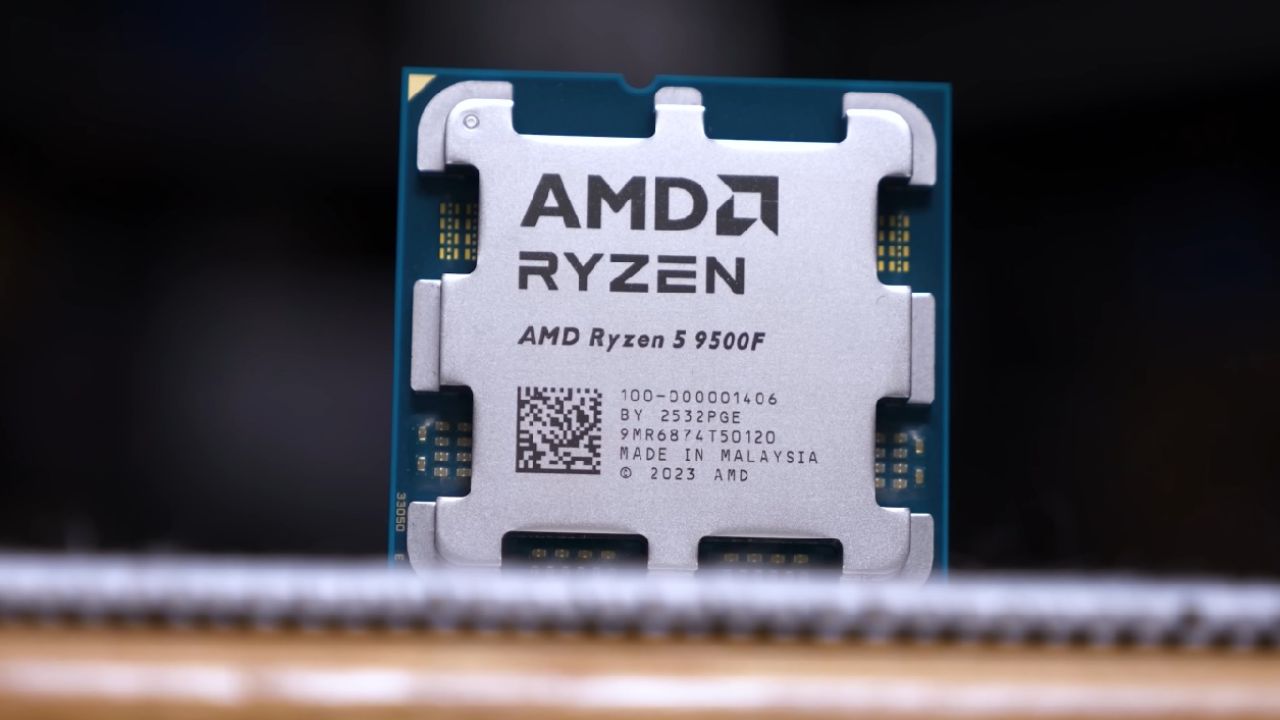
Why AMD is Still Expanding Zen 4 on AM5
At first glance, launching another Zen 4 processor this far into AM5's lifecycle may seem unusual. In reality, it makes strategic sense. The biggest challenge facing AM5 has never simply been CPU performance. Platform cost has been a major consideration, particularly for entry-level buyers moving from inexpensive AM4 systems.
The processor is only one component of the equation. DDR5 memory and an AM5 motherboard can quickly push overall platform cost upward. AMD can address that problem by filling more price points.
A Ryzen 5 7500 gives AMD another opportunity to make AM5 accessible without relying entirely on newer, more expensive architectures. Zen 4 remains capable enough for mainstream gaming and productivity, while AM5 provides the longer upgrade path that buyers expect from a modern platform.
This is also where the processor's integrated graphics become strategically useful. AMD can market the chip to buyers building incrementally rather than demanding a complete gaming system on day one.
Senior Editor, NoobFeed
Gaming Hardware Updates
No Data.