
AMD Ryzen 7 9850X3D Performance Expectations and Early Launch Indicators
Ryzen 7 9850X3D emerges with higher boost speeds aimed at enhancing gaming consistency and overall frame stability
Hardware by Shinji Okazaki on Dec 03, 2025
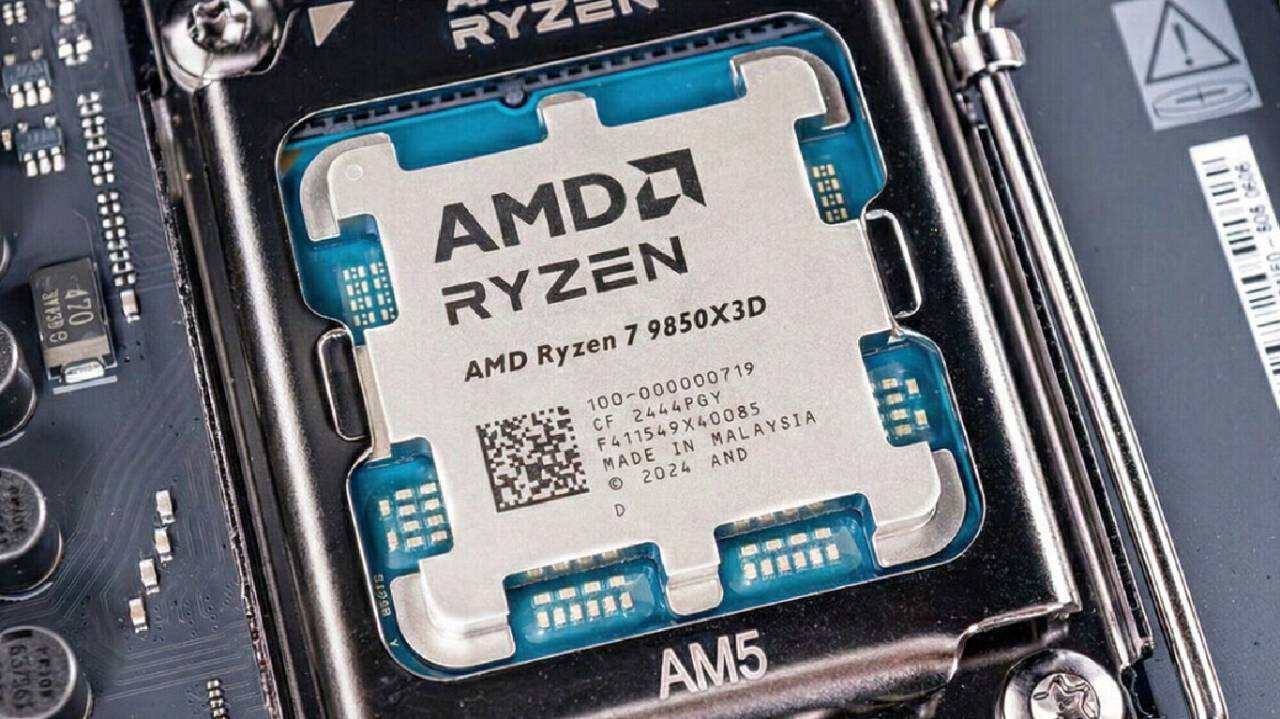
AMD's driver page now lists the Ryzen 7 9850X3D, a sign that the chip is nearly ready for distribution. Although an official announcement has not yet been made, the listing provides a preview of what will happen as CES 2026 approaches.
The SKUs align with what most attendees anticipated: AMD will display its new X3D CPUs and other desktop products.
Early Confirmation Through AMD's Driver Listings
The 9850X3D has been added to the drivers and downloads page on AMD's website. No specifications are provided, but this kind of look usually precedes an official debut.
CES is coming up soon, and AMD's timing suggests they have a plan for when to make announcements. There were no driver listings for a possible Ryzen 9 9950X3D2, suggesting the CPU will remain under wraps until CES.
Specifications and Architecture Direction
Ryzen 7 9800X3D platform has 8 cores, 16 threads, a base clock speed of 4.7GHz, a boost clock speed of 5.2GHz, a TDP of 120W, and 96MB of L3 cache.
This layered cache keeps game data close to the cores, which means the system doesn't have to rely on slower memory as much, and the GPU can keep working hard in games.
Ryzen 7 9850X3D has the same number of cores and threads and the same amount of cache. The boost clock, on the other hand, is slated to go up from 5.2GHz to 5.6GHz while the base clock stays at 4.7GHz and the TDP stays at 120W. The prolonged boost clock may affect thermals, but we still need to check for any big changes.
Expected Behaviour of Performance
The higher boost frequency is meant to close the gap between raw frequency and large-cache performance that has existed for a long time. Earlier X3D processors gave up clock speed for cache.
Still, the 9850X3D's 5.6GHz bump brings it closer to non-X3D CPUs in workloads that benefit from higher frequencies. Games like CS2 that need high clocks may do better without sacrificing the frame-time consistency that 3D V-Cache provides.
Early Geekbench tests of a 9800X3D manually overclocked to 5.6GHz suggest it performs up to 10% better than stock. An 8% increase in raw frequency can provide a 5–10% boost in CPU-intensive games. Even if the boost seems small, it matters more at the top of the performance stack.
If cost is not an issue, we do not recommend that 9800X3D owners upgrade, since personal tuning can get the same results. The 9850X3D is aimed at people considering buying anything new, or the 9800X3D, before it is expected to be replaced.
Possible Ryzen 9 9950X3D2 and Dual V-Cache CCD
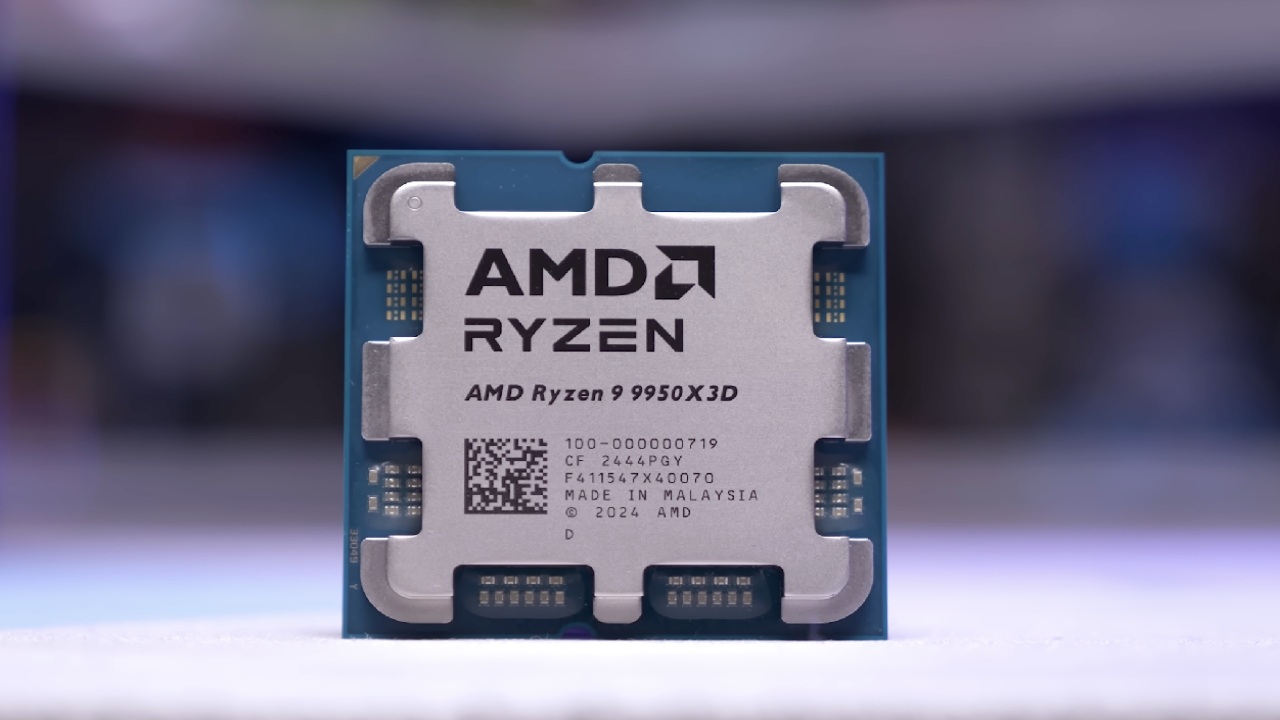
If you need more than 8 cores, talking about a new Ryzen 9 9950X3D2 offers a different perspective. Early reports say it has the same 16 cores and 32 threads as the 9950X3D, a base clock speed of 4.3GHz, and a boost speed of 5.6GHz rather than 5.7GHz. It is said that the TDP would go up from 170W to 200W to make room for more cache.
Previously, dual-CCD X3D CPUs had only one CCD with V-Cache. This meant that the OS and Xbox Game Bar had to prioritise the cached CCD for gaming. If both CCDs in the 9950X3D2 get V-Cache, the scheduling overhead could be removed. The total L3 cache may be up to 192 MB, and all cores can share it.
This method could increase 1% lows by 10–15% over the conventional 9950X3D and give 20–25% benefits in simulation-heavy workloads that scale across many threads. However, the thermal behaviour will need to be examined due to increased stacked memory on both dies.
Effects on Gaming and Workload
Average framerates are unlikely to rise much from the current high-end X3D chips, since most games use only 8 cores or fewer. Instead, gains are shown in consistency and lows, which lowers the scheduling lottery and raises the performance floor.
For simulation games that work well with several players, having two CCDs with V-Cache speeds up task completion by eliminating communication delays.
What to Expect from the Ryzen 9000G Series
We expect the Ryzen 9000G series, including a Ryzen 7 9700G, to emerge alongside the new X3D processors. These APUs are expected to offer RDNA3.5 graphics for AM5 desktop systems and may be the first integrated graphics capable of sustained 1080p gaming without a discrete GPU when given desktop-level power headroom.
The chips are also speculated to incorporate XDNA2 NPUs, boosting AI-centric capabilities across desktop platforms. Desktop NPUs are a big part of CES this year, as AI is becoming a major part of the industry.
Final Thoughts
AMD's presentation will be around three things: the Ryzen 7 9850X3D for high-end gaming, the Ryzen 9 9950X3D2 for all-around performance without scheduling issues, and the Ryzen 9000G series for small PCs with built-in graphics. The combination would position AMD with a broad desktop offering for the event.
We won't know for sure what the specs are until CES, but the information we do have points to these projected outcomes.
Also, check our other AMD articles below:
- AMD Ryzen 9 9950X3D Review: Setting The Standard For 2025 Gaming CPU
- AMD Ryzen 7 9800X3D Review: 3D V-Cache Goes God Mode with Stunning Gaming Performance
- AMD RX 9070 Performance Review: Thermals, Clocks, and Real-World FPS
- AMD Ryzen 5 7600 Review: Best Budget Gaming CPU of 2025?
- AMD Radeon RX 7800 XT Review: RDNA 3 Power For Midrange Gaming
- Sapphire NITRO+ AMD Radeon RX 9070 XT Review: The Ultimate 4K Gaming GPU
- AMD Ryzen 7 7800X3D: Delivers Gaming Performance Far Beyond Expectations
- AMD Ryzen 9 7900X Review: Powering the AM5 Era with DDR5 & PCIe 5.0
- Intel Core i9‑14900K vs. AMD Ryzen 7 7800X3D: Power Profiles & Gaming Benchmarks
Editor, NoobFeed
Gaming Hardware Updates
No Data.