
AMD Zen6 Support and New APU Redefine Gaming Hardware Direction
Ray tracing adoption faces renewed scrutiny as developers prioritize performance gains shown by Battlefield 6 and emerging AMD hardware advancements.
Hardware by Nahe Yan on Nov 25, 2025
Ray tracing has been a major talking point for several years, with many new games shipping with ray-traced or even path-traced effects enabled by default. Some titles now require hardware ray tracing support with no option to turn it off.
Yet a recent high-profile release challenges this trend and raises questions about the future of ray tracing adoption.
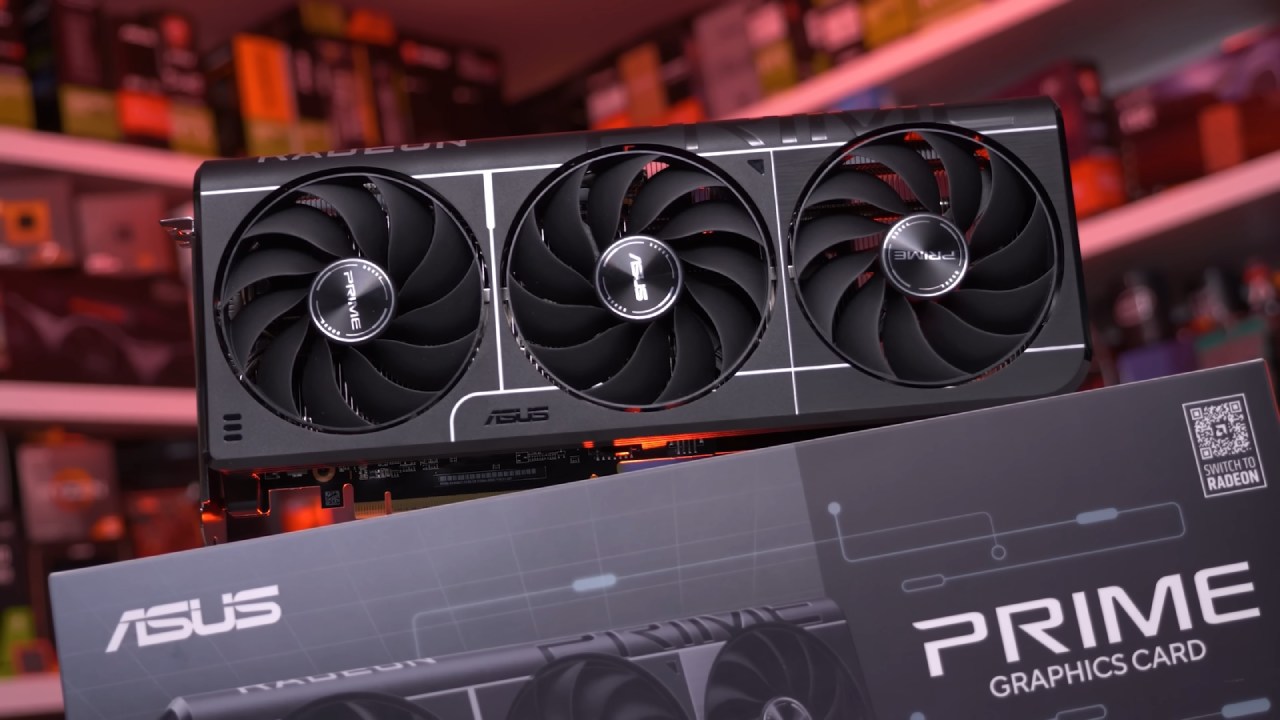
Battlefield 6 Drops Ray Tracing for Performance
The release of Battlefield 6 without ray tracing functionality is a noteworthy milestone. Turning it on is not an option. This is surprising because Battlefield 5 was one of the first games to show off real-time ray tracing at the time of Nvidia's RTX 20 launch. According to a technical director on Battlefield 6, the decision was intentional.
According to him, the team's goal was to concentrate solely on efficiency and optimization for standard users and default settings. Ray tracing features were not the priority; raw efficiency was.
This choice is reflected clearly in the benchmarks. At 1440p, the RX 9060 XT handles low, medium, high, ultra, and even the "overkill" preset at around 60 fps. The 1% drop in the overkill preset, but performance remains stable in ultra.
Even at 1080p high, the RTX 5060 Ti drops from 131 fps to 73 fps in its 1% lows, a bigger hit than cards with more than 8GB of VRAM.
Comparing Battlefield 6 to Borderlands 4
When comparing Battlefield 6 to another recent release in a similar genre, such as Borderlands 4, the advantage of leaving ray tracing out becomes clear. Borderlands 4 at 1080p "Badass" shows the RTX 4060 Ti 16GB averaging around 35.7 fps. In Battlefield 6 at 1080p overkill, the same card reaches 84fps, more than double.
While these two games are different, the comparison illustrates how performance-focused development without ray tracing can change the overall experience. The absence of ray-traced reflections in Battlefield 6 does not affect its reception, and the game has seen early success. This can motivate more developers to evaluate whether ray tracing is necessary instead of including it automatically.
Ray tracing is unlikely to disappear completely. Achieving future graphical detail will eventually require more capable hardware and more efficient ray tracing pipelines. Until that hardware performance gap narrows, ray tracing may not be the default choice for every new title. This is encouraging for anyone planning a GPU upgrade soon.
.jpg)
AM5 Gains Multi-Generation CPU Support
AMD is also making progress in platform longevity. AM5 is confirmed to support multiple CPU generations, similar to AM4. This is not just AMD's claim. There is documented evidence.
ASUS has officially confirmed Zen 6 CPU support in its marketing materials for its new AMD B850 motherboard, the AYW Gaming OC. ASRock has also confirmed Zen6 readiness in a motherboard showcase on a Chinese platform, labeling several boards as "Zen6 ready."
AMD Prepares an APU With More Cores Than RX 9070 XT
The chip is sized at 408mm², around 30% larger than current console APUs. Estimated TDP is 250–350W. The GPU is based on RDNA5 with 68 active compute units out of 70. This CU count exceeds the RX 9070 XT, and the architecture bump suggests higher performance.
There is at least 24 MB of L2 cache on the GPU. The CPU portion includes up to 3x Zen6 cores and 8x Zen6C cores, totaling 11 cores with 12MB L3 cache. Memory features a 192-bit bus with up to 48GB GDDR7. The NPU delivers up to 110 TOPS at 6W or 46 TOPS at 1.2W. The target launch window is around 2027.
If AMD maintains its history of releasing custom Xbox silicon to consumers in modified form, this APU architecture could eventually appear in the wider PC market.
.jpg)
Final Thoughts
Performance optimization is gaining attention over ray tracing, platform longevity continues on AM5, and integrated graphics hardware is advancing significantly. As these trends evolve, there is room for both high-performance rasterization and for eventual advances in ray tracing once hardware becomes more capable.
Also, check our other AMD articles:
- AMD Ryzen 9 9950X3D Review: Setting The Standard For 2025 Gaming CPU
- AMD Ryzen 7 9800X3D Review: 3D V-Cache Goes God Mode with Stunning Gaming Performance
- AMD RX 9070 Performance Review: Thermals, Clocks, and Real-World FPS
- AMD Ryzen 5 7600 Review: Best Budget Gaming CPU of 2025?
- AMD Radeon RX 7800 XT Review: RDNA 3 Power For Midrange Gaming
- Sapphire NITRO+ AMD Radeon RX 9070 XT Review: The Ultimate 4K Gaming GPU
- AMD Ryzen 7 7800X3D: Delivers Gaming Performance Far Beyond Expectations
- AMD Ryzen 9 7900X Review: Powering the AM5 Era with DDR5 & PCIe 5.0
- Intel Core i9‑14900K vs. AMD Ryzen 7 7800X3D: Power Profiles & Gaming Benchmarks
Editor, NoobFeed
Gaming Hardware Updates
No Data.