
Intel Arc Pro B70 Controversy and the Decline of Affordable Gaming GPUs in 2026
Intel repositions expected gaming GPUs into professional segments, increasing prices and reducing midrange options for buyers.
Hardware by Nahe Yan on Apr 13, 2026
Technology keeps moving forward quickly, but the gains are still not evenly distributed. There are still hardware shortages, prices are still high, and product direction increasingly favors specialist and premium segments rather than making them more accessible to the general public.
Companies say they are growing and making new alliances, but regular customers still have problems with pricing and availability.
Frustrations in the Market and Hardware Direction
People believe that the one-eyed guy is king in the country of the blind. But in the world of tech news, the tech tree has moved on from that point a long time ago, so those advantages no longer matter. Technology is still interesting and annoying because it moves so quickly and often helps people who are already in strong positions. Even if things are looking better for firms like Intel and more PCs are shipped worldwide in the first quarter of 2026, true progress in lowering retail pricing remains constrained.
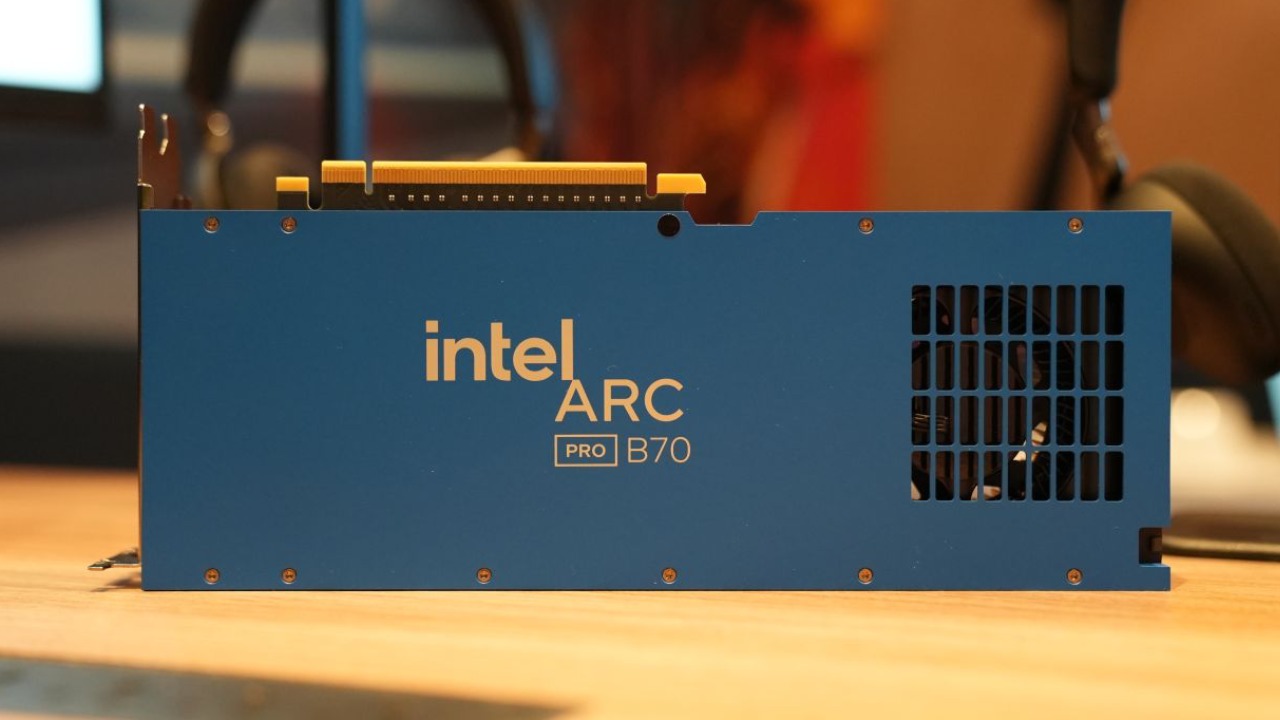
Future PC hardware plans that formerly looked good are now often scrapped, put off indefinitely, or moved to AI-focused or professional models. Intel's Arc Pro B70 is an example of an alternative that often works just as well but costs a lot more. Because of this, PC gamers' spirits are still low.
Intel Arc Pro B70 and Where It Fits in the Market
A typical product launch involves many reviewers, clear communication, and a well-planned marketing plan. On the other hand, Intel's Arc Pro B70 launched quietly, with few reviews and little advertising. The card features the larger BMG G31 die, which many people thought would appear in a more powerful Arc B770 edition, as has happened with other products in the past.
Instead, the predicted gaming GPU seems to have been turned into a professional offering with more VRAM and a price tag of about $1000. Later releases of gaming drivers made it impossible for early reviews to focus on gaming performance. This change takes a possible $300–$400 GPU alternative with more VRAM off the market.
It used to be easy to explain why GPUs that cost more were worth it because they could be used for both gaming and business. Now, people would rather get workstation GPUs that are more expensive but can also play games. The multi-GPU "Battle Matrix" arrangement is an example of this change. Still, testing showed that it was only partially compatible and used up to 720W of power.
Intel's Recovery and Partnerships with Other Companies
Even though people have said bad things about it, Intel's finances have improved, and its market value is now above $300 billion, the highest it's been in 25 years. Partnerships have helped drive this growth, including deals to provide Xeon platforms and infrastructure processing units for cloud systems, as well as working together on large manufacturing projects.
These changes show that the corporate and infrastructure industries are getting stronger, even as consumer products face significant criticism.
Growth in PC Shipments and Market Conditions
Industry data shows that PC shipments worldwide increased by 2.5% in the first quarter of 2026. Some markets saw growth, while others saw declines, but overall, growth increased. The growth was driven by the expectation that component prices would rise, operating systems would change, and new products would be introduced.
Even though the rise is still a drop from the previous year, it shows that general market conditions remain limited.
New Steam Frame Rate Estimator
A new Steam update adds a frame rate estimator that helps users better judge how well games run on specific hardware. Right now, consumers depend on outside benchmarks and comparisons that don't always apply to their own systems.
The new approach lets users choose a game and hardware setup, and then uses data from all users to make an educated guess about how well the game will run. If data collection remains anonymous, this method could yield more reliable, scalable performance insights. The feature is still in development and only works with SteamOS devices. Still, it could be made available on more platforms in the future.
Utility Software Can Be a Security Risk
A security issue affected the CPU-Z and HWMonitor websites, causing download URLs to be briefly redirected to files containing trojans. The problem was fixed, and the official installation packages stayed safe. But everyone who visited the site during the affected time should conduct antivirus and malware scans.
It's also vital to distinguish HWMonitor from other tools with similar names, since people often get them confused.
Changes to the Power Connector
The 12V2x6 connector is still a reliability issue; manufacturers are working on fixes. ASUS produced the ROG Equalizer, an extension cable that can handle more current—17A per cable instead of 9.2A. This design lowers the temperature when the load is imbalanced.
The solution comes with a high-end power supply and works with many brands, but to get the most out of it, you may need to integrate certain hardware and software.
Risks to Hardware and Problems with Repairs
A case with a high-end GPU shows how dangerous it can be to change hardware. An RTX 5090 Lightning worth more than $5000 was broken while practicing soldering with little 0402 resistors. The attempt broke the device since the pads were damaged.
It's useful to understand how to solder. Still, there are safer and cheaper materials that are easy to find for practice. Efforts to fix things are still going on, and some progress has been made.
Creative Projects and Community Builds
People in the community keep coming up with new, creative PC builds. One example is a system that uses a BC250 board and the same APU as a current console. It is built into a custom chassis made mostly of LEGO parts. The design has parts that can be changed, such as a removable keyboard and display unit.
These projects demonstrate several ways to construct and customize systems beyond standard hardware setups.
Final Thoughts
The current situation shows a difference between what technology can do and how easy it is for users to get it. While the enterprise, AI, and infrastructure sectors keep improving, consumer gear is getting more expensive and offers fewer balanced choices. Some progress has been made through better tools, greater security knowledge, and more innovation in the community. However, larger improvements are still needed to address affordability and availability issues.
Also, check our other hardware articles:
- AMD Ryzen 9 9950X3D Review: Setting The Standard For 2025 Gaming CPU
- Amazon Luna 2025 Review: Is Prime Gaming's Cloud Service Your Go-To For Casual Fun?
- AMD RX 9070 XT Review: AMD's RDNA 4 Champion for 1440p Gaming
- GeForce Now Ultimate: Ditching Your Gaming PC For Cloud RTX 4080 Power?
- NVIDIA GeForce RTX 5080 Review (2025): Still A 4K Gaming Powerhouse?
- Intel Core Ultra 9 285K Review And Performance Breakdown (2025)
- AMD Ryzen 7 9800X3D Review: 3D V-Cache Goes God Mode with Stunning Gaming Performance
- Intel Core Ultra 9 285K vs AMD Ryzen 7 9800X3D: In-Depth Gaming Performance and Benchmark Comparison
- NVIDIA GeForce RTX 5080 Super Performance In Cyberpunk 2077: Path Tracing & DLSS 4.0 Tested
- AMD Radeon RX 9070 XT In Cyberpunk 2077: Ray Tracing & FSR 4.0 Tested
- Intel Arc B580 Review: The $250 GPU Revolutionizing 1440p Gaming
- Intel Arc B570 Vs. B580: Value, Specs, And Real-World Gaming Performance
- RTX 5090 Laptop Vs. M4 Max MacBook Pro: Ultimate Raw Performance Vs. Battery Endurance
- Intel Arc b580 Vs. RTX 4060: Game Performance And Value Analysis
- RTX5090 Hell Is Us Demo 4K Ultra Benchmark: DLSS Vs. Native Performance Guide
- NVIDIA RTX 5070 Review: Mid-Range Muscle or Marketing Hype?
- Nintendo Switch 2 Review: Handheld Performance, Features & Value Breakdown
- RTX 5070 Ti Review: Performance, Thermals & Power Efficiency Tested
- Samsung Odyssey OLED G81SF Review 2025: Ultimate 32-Inch QD-OLED Gaming Monitor
- AMD RX 9070 Performance Review: Thermals, Clocks, and Real-World FPS
- AMD Ryzen 5 7600 Review: Best Budget Gaming CPU of 2025?
- AMD Radeon RX 7800 XT Review: RDNA 3 Power For Midrange Gaming
- Asus ROG RTX 5090 Astral OC Vs. Founders Edition: The 4K Gaming Benchmark
Editor, NoobFeed
Gaming Hardware Updates
No Data.