
Zen 6 Olympic Ridge and Nova Lake Expected Performance and Power Details
Zen 6 architectural changes and Nova Lake dual-tile ambitions redefine expectations for multi-threaded desktop workloads.
Hardware by Tanvir Kabbo on Feb 24, 2026
According to significant leaks about AMD's upcoming desktop generation, the Ryzen 10000 series, code-named Olympic Ridge, may raise the bar for performance. These processors are based on the Zen 6 and are said to have higher core densities per CCD, more cache, and significant IPC increases.
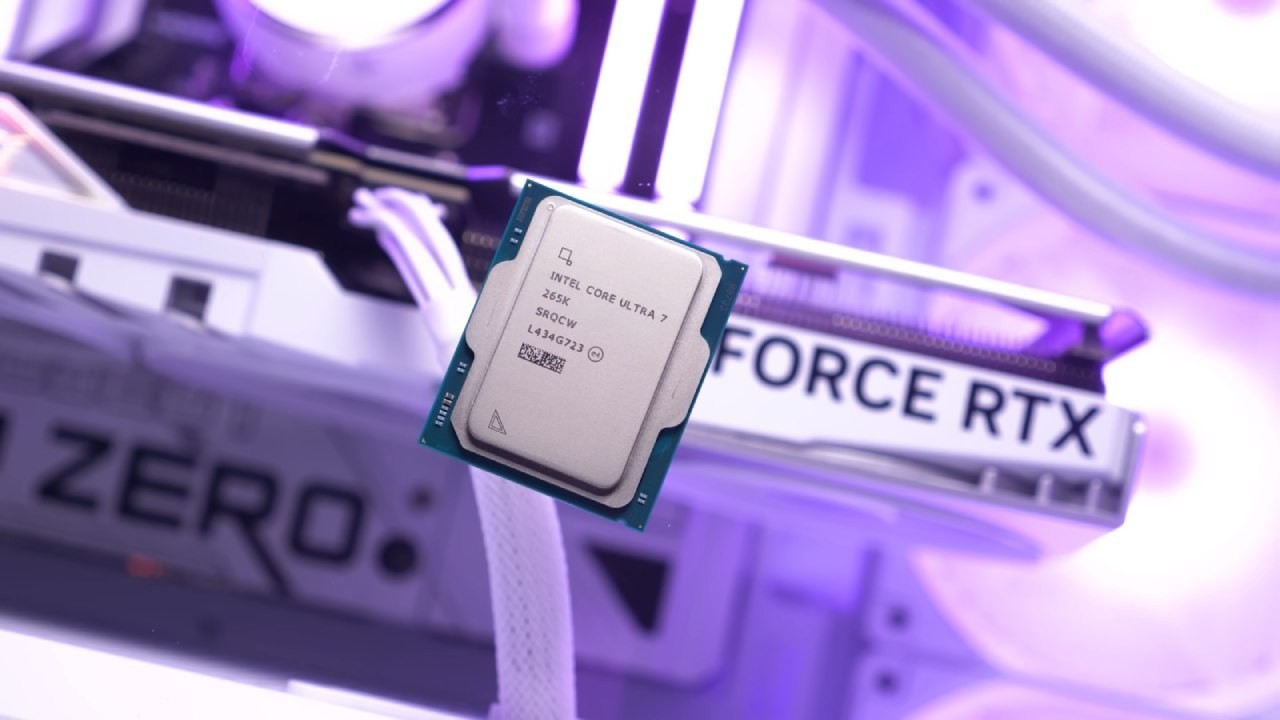
In the meantime, Intel's Nova Lake is working on a high-core strategy that might raise desktop power envelopes to previously unheard-of levels.
.jpg)
A Wider Zen 6 Architecture
According to reports, Zen 6 will include 12 cores per CCD instead of 8 cores, allowing dual CCD architectures to support up to 24 cores and 48 threads. In order to ensure entry-level accessibility, lower-tier variations will continue to offer 6-core and 8-core alternatives.
For many tasks, a 6-core CPU is still more than sufficient. In particular, double-digit cores are not always necessary for gaming performance. However, breaking down to 6 cores suggests a significant amount of disabled silicon from a yield standpoint, which presents intriguing manufacturing issues.
The sweet spot for you as a gamer or enthusiast may be between 10 and 12cores, which successfully strikes a balance between cost and functionality.
Clock Realities and Cache Scaling
According to rumors, each CCD has 48MB of L3 cache, which is 50% higher than the previous iteration. 96MB per CCD could be provided by X3D models. Dual-layer V-Cache has been proposed because of its cost and thermals; its viability for the average PC is still questionable.
Under typical circumstances, frequency expectations are below 6 GHz, with PBO potentially boosting to 6.3 GHz in workloads requiring little threading. Consistent 7 GHz operation under normal cooling conditions is doubtful, while higher frequencies might be achievable on extraordinary silicon. Throughput is frequently prioritized over excessive clock speed in wider systems.
IPC increases are projected to be between 10% and 15%; however, memory tuning and IO die enhancements will affect gaming performance.
Process Node and Compatibility
It is anticipated that Olympic Ridge will use TSMC 2nm for computation dies and perhaps 3nm for the IO die. In dual-channel mode, it supports DDR5 at up to 8000MTS while maintaining the AM5 socket. Assuming BIOS support is offered, that guarantees platform longevity for existing AM5 customers.
The timing of the launch is still flexible. Although it was generally expected to happen in late 2026, more recent sources suggest that it might happen in 2027. If this is the case, AMD might reorganize its strategy or give data center allocations priority in reaction to changes in the competition.
Intel’s Dual-Tile Experiment
Nova Lake presents an alternative way of thinking. A shift into workstation-class terrain is suggested by the alleged 52-core dual-tile configuration. According to internal discussions, it is not a flagship gaming CPU, but rather a workstation-light processor.
For the dual-tile SKU, power numbers for PL4 have appeared at about 854W. This indicates significant electrical demands, but it does not imply that game loads would reach such extremes. To get optimal performance, high-end motherboards from the 990 series with improved VRM architecture and up to 48 PCIe lanes would be needed.
Additionally, there are hints that Intel may offer its products in phases, starting with single-tile models and moving on to the 52-core model in 2027.
Expectations for Single-Thread vs. Multi-Thread
According to current forecasts, Zen 6 and Nova Lake appear to be in a close single-threaded competition. Workloads with several threads are more complicated. When growing beyond 24 or 52 cores, dual-channel bandwidth can become constrictive, even with 8000MTS DDR5.
In highly parallel applications where scaling efficiency is limited by memory bandwidth and IO throughput, you could observe diminishing returns.
Competitive Outlook
Rather than being small improvements, both architectures are major overhauls. While Nova Lake aggressively scales cores with greater power ceilings, Zen 6 increases cache and execution resources.
This increasing competitiveness is advantageous to us as enthusiasts. The upcoming CPU generation promises significant performance improvements across the board, regardless of your priorities—gaming, multimedia production, or intensive multi-threaded productivity.
Also, check our other hardware articles:
- AMD Ryzen 9 9950X3D Review: Setting The Standard For 2025 Gaming CPU
- Amazon Luna 2025 Review: Is Prime Gaming's Cloud Service Your Go-To For Casual Fun?
- AMD RX 9070 XT Review: AMD's RDNA 4 Champion for 1440p Gaming
- GeForce Now Ultimate: Ditching Your Gaming PC For Cloud RTX 4080 Power?
- NVIDIA GeForce RTX 5080 Review (2025): Still A 4K Gaming Powerhouse?
- Intel Core Ultra 9 285K Review And Performance Breakdown (2025)
- AMD Ryzen 7 9800X3D Review: 3D V-Cache Goes God Mode with Stunning Gaming Performance
- Intel Core Ultra 9 285K vs AMD Ryzen 7 9800X3D: In-Depth Gaming Performance and Benchmark Comparison
- NVIDIA GeForce RTX 5080 Super Performance In Cyberpunk 2077: Path Tracing & DLSS 4.0 Tested
- AMD Radeon RX 9070 XT In Cyberpunk 2077: Ray Tracing & FSR 4.0 Tested
- Intel Arc B580 Review: The $250 GPU Revolutionizing 1440p Gaming
- Intel Arc B570 Vs. B580: Value, Specs, And Real-World Gaming Performance
- RTX 5090 Laptop Vs. M4 Max MacBook Pro: Ultimate Raw Performance Vs. Battery Endurance
- Intel Arc b580 Vs. RTX 4060: Game Performance And Value Analysis
- RTX5090 Hell Is Us Demo 4K Ultra Benchmark: DLSS Vs. Native Performance Guide
- NVIDIA RTX 5070 Review: Mid-Range Muscle or Marketing Hype?
- Nintendo Switch 2 Review: Handheld Performance, Features & Value Breakdown
- RTX 5070 Ti Review: Performance, Thermals & Power Efficiency Tested
- Samsung Odyssey OLED G81SF Review 2025: Ultimate 32-Inch QD-OLED Gaming Monitor
- AMD RX 9070 Performance Review: Thermals, Clocks, and Real-World FPS
- AMD Ryzen 5 7600 Review: Best Budget Gaming CPU of 2025?
- AMD Radeon RX 7800 XT Review: RDNA 3 Power For Midrange Gaming
- Asus ROG RTX 5090 Astral OC Vs. Founders Edition: The 4K Gaming Benchmark
Senior Editor, NoobFeed
Gaming Hardware Updates
No Data.