
Chronicles: Medieval Shows Off Massive New Look, and You Might Want to Keep It on Your Radar
The upcoming medieval sandbox is shaping up around deep systems, large-scale battles, and a world that keeps moving whether you’re ready or not.
News by Tahmid Mahi on Apr 30, 2026
You’ve just seen a fresh and pretty extensive look at Chronicles Medieval, complete with new gameplay details and clips that give you a better sense of what the game is trying to be. It’s the kind of project that can easily slip under your radar if you are not actively watching its development. The game has been in heavy production for a while, which is likely why it hasn’t stayed in the spotlight for most people.
Even so, what’s starting to come together looks like something you might want to keep on your list. It does not have the loud marketing push or mainstream attention that big releases usually get. Instead, it’s slowly building an identity through consistent updates and systems that feel more thought-out than random.
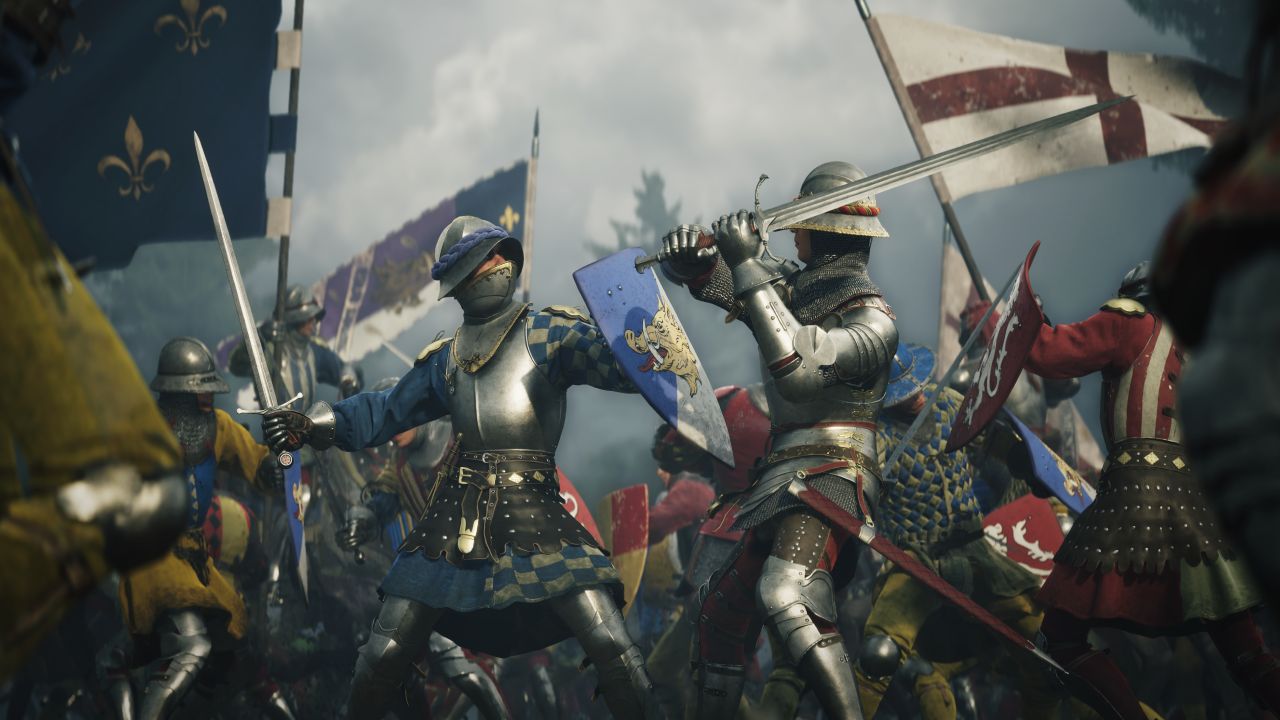
What stands out early is that it does not look like it’s trying to copy whatever is popular right now. You’re not seeing it chase trends or mimic other successful games. Instead, it’s aiming to build a full medieval world where multiple systems exist at the same time, and everything interacts in meaningful ways.
You’re talking about war, politics, trade, social standing, and survival all overlapping in one connected environment.
The game is set in Europe during the 14th and 15th centuries, and that choice plays a big role in how the world feels. You’re stepping into a period defined by constant conflict, unstable kingdoms, shifting borders, and rival nobles competing for control. It is not meant to feel peaceful or predictable at any point.
Instead, you’re in a world where armies move often, alliances can change overnight, and entire regions can shift in power quickly. Even things like disease and trade routes have a direct impact on how stable a region is. You are not entering a safe fantasy version of history; you are stepping into a harsh and unstable era.
The developers are also very clear about your place in that world. You are not treated as some chosen figure or central hero that everything revolves around. You’re just one person inside a much larger system that continues to function whether you are involved or not.
That approach matters because it changes how success feels. You are not handed progress or importance. Instead, you build it through your actions, and the world reacts to what you do in real time. It makes achievements feel more earned rather than expected.
A big part of that comes from how the world systems are designed to connect with one another. You’re not dealing with isolated mechanics. Instead, everything feeds into something else. If attackers target caravans, supply routes suffer. If supply routes suffer, towns begin to experience shortages.
Once shortages appear, prices increase, and that can lead to unrest spreading through regions. If unrest grows too far, leadership weakens and stability drops. What you are essentially looking at is a chain reaction, where a small action can have consequences much later.
This way, you can also influence the world in different ways, depending on how you play.
You could be guarding trade routes and growing rich through stability. Or you could actively disrupt regions and create chaos that shifts political power. The outcomes are not fixed, which gives the sandbox a lot of flexibility.
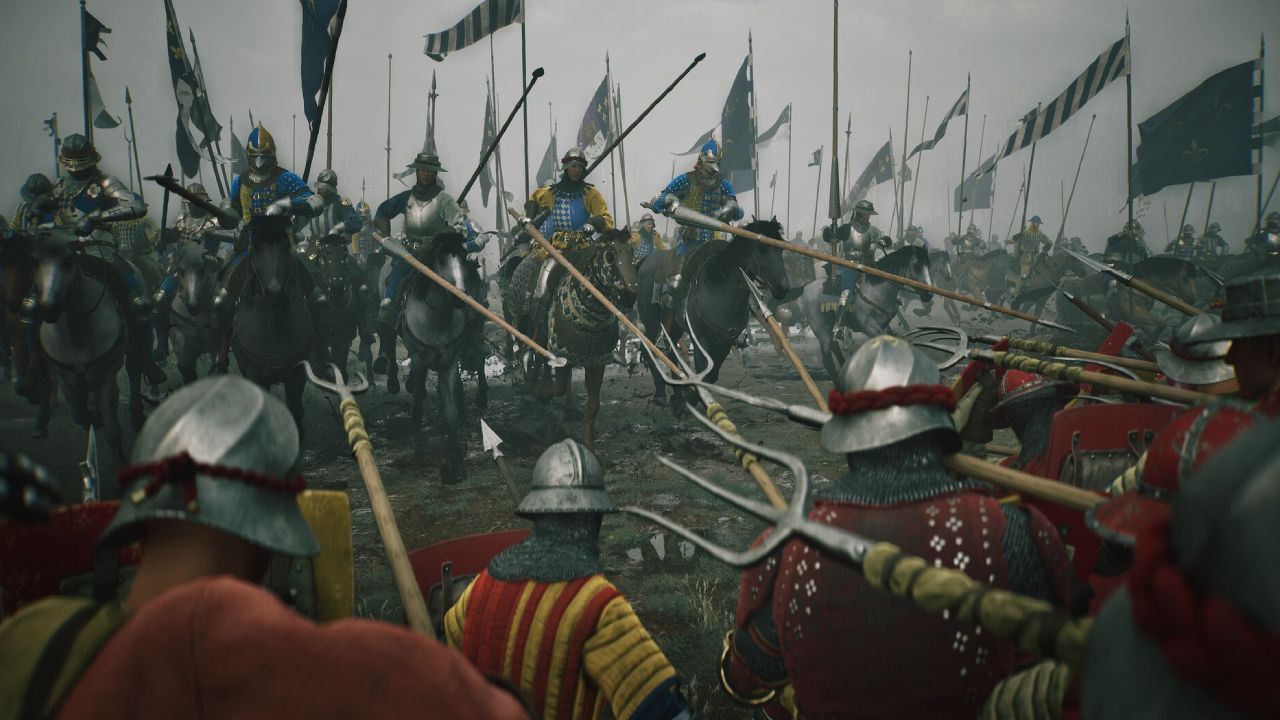
Combat and warfare are clearly another major focus, and they are designed to feel large, tactical, and grounded. You’re not just throwing units at each other and watching numbers decide the outcome. Positioning, timing, and terrain all matter in how battles play out.
A smaller, more disciplined army can still defeat a larger one if used correctly. That kind of design forces you to think more carefully, to not just rely on size. It also makes the battles less predictable and more situational.
While managing formations and giving orders, you are also directly involved in combat. You might be dueling enemies, holding a position, or trying to shift morale through your actions on the battlefield. That mix of leadership and direct combat is one of the game’s most distinctive ideas.
The game is also leaning into the messy reality of medieval warfare rather than polishing it into something clean or controlled. You are supposed to feel the chaos of it all, from broken formations and muddy terrain to sudden panic and collapsing lines.
Battles are meant to feel messy and tense, not structured and tidy. This includes those times when things go wrong quickly and you have to react instead of planning perfectly. If it works as it's supposed to, it could make fights feel memorable instead of routine.
Another big system is time and legacy.
Characters don’t stay static forever. They grow up, grow old, and go through the whole cycle, and the world keeps on turning. What you build can be lost or inherited depending on what happens after your time.
That adds weight to your decisions because you are not just developing a single character for endless progression. You are building something that continues beyond them or collapses depending on how stable your foundation is.
There is also a fog-of-war system that plays a big role in how you interact with the world. You do not start with full knowledge of everything happening across the map. There is so much to find out until you go there yourself.
Even places you’ve been to before can change over time, so your old information may not be accurate anymore. A safe road could turn dangerous, or a weak settlement could become fortified. That forces you to constantly update what you know.
On top of that, the game uses a hybrid exploration mechanic. Instead of a seamless open world, you navigate a top-down overworld map to reach different regions and locations. So this gives you an idea of scale and movement across medieval Europe.
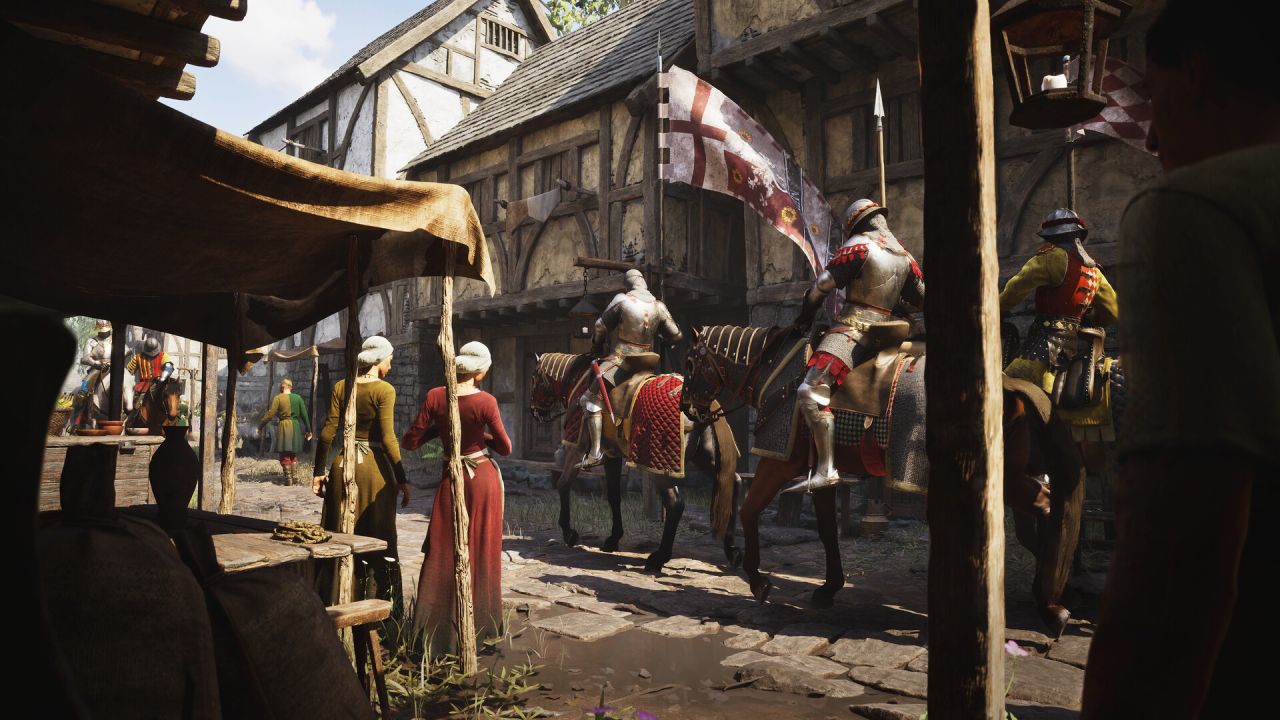
When you arrive at specific locations like cities, battlefields, or missions, the game shifts into detailed third-person gameplay. That transition allows it to maintain both large-scale strategy and close-up immersion within a single system.
There is also no fixed linear campaign guiding you through the same story every time. Instead, you choose historical chapters, such as the Hundred Years’ War, and build your own path through that setting. Your experience depends on the choices you make.
That means you can take very different roles depending on how you play.
You might climb through political structures, become a mercenary, or even reshape regions as a warlord. Each run can unfold in a different direction. Your choices and alliances can completely change how the story and world evolve.
These playthroughs can last up to around 35 in-game years, which gives enough time for long-term progression and change. Over time, characters age and retire, and the game eventually presents you with a summary of the legacy you left behind.
You also gain perk points to help you further customize your build, such as diplomacy, leadership, and social influence. That means progression is not just about combat strength but about how your character develops in the world.
Before battles begin, you also take time to set tactics, formations, and orders. Once combat starts, you jump directly into the action while still managing your troops in real time. It creates a constant balance between planning and reacting.
On the co-op side, the game launches with support for up to 4 players in custom battles during early access. The long-term plan includes full co-op campaign support, which could make group play a major part of the experience.
Mod support is also being planned seriously rather than treated as a side feature. The developers want to give creators tools to expand and shape the game over time, which could help keep it active long after launch.
Still, the scope here is massive, and that comes with risk. The game is trying to combine world simulation, tactical combat, third-person action, economy systems, politics, co-op, and modding all in one package. That level of ambition is not easy to achieve.
A lot will depend on how stable the final systems are, how smart the AI behaves, and how satisfying the combat feels in practice. For now, though, Chronicles Medieval is shaping up as one of those projects that could either surprise people in a big way or struggle under its own ambition.
Editor, NoobFeed
Related News
No Data.