
Inside Crossfire's New Approach to Third-Person Combat
The independent studio behind this five-year passion project is throwing out the old rulebook.
News by Adeela Tas on Jun 28, 2026
That's No Moon has been at it for five years now, and what they're building with Crossfire is unlike anything you've seen in a third-person shooter. Five years of not just building Crossfire, but building a team and an entire company from the ground up to make that game possible. And when you hear the people behind it talk about what they've created, you start to understand why it's taken that long.
Being an independent studio means that That's No Moon doesn't have decades of legacy technology weighing it down. No 25-year-old tech stack collecting dust in the background. Everything has been purpose-built for Crossfire, and that freedom has turned out to be one of the studio's biggest advantages.
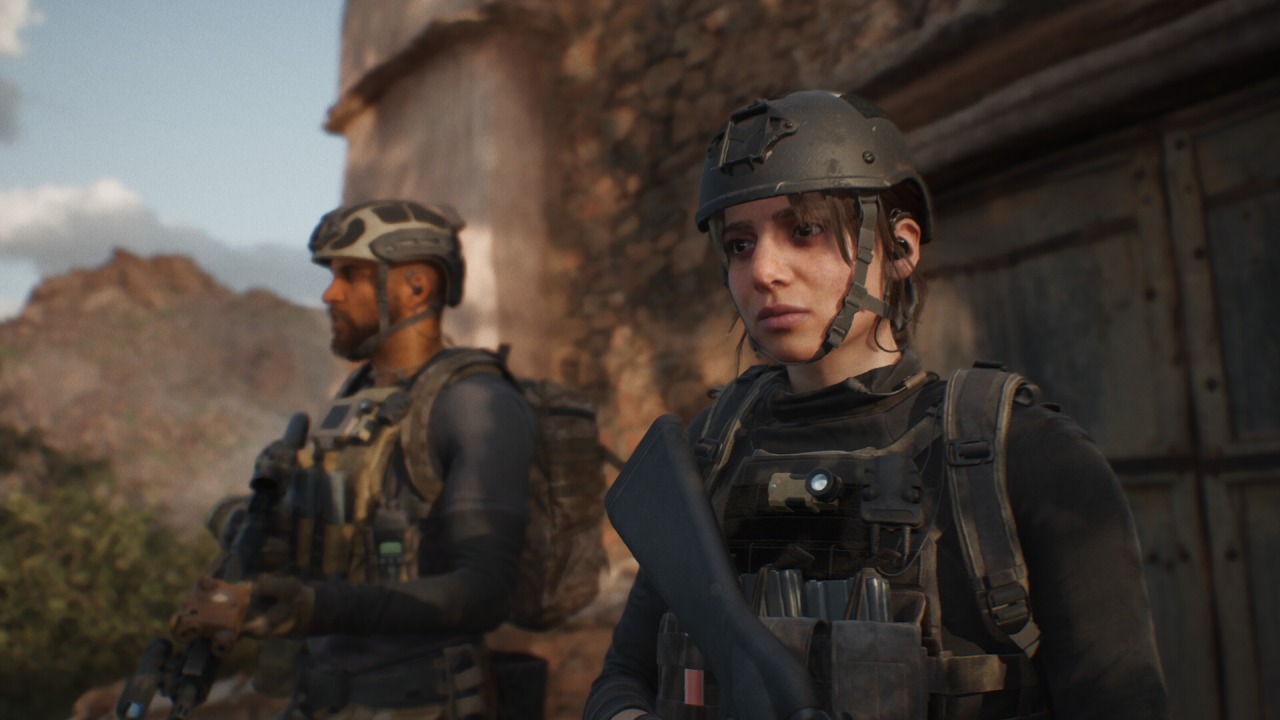
Where bigger, more established studios might hesitate to take risks because they've got too much brand equity or existing technology to protect, That's No Moon came in with nothing to lose and everything to prove. Their mindset from day one was simple: make a splash, innovate, and do something nobody else has done.
It's supposed to feel like one seamless whole, not a story stitched onto a game or a game awkwardly wrapped around a plot.
The North Star for That's No Moon when it comes to making Crossfire is creating an experience where the game design and the narrative are so deeply connected that you, as the player, can't tell where one ends and the other begins. That philosophy traces back to the creative director's earliest days in the industry. Starting out as a compositor making his own films, he was always chasing one thing: immersion.
He remembers standing under a street lamp at four in the morning after a long shift, staring at the shadows on the ground, the way the light bled into a penumbra, and wishing games could capture that kind of beauty. That feeling never left him. Art, whether you go back to Renaissance painters or modern game developers, has always been about the same thing: how do you capture light, and how do you make someone feel something?
That obsession is exactly why That's No Moon keeps doing things differently with Crossfire. The question driving every decision is how to give you, the player, an experience that feels genuinely real and genuinely new. And now, for the first time, the technology is actually there to make that happen. Realistic human biomechanics. Arbitrarily complex organic geometry.
The kind of fidelity in character rendering that actually changes how writers can tell stories. With Unreal Engine pushing what's visually possible, the writing team at That's No Moon says they can now deal in nuance, a glance, an eye dart, a subtle shift in expression, instead of having to spell everything out in dialogue. The technology isn't just serving the gameplay. It's actively making the storytelling sharper.
Crossfire follows a buddy-caper setup.
You're playing as Layla Qassem, a somewhat jaded character who finds herself stuck with a partner she didn't ask for and doesn't particularly like. The world forces them together, and what you get to watch and be part of is two people who are better together than apart, even when they're at each other's throats. It's a classic story about overcoming differences to survive, and That's No Moon knows that.
They're not pretending it's something it's not. The idea of "same but different" is something the studio genuinely believes in. Take a genre you love, in this case the thriller, and do something fresh inside it without abandoning what makes it work. The tagline says it all: fight together or die alone.
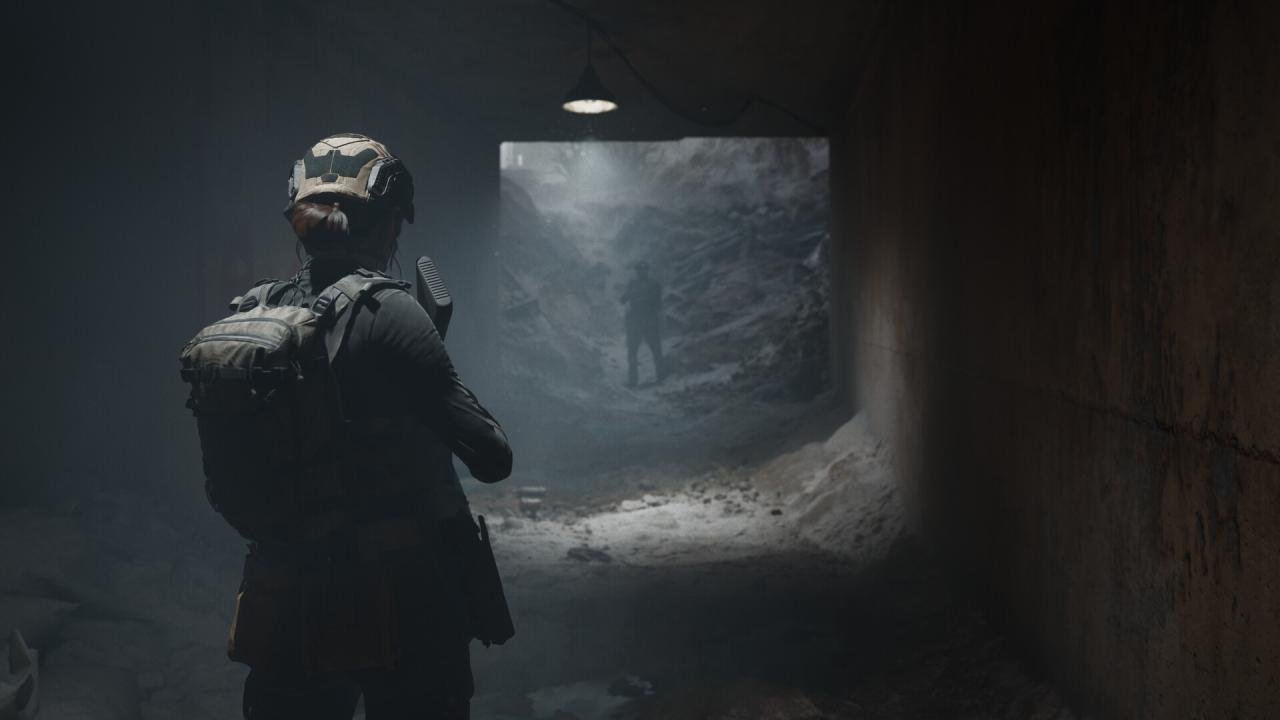
On the gameplay side, Crossfire is doing something that sounds simple but is technically one of the hardest problems the studio That's No Moon has ever had to solve. Traditional third-person cover shooters operate on a binary: you're either in cover or you're out of cover. You snap to an object, you stick to it, and the game plays a pre-baked animation to get you in and out. Everything is designed around cover objects being the same height, so the system never breaks.
That's No Moon threw that out entirely. With what they call adaptive cover, your character in Crossfire automatically adjusts their stance based on where enemies are, their elevation, and what's in your environment, without you ever needing to touch the cover object. The entire space becomes analog. Everything is covered. There is no binary state.
What that means for you as a player is that Crossfire becomes significantly more cerebral.
You have to actually read your environment. You have to think about enemy positioning, elevation, and how objects in the space relate to your line of sight. It's closer to how you'd actually think if you were really in that situation. On top of that, That's No Moon built something called aim obstacle avoidance into Crossfire.
When you pull the trigger and aim down sights, your character automatically repositions around whatever object is in front of you. In a traditional shooter, developers know exactly what animation to play because the geometry is standardized. That's No Moon doesn't have that luxury because its environments are detailed and entirely analog.
So instead, when you aim your gun, Crossfire runs an Environmental Query System that projects a grid of traces forward into the space, figures out where obstacles are relative to your reticle, pulls the right pose from a motion-matching database to clear your muzzle, and adjusts the camera so your crosshair stays exactly where it needs to be.
All you did was pull ADS. The goal, and the thing the team is most proud of, is that when all of this is working the way it should, you won't notice any of it. You'll just think that's how games work. That invisibility is the point. Crossfire also has a grounded science fiction element baked into it, and That's No Moon is intentional about the fact that the technology in the world of the game is based on real science that exists right now.
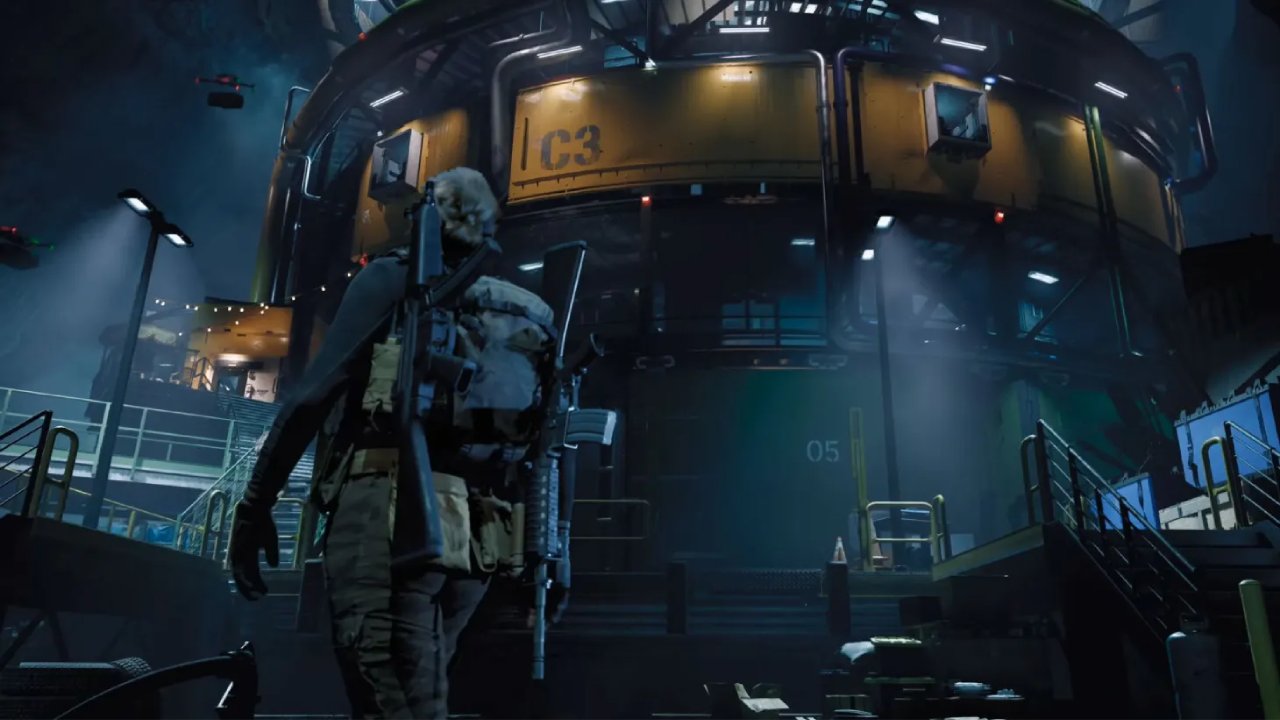
That choice isn't accidental.
It keeps you grounded in the story and in the stakes. It doesn't feel like something the writers made up because, essentially, they didn't. That's No Moon is a new independent studio that had to take risks, and they'll be the first to tell you that's what energizes them. The creative leads came from environments where pitching new technology-driven ideas was usually met with the same answer: too much money, too much time, too much risk.
As an independent studio with everything to prove and nothing protecting the status quo, they finally have the freedom to just do it. These games take years to make now. Three, five, seven years for a project. That means over the course of a career, you only get so many shots.
That's No Moon is making sure everyone of theirs counts with Crossfire, not just by making a good game, but by making a game that shows the rest of the industry something new is possible. The team is also working with an established IP, but they approached Crossfire from day one as if it were entirely their own.
They want to be good stewards of what came before while making something that genuinely reflects how they see the world, full of gray areas, flawed people, and characters who hold different views without one of them being a cartoon villain. That's the kind of game That's No Moon is building. One where the story and the design are inseparable, the technology is invisible, and Crossfire feels like nothing you've played before.
Editor, NoobFeed
Related News
No Data.