
Halo 7 Could Ditch Unreal Engine as Activision Takes Control of the Franchise
Activision's growing influence could reshape Halo's development, technology, and release strategy, but the biggest challenge will be preserving the franchise's identity while charting a new direction.
News by Maisie Scott on Nov 29, 2026
With Halo moving under Activision's management, the next mainline entry could take a completely different direction, potentially adopting Call of Duty's development technology and production pipeline. What does this mean for the future of Halo? Well, with the franchise under Activision, Halo's future is heading in a different direction. So what should players expect from the next mainline entry, Halo 7?
Halo could also be part of a much larger development structure that's been making Call of Duty games for decades, with Activision now running the franchise. This also begs the question of whether the series will retain its identity or embrace some of the design philosophies that have defined Activision's military shooter franchise.

The situation is a little different, though, from what you might think at first.
As XBOX's Matt Booty explained, Activision isn't absorbing the Halo Studios brand; it's handing the Halo franchise over to the publisher. According to reports, Halo Studios has been reduced to a smaller team that will support the franchise, rather than develop the next major title.
Activision has plenty of studios with Call of Duty experience, so it has many developers it could bring in to work on Halo. Infinity Ward is currently leading Call of Duty: Modern Warfare 4, the latest in the series the studio started with the original Modern Warfare.
Treyarch still handles the Black Ops games, the latest of which is Black Ops 7, and Sledgehammer Games has co-developed several titles and reportedly leads a new Call of Duty game for 2027. Raven Software is another longtime support studio that works on Warzone and helps develop Call of Duty campaigns. Beenox handles much of the PC-focused support work and is reportedly co-developing the PC version of Modern Warfare 4.
High Moon Studios also has years of experience supporting the franchise. These teams have spent much of their careers working within the Call of Duty development cycle, which could make Activision's existing talent pool particularly important as it establishes a new team for Halo.
The company's plans for Call of Duty could also explain why Halo is now part of this structure.
Modern Warfare 4 is expected to release in October, and word has it this will be the last game in the Modern Warfare series for some time. Modern Warfare and Black Ops have been side by side for a few years now, but Activision seems to want to change how often it releases games in the same sub-series. The Ghost of Hope says Sledgehammer Games will develop Call of Duty’s 2027 entry,, an all-new sub-franchise unrelated to Modern Warfare, Black Ops, or Advanced Warfare.
Rumored details include a setting spanning the late 1990s and early 2000s, greater emphasis on tactical movement and melee combat, and the possible removal of Zombies mode. None of these details have been officially confirmed, particularly with the game still several years away from release. However, Activision has publicly discussed moving away from releasing back-to-back entries in the same series.
This is something to watch for Halo, as it suggests Activision is already reshaping its release schedule to make way for more franchises, rather than relying on fewer annual releases. In the future, Halo may be another big franchise in that rotating structure. One of the biggest questions about Halo 7 is whether it will continue to use Unreal Engine 5 or move to Activision's proprietary IW engine.

The move was seen as a significant step to modernize Halo's visuals and development pipeline after years of relying on a heavily modified Slipspace engine. Call of Duty, however, uses an entirely different technology. Every mainline entry, including Modern Warfare, runs on the IW engine, which was originally developed by Infinity Ward and shared across Activision's internal studios.
Its foundations trace back to id Tech 3. Still, the engine has been rewritten and modified so extensively over more than two decades that it now looks very different from its original version. More importantly, it is Activision's proprietary technology and isn't licensed externally.
The IW engine is designed for fast-paced military shooters, focusing on responsive movement and gunplay while maintaining 60 FPS on consoles and PC. If Activision does build its new Halo team mostly with developers with Call of Duty experience, a move to the IW engine could become a real possibility.
That would be a huge shift in the course Halo Studios was already charting with Unreal Engine 5. It would also mean rebuilding Halo's development tools, art pipeline, and technical systems around technology originally designed for a different type of shooter.
That approach comes with some obvious challenges, though.
The IW engine is a great match for Call of Duty, with its fast movement, responsive shooting mechanics, and densely designed multiplayer maps. Halo has different requirements, including large-scale vehicle combat, large Forerunner environments, co-op campaigns, and physics-driven sandbox gameplay.
Activision may also stick with Unreal Engine 5, especially if the new development team feels it’s a faster, safer option. Unreal Engine offers flexibility across genres, and Activision's established shooter formula has been heavily optimized around the IW engine. Another worry is that Halo 7 might start to look a little too much like Call of Duty. Activision has been building annual military shooters with tight time-to-kill mechanics, streamlined progression systems, and extensive weapon customization for years.
Modern Warfare 4 is said to offer Gunsmith customization options, while the company’s live-service multiplayer and extraction-based gameplay can be found in Warzone and DMZ. These systems helped define Call of Duty, but they aren't necessarily suited to everything Halo is known for.
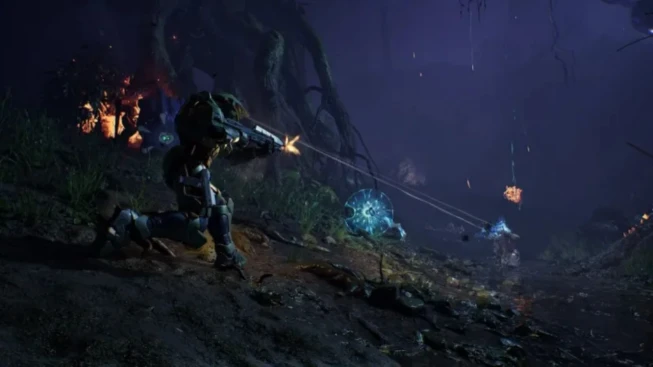
Halo has always taken a different approach, centered on energy shields, longer time-to-kill engagements, vehicle-based combat, and large-scale Forge community tools. The slower pace of an arena-shooter, and the mythology of the campaign, which revolves around the Master Chief, the Covenant, and the Forerunners, are both an important part of the experience.
If Activision leans too heavily on the conventions of Call of Duty, including twitchy gunplay, battle royale spin-offs, and seasonal live-service structures, then it risks losing what makes Halo unique. The franchise needs to keep its own gameplay identity and not just become another military shooter with Master Chief at the helm.
That doesn't necessarily mean the transition will hurt the series or the developers involved.
Rob Kostich has publicly stated that the team intends to stay faithful to what players love about Halo while aiming to create the franchise's greatest entry. Whether that promise translates into the final game remains to be seen, but it at least suggests Activision is aware of concerns about the franchise's identity.
A few rumors are worth keeping in mind. Rebs Gaming has previously claimed that sources indicate an Activision Halo prototype exists and is awaiting Microsoft's approval. Perhaps the prototype was shown to Microsoft to demonstrate the franchise’s potential under Activision’s management, but details about the project remain unconfirmed.
Another separate rumor suggests Microsoft informally discussed developing a Halo MMO during Phil Spencer's time leading XBOX. Such a project would be a considerable undertaking, especially since Activision's immediate priority appears to be establishing the direction of the mainline Halo games. Since Activision already has Warzone as a live-service experience, a Halo MMO might offer a different experience within the franchise's universe.
It could follow a structure similar to Destiny 2 or take an entirely different approach to multiplayer progression and exploration. Still, this remains speculation, and establishing the next mainline games will likely be more important before the company considers expanding Halo into another major format.
On the platforms front, Microsoft hasn't provided any official information on the release of Halo 7. But given XBOX's current multiplatform strategy, a simultaneous XBOX and PC launch is a fair bet. Given Microsoft's recent trend of bringing its first-party games to multiple platforms, a PlayStation 5 version could also be on the cards.
And with Activision also having its new Sledgehammer-led Call of Duty sub-franchise planned for 2027, it may be a matter of not having the development resources to do more. That said, the earliest we'd see Halo 7 would be an optimistic 2028, with a release sometime in 2029 or later looking more likely.
Editor, NoobFeed
Related News
No Data.