
Intel Razor Lake-AX Targets RTX 5070 Ti Performance With Xe3P Graphics
Intel's next-generation flagship mobile processor aims to bring RTX 5070 Ti-class graphics performance into an integrated SoC.
Hardware by Tanvir Kabbo on Nov 28, 2026
Intel's next-generation Razor Lake-AX (RZL-AX) processor might push the boundaries for integrated graphics. The Industry report says its flagship integrated GPU is aiming for performance similar to NVIDIA's GeForce RTX 5070 Ti Laptop GPU. If they can pull this off, it's a huge step up from today's high-end APUs. But simply stuffing extra GPU cores into a processor isn't enough to match a dedicated graphics card. Power consumption, cooling, and memory bandwidth could ultimately determine whether Intel delivers on its ambitious target.
Intel Targets a New Performance Tier With Xe3P Graphics
The reported performance target suggests Razor Lake-AX could outperform a standard mobile RTX 5070 by approximately 20–30%. That would place Intel's flagship APU above current integrated graphics solutions from both AMD and NVIDIA. AMD's Ryzen Halo processors, featuring Radeon 8060S and 8065S graphics, currently occupy the performance territory of mobile RTX 5060 to RTX 5060 Ti GPUs. NVIDIA's current RTX Spark sits closer to mobile RTX 5070 performance.
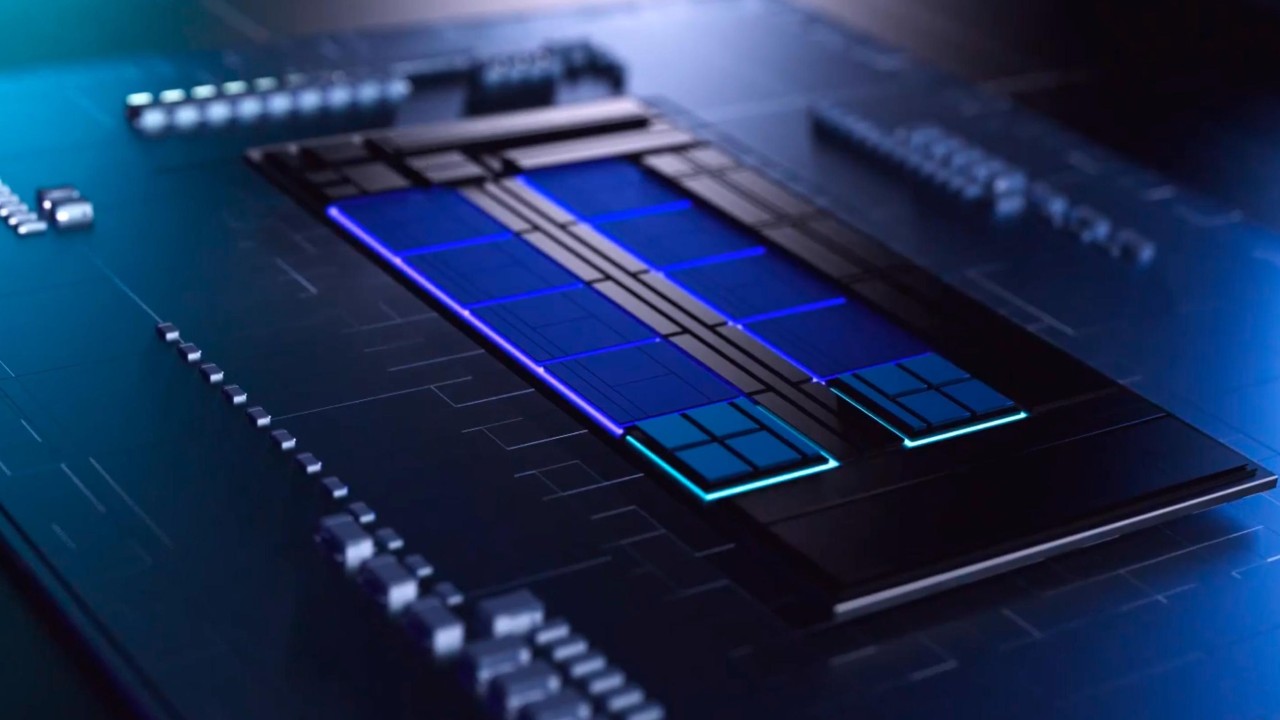
Intel is therefore targeting another performance category rather than simply competing with existing high-end APUs. However, all comparisons are still provisional estimates. Laptop GPU performance depends heavily on power limits, cooling, memory configuration, and the workloads themselves. It benchmarks with an RTX 5070 Ti in some tests, but it doesn't mean it will perform like one in demanding games and long rendering jobs.
32 Xe3P Cores Face a Major Power Challenge
Razor Lake-AX is expected to feature 16-core and 32-core integrated GPU configurations based on Intel's upcoming Xe3P architecture. It is said to feature a CPU that combines Coyote Cove P-cores with Arctic Wolf E-cores to create a powerful hybrid processing platform.
The 32-core configuration is particularly interesting because it matches the GPU core count of Intel's upcoming Crescent Island D-Series workstation and AI accelerators. However, Crescent Island enjoys an air-cooled TDP of up to 350W, with its power budget dedicated to graphics and AI processing.
Razor Lake-AX faces a completely different situation. CPU, GPU, IO and on-package memory have to share a thermal and electrical environment. Consequently, the GPU can't run at full power levels all the time like a workstation GPU can. Intel must dynamically balance power between CPU and GPU workloads while maintaining consistent operating temperatures. That could be the largest impediment to attaining consistent RTX 5070 Ti-class performance in a laptop.
LPDDR5X Could Become Intel's Biggest Weakness
Memory bandwidth presents another challenge. Razor Lake-AX reportedly supports up to 192GB of unified memory on motherboard-mounted (MoB) variants, alongside Memory-on-Package (MoP) configurations, using a wide 256-bit-class memory interface. This capability could benefit intensive games, professional applications, and local AI tasks.
However, Intel is said to be sticking with LPDDR5X as it prepares to launch the CPU in early 2028. This creates an awkward contrast with AMD's planned Medusa Halo, pairing Zen 6 with RDNA 5, and NVIDIA's next-gen Vera Rubin RTX Spark. Both platforms are planned to feature faster LPDDR6 memory.
A wider memory bus can help increase bandwidth, but interface width alone can't level the playing field for variations in memory data rates and efficiency. Integrated GPUs rely heavily on system memory as CPU and GPU tasks share the same resources. Intel might not be able to use all 32 Xe3P cores because bandwidth limits can cap performance, especially in heavy gaming and compute workloads.
AI Performance Could Give Razor Lake-AX Another Advantage
Gaming is just one part of Intel's plan. Xe3P's AI potential, as seen in Crescent Island, could make Razor Lake-AX interesting for local LLM inference, AI development, and workstation use. The combination of substantial GPU processing power and up to 192GB of unified memory could be an attractive alternative to traditional mobile workstations.
Intel is also creating a new SoC called Serpent Lake that will purportedly combine Intel x86 CPU cores with an integrated NVIDIA RTX GPU tile. The parallel effort demonstrates Intel's broader ambitions to explore alternative approaches to high-performance mobile computing.
Can Intel Replace Discrete Laptop Graphics?
Razor Lake-AX might redefine integrated graphics with up to 32 Xe3P processors and a large amount of unified memory. But its RTX 5070 Ti Laptop performance target is still just an unsubstantiated leak. That performance may be limited by shared power restrictions and LPDDR5X bandwidth.
Intel's biggest challenge will be keeping its oversized GPU sufficiently powered and supplied with data during sustained workloads. If the company succeeds, Razor Lake-AX could make dedicated mid-high-end laptop graphics less necessary. Otherwise, its impressive performance target might remain a peak benchmark achievement rather than a consistent real-world experience.
FAQ
Q. What GPU is Intel Razor Lake-AX targeting?
A. Intel's flagship Razor Lake-AX integrated GPU reportedly targets performance comparable to NVIDIA's GeForce RTX 5070 Ti Laptop GPU, potentially offering a 20–30% improvement over a standard mobile RTX 5070.
Q. How many Xe3P GPU cores will Intel Razor Lake-AX feature?
A. Razor Lake-AX is expected to offer 16-core and 32-core integrated GPU configurations based on Intel's upcoming Xe3P architecture.
Q. How much unified memory will Intel Razor Lake-AX support?
A. Razor Lake-AX reportedly supports up to 192GB of unified memory on motherboard-mounted variants, alongside Memory-on-Package configurations and a wide 256-bit-class memory interface.
Q. Why could LPDDR5X memory limit Intel Razor Lake-AX performance?
A. LPDDR5X could become a bandwidth limitation for its large integrated GPU, particularly as competing AMD Medusa Halo and NVIDIA Vera Rubin RTX Spark platforms are expected to adopt faster LPDDR6 memory.
Senior Editor, NoobFeed
Gaming Hardware Updates
No Data.