
RGG’s 1915 Prequel Stranger Than Heaven Introduces Combat and Music Mechanics
The new prequel is pulling huge trailer numbers, introducing a new protagonist, and taking the series into a different era with music, brutal combat, and a story spread across decades.
News by Adeela Tas on May 18, 2026
Stranger Than Heaven is now one of the most promising titles by Ryu Ga Gotoku Studio, with early indications suggesting that it will become the studio's biggest game ever. The game's newest trailer, which showcases its story and cast, has racked up 1.1 million views in just a couple of days since its release on the official SEGA YouTube channel, surpassing previous teasers for titles such as Like a Dragon: Infinite Wealth.
This level of popularity suggests that the studio might find a new way to introduce its titles to players unfamiliar with the Yakuza or Like a Dragon series. Unlike previous releases, which were heavily integrated into ongoing storylines, Stranger Than Heaven seems to be made as a fresh start for gamers unfamiliar with the franchise.
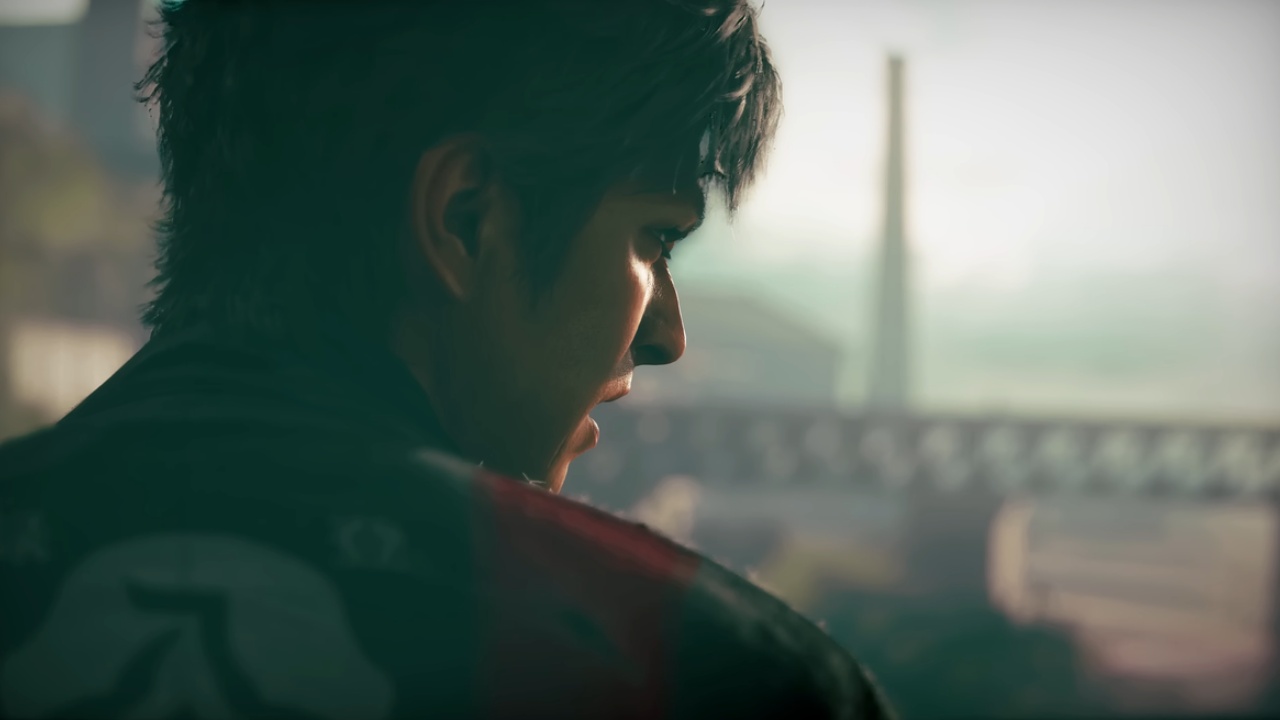
You are not entering the eighth or ninth part of an existing storyline here. Rather, the game is going to take you back to the roots of the world associated with the Tojo Clan and the whole Yakuza universe. This makes it a prequel game, meaning that you do not need to spend years learning about the backstory of the franchise before playing it.
A big reason people are paying attention to this game is its presentation.
The story and cast trailer gave a much clearer look at the game’s direction, and visually, it already feels different from past RGG projects. The atmosphere, time periods, and tone all stand out immediately. There is also a noticeable shift in how the studio is approaching language and voice acting. In Stranger Than Heaven, there won't be a traditional English dub option where you can simply change the language entirely.
Rather, the game will have a natural integration of both English and Japanese language dialogues. This choice of language seems to be directly linked to the protagonist and the location. The protagonist, Makoto Daito, is mixed-race and speaks English, which is why both languages fit seamlessly into the story.
In case you played Like a Dragon: Infinite Wealth, then you would have observed the awkwardness of the transition of dialogue in light of the mix of locations from Hawaii and Japan. In Stranger Than Heaven, the integration of two languages seems directly tied to the game's narrative. For RGG Studios, this could actually work to the game's advantage, since some English dub options were well received, while others drew criticism.
The story itself begins in 1915 and follows Makoto Daito after he sneaks onto a ship leaving San Francisco for Japan.
The story of his life is particularly heartbreaking, even compared to others in RGG. He loses his father immediately after arriving in America, and Makoto’s Japanese mother ends up alone in a strange country in which she doesn’t understand the language. Finally, the racism and difficulties in America result in the death of his mother, too.
You also track his friendship with Yu Shinjo, his childhood friend, who joins him in boarding the ship as a stowaway. The friendship seems vital throughout the game, but early signs suggest there might be trouble in their relationship in the future.
Among the biggest surprises is probably the inclusion of Snoop Dogg as one of the characters, as this seems to be something very silly, but at the same time, very believable in an RGG game. The structure of Stranger than Heaven sets it apart from the studio's other titles in several ways. Rather than limiting itself to a specific era or location, the game sees Makoto travel through various decades of his life.
The eras and locations confirmed include 1929 in Kure, Hiroshima; 1943 in Sotenbori, Osaka; 1950 in Kokura, Fukuoka; 1951 in Atami, Shizuoka; and 1965 in Kamurocho, Shinjuku. As Makoto grows up, the player can expect changes in gameplay and general atmosphere as well. Some eras remain undisclosed, which means significant revelations in the storyline are coming from the studio soon.
The combat system is also receiving noticeable changes.
While traditional RGG titles have been known to revel in the chaos of crowds, Stranger Than Heaven seems to center more on individual, technical fighting. Makoto’s body becomes the focus of attention, with players controlling the movements and attacks from each side of his body individually. The fights in the game are being dubbed as intense, visceral, and reactive.
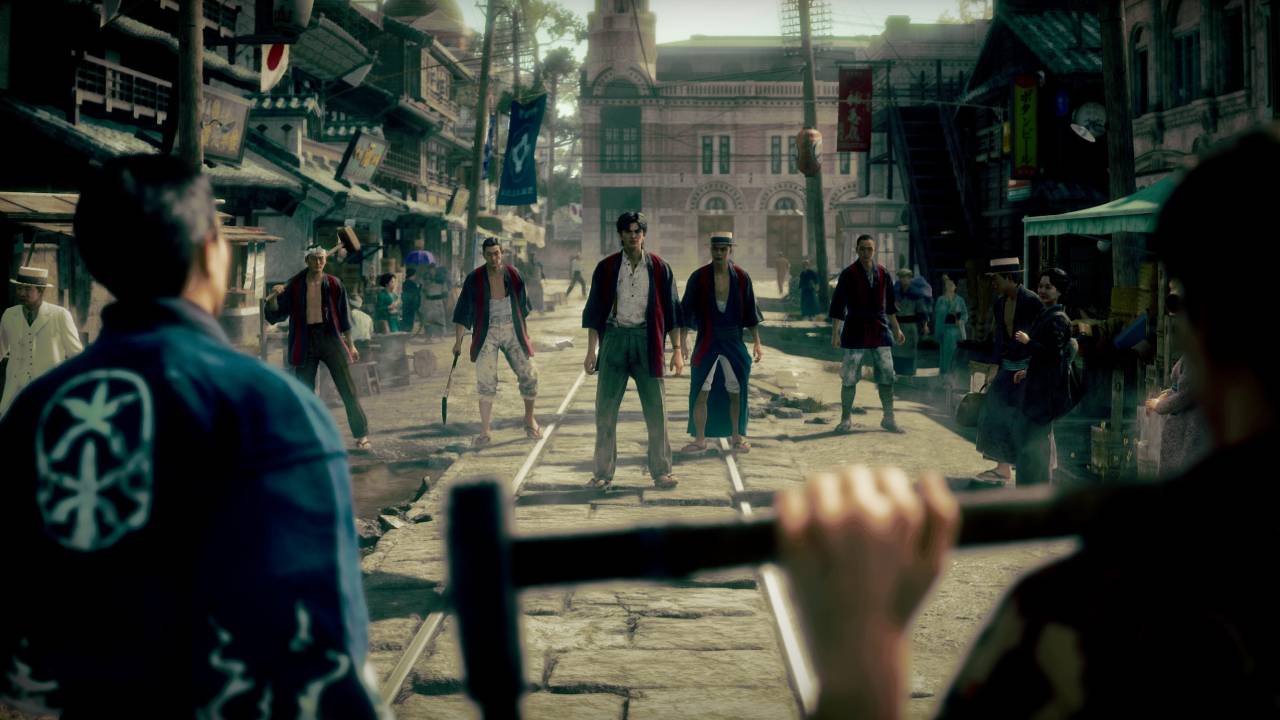
Heavy punches can be chained, enemies can be thrown away with the help of charged attacks, takedowns can be performed while an opponent is staggering, and further attacks can be done when an opponent is pinned to the ground. Weapons are a big part of the gameplay as well, and knives, katanas, hammers, and many other items come into play.
Despite being violent, the game does not revolve solely around that aspect. One of the most surprising things is how central music is to this title. Makoto is not only a warrior but also a performer, organizing various acts and arranging music shows across Japan.
Creating such shows, you have to collect various rumors, find good singers and entertainers, as well as collect various sounds at different places, which will be later used to compose original songs. After that, you will have to organize the setlist, band arrangement, stage performance, and even the lighting for the whole show. This makes it clear that it is a major part of the game, not a small mini-game. It is no wonder the developers made a trailer with a lot of emphasis on music.
The reaction to all of this has been strong enough that many fans now believe Stranger Than Heaven could become the defining RGG title of this generation.
Just the number of trailers alone is a clear indication that the game is highly anticipated. This new trailer currently has fewer views than Stranger Than Heaven, even though it's been up for years. The renewed hype also follows a period when some people began questioning the studio’s vision.
Games such as Yakuza Kiwami 3 and Yakuza 0 Director’s Cut were not well-received, especially by those who thought that the studio was releasing games too fast. Yakuza Kiwami 3 was met with mixed reception, while Yakuza 0 Director’s Cut faced a lot of criticism for being overpriced and lazy.
Nonetheless, many gamers refused to accept that the edge RGG Studio once had was gone. Games such as Pirate Yakuza in Hawaii and Infinite Wealth have received positive user feedback on Steam, even after some fans lodged complaints on online forums. In this regard, the studio's consistency is better than that of other major studios, which take 7-8 years to release.
RGG’s output schedule remains unusually fast for the modern industry.
Despite reusing assets, the studio continues to release major titles at a much higher rate than most AAA game studios. Stranger Than Heaven, being released about three years after Infinite Wealth, means that RGG is still ahead of other studios in terms of productivity. However, just a single major trailer seems to have led to yet another change in the story concerning the studio.
The same people who were saying RGG was washed just months ago are back, hailing Stranger Than Heaven as the most anticipated game. By now, the anticipation is that the game will be released sometime around 2027, along with other big titles by SEGA and Atlus, such as Persona 4 Revival. Should this occur, then 2027 will likely have much the same feel as 2024, where Persona 3 Reload and Like a Dragon: Infinite Wealth were both released within weeks of each other.
Stranger Than Heaven currently seems to be a title that will set new standards for Ryu Ga Gotoku Studio, with the historic background, improved fighting, music mechanics, multilingual storylines, and massive initial buzz online making this an extremely special title for the studio.
Editor, NoobFeed
Related News
No Data.