
New SteamOS Handheld Coming in 2026 and Why Pricing Still Matters
Upcoming SteamOS handheld offers improved performance, OLED display, and refined controls while targeting enthusiasts seeking high-end gaming experiences.
News by Masaru Hoshino on Dec 24, 2025
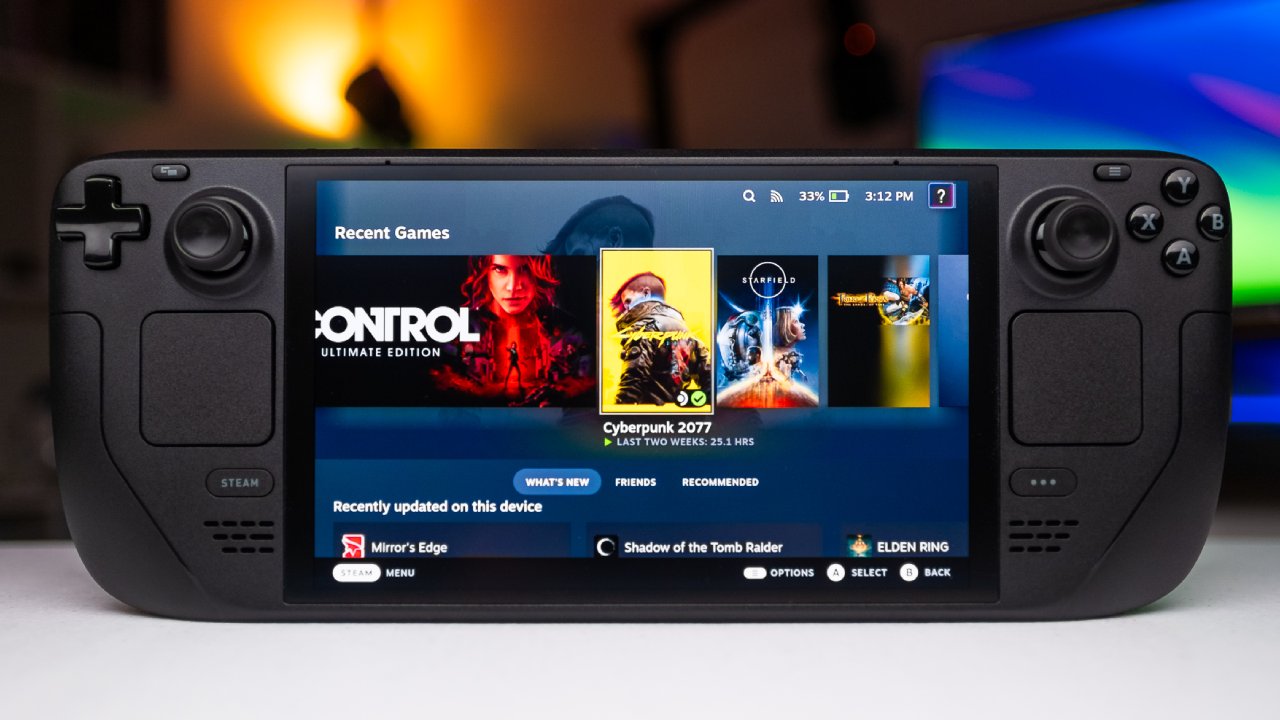
There has been growing anticipation for a brand-new SteamOS handheld scheduled for release in 2026. Valve has been open from the start about wanting to collaborate with other manufacturers to get SteamOS running on more devices.
That effort appears to be ramping up as Steam Machine approaches launch and the desktop version of SteamOS gains broader driver support.
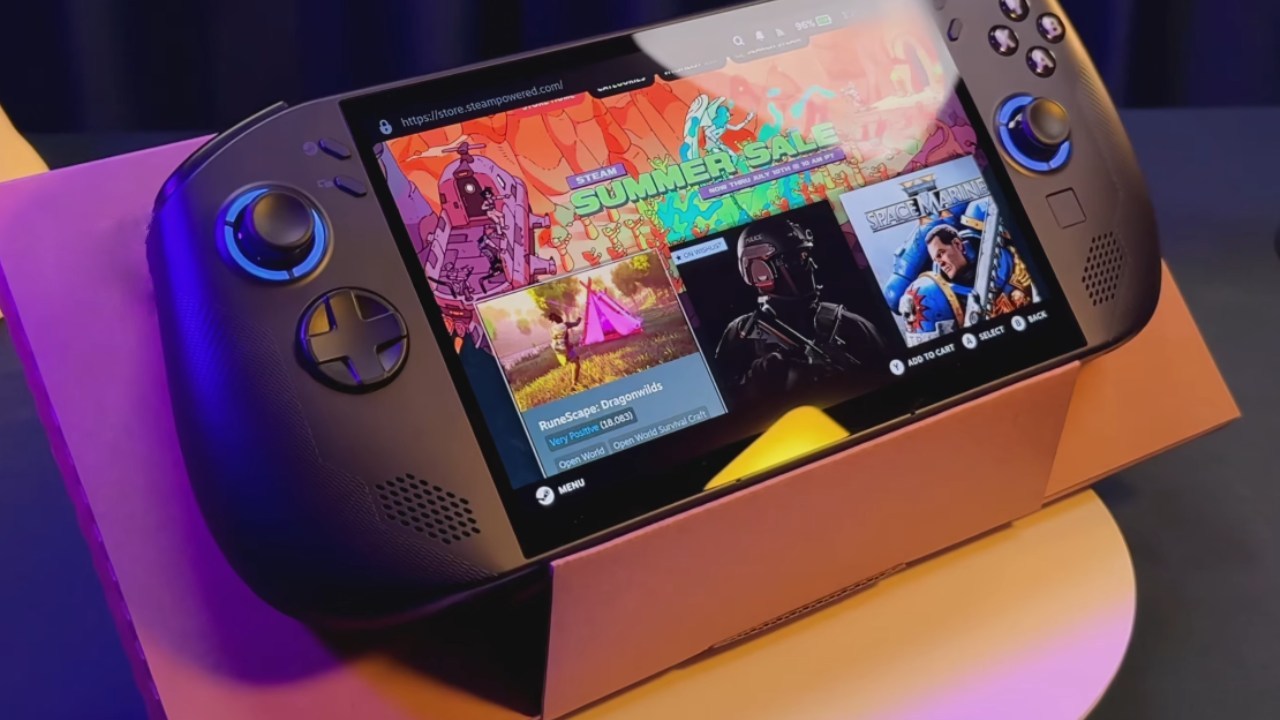
Lenovo has already jumped in by releasing two versions of its handheld—one running Windows and another running SteamOS.
SteamOS model, which came in purple, became one of the biggest stories of the year because it directly compared Windows and SteamOS performance on the exact same hardware. What it revealed was eye-opening:
Windows bloat had finally caught up to its gaming performance. The SteamOS version of the Legion Go S outperformed Windows 11 by around 20% in nearly every game, with some games showing even higher gains. The difference was night and day.
Even though the Legion Go S launched while hype for the Z2 Extreme chip was dominating conversation, it seems to have sold well enough for Lenovo to move forward. The company is now preparing to announce a full SteamOS version of the Legion Go 2. The Legion Go S had already proven that a SteamOS model could be sold for over $100 less because Lenovo didn't have to license Windows.
With the Legion Go2 starting around $1,000 and scaling up to around $1,300 thanks to its Z2 Extreme chip, massive OLED display with VRR, and refined controllers, the price is likely to be a sticking point for most people. That's especially true given the state of the hardware market, where the overall cost of everything—from PCs to consoles—continues to climb.
Sales of consoles have decreased drastically, down 47% from last year. This is the worst sales period since 1995. High prices are a big reason why this collapse is happening. The PS5 isn't really much cheaper now than it was when it first came out, even with the discount. People are understandably hesitant when you add in the whispers regarding next-generation systems.
Handheld makers outside the company are also experiencing this problem. Devices like the Legion Go and ROG Ally refresh far too quickly, sometimes within a year or two, which forces prices higher because they're always chasing the latest silicon.
Valve avoided this by basing the Steam Deck on an already-developed RDNA 2 chip originally intended for a Surface device. AMD cut Valve a deal, helping them hit a far more reasonable price point. That strategy is likely a big part of how Valve plans to achieve fair pricing for the upcoming Steam Machine.
Even though Legion Go S performs nearly identically to the Z2 Extreme—with only a 3–4 fps difference in most cases—consumers resist "older generation" labels. People lose interest when a spec sheet shows the hardware is old, even if the actual-world performance difference is small.
This makes it hard for companies to sell slightly older processors at lower prices, especially since Windows-based handhelds often stop receiving support earlier.
People who want to save money on a PC gaming system can now get server-rack PS5 motherboards. These boards, which include the PS5 APU (a CPU and GPU on the same chip), have begun appearing for about $150. The performance is the same as a regular PS5.
You can obtain stable 1440p60 with FSR. 1080p60 is straightforward to achieve without upscaling, and some 4K scenarios are also feasible.
However, there are caveats. These boards are designed for server racks, so you'd need a 3D printer to create a case and cooling bracket since there's no built-in cooling solution. Even so, for $150, the savings are enormous compared to modern handhelds that cost anywhere from $800 to over $1,200.
The downside is that scalpers have already swooped in as soon as word got out, raising prices beyond their original bargain level.
This discovery further supports the idea that Valve is likely securing older but still performant parts for the Steam Machine, much as it did with the Steam Deck.
Unlike Sony, Microsoft, or Nintendo, Valve operates differently: it's still private, its storefront is massively successful, and it consistently supports consumers. There's good reason to believe Valve will land on a competitive price.
One such problem is a delay. Valve has a history of delaying launches, including the first Steam Deck, which was supposed to be out during the holidays but didn't until February.
Launch date could change if the Steam Machine, Steam Controller, or Steam Frame aren't all available at the same time.
Because the products seem to be linked, even a single delay could affect the entire portfolio.
Even if it could happen, people are nonetheless really excited. Before the first Steam Deck came out, there weren't many games shown running on it. This time, they hope Valve will let them try it out more.
There are questions about performance, hardware integration, and ecosystem updates, and people are getting increasingly excited to finally try out the new system.
Steam Replay data from 2025 highlighted how people divide their time across games of different ages. Only 14% of players spent most of their time on brand new releases from the past year. Meanwhile, 44% focused on games released within the last 1–7 years, and 40% played games more than 8 years old.
Some have been blowing these numbers out of proportion. If you use a Steam Deck regularly, you likely bounce across all eras. We often play brand-new titles like Kronos: The New Dawn or Elden Ring Night Reign, games from the last several years like Baldur's Gate 3, and older titles like Resident Evil6. The strength of the Steam Deck is that you get access to your entire library, new and old.
Of course, new releases costing $70 factors into how frequently you buy day-one games. Many players wait for deep discounts. But if something launches in good shape, performs well, and plays smoothly on Steam Deck, picking it up immediately feels worthwhile.
Unfortunately, with so many modern games launching in rough condition, the value of older, already-optimized titles has only grown. Since the PS4 era, many types of games have stagnated, and players have returned to earlier titles or niche breakthroughs because they keep using the same open-world formulae.
For people who own a Steam Deck, it's often the best way to clear their backlog. It does a great job of handling everything throughout generations, whether you're exploring new places or reliving old favorites.
Editor, NoobFeed
Related News
No Data.