
Allogloom Review
PC
A hand-drawn fairy tale that leans more toward charming whimsy than real fright.
Reviewed by Maisie Scott on Oct 19, 2026
Every so often, a point-and-click adventure comes along that makes you want to clear an evening and settle in, and Allogloom is one of those. Kate, the solo developer working as Galactic Ghosty, made it, and Iceberg Interactive published it. This is her debut, hard to believe after just a few minutes. Every scene was drawn by hand.
Allogloom's content notes mention cartoon blood, gore, and mild references to alcoholism, so you know roughly what you're stepping into. It isn't built to scare you, though. It feels more like a macabre storybook than a true horror game. If you've played Fran Bow, Little Misfortune, or Sally Face, the tone will feel familiar; Strange Antiquities and Wytchwood are fair comparisons, too.
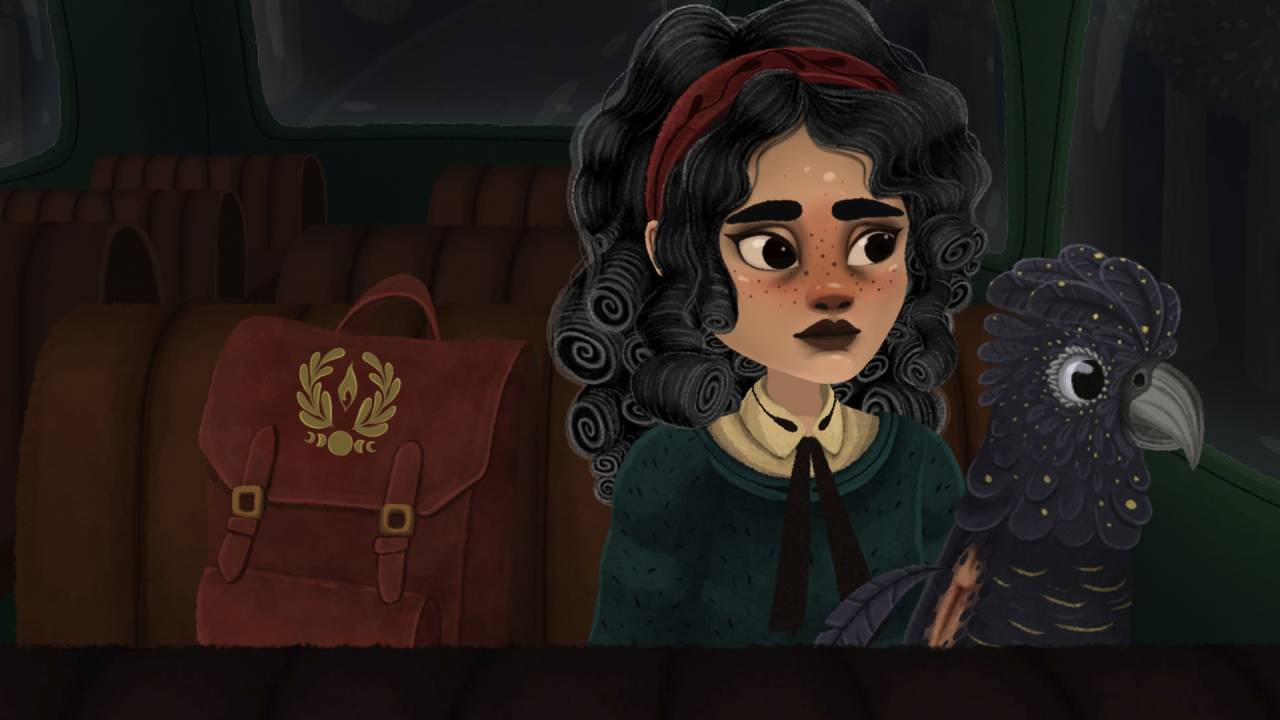
Add the dark humor, the cute monsters, and a dash of body horror, and you get something like The Addams Family crossed with Brigadoon.
You play as Nora, a young woman living in Gruesome Grove, a fog-shrouded town where everyone has quietly accepted their place in life. The village revolves around golden moths. They eat the dead, and they punish anyone who tries to leave the forest. Leaving is forbidden, and the entire community is built around that rule.
They preserve bodies in sap and leave them out in the open, and nobody seems bothered. You meet Nora outside her father's gardening store while her Granny Dot gets ready for the ceremony known as the Day of the Gate of the Dead. Dot asks you to prepare the family's offering to the moths, and that small errand doubles as your tutorial, walking you through the basics you'll rely on until the end.
Then everything goes wrong. Monsters invade the village, eat some residents, and drag others away, including people Nora loves. Her own family goes missing, and you're sent out to find them. The search takes you through stranger and stranger places, filled with trapped creatures, and gradually toward a forgotten history the Grove would rather keep buried.
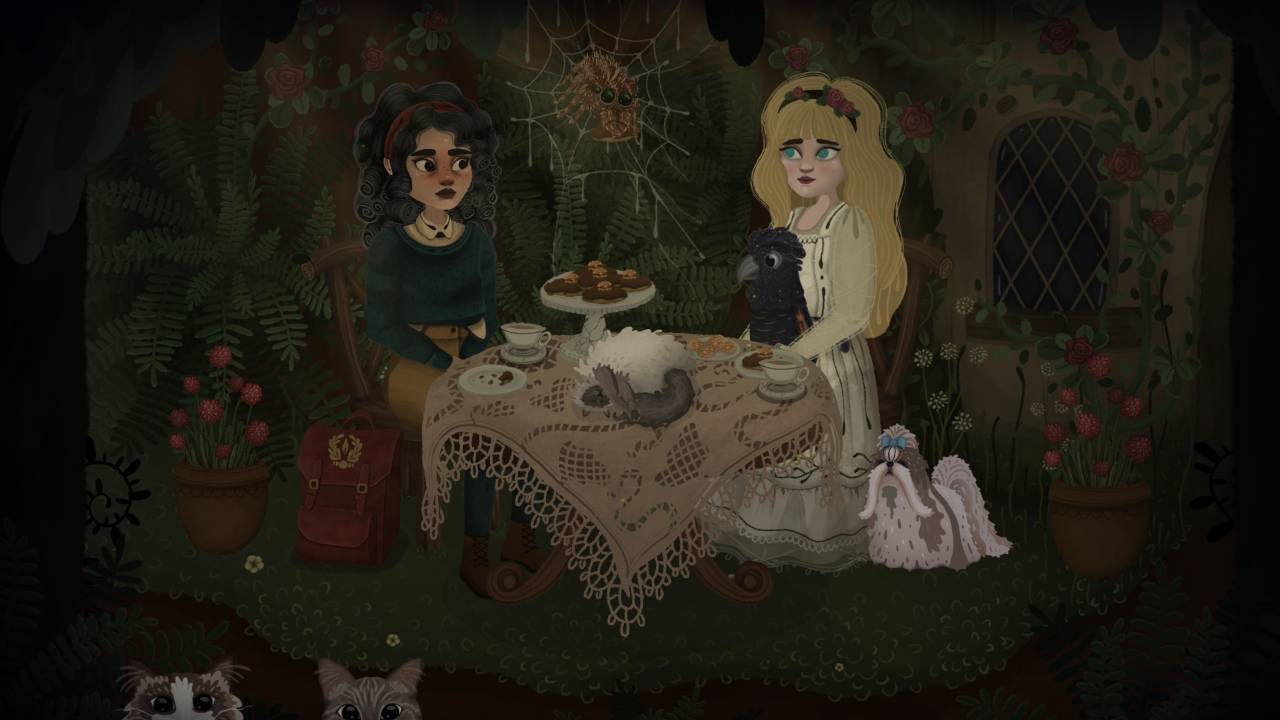
Your companion is Hopper, Nora's pet bird. He's a parrot who seems smarter than he looks, though a bit of food usually distracts him. The supporting cast is a mixed bunch. Nora's father, Arthur, trades terrible puns with her, and those exchanges build a warm father-daughter bond that gives you a reason to care about the search.
Beyond Arthur, oddball side characters and monsters outshine Nora herself.
You also run into a character who keeps a decapitated head around because it has a nice mustache, a man who lost a leg fighting off the creatures and has gone a little unhinged, and a girl who would happily live among the trees if the forest came with good chocolate.
Later you meet a gentle, monstrous queen and her brother, Tommy. A few are interesting enough that you'll keep clicking through every dialogue option just to hear more. Nora herself is a bit of a blank slate. She's curious, loves her family, and remains oddly calm in the face of the most gruesome things, as if death and despair are just part of life in her corner of the world.
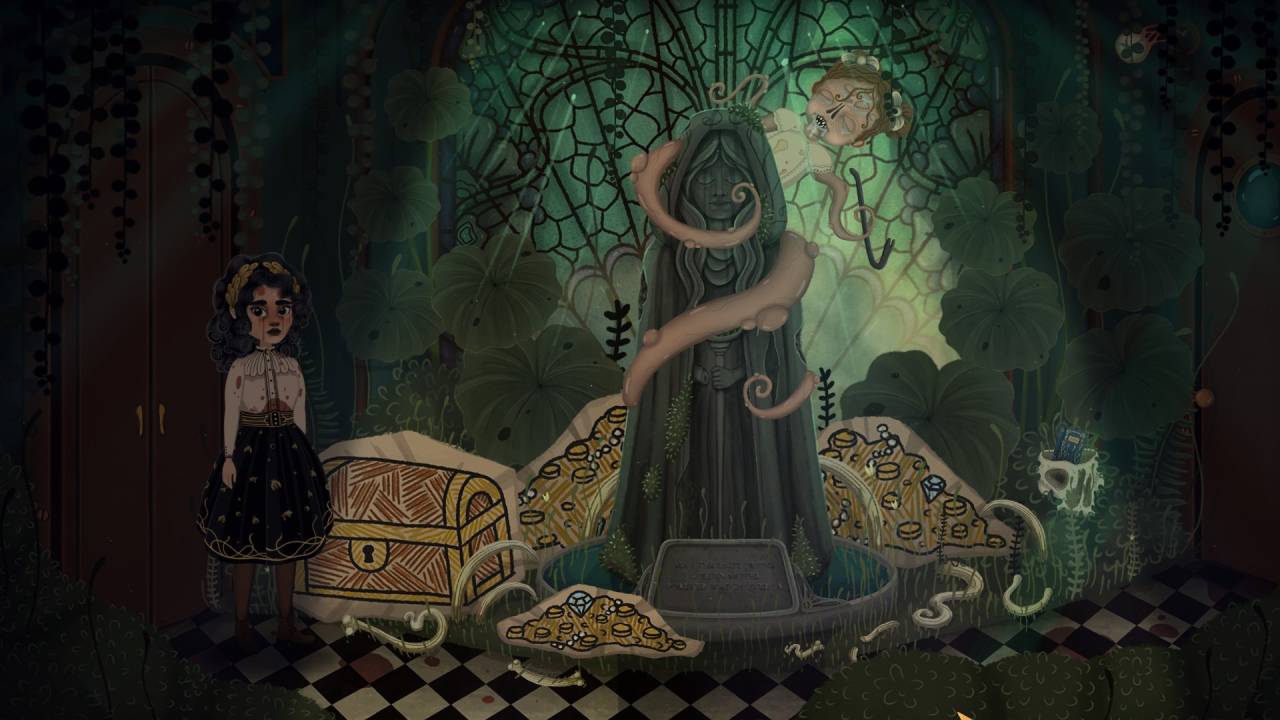
That makes her easy to approach, though she can come across as a bit safe next to the bold world around her. The monsters are the most intriguing part. Some of them are clearly transformed creatures, and you keep wondering what happened to them. One of them loves music, and you'll want much more of his story than the game gives you.
The story in Allogloom touches on mental health and trauma, finding yourself, family secrets, loneliness, forced isolation, and the pressure of other people's expectations. It's about pushing against barriers when the whole world is trying to hold you back. Many of the twists are easy to see coming, but the telling is charming enough to keep you with Nora to the end.
Learning about the moth ritual and about her mother fuels your curiosity throughout.
The first third is the strongest stretch, with plenty of lore tucked into the environments. The weaker side shows up in the emotional beats. A few moments that should hit hard get only a few seconds before the characters move on, and the second half feels thin in that respect.
Near the end, several plot threads simply fall away, leaving you wanting to know what happened to people the game never circles back to. Underneath it all, Allogloom runs on a point-and-click setup that feels like a simplified take on Broken Sword's gameplay. There's no old-school verb menu.
You click to walk and click on hotspots like doors, letters, and objects. You pick up nearly everything in each chapter and carry it in your backpack, where you can combine items or use them on the environment to solve puzzles. Allogloom has eight chapters, and finishing each one empties Nora's inventory.
That's a small letdown, since carrying early discoveries into later puzzles could have made them more layered. Still, each chapter brings its own items and problems, so it never feels repetitive. The story takes around five to six hours, and a bit longer if you read everything and stop to take notes.
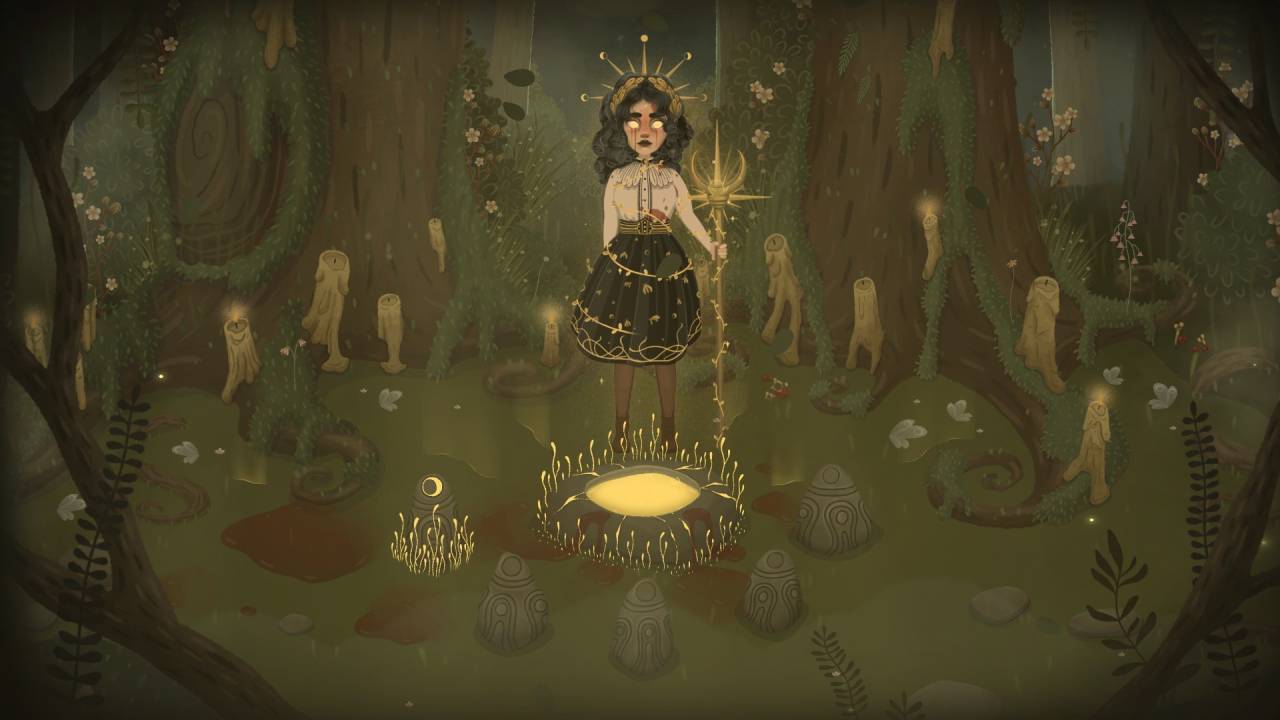
The early chapters keep you in small areas, and then Allogloom opens up to several locations per chapter.
You'll talk to people, read notes carefully, remember what you've seen, and match it all with the right object. A hotspot button highlights what you can interact with, and you can skip it if you enjoy hunting for pixels. It's a handy safety net that mostly keeps you from missing anything. A couple of times it skipped a spot during a puzzle, and it's hard to tell whether that was deliberate or a bug.
It wasn't a dealbreaker, just an old-school touch. Allogloom feels comfortable with a mouse and keyboard. Dialogue waits for you to move it along, so you can pause on a line without feeling rushed, and it's easy to step away and come back. The music and effects have separate volume controls.
There's no text-size option, though the default is readable from a normal distance. The puzzles in Allogloom start easy and ramp up in complexity, building to a finale of well-designed brainteasers. Most of them follow the logic of what's happening in the story and the environment, and you rarely hit something that feels obtuse.
They range from simple fetch-and-trade tasks to multi-step goals that require solving several smaller problems to advance the main quest. One puzzle has you read a moon cycle chart to open a hidden lock. Another has you find a way to zoom in on a painting to read a passcode for a locked door, which then helps with a bigger problem.
Because Allogloom is about learning the world, you get the most out of it by reading everything, including text you don't strictly need.
The best puzzles are the ones where the answer sits right in front of you. In one scene, a character throws a bottle; you know you'll need it intact; you spot a cushion; and you realize it's soft. Slide it underneath, and it works. Those moments make you feel clever without asking for much outside-the-box thinking.
The same goes for tasks where someone needs an item, and you figure out where to find it and what to combine to make it. Learning more about the world as you solve things also makes progress feel worthwhile. Some of the puzzles run into trouble, though. The moon phase puzzle asks you to enter phases in a certain order, guided by a phrase above the buttons, but the reference information is on a different screen.
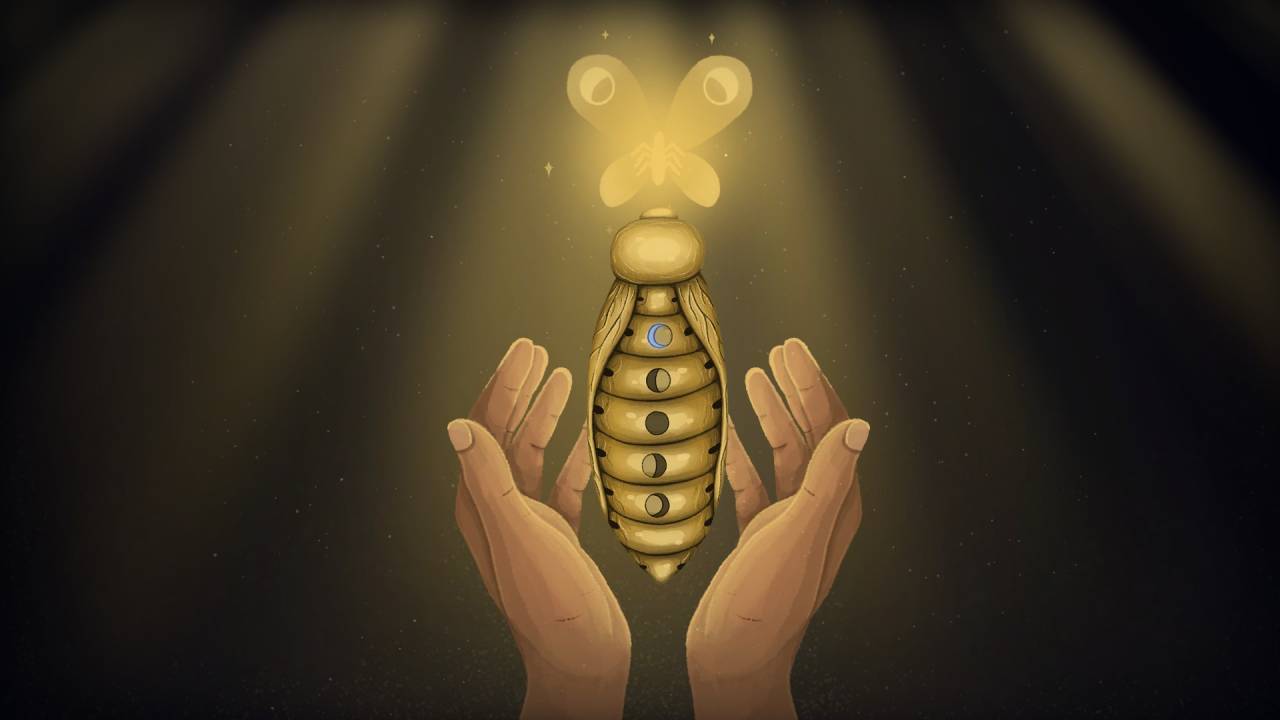
You end up walking back and forth, or photographing the screen, to remember names and descriptions. Letting you pick up the poster and hold it on that screen would have solved it easily. In another scene, a character wants a creature killed before she'll hand over what you need. She's holding a bloody cleaver, and you think the answer is obvious. It isn't.
You don't even get the option, and the real solution lives in a completely different part of the game. You can look at a few items but never use them, and the game doesn't explain why, so they feel like red herrings. The more persistent frustration is the lack of help. There's no hint system and no journal to track clues and characters, so you end up taking screenshots or writing things down.
A highlight can show you where to click, but a reminder would tell you what to do with the information you already have.
When nothing works, you end up trying every item on every hotspot, which is fine for a while but gets tiresome when you just want to get back to the story. What helps is checking both sides of a scene, since you can sometimes keep walking left or right without it being obvious, talking to people again for new dialogue, clicking things you've already clicked, and combining items in your backpack.
Getting around is the other sore spot. Environments are compact, and Nora has no run option, which works early on. Later, an item might be five screens away, and you have to walk her to the edge of a screen before it changes. You can't fast travel or double-click to leave.
The backtracking is manageable at first, but it starts to wear on you the more you wander without a clear goal. This is where Allogloom shines. The whole game is hand-drawn, with Art Nouveau influence and soft, slightly imperfect linework that gives the architecture and nature a lot of personality.
Characters have doll-like faces and move their eyes and mouths playfully, and even Nora's clothes shift slightly as she walks. Environments move too, with objects like fallen leaves animated at varying depths, giving the characters a pop-up-book feel. It works nearly all the time, though it falters occasionally.
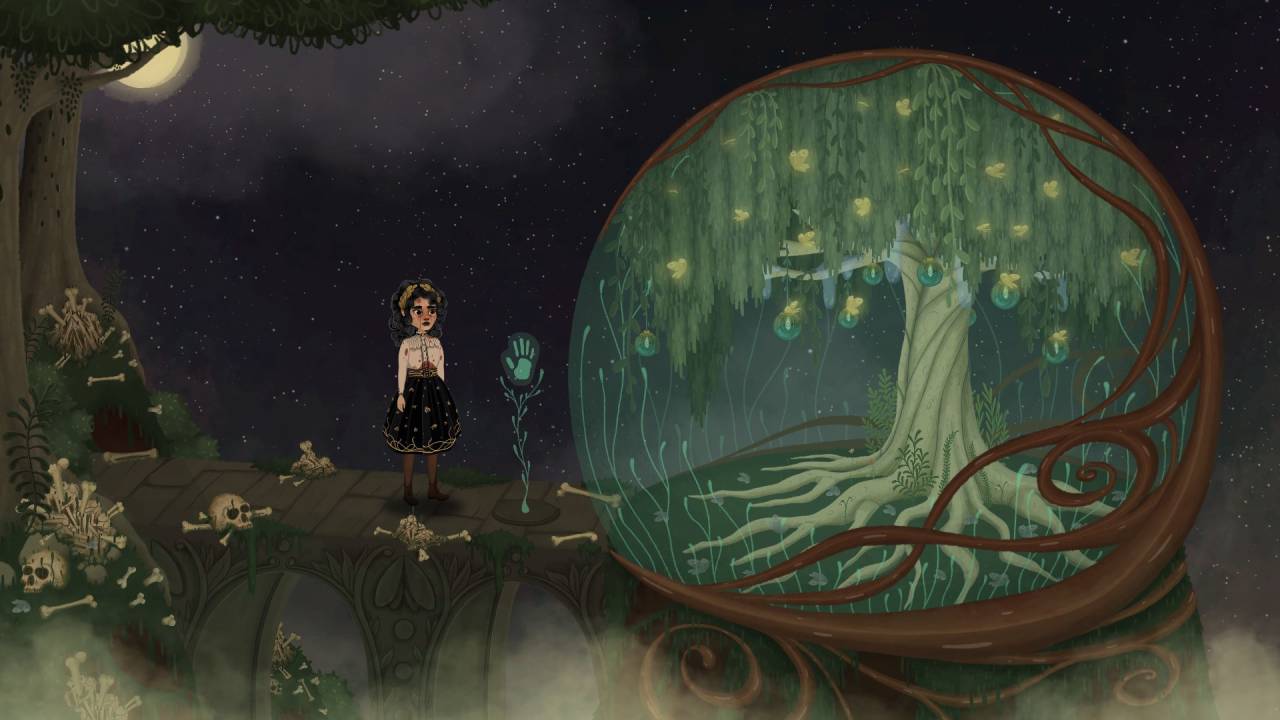
The palette leans dark, with a Gothic fantasy streak, and the art balances between whimsy and horror in a way that suits the town.
You'll spot a bit of Tim Burton, Fran Bow's gloom, and Broken Age's whimsy. The creature designs bring in the body horror of The Thing and The Fly, and they'd make Cronenberg and Carpenter envious. Small details add a lot. A sharp drop-off in a pond might look like a missing texture at first, but step back and it suggests real depth, making you uneasy about what's below.
The linework on the teleportation stones and the white sections of the large mushrooms stand out, while some of the moss looks a bit muddy. Close-up views are impressive as well, like the glaze on a phone booth window or the sap on a phone book, and they show the maturity you'd expect from a more experienced studio.
Cutscenes use nice camera angles and lighting to give key moments some weight. The weak spot is facial expressions. They don't convey strong or even moderate emotion very well, and it's hard to tell one reaction from the next. In a story-focused game like Allogloom, that holds back the emotional scenes.
Allogloom's soundtrack, by first-time game composer Kim Miller, carries a spooky yet playful mood that keeps the fairy-tale tone intact even when things get grim. The birdsong and other ambient sounds layered beneath it are pleasant. There are drawbacks, though.
Tracks often stop instead of looping smoothly, and the ensuing quiet can last a couple of minutes, which is awkward when you're lingering in a scene. The music also stays in a similar register throughout. The stings land at the right moments, but the tracks start to blur together, and it doesn't feel like something you'd listen to on its own.
The music sets the mood, but there are no voices, and effects are sparse.
There's no voice acting. That's understandable for a solo project, and the writing still feeds your imagination, but voices could have carried the emotional moments. Sound effects are sparse and sometimes feel incomplete. In one scene, a man is fighting for his life, and it's almost silent until the camera zooms in and a rope snaps.
The quiet builds unease but never conveys the struggle. When something louder happens, like a creature crashing through a window, it works well, and you wish there were more of that. The rest, like knocking and shuffling feet, is fine but forgettable.
Allogloom shines when it lets you wander through a fully imagined world. The art, writing, and audio all push the same mood, and the puzzles teach you something about the town and its people as you solve them. You won't run into any technical trouble in Allogloom, so nothing pulls you out of the story.
The first third is the best stretch, and it sets you up for a wonderful experience. After that, the weaknesses begin to show. The story struggles with emotional weight, loose threads pile up near the end, and the walking, missing-hint system, and lack of a clue journal start to get under your skin. Whether that matters depends on how you play.
If you enjoy reading dialogue, studying your surroundings, and working through item puzzles, there's a lot to like. If you tend to skip text, dislike trial and error, or want a strong horror experience, you may feel differently. For a debut, Allogloom is impressively polished, and Kate shows real promise as a developer to watch. It's a strong recommendation for genre fans, with a few rough edges to keep in mind.
Editor, NoobFeed
Verdict
Allogloom is a gloomy, beautifully drawn adventure with sharp puzzles and plenty of charm, held back by thin emotion and slow travel. Well worth buying if you like the genre.
75
Related News
No Data.