
Thank You For Your Application Review
PC
Thank You For Your Application proves that processing paperwork can be a high-stakes psychological thriller.
Reviewed by Asura Kagawa on Jun 23, 2026
When looking at how Thank You For Your Application came together, it is clear that the development team wanted to create something that feels uncomfortably close to home. They took a long look at the history of dystopian workplace simulators and decided to push the concept into a much more personal territory.
Instead of just making a game about checking boxes, they built a system where every single piece of paper tells a story about someone trying to survive. You can feel the influence of classic indie paper-pushing games, but the developers deliberately shifted the focus toward a more intense, emotionally draining experience.
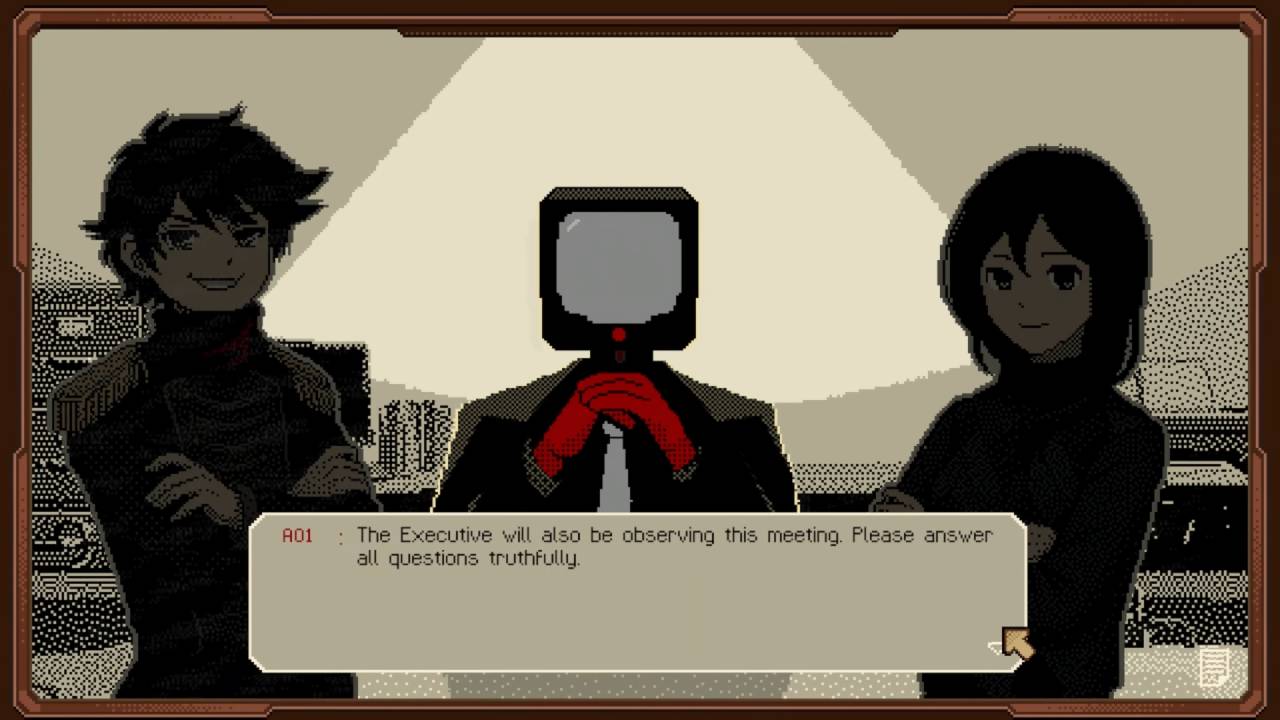
They wanted to capture that exact feeling of modern corporate burnout, where you feel like you are losing your mind over minor details. The history behind this project reflects a desire to comment on how arbitrary and cruel modern hiring processes can feel. By creating a fictional corporation that acts as a literal god over its citizens, the developers turned a standard puzzle loop into an administrative nightmare.
It is a massive step forward for this specific sub-genre, moving away from simple observation tests and turning into a genuinely stressful exploration of systemic control. The team spent a lot of time ensuring that the environment felt both retro and futuristic, trapping you in a visual space that feels tight and restricted.
The design philosophy directly reflects the protagonist’s mental state, who is stuck between a rock and a hard place throughout the playthrough. Every design choice, from the layout of your desk to the way the paperwork piles up, was designed to make you feel the crushing weight of institutional pressure. The developers did not want you to feel relaxed; they wanted you to feel the constant, lingering anxiety of making a single, career-ending mistake.
A new interactive nightmare emerges from the shadows of the corporate machine.
The game entered the indie scene at a time when everyone was already feeling the weight of economic uncertainty and job-market exhaustion. Thank You For Your Application was born out of that exact anxiety, translating the real-world frustration of job hunting into a dystopian thriller set in the year 2066.
It started small, mostly concerned with the basic mechanics of digging through applications and checking data. But as they developed it, the team realized they had to put the game into a world that felt alive, bleak, and unforgiving. Aeropolis City became the perfect setting for this narrative experiment, a future where traditional governments have been completely replaced by corporate entities.
The game came to be because the creators wanted to explore what happens when human empathy is treated as a performance flaw. They built a world where you are forced to sit through a seemingly endless loop of tasks just to keep your own head above water.
It evolved from a simple mechanical prototype into a massive, narrative-driven experience that takes over ten hours to fully untangle. The presentation makes heavy use of a distinct aesthetic choice: clean but grim pixel art that conveys a sense of cold uniformity.
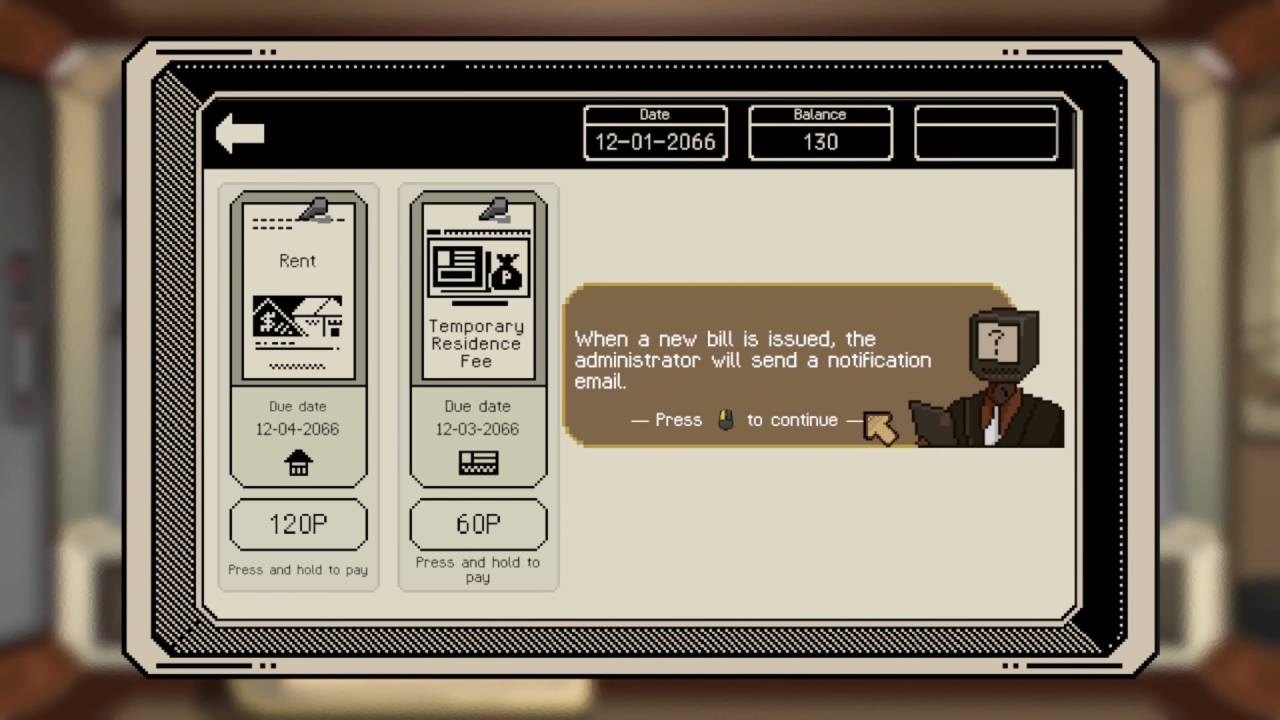
The music keeps you grounded in this headspace, offering a steady, loop-heavy backdrop that keeps your heart rate up without ever distracting you from the text. When the game finally launched, it immediately set itself apart by refusing to offer an easy ride or a cozy atmosphere. It was a standout because it turned the drudgery and fatigue of admin work into a gripping, life-or-death struggle for survival.
Players must navigate a dark web of choices to survive the corporate grind.
The plot of Thank You For Your Application drops you face-first into the absolute lowest rung of management at the Aeropolis Lab Corporation. You play as a nameless, fresh-faced interviewer whose entire existence is defined by a tiny desk, a mountain of files, and a corporate mandate to follow orders.
The world outside your office window is completely fractured, divided between the shiny corporate sectors and the absolute squalor of the outer rings. Your job is simple on paper but horrifying in practice: you are the gatekeeper who decides who gets a shot at a better life and who gets thrown back into the gutter.
As you sit at your desk day after day, the narrative begins to pull you in several completely different directions at once. On one hand, you have the corporate storyline, which drops subtle, creepy hints about a mysterious new artificial intelligence technology the company is developing. On the other hand, you have a deeply personal, high-stakes family drama happening entirely through letters and financial transfers.
Your mother and sister are trapped in the worst parts of town, and they live entirely off the money you send home to survive. Making things even more complicated, an underground resistance movement learns of your new position and invites you to join it. This introduces a massive conflict of interest, forcing you to decide daily where your loyalties lie.
You can choose to be the perfect, unfeeling company employee who rejects people without a second thought, or you can risk your life to help the underground network. The plot never lets you feel completely safe, and it naturally builds toward at least three distinct endings that reflect just how much of your soul you gave away.
Managing endless paperwork becomes a high-stakes test of cognitive endurance.
The core gameplay mechanism of Thank You For Your Application is an intense, active simulation of high-pressure data entry and document verification. Your daily routine consists of calling a specific number of job applicants, usually eight to ten per shift. People come to your desk and give you a bunch of documents that you have to literally drag across your screen to read .
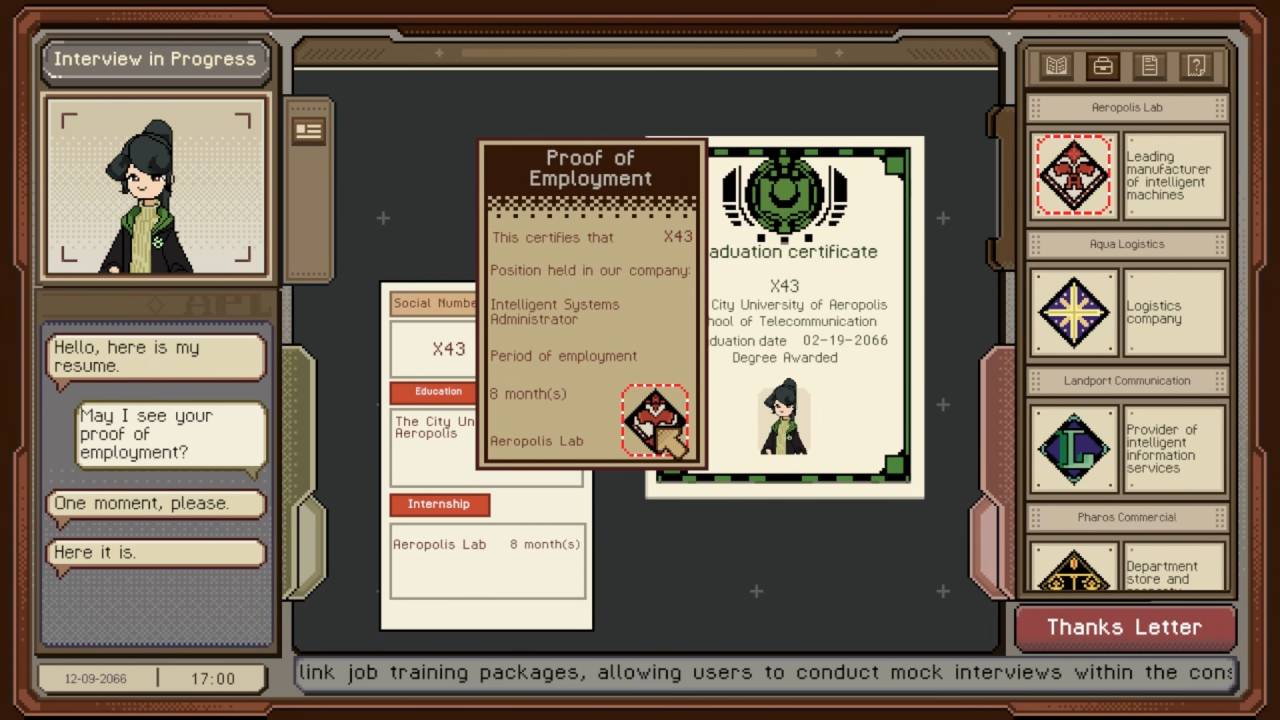
You are looking at resumes, identification cards, health certificates, and corporate loyalty pledges, trying to find anything that looks out of place. Every morning, you start with a fresh directive from upper management outlining the specific parameters you need to follow for that day's hiring pool.
In the beginning, the game eases you into the routine with incredibly simple rules to follow, like checking whether an applicant lives in a certain district. But within a couple of hours, the system becomes incredibly overwhelming as the number of active rules multiplies. Suddenly, you are watching eight different variables at once while trying to spot subtle discrepancies in serial numbers, missing official stamps, and expired dates.
The interface demands precise mechanical control, requiring you to constantly flip through pages, compare documents side-by-side, and search for tiny textual errors. Once you finish your shift, the gameplay transitions into a stressful evening phase inside your tiny, corporate-mandated apartment. This is where the resource management side of the game takes over, forcing you to open your mail and deal with an endless onslaught of bills.
You have to carefully split your tiny paycheck between paying rent, keeping the lights on, buying medicine for your family, and purchasing items to keep your own stress levels down.
Interrogations and document puzzles turn a desk job into a psychological battleground.
The puzzle and combat mechanisms in Thank You For Your Application are fully integrated into your daily paperwork tasks rather than existing as separate modes. The puzzles themselves are structural and logical, presented to you in the form of fraudulent documents, hidden text contradictions, and forged identities.
You essentially have to act like a forensic accountant, reading through boring blocks of text to spot the one specific lie that invalidates the entire application. If everything looks perfectly legitimate, hit the pass stamp; if something is wrong, log the exact error code. The closest the game comes to actual combat is during the verbal interrogation phases, when you actively confront an applicant about a mistake you found.
When you point out a contradiction, the applicant will often get defensive, offer a pathetic excuse, or show signs of complete panic. If their answers do not align with corporate guidelines, such as admitting they hate working long hours, you can choose to use a corporate shock device. This physical enforcement tool allows you to literally terrorize the applicant into compliance until they give you the exact narrative answer the company wants to hear.
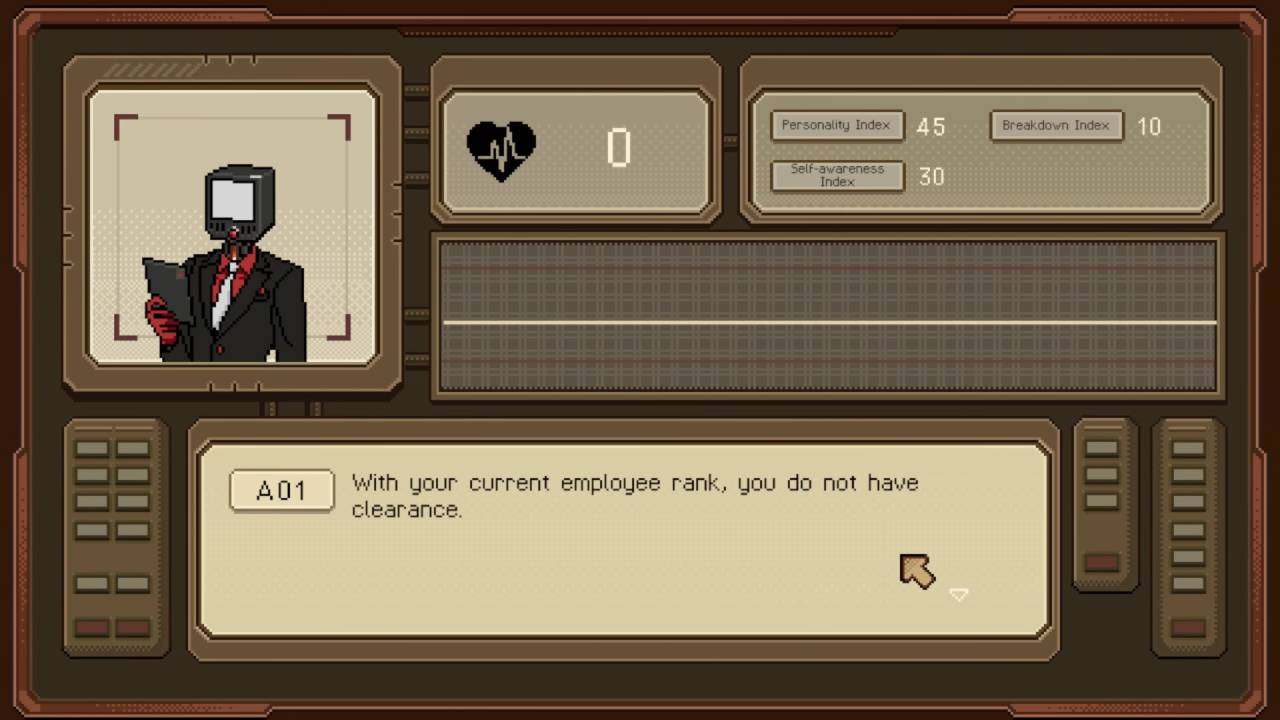
This creates a highly confrontational, uncomfortable dynamic where the player is forced to act as an aggressive arm of the state just to get through the day. The combat here is entirely psychological and administrative, weaponizing your position of authority against people who are completely defenseless.
The clock is ticking, and you are doing your best to get the applicant to provide the right information before your shift ends. It turns a simple reading exercise into an incredibly tense, high-stakes game of chicken where one wrong click can ruin your entire afternoon.
Unforgiving penalties can make repeating the same workdays feel highly tedious.
When you look at how the puzzle and combat mechanisms function over a long playthrough, there are both incredible design triumphs and massive mechanical frustrations. On the positive side, the document puzzles are brilliant at forcing you into a genuine flow state where you feel like an absolute expert.
There is an undeniable sense of satisfaction when you spot a tiny, single-digit typo on a background check that completely exposes a massive forgery. The interrogation system also does a fantastic job of breaking up the visual monotony of looking at gray pieces of paper all day. However, the major flaw with this mechanical setup is how incredibly unforgiving the game is when you make a mistake on a side quest.
Thank You For Your Application does not include any safety net or automated correction system for your narrative choices. If you accidentally overlook a single document discrepancy for an applicant tied to the resistance or your family, you will fail that quest immediately. The game will seamlessly lock you into a permanent fail state for that storyline without giving you any clear warning that you completely messed up.
Because of this brutal design choice, you are essentially forced to micromanage multiple manual save slots just to protect your progress. If you realize you missed a quest requirement four days ago, your only option is to delete hours of progress and play through those identical workdays all over again.
When you are forced to re-read the exact same dialogues and check the exact same resumes multiple times, the tension completely evaporates. The game very quickly turns from a thrilling, high-stakes psychological thriller into what feels like a truly tedious, annoying chore.
Then grinding for corporate cash unlocks many much-needed mental health upgrades.
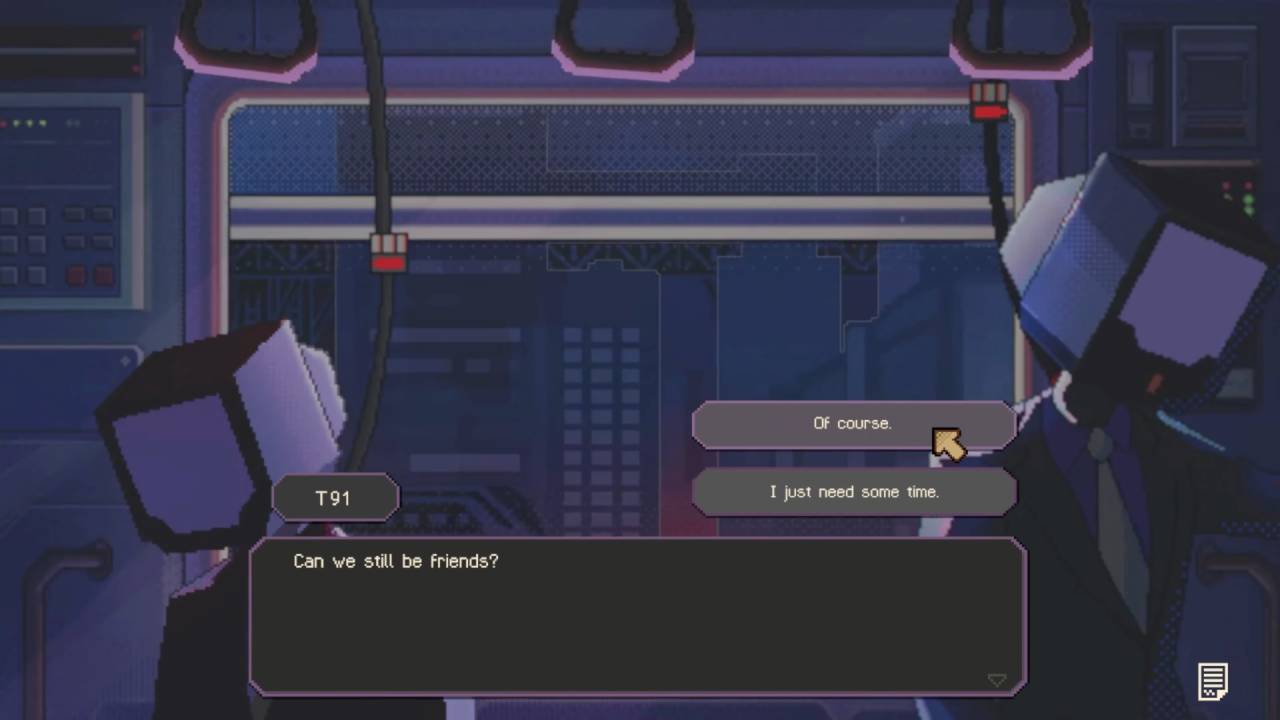
Instead of giving you a traditional experience point meter or character level-ups, Thank You For Your Application uses a financial and psychological progression loop. The functional equivalent of grinding for XP in this game is maximizing your daily salary by processing applicants perfectly without receiving corporate penalties.
Every correct decision you make preserves your paycheck, while every single mistake chips away at your earnings and rapidly increases your character’s hidden stress meter. If you let your stress get too high, your character begins to lose their grip on reality, making the paperwork visibly harder to read.
This economic grind completely dictates how you approach the narrative and how much freedom you have to make moral choices. The money you earn is not just a high score; it is a vital resource that you absolutely must grind for if you want to keep your family safe. If you do not earn enough money to send care packages back to the bad city, your mother and sister will suffer immediate, permanent health consequences.
This creates a tense cycle where you are forced to grind through perfect workdays just to buy yourself a few more hours of narrative safety. The game also has a clever meta-progression system that is solely based on upgrading your depressing corporate apartment. You can spend your earned cash on specific furnishings, like a better mattress, a small plant, or a radio, which are permanent status upgrades.
These items give passive buffs that automatically reduce your stress rate of accumulation or give you a slight buffer when you make mistakes at work. It creates a satisfying rhythm where the physical rewards of your labor directly help you survive the next, even more difficult shift at the corporate desk.
Staff Writer, NoobFeed
Verdict
Thank You For Your Application turns corporate dread into a brilliant, high-stakes puzzle. Despite punishing quest failures, its intense mechanics and dark narrative make it a gripping thriller.
80
Related News
No Data.