
Schrödinger’s Call Review
Nintendo Switch 2
A gothic narrative mystery where every conversation gives you pieces of the truth in a fallen world.
Reviewed by Asura Kagawa on May 29, 2026
When one starts to play Schrödinger's Call, there are no immediate sequences of intense action or exploration of large environments. One finds oneself in a very small, gothic setting, with a little girl named Mary, a phone on a desk, and the impending end of humanity. This game develops its entire story in that room, through that very phone, and during that bizarre moment when everything seems to have already ended, yet has not progressed any further.
The world has ended before you have gotten there. The moon has already collapsed, the earth has been demolished, and all there is is a frozen frame showing the last few seconds before destruction. The game follows the story of Mary, whose character is oblivious to her past self. She finds herself in that gothic room.

This is where she serves as the last confidant for the doomed world, and answers calls from souls stuck somewhere between life and death because of unresolved regrets. The visual novel takes this premise very seriously and delicately, and you end up not trying to save the world, but giving voice to those voices silenced by their living past.
Incredibly fast, you realize that this game is all about listening.
In this game, the characters calling out to Mary are not described as either good or bad. Instead, they are depicted as people trapped in their final moments of life, regretful, lonely, frustrated, afraid, and with unresolved matters in their lives. While talking to them, your role would not be to solve the puzzle, but rather to untangle their emotional knots.
Schrödinger's Call explores themes such as loss, dignity, memory, regret, family, and loneliness, but in an earnest, non-hysterical way. The point here is not to condemn them but to listen and show them what they refuse to see. Players experience an adventure resembling a visual novel, with elements of mystery and investigation.
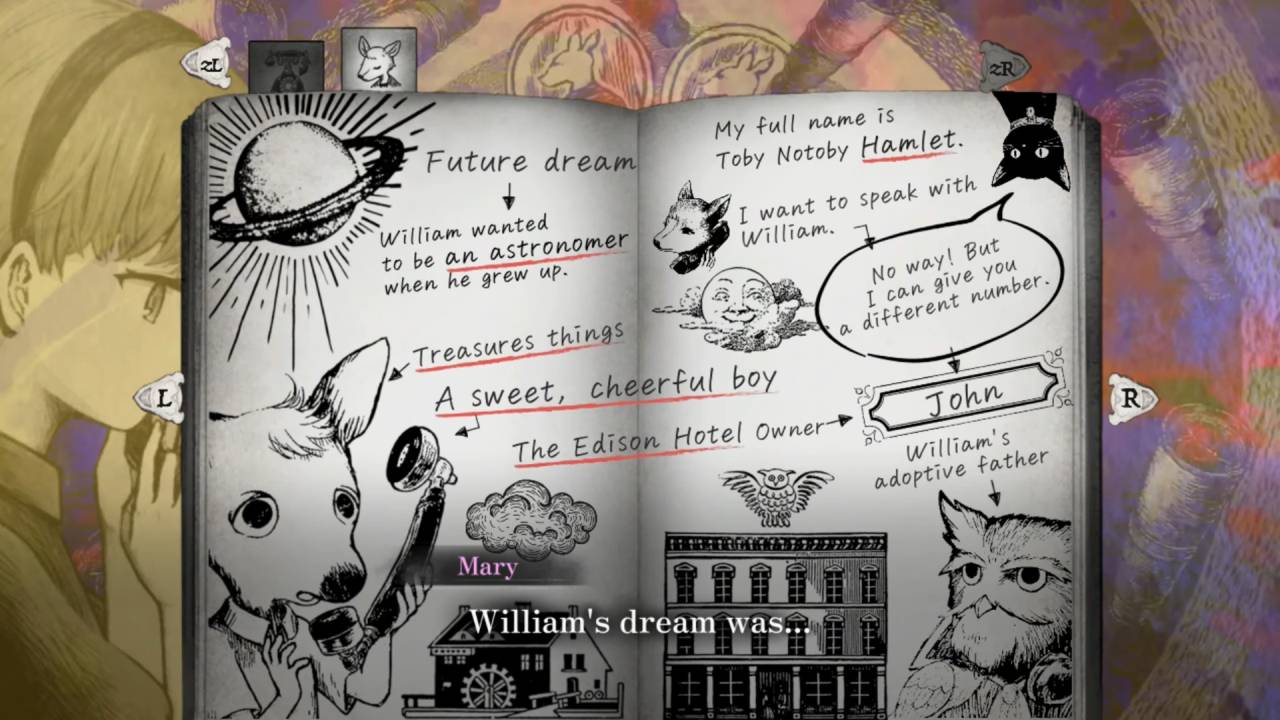
In fact, most of the gameplay centers on studying texts, making choices, and learning about the identities of various characters and the events that occurred in their pasts. This is achieved by equipping the player with useful devices such as a notebook, a telephone directory, and a set of clues to call up third parties and analyze memories.
To put it simply, in terms of action, this game is not very interactive. Instead of shooting, for example, players choose texts, recall facts, dial phone numbers, and use their acquired data. Even with such an apparent simplicity, it doesn't come across as particularly passive. As the player navigates the investigation segments, it becomes easy to get caught up in solving a genuine mystery rather than simply reading a story.
In each story, the protagonist receives calls from a caller and several other characters.
These characters are depicted as anthropomorphic animals, whose contact information she can use to gather further clues. It's through the use of "third party characters" that Schrödinger's Call succeeds in presenting various perspectives on the same situations, thus allowing for a better understanding of the truth that lies between memory and lies. The choices made in this story are an intriguing blend of themes and illusion.
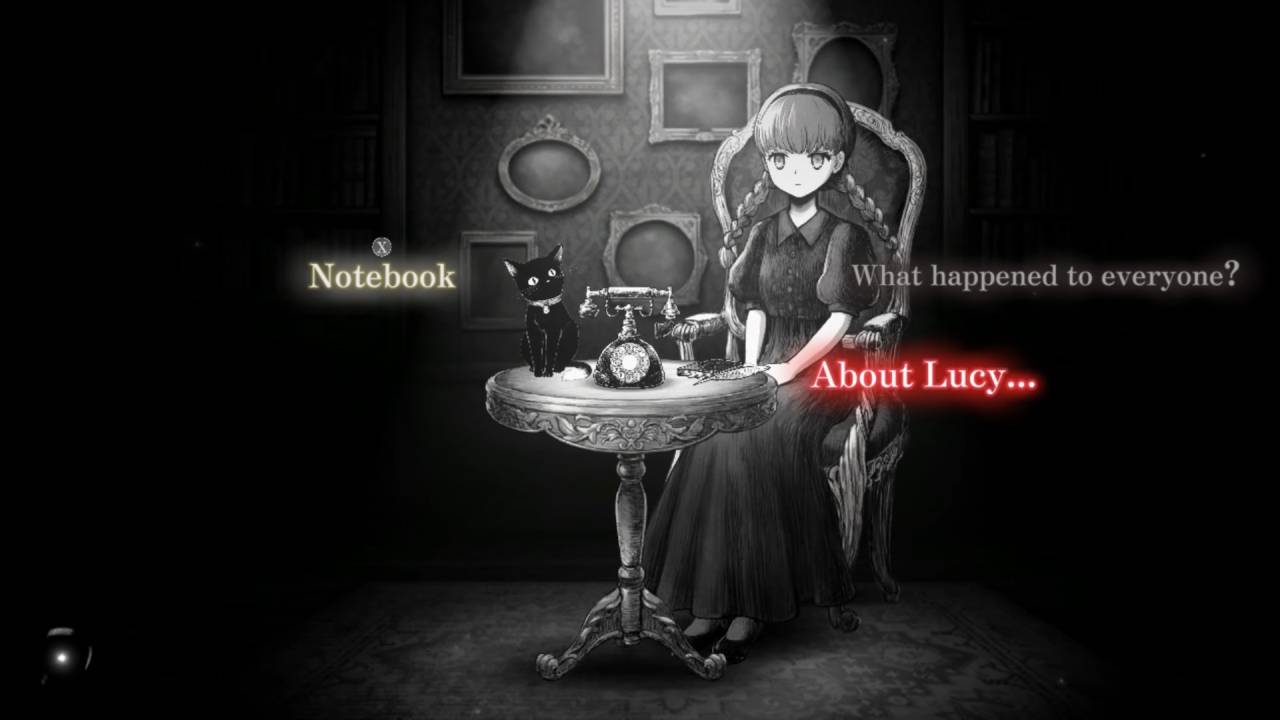
The game offers several options for players to choose from while making dialogue decisions and during the introduction to every chapter, where the player has to select the option that will guide the story towards certain themes. You may have noticed that the game doesn't offer you many options to create a different path and ending based on your choice.
However, Schrödinger's Call is quite linear in terms of its storyline. Regardless of what you select, the story eventually heads towards a common point. When playing, the choices seem to matter because you have the same things to say at that moment, as well as your perception of Mary in the conversation.
The main idea behind the title comes from the famous thought experiment about a cat trapped in a box that is simultaneously dead and alive depending on whether someone observes it. However, in the game version of this principle, the "in between" state is applied to the whole universe. The end of times has come, but it has not yet been completed.
The people disappeared, but their unprocessed emotions keep them here.
As mentioned earlier, Mary, who plays the central role in the story, has no memory of her identity. In fact, playing Schrödinger's Call allows you to piece together clues about your protagonist's identity as you help others resolve theirs. Finally, the character Hamlet, a cat, perfectly captures the essence of the game. "To be or not to be" haunts you softly throughout all the calls.
Every chapter in the game tells a different story, and the early chapters prove very effective. Many people have difficulty completing the first three chapters because of their heartbreaking conclusions. This clearly indicates the effectiveness of Schrödinger's Call in providing a definitive conclusion for its characters' lives.
Going into the chapter with no idea of anything, and coming out having experienced a full emotional journey, proves to be its strength. However, while doing so, the game continues with its broader theme of Mary and the strange space she occupies between life and death. The atmosphere may seem familiar to those who have played other games that are known to evoke powerful emotions.
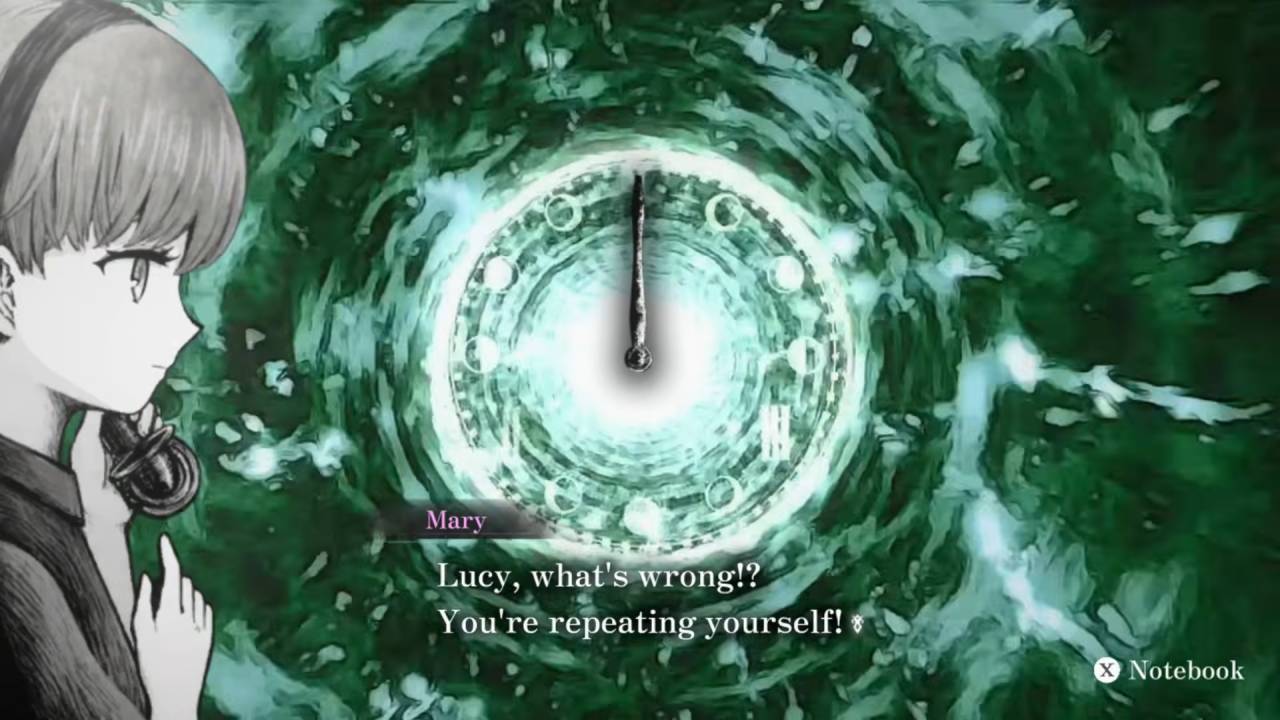
It is not as dark as some of the most notorious titles in the genre, but it shares one common feature with them: it is even more captivating if players enter the game without prior knowledge of its plotline. As for the story itself, it tends to be rather slow-paced, introducing players to the underlying themes gradually as they try to understand the characters better.
Some episodes discuss the theme of solitude; others touch on people's understanding of their self-worth; yet others analyze the influence of relationships on one's life. On a purely visual level, Schrödinger's Call is unmistakable from the start. This is due to the use of a striking gothic and storybook art style that gives each screen its own composition.
Characters and backgrounds resemble illustrations from some elaborate picture book, giving the whole work an overall sense of melancholy.
In times of particular intensity, the game pulls out the stops, using experimental visuals and compositions to create a surreal effect. Colors and lines will warp and morph into strange forms, and the scenes themselves may even dissolve into something entirely abstract, conveying more about the emotions felt than could ever be said in words. And yet, in spite of such extravagances, there is never a lack of clarity.
Colors have been used very intentionally throughout the stories. For instance, the use of colors shifts between monochromatic scenes and more vibrant ones to emphasize emotional high points and critical moments of revelation. What happens is that some scenes are shot in muted colors, followed by a sudden splash of color upon the revelation of something the character has been hiding.
The use of colors, therefore, is quite instrumental in selling the emotions of each story. The audio design is equally important. The music takes on much of the emotional load, featuring pieces that can be soft and tender one minute, only to grow powerful once a memory is unlocked or when a person reaches a tipping point. In this game, the use of music helps the player shift focus to the conversation at hand and get more deeply involved in each dialogue.
The music changes tone depending on whether an essential piece of information is revealed or the chapter approaches its climax. Sound effects are minimal, but effective, adding a sense of importance to key actions such as dialing someone on the phone. Headphones make all the difference. There is a sense of immersion brought out by the music playing around you, while your surroundings grow somewhat subdued.
This is not the type of game that requires quick reflexes or positional sound, and it's not necessary to notice these things here.
Listening to the soundtrack while paying attention to the dialogue will help players immerse themselves more fully in the atmosphere. Although the game lacks much vocal music, the instrumental pieces make up for it and leave a lasting impression. You'll likely recall some of the tracks that played during certain emotional scenes long after you finished Schrödinger's Call.
The game is undeniably designed to create a particular atmosphere and tell a unique story, but it does have some flaws here and there. The abundance of flashbacks might become repetitive over time, and they can disrupt the game's pace and not contribute positively.
Although they emphasize important aspects of the storyline and help switch perspectives, some transitions may be unnecessary and slow gameplay. Furthermore, there are technical difficulties with occasional visual bugs and black screens, depending on specific chapters of the game. However, those are not constant elements of the game and do not significantly affect immersion or hinder players' progress.
The game is designed quite efficiently; the gameplay runs smoothly enough to allow the story to take center stage. Schrödinger's Call is emotional and gripping enough to warrant considerable time, although it is certainly not a game that lasts for many hours. Still, within a relatively short period, you can come to know about Mary, Hamlet, and the other callers, as well as understand their problems and hardships.
The ending is another aspect of the narrative designed to evoke contemplation.
It seems promising for encouraging players to reflect on their impact on Mary's fate and story development. In contrast to many games, this title does not have an excessive number of endings ranging from "normal" to "true"; however, it makes the player feel that they did the best thing for Mary and that there was no alternative way to bring Mary to her ending.
This element of gameplay evokes emotions, since one can assume that even the most positive outcome does not always mean everything could have been done differently. Finally, what truly makes the player think deeply about the game is that it continues to affect them after they play. In other words, when playing Schrödinger's Call is over, players tend to think less about the gameplay systems implemented and more about the people they talked with and their regrettable fates.
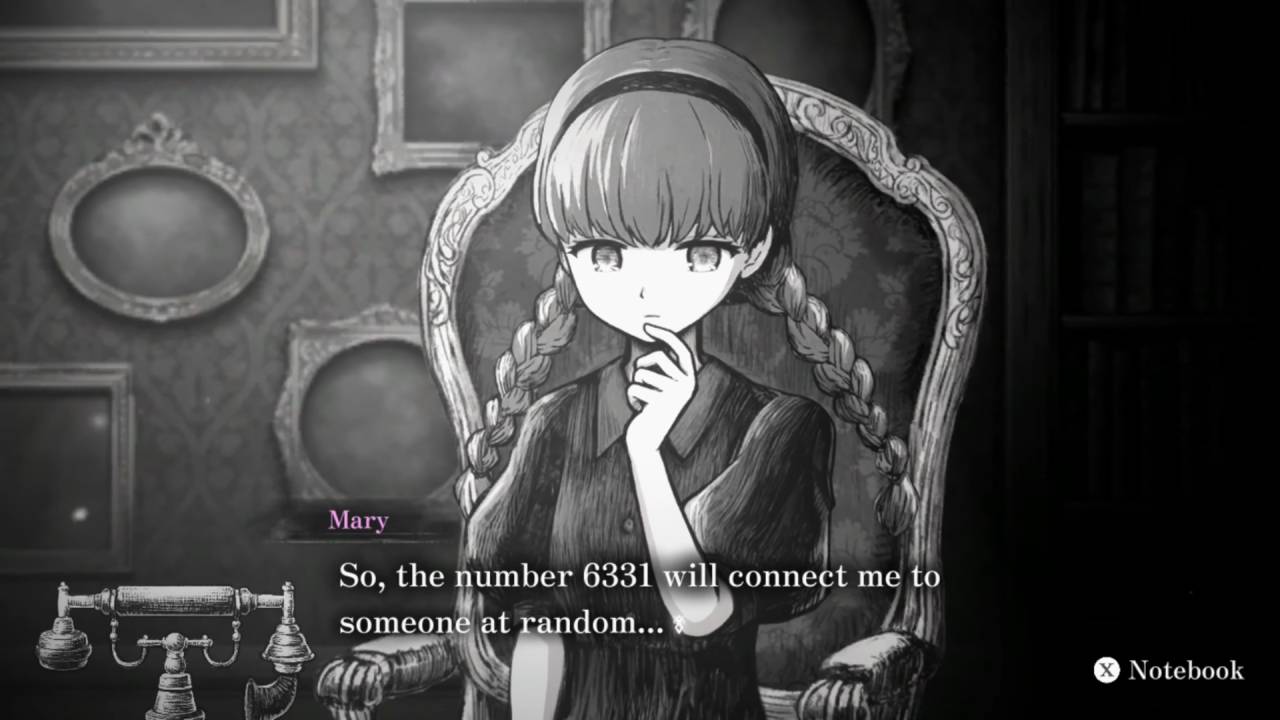
This is not a hard game with many complex mechanics; rather, it is the full-fledged realization of the idea that even in such a world as described by the creators' story, conversations matter. If you enjoy reading visual novels, story-driven games, or any experiences that combine mystery and emotion in their gameplay, this experience will be quite a treat for you. This video game will require you to slow down and pay attention to what is happening.
You will play the role of someone helping others overcome things they couldn't have overcome while they were alive. Beyond the deep plot of Schrödinger's Call, there are excellent graphics and a carefully created sound environment, providing a balanced game experience. You might find this game imperfect and not suitable for hardcore gamers, but you will definitely be impressed with its storyline and concept.
By the end of your gaming session, you will spend hours sitting in this gothic room making phone calls to different people, telling their stories before they die forever. You see, nothing can be done outside; all of that has happened long ago, but inside this tiny room, there is still a possibility of reconciliation and closure. Schrödinger's Call proves that one small room, an ordinary phone, a notebook, and just one voice can communicate with lost souls stuck somewhere between past and death.
Staff Writer, NoobFeed
Verdict
Schrödinger’s Call is an absolutely mesmerizing and heart-rending visual novel that replaces spectacle with sincerity, offering its audience an exquisite contemplation of the themes of remorse and empathy.
89
Related News
No Data.