
Backyard Baseball Review
PC
A faithful revival that understands why the original mattered, while making just enough changes to fit modern players.
Reviewed by Mahi Araf on Jul 11, 2026
There are very few sports games that carry the kind of emotional connection Backyard Baseball has built over the years. While plenty of franchises have chased realism, licensed athletes, and competitive online play, Backyard Baseball always stood apart by embracing something much simpler. It was never about creating the perfect simulation of baseball.
Instead, it invited you into a neighborhood where kids grabbed a bat, picked their friends, and played because they loved the game. That identity has survived for decades. Originally released in the late 1990s, Backyard Baseball became one of those games that many players remembered long after they stopped playing it.
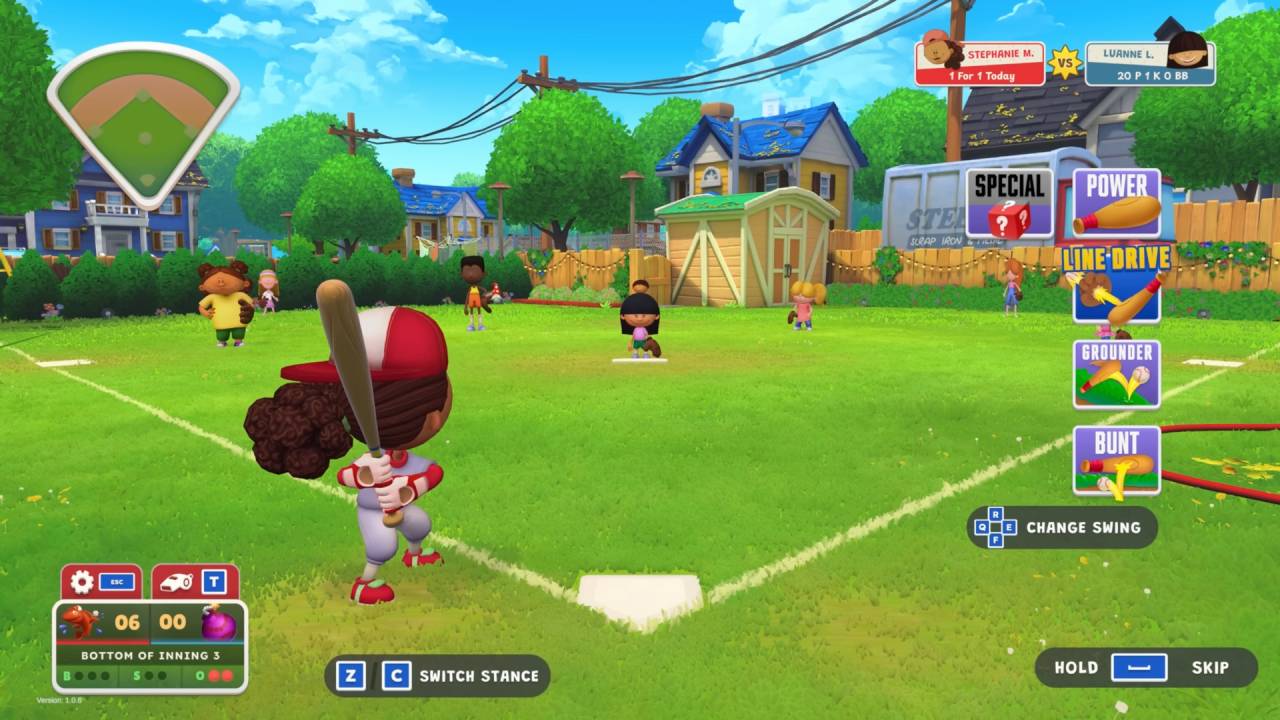
It introduced memorable child versions of professional athletes alongside a cast of original neighborhood kids who quickly became fan favorites. Characters like Pablo Sanchez became gaming icons despite appearing in a sports title that never tried to compete with blockbuster franchises.
Bringing back a game like this is much harder than simply increasing the resolution or updating character models.
Nostalgia is a strong emotion, but it can also be deceptive. What players remember is how a game made them feel, not how it looked or played. A good remake has to recreate those feelings, and subtly improve the experience, underneath it all. It's a delicate balance. Change too much, and you lose the game's personality; change too little, and it feels dated.
Fortunately, Backyard Baseball surprisingly gets this challenge right. Instead of trying to reinvent itself into a modern sports simulation, it focuses on keeping the charm that made the original memorable. It still feels like you're playing a neighborhood baseball game with a bunch of rambunctious kids, but the presentation, controls, and overall polish make it feel much more at home on today's hardware.
If you were a kid when the series was released, you'll immediately recognize the faces, the playgrounds, and the jovial environment that characterized the original release. If you're discovering Backyard Baseball for the first time, you'll find a game that feels refreshingly different from today's sports titles. Instead of endless menus, battle passes, and complicated systems, you simply jump in and start playing baseball.
Story has never been the driving force behind Backyard Baseball, and this release doesn't suddenly transform it into a narrative-heavy sports adventure.
Instead, the personality comes from the world itself. Every field feels like an actual neighborhood location where kids gathered after school, and every player has their own little quirks that give the roster character without needing elaborate cutscenes.
League Play remains the centerpiece for anyone looking to spend the most time with the game. You draft your team from a pool of familiar players, customize basic team details, choose your preferred season length, and begin working through a straightforward schedule before reaching the playoffs. The simplicity is intentional. You aren't managing contracts or worrying about salary caps. You simply build the team you want and play baseball.
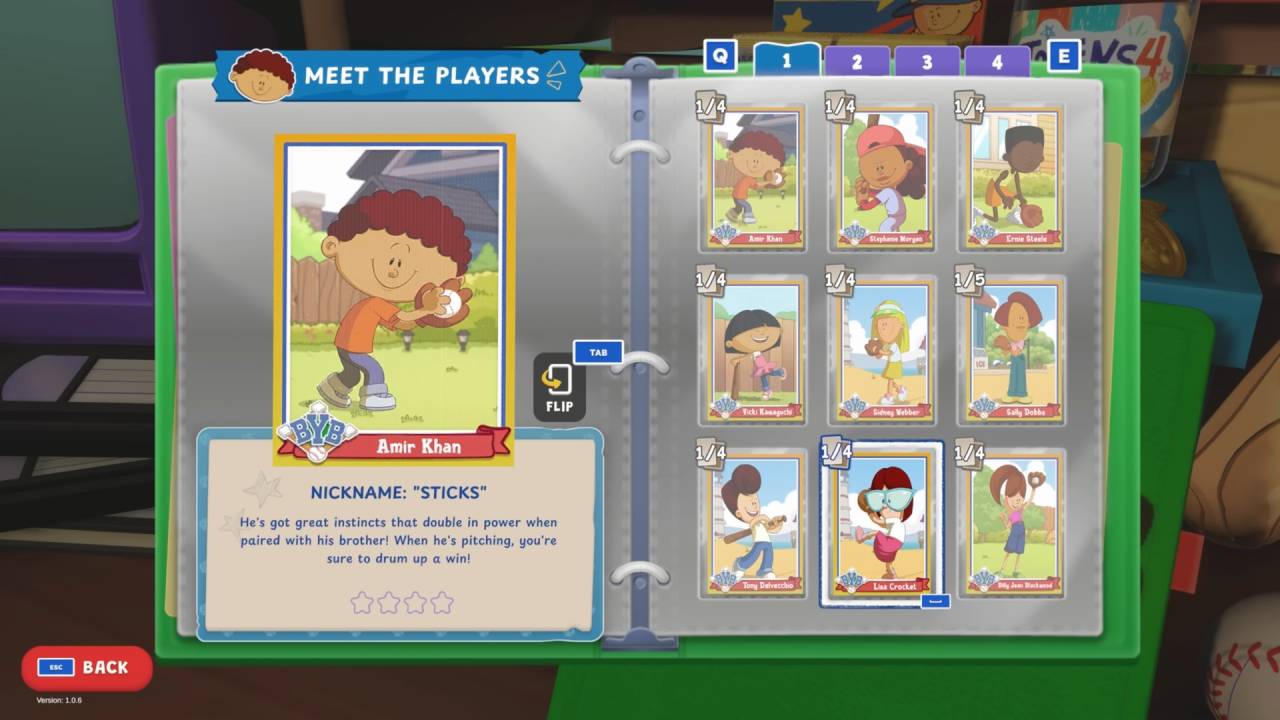
Outside of League Play, there are enough additional modes to keep things interesting. Home Run Derby offers a satisfying arcade distraction where you chase personal records and leaderboard positions instead of championship trophies.
Timed challenges encourage repeated attempts, and the competitive scoring system gives every swing a purpose. It is one of those modes that feels easy to pick up for a few minutes but somehow turns into an hour of trying to beat your previous distance or total.
Wiggle Ball offers a smaller, more chaotic alternative to standard baseball.
Each inning is far less predictable than it is in traditional games, with fewer fielders and the ball moving more erratically. It is not a full replacement for the main experience, but it is a nice change of pace when you want something a little lighter and less structured.
Custom players return, too, letting you build your own kid and set strengths and weaknesses in various skills. You won't get an incredibly detailed character creator, but there's enough flexibility to make the experience feel personal. One extra layer of charm that longtime fans will appreciate is seeing your own player take the field with the classic Backyard Baseball cast.
One of the nicest surprises is how the game encourages replayability without overwhelming you. Multiple seasons, different roster combinations, varying inning lengths, unlockable content, and extensive statistical tracking all create reasons to return long after your first championship. Nothing feels forced, yet there is always another season waiting.
Actually playing Backyard Baseball is exactly what longtime fans probably hoped for.
Controls remain intentionally simple, allowing almost anyone to understand the basics within a few minutes. Batting is timing and placement, not memorizing dozens of mechanics. Pitching is choosing the right pitch and throwing it precisely.
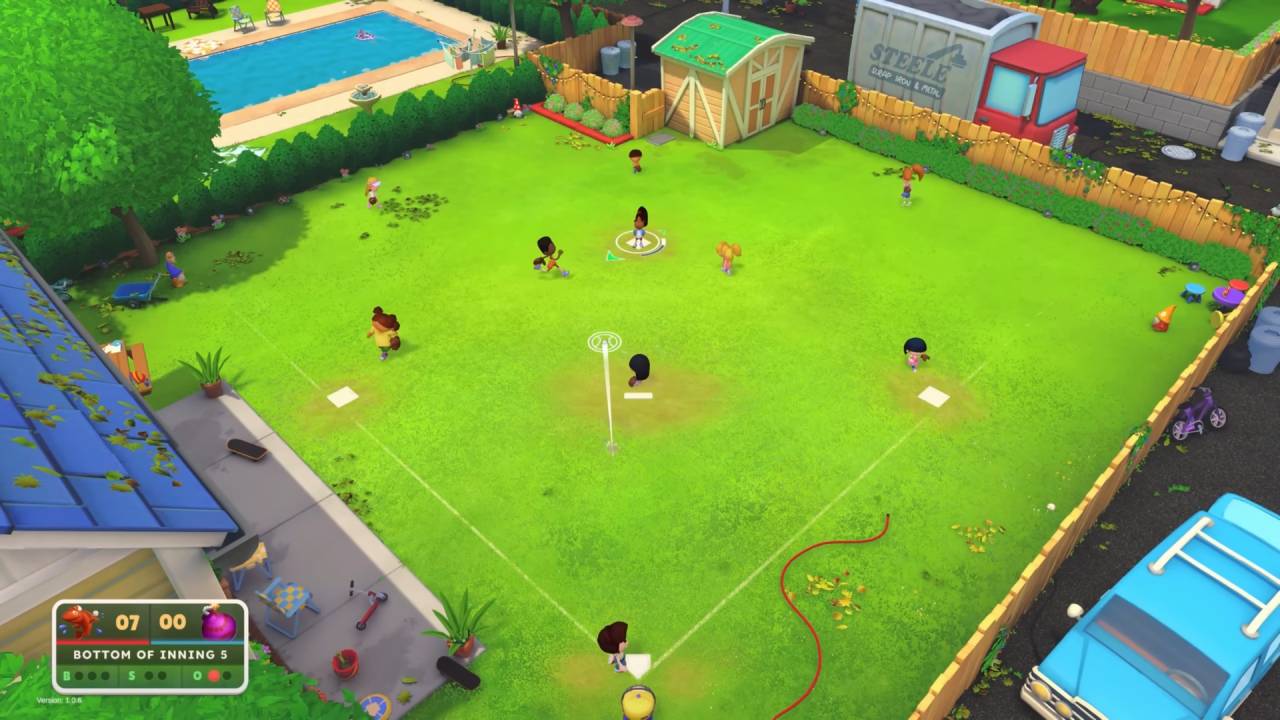
Fielding takes a little getting used to, more than hitting. As the game continues, positioning your defenders correctly, making clean throws, and reacting quickly become more important. During your first few matches, you may give away extra bases simply because you're still learning how throws work, but once the controls click, fielding becomes much more natural.
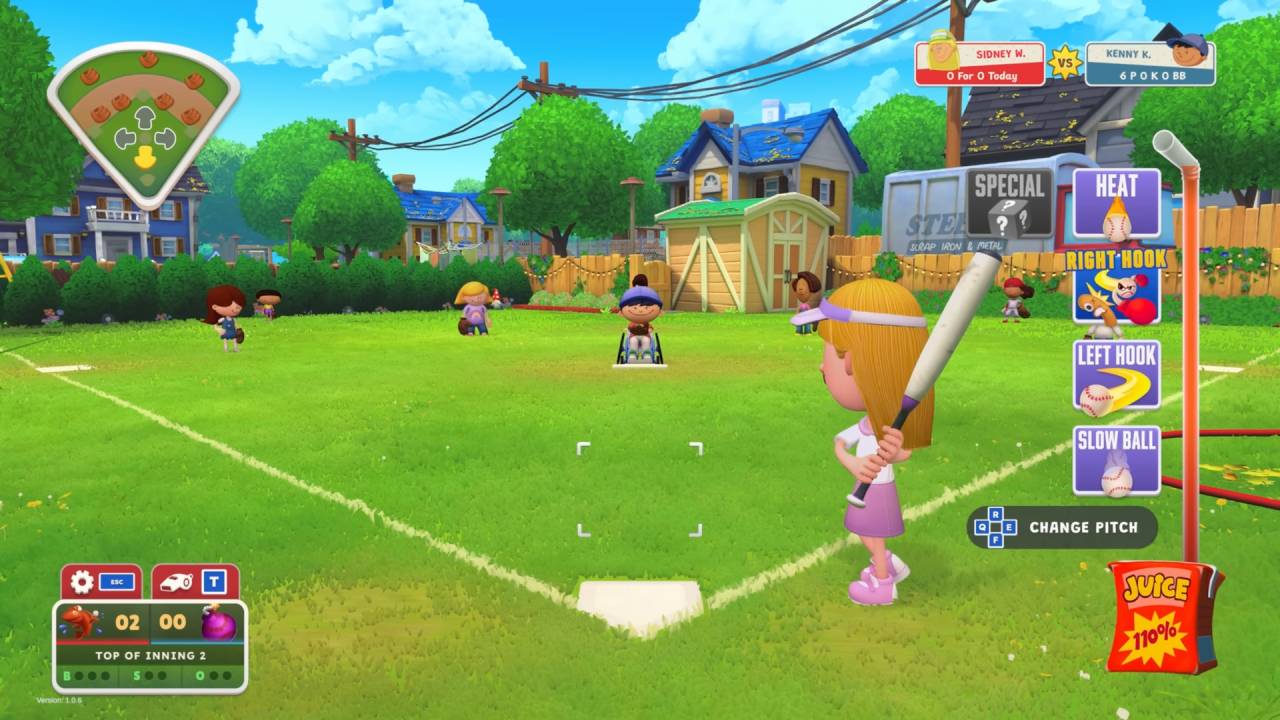
Running the bases also demands attention. Decisions about when to turn a single into a double or send a runner home often make the difference between winning and leaving runs on the base paths. Making smart decisions is rewarded rather than spamming, so each hit feels like it means something.
Power-ups are back to bring some arcade chaos to otherwise traditional baseball play.
The special bats, the strange pitches, and the odd abilities provide moments of surprise that fit perfectly with Backyard Baseball's identity. These aren't realistic additions, but realism was never the goal. They're here to create memorable highlights, and they succeed.
The pace also deserves praise. Matches move quickly enough that you rarely feel trapped in long stretches of downtime, especially if you choose shorter inning lengths. Whether you have fifteen minutes or an entire evening, it's easy to fit another game into your schedule.
Customization remains relatively modest compared to modern sports titles, but that's actually part of the appeal. You select your roster, choose colors, create a player if you wish, and start playing. Instead of burying baseball beneath endless management systems, the game stays focused on delivering enjoyable matches.
There's a surprisingly solid core of gameplay beneath Backyard Baseball's silly surface. Hits are consistent, pitching feels responsive, and player attributes matter. Fast guys can pressure the bases, big hitters can shift defensive positioning, and great pitchers are in high demand year-round.
The AI is good enough to play competitive matches without being unfair. Computer-controlled opponents will capitalize on your mistakes, but wins feel earned, not scripted.
There are unique power-up mechanics that can lead to awkward behavior in certain situations.
Sometimes, runners will hesitate, or animations don't fully convey what's going on, which leads to small frustrations that, hopefully, will be addressed in future updates. Fortunately, these appear to be fairly rare and do not detract from the overall experience.
Another area that needs work is menu responsiveness. Gameplay itself is smooth, but some of the navigation screens seem slower than you'd expect. It's a pain in the ass, not a problem. But faster transitions would make repeat season management even more enjoyable.
Multiplayer is one area that has not yet reached its full potential. Local fun has always been part of Backyard Baseball's appeal, but online competition feels like the natural next step. Leaderboards already add replay value to Home Run Derby, encouraging you to improve your performance against other players.
Head-to-head online play has enormous potential to extend the game's lifespan once fully implemented. Competitive leagues, friendly matches, and even online Wiggle Ball could become major reasons to keep returning long after launch.
Progression works differently from most modern sports games, and that's honestly refreshing.
Even better, instead of grinding experience bars or unlocking ever more powerful gear, you're driven to improve your own performance. The biggest payoffs are winning titles, messing with different lineups, and watching long-term stats grow.
Stat tracking is one of the game's strongest features. Nearly everything you accomplish gets recorded somewhere. Individual batting numbers, pitching performances, defensive contributions, season histories, championships, coaching statistics, and personal records combine to form a surprisingly deep archive of your baseball career. If you enjoy comparing seasons or seeing how individual players perform over time, you'll likely spend almost as much time reviewing numbers as you do playing games.
That progression creates its own sense of investment. Rather than artificially increasing player ratings, the game lets your knowledge improve naturally. You begin understanding which players complement one another, which batting orders work best, and how different pitchers handle certain situations. Your skill becomes the progression system.
Perhaps the most welcome surprise is what the game doesn't include.
No microtransactions are asking you to purchase stronger players. No battle pass appears every few weeks, demanding constant attention. No premium currency interrupts your experience. Once you purchase Backyard Baseball, everything revolves around simply enjoying baseball. In today's gaming landscape, that alone feels surprisingly refreshing.
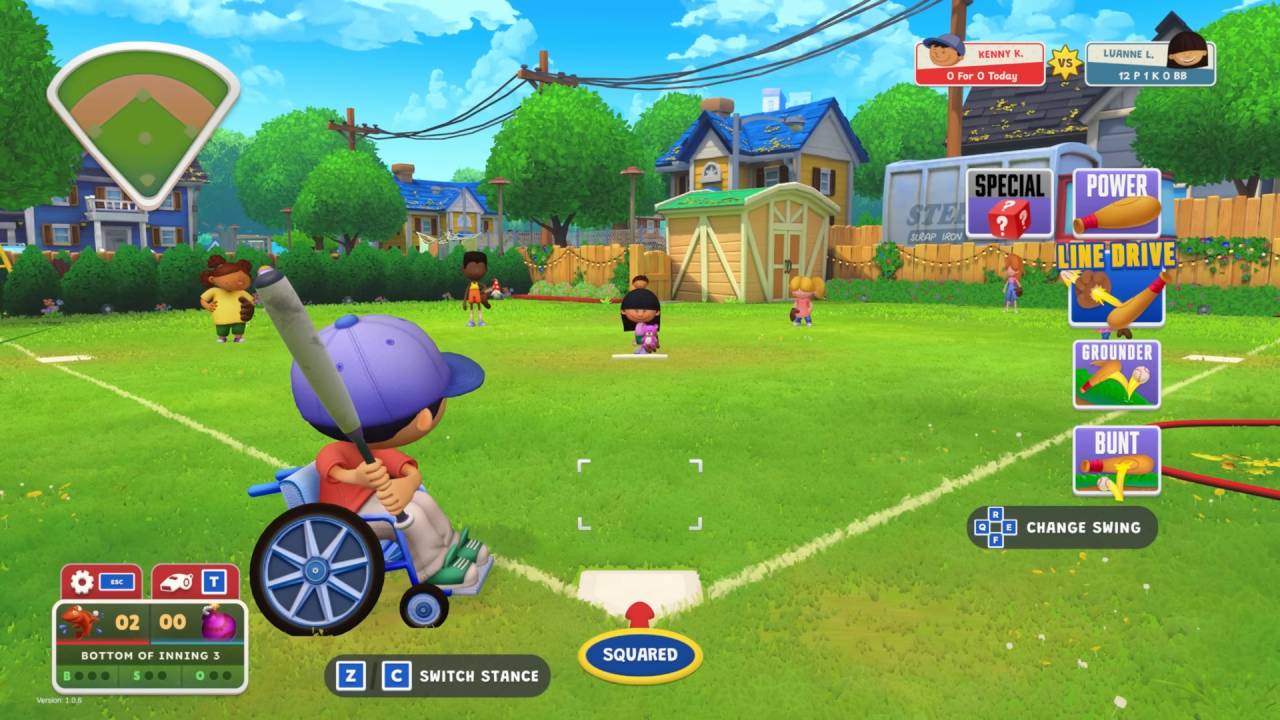
Visually, Backyard Baseball succeeds by capturing memories rather than copying old graphics pixel-for-pixel. The character models are more expressive, the environments are much more detailed, and the animations flow naturally while still retaining the playful style that was the hallmark of the original.
Fields feel alive thanks to interactive background elements and environmental details that reward attention. Small animations and visual reactions make every place feel like a real neighborhood, not a static backdrop. The presentation makes it seem like these kids are really living in this world, not just coming to play baseball.
We also have to mention the quality of the animation. Batting stances, celebrations, pitching motions, and fielding actions all have enough personality to make each player feel unique. Even the little touches help to sell the happy vibe of the game.
The audio is used very well alongside the visuals.
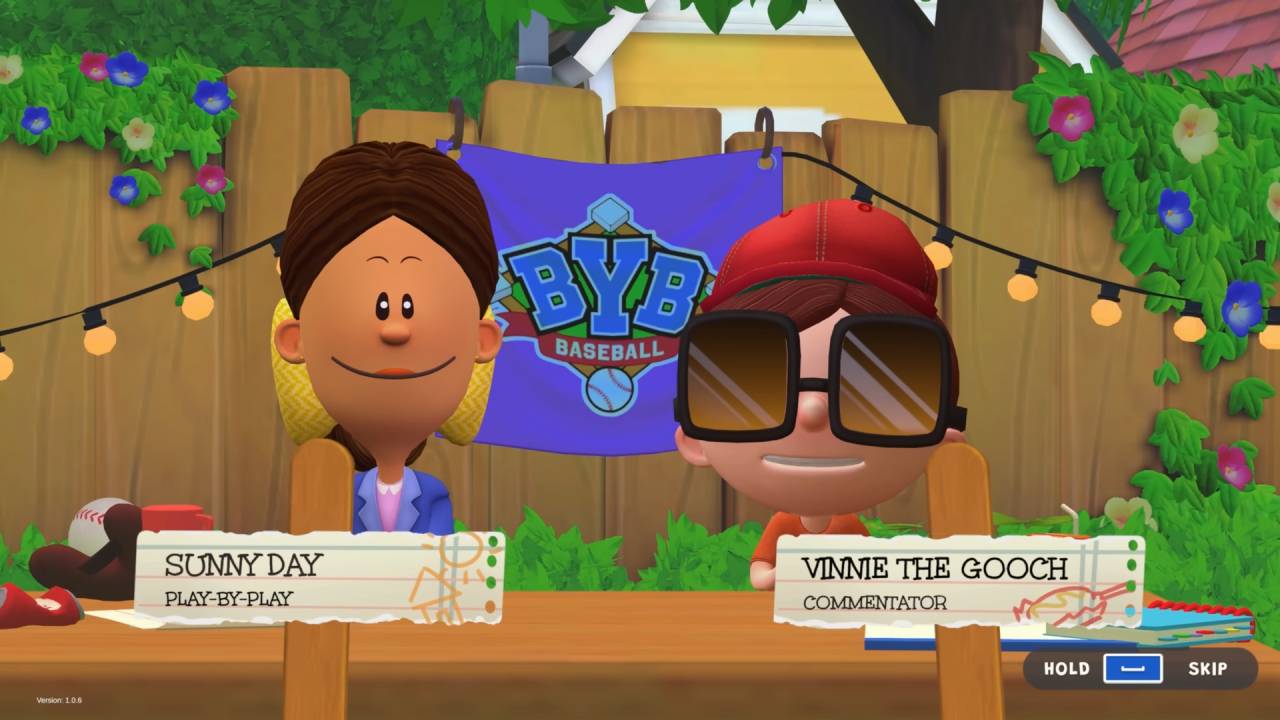
The commentary is still very funny, the player intros are still amusing, and the background chatter keeps each game feeling lively. Personality is added to the roster with individual musical themes, while satisfying bat cracks and environmental sound effects complete the presentation. Sure, the dialogue pool can probably grow over time as repeated matches naturally cycle lines, but what is there works well with the game's lighthearted tone.
Most of the gameplay performance is consistent. Matches are smooth, load times are fair, and controls are responsive. A few interface slowdowns and occasional bugs appear here and there, but nothing consistently damages the experience. Continued post-launch support should address many of these smaller issues.
Backyard Baseball doesn't attempt to compete directly with realistic baseball simulators, and that's exactly why it works. It knows its audience and fully embraces its identity instead of chasing trends.
For returning fans, this release feels remarkably close to revisiting an old neighborhood after many years away. Everything looks cleaner, and everything runs better, yet the familiar atmosphere remains intact. That emotional connection is difficult to manufacture, but Backyard Baseball earns it naturally.
New players may initially wonder why so many people still speak fondly about a children's baseball game from the late 1990s.
After spending several seasons building teams, chasing statistics, and enjoying the lighthearted presentation, the answer becomes obvious. The game succeeds because it remembers that sports are meant to be fun above all else.
At $40, Backyard Baseball is a steal compared to most major sports releases and a polished version of a beloved classic. No infinite customization, huge online ecosystems, or hyper-realistic simulation mechanics. It delivers just what it promises, though: a fun, accessible baseball game packed with personality and replayability. If that's the experience you're looking for, the asking price is easy to justify.
Senior Editor, NoobFeed
Verdict
Backyard Baseball faithfully modernizes a beloved classic without losing its personality. Minor technical issues and limited online features hold it back slightly, but the charm, replay value, and straightforward fun make the $40 price worthwhile.
75
Related News
No Data.